The pursuit of the perfect home cinema setup is often dominated by discussions of resolution, peak brightness, and color gamut, yet a fundamental truth remains that the auditory experience is equally critical to the immersion of the viewer. At the What Hi-Fi? testing facilities, the editorial team maintains a strict guiding principle: good sound is inherently valuable regardless of the playback medium, and audio performance must carry equal weight to visual fidelity. This philosophy was recently brought into sharp focus during the intensive evaluation phase of the What Hi-Fi? Awards 2026, where a series of Ultra-Short Throw (UST) projectors underwent rigorous head-to-head testing.
The Evolution of Home Cinema Standards
For decades, the standard for home theater was dictated by dedicated components: a receiver, a disc player, and a discrete multi-speaker configuration. However, the rise of UST projectors—which can cast a 100-inch image from just inches away from a wall—has shifted consumer expectations. Manufacturers are increasingly packing these units with integrated sound systems to appeal to the "all-in-one" convenience market.
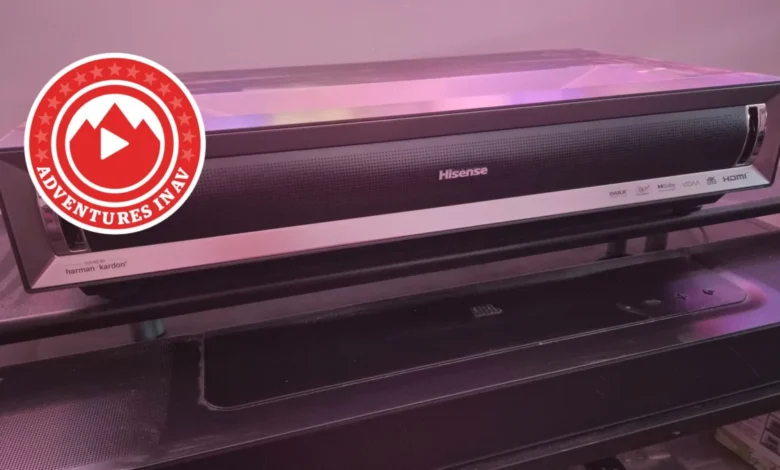
During the 2026 awards evaluation process, the testing panel subjected a wide array of these projectors to standardized audio benchmarks. The objective was to determine which units could legitimately function as standalone systems without necessitating an external soundbar or amplifier. This process, which spans several weeks, involves testing across various content types, including high-bitrate 4K Blu-ray discs, streaming services, and uncompressed audio files.
Chronology of the 2026 Awards Evaluation
The testing phase for the 2026 awards followed a structured, multi-stage methodology.
- Phase 1: Initial Calibration: Every unit underwent a standardized image calibration to ensure the visual baseline was neutral.
- Phase 2: Dialogue Clarity Testing: Units were evaluated on their ability to reproduce mid-range frequencies, specifically focusing on vocal clarity in complex soundscapes.
- Phase 3: The Stress Test: During the final week of testing, researchers employed the 4K Blu-ray release of Sinners, specifically selecting the "musical medley" sequence. This scene is notoriously difficult for integrated speakers due to its rapid transition between blues guitar, orchestral swells, and percussion-heavy breakdowns.
- Phase 4: Comparative Benchmarking: Following the stress test, the team cross-referenced the performance of the final unit against previously tested hardware to ensure parity in judgment.
Data-Driven Observations on Integrated Audio
The results of the 2026 testing highlight a significant disparity in how manufacturers approach integrated sound. Historical data from previous annual reviews shows that fewer than 15% of UST projectors achieve a "five-star" rating specifically for audio performance. Most units suffer from a "mid-range bias," where the internal digital signal processing (DSP) is tuned aggressively to prioritize dialogue, often resulting in a muddy, compressed soundstage that lacks the dynamic range required for cinematic soundtracks.
However, the final unit evaluated in the 2026 cycle demonstrated a departure from this trend. By utilizing an optimized driver array and more sophisticated frequency crossover points, this specific model managed to retain rhythmic integrity—a quality often lost in lower-cost integrated solutions. While it did not reach the technical specifications of a dedicated 5.1-channel system, the unit exhibited a controlled bass extension and high-frequency dispersion that allowed for a more "musical" presentation of complex audio sequences.
Industry Implications and System Matching
The recurring issue in home cinema integration is the phenomenon of "underpowered low end," where the absence of a dedicated subwoofer forces the projector’s internal speakers to overcompensate, leading to audible distortion at higher volumes. Industry analysts have long suggested that consumers often view audio as an afterthought, leading to the "system mismatch" problem.
System matching is the art of ensuring that all components within a playback chain—from the source to the amplification and the speakers—operate within their ideal performance parameters. When a high-end visual display is paired with inadequate sound, the psychological impact of the film is diminished. Studies in sensory integration suggest that high-fidelity audio can actually make a lower-resolution image appear "sharper" to the viewer, confirming that the brain prioritizes audio-visual synchronization over raw pixel count.
Official Perspectives and Market Trends
Industry representatives have noted that the challenge for manufacturers lies in the physical constraints of UST projector chassis. To keep the units "ultra-short" and aesthetically pleasing, engineers are limited by the volume of space available for speaker enclosures.
"We are seeing a trend where audio is being treated as a secondary feature," noted a lead audio engineer in a recent industry symposium. "The goal for the next generation of hardware is to bridge the gap between integrated convenience and discrete performance through advancements in driver material science and room-correction software."
The Consumer’s Responsibility
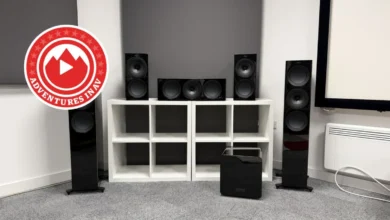
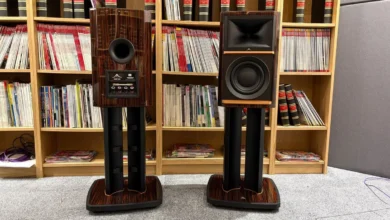
For the average consumer, the lesson remains clear: an investment in a high-end projector must be matched by a commitment to an adequate sound solution. Whether through a dedicated soundbar, a pair of active bookshelf speakers, or a full 5.1 surround system, the audio component serves as the emotional engine of the cinema experience.
The What Hi-Fi? testing team maintains that the "as the director intended" experience is impossible to achieve without a holistic approach. While the convenience of integrated sound is an attractive entry point for casual viewers, those seeking an authentic cinematic experience should prioritize external audio solutions. As the 2026 awards season approaches, the focus remains on rewarding those manufacturers who refuse to compromise on either front, setting a new benchmark for what is possible in the compact, high-performance home theater market.
Looking Ahead: The Future of Home Cinema
As we move into the latter half of 2026, the focus of home cinema hardware is shifting toward AI-driven room calibration. These systems allow users to optimize their sound output based on the specific acoustic properties of their living room, effectively bridging the gap between professional theater installations and domestic setups.
Furthermore, the integration of advanced object-based audio formats, such as Dolby Atmos and DTS:X, into smaller hardware footprints will continue to evolve. As the technology matures, consumers can expect a greater emphasis on "musicality"—a term that encompasses the ability of a system to convey not just the sound effects of a film, but the nuance and emotion of the soundtrack itself.
In conclusion, while the allure of a large, clear picture is undeniable, the home cinema experience is fundamentally incomplete without audio that matches the visual grandeur. As the findings from the 2026 awards cycle suggest, the most rewarding setups are those that treat sound with the same rigor, research, and respect as the display itself. Whether you are building your first system or upgrading an existing one, prioritizing audio fidelity is the most effective way to ensure that your home theater remains an immersive, high-impact environment.