Penguin Colony Review: A Surreal, Cosmic Horror Reimagining Through Avian Eyes

Penguin Colony stands as a distinct entry in the contemporary indie horror landscape, merging the atmospheric dread of H.P. Lovecraft’s cosmic fiction with unorthodox platforming mechanics and satirical social commentary. Developed by Origame Digital and published by Fellow Traveller, the title launched on October 16, 2026, priced at $15 / £13. Available exclusively for single-player experiences, the game has received official Steam Deck verification, ensuring optimized performance across handheld and desktop hardware configurations alike.
Set against a backdrop heavily inspired by Lovecraft’s 1936 novella At the Mountains of Madness, Penguin Colony recontextualizes familiar literary tropes by casting the player not as an intrepid human explorer, but as a penguin navigating the terrifying periphery of ancient, otherworldly phenomena.

Mechanics and Traversal: The Challenge of Avian Locomotion
The gameplay loop of Penguin Colony centers on movement mechanics that are deliberately awkward and restrictive. Players control a transient consciousness capable of possessing various penguin species scattered throughout the frozen environments. Each species introduces subtle variations to core traversal abilities—honking, sliding, swimming, and hopping—allowing for basic navigation around environmental hazards. For instance, baby penguins can access confined spatial gaps, while Rockhopper penguins provide superior vertical elevation through enhanced jumping capabilities.
Reviewers have noted that this sluggish, heavy movement model functions as an intentional design choice rather than a traditional gameplay oversight. By restricting the player to the physical limitations of an avian body, the game deliberately induces frustration. This mechanic mirrors the overarching thematic premise: the player acts as a minor, often helpless observer caught in a grander, incomprehensible narrative scale.
However, mechanical implementation is not entirely seamless. Inconsistencies within the mantling system can lead to unpredictable navigation errors, where certain ledges allow passage while structurally identical ones do not. Additionally, the user interface features a prominent, circular stamina meter that activates only during depletion phases. Its large neon presentation and opaque correlation to player actions have drawn criticism for breaking the title’s otherwise minimalist aesthetic immersion.

Narrative Architecture and Voice Performance
The narrative framework departs from a direct adaptation of Lovecraftian source material by introducing Howard Blakely, a neurotic American protagonist voiced by Lenval Brown, recognized for his iconic narrative work in Disco Elysium. Brown’s verbose, high-anxiety delivery anchors the psychological descent of the expedition, mirroring the neurotic archetypes common in classic weird fiction.
Complementing Blakely’s narrative perspective are recurring interludes featuring a party of Māori warriors. These sequences detail an indigenous lineage dedicated to tracking and containing the ancient evils manifested at the Earth’s southern pole. In contrast to Blakely’s obsessive documentation and complicit association with a Nazi expeditionary force seeking occult artifacts, the Māori contingent demonstrates proactive camaraderie, self-sacrifice, and community defense. This dual-narrative structure establishes a stark thematic contrast between modern, colonial curiosity and indigenous stewardship.
Thematic Integration and Industry Commentary
Penguin Colony deliberately confronts the historical xenophobia embedded within H.P. Lovecraft’s literary legacy. Rather than sanitizing or ignoring the author’s well-documented racial prejudices, the title weaponizes them, casting Blakely as a representative of obsolete, exclusionary worldviews that crumble when confronted with true cosmic scale.

Furthermore, the title utilizes its platform to deliver direct political commentary. In addition to a standard land acknowledgment and content warnings at the outset, the post-credits sequence features an explicit critique of inaction within the broader technology and entertainment industries concerning geopolitical conflicts, specifically regarding the humanitarian crisis in Palestine. Developers and publishers have increasingly utilized interactive media as a medium for direct socio-political messaging, a strategy that aligns with Origame Digital’s history of avant-garde thematic explorations.
Technical Performance and Design Scale
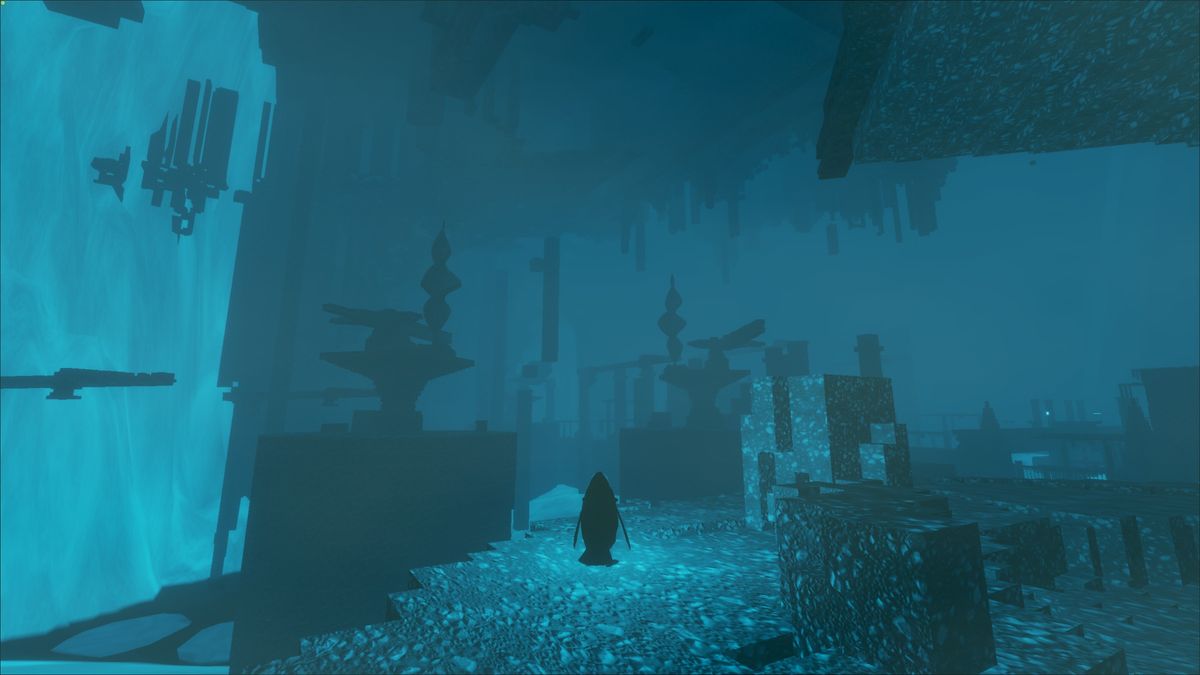
Visually and atmospherically, the latter half of the game shifts into expansive subterranean architectures beneath the Antarctic ice. The alien megastructures evoke comparisons to atmospheric horror titles such as Scorn and the deep-level environmental design of Dark Souls. These monolithic spaces convey an overwhelming sense of ancient, inhuman purpose.
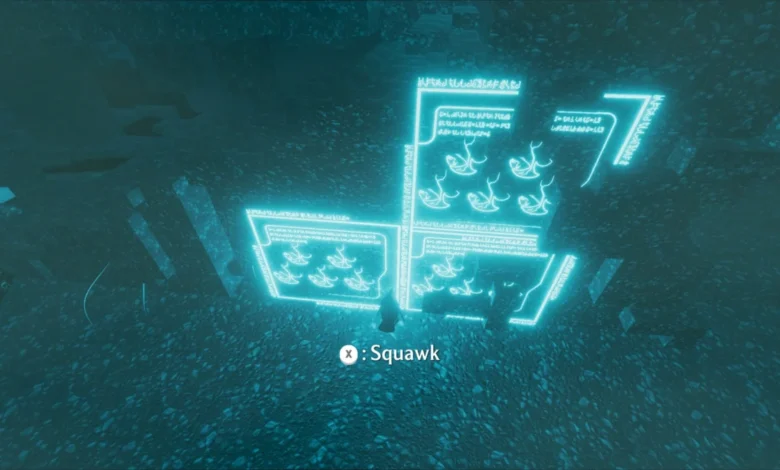
Environmental storytelling is further emphasized through a cipher-based hieroglyphic writing system embedded within the architecture. Players willing to decode these inscriptions using substitution ciphers gain deeper insight into the overarching lore, rewarding attentive exploration without relying on explicit exposition.
Broader Impact and Critical Reception
Priced accessibly and designed with a relatively compact runtime, Penguin Colony has positioned itself as a notable release within the 2026 indie calendar. While technical hurdles—such as erratic stamina meters and stiff platforming physics—present initial barriers to entry, the game’s willingness to subvert traditional horror tropes has resonated with critics. By juxtaposing cosmic insignificance with sharp critiques of historical and modern sociopolitical frameworks, Origame Digital has delivered an experience that transcends standard pastiche, establishing a distinct voice in narrative-driven indie gaming.