The intersection of artificial intelligence, edge computing, and industrial internet of things (IoT) continues to reshape operational landscapes across global enterprises. In a recent industry broadcast, technological leaders and enterprise architects dissected the compounding complexities facing the smart home ecosystem, major semiconductor industry maneuvers, and industrial deployment strategies for machine learning. A central highlight of the discussion featured Muthu Sabarethinam, Vice President of AI/ML Products and Services at Honeywell, who detailed how industrial conglomerates are integrating ultra-low-power machine learning—commonly known as TinyML—directly onto field-deployed sensors. As organizations manage millions of connected hardware units globally, the strategic deployment of on-device intelligence is shifting from a futuristic concept to a baseline operational requirement for security, latency mitigation, and energy conservation.
The State of Interoperability and Ecosystem Friction
Before delving into industrial-scale machine learning, industry observers addressed ongoing interoperability hurdles plaguing the consumer smart home sector. Prominent technology publications, including The Verge and specialized IoT intelligence networks, have recently spotlighted significant friction points within the Matter connectivity standard. Co-developed by tech giants such as Apple, Google, and Amazon, Matter was engineered to unify smart home devices across disparate ecosystems. However, implementation realities have proven challenging.
Analysts pointed to critical roadblocks involving Thread border router interoperability and complex credentialing procedures during device setup. Rather than pointing the finger exclusively at the core standard, industry analysts noted that the primary burden of responsibility rests on device vendors. Uneven firmware support, fragmented rollout schedules, and varying interpretations of protocol specifications have left consumers navigating a surprisingly disjointed setup experience.
Parallel to consumer protocol challenges, cybersecurity analysts have raised alarms regarding foundational infrastructure vulnerabilities. Recent investigative reporting by cybersecurity journalist Kim Zetter uncovered mysterious radiation spikes and potential digital tampering vectors surrounding remote sensors in the Chernobyl exclusion zone. The incident underscores a persistent global vulnerability: the susceptibility of critical environmental and industrial monitoring infrastructure to sophisticated cyber threats. As physical sensors increasingly bridge with networked environments, securing the perimeter at the hardware and edge level has transitioned from an IT priority to a critical national security concern.
Semiconductor Consolidation and Architectural Shifts
Hardware innovation remains deeply intertwined with software functionality, a dynamic highlighted by recent structural realignments within the semiconductor sector. Major technology players have heavily backed a newly formed company dedicated to accelerating the commercialization of RISC-V, an open-standard instruction set architecture (ISA) based on reduced instruction set computer principles. Spearheaded by industry heavyweights including Qualcomm, NXP Semiconductors, and Infineon, this collaborative entity aims to challenge traditional proprietary architectures and provide device manufacturers with scalable, highly customizable processing foundations.
In parallel corporate developments, Renesas Electronics announced a definitive agreement to acquire Sequans Communications, a prominent specialist in cellular IoT modules and chipsets. This strategic acquisition is designed to bolster Renesas’s wireless connectivity portfolio, enabling seamless integration of cellular capabilities into microcontrollers and edge processors. Concurrently, the unmanned aerial vehicle (UVE) sector is witnessing rapid architectural expansion. California-based drone startup Birdstop recently secured fresh capital funding to scale its network of Beyond Visual Line of Sight (BVLOS) drones across the United States, utilizing an operational framework structurally reminiscent of satellite constellations designed to continuously monitor and safeguard critical infrastructure.
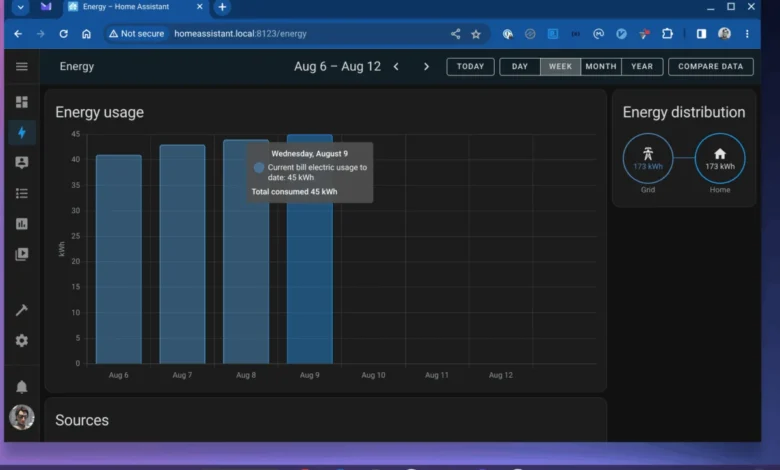
Amidst these macro-level hardware shifts, software-defined infrastructure continues to win over end-users. Community reactions to recent migrations toward open-source home automation platforms—such as Home Assistant—demonstrate a broader market appetite for decentralized, privacy-focused, and highly interoperable control hubs. This consumer-side movement toward localized energy management and data ownership mirrors enterprise-level desires for autonomy and robust data governance.
Honeywell and the Industrial Integration of TinyML
The focal point of the recent industry discourse centered on industrial transformation, specifically how legacy giants like Honeywell are modernizing infrastructure through artificial intelligence. Muthu Sabarethinam, Vice President of AI/ML Products and Services at Honeywell, joined the broadcast to articulate the organization’s strategic vision for leveraging machine learning at the extreme edge.
Honeywell maintains a massive physical footprint, supporting more than one million industrial and commercial sensors deployed globally in the field. Extracting actionable business intelligence from this vast web of legacy and modern hardware requires a fundamental reevaluation of data architecture. Traditionally, industrial sensors captured raw physical measurements—such as temperature, vibration, pressure, or flow rate—and transmitted this telemetry over networks to centralized cloud servers or on-premises data centers for heavy analytical processing.

However, this traditional paradigm introduces severe operational constraints, including high network bandwidth consumption, recurring latency penalties, vulnerability to network outages, and heightened exposure to interception during transit. To counteract these limitations, Honeywell is actively exploring the integration of TinyML: a specialized subset of machine learning algorithms optimized to run locally on resource-constrained microcontrollers and low-power hardware.
Technical Imperatives: Security, Power, and Latency
During the discussion, Sabarethinam outlined the primary technical drivers compelling Honeywell to decentralize its analytical capabilities by pushing intelligence directly onto individual sensors.
- Latency Reduction: In industrial settings, split-second decisions can prevent catastrophic equipment failure. Processing anomaly detection algorithms directly on the sensor eliminates the round-trip latency associated with cloud communication, enabling real-time fault detection and immediate automated mitigation.
- Power Optimization: Industrial deployments often rely on battery-powered sensors or energy-harvesting mechanisms where power consumption must be minimized. Transmitting raw data continuously via high-power wireless radios drains batteries rapidly. By processing data locally and transmitting only lightweight metadata or exception alerts, devices can preserve power and extend operational lifespans significantly.
- Enhanced Security: Minimizing the volume of raw operational data transmitted across external networks reduces the attack surface available to malicious actors. Keeping sensitive telemetry local mitigates the risks associated with interception, man-in-the-middle attacks, and unauthorized data harvesting.
Packaging Algorithms for Industrial Scale
Deploying machine learning models across a heterogeneous fleet of over a million field sensors presents an immense logistical hurdle. Sabarethinam emphasized that the success of industrial TinyML depends heavily on how software vendors and internal engineering teams package their algorithms.
To achieve deployment at scale, machine learning models must be modular, highly optimized for diverse hardware architectures, and capable of seamless over-the-air (OTA) firmware updates. Standardized abstraction layers are required to ensure that an algorithm trained in a simulated environment can execute reliably on microcontrollers with varying processing power and memory capacities. Honeywell’s approach involves developing robust software wrappers and modular algorithm libraries that simplify the deployment pipeline, enabling field technicians and enterprise clients to scale AI capabilities without requiring deep data science expertise on-site.
Evolving Business Models and Customer Data Access
As industrial conglomerates transition from hardware-centric vendors to integrated service providers, the underlying business models must evolve accordingly. The integration of TinyML on intelligent sensors opens new avenues for servitization—transforming physical hardware sales into ongoing subscription-based predictive maintenance and operational efficiency services.
Sabarethinam noted that modern enterprise customers increasingly demand flexible access to their operational data. Rather than receiving raw, unstructured physical measurements, clients are looking for high-level insights, predictive health scores, and automated optimization recommendations. By shifting computation to the edge, Honeywell can offer tiered analytical services, allowing customers to subscribe to specific diagnostic capabilities tailored to their operational requirements.
Broader Implications for the Industrial IoT Landscape
The deployment trajectory outlined by Honeywell signals a broader maturation phase for the Internet of Things. While the consumer sector continues to grapple with foundational protocol standardization and setup friction, the industrial sector is pressing forward into advanced decentralized intelligence.
The convergence of RISC-V hardware architectures, cellular IoT module consolidation, and ultra-low-power machine learning creates a powerful synergy for enterprise automation. By embedding localized intelligence into the physical fabric of industrial machinery, companies are not only optimizing internal workflows but also redefining the economic value proposition of physical infrastructure. As TinyML frameworks become more standardized and accessible, the boundary between passive physical monitoring and active autonomous equipment management will continue to dissolve, setting a new benchmark for industrial digital transformation worldwide.