Tesla Stock Plummets as Q2 2026 Earnings Miss Triggers Massive Market Cap Wipeout


Tesla Inc. (NASDAQ: TSLA) experienced one of its most volatile trading sessions in recent history on July 23, 2026, as shares plummeted approximately 14.5 percent following the release of its second-quarter financial results. The electric vehicle (EV) and clean energy giant saw its stock price tumble from an opening of $374 to a closing price near $320, effectively erasing more than $140 billion in market capitalization in a single day. This sharp contraction represents the steepest one-day percentage decline for the company in over a year and ranks among the top ten largest daily losses since Tesla’s initial public offering in 2010.
The sell-off was catalyzed by a stark divergence between the company’s top-line growth and its bottom-line profitability. While Tesla reported record-breaking revenue and delivery figures, the costs associated with its aggressive pivot toward artificial intelligence, autonomous driving, and humanoid robotics significantly weighed on earnings, leading to a substantial miss against Wall Street expectations.
Financial Performance: Record Revenue Meets Compressed Margins
On the evening of July 22, 2026, Tesla released its Q2 2026 earnings report, which initially presented a narrative of continued dominance in the EV sector. The company achieved record quarterly revenue of $28.2 billion, marking a 26 percent increase year-over-year. This growth was underpinned by a record 480,126 vehicle deliveries, a figure that surpassed the most optimistic analyst projections and suggested that global demand for Tesla’s Model 3, Model Y, and Cybertruck remained robust despite a maturing market.

However, the enthusiasm surrounding delivery volume was quickly overshadowed by the erosion of Tesla’s profitability. Operating income for the quarter fell by a staggering 57 percent to $398 million. This collapse in income resulted in an operating margin of just 1.4 percent, a figure far below the double-digit margins that had previously characterized Tesla’s financial health and justified its premium valuation compared to traditional automakers.
Non-GAAP earnings per share (EPS) arrived at $0.33, missing the consensus analyst estimate of $0.53 by nearly 38 percent. The primary driver of this shortfall was a massive surge in capital expenditures, which rose 142 percent year-over-year to $5.8 billion. This spending was largely directed toward the procurement of high-end computing hardware for AI training, the expansion of the Dojo supercomputer project, and the continued development of the Optimus humanoid robot.
The Cost of Innovation: Negative Free Cash Flow
For institutional investors, perhaps the most concerning metric in the Q2 report was the reversal of free cash flow. Tesla reported a negative free cash flow of $1.1 billion for the quarter. While management had previously signaled that 2026 would be a year of heavy investment, the reality of the cash burn intensified fears regarding the "valley of death" between current automotive manufacturing and the future of autonomous "robotaxis."
The negative cash flow highlights the precarious balance CEO Elon Musk is attempting to strike. Tesla is currently subsidizing the development of unproven future technologies—such as Level 5 autonomy and humanoid labor—with the profits from its automotive sales. As automotive margins compress due to increased competition and the necessity of high-volume production, the buffer for R&D spending has narrowed significantly.

Chronology of the Q2 2026 Earnings Cycle
The market reaction on July 23 was the culmination of a week-long emotional arc for investors:
- Early July 2026: Tesla reports a "massive beat" on vehicle deliveries, delivering over 480,000 units. The stock rallies as analysts believe the company has successfully navigated global economic headwinds.
- July 22, 2026 (4:00 PM ET): Markets close with TSLA trading at $374.01.
- July 22, 2026 (4:05 PM ET): The Q2 earnings press release is issued. The revenue beat is initially welcomed, but the EPS miss and margin compression cause an immediate 4-5 percent drop in after-hours trading.
- July 22, 2026 (5:30 PM ET): The Earnings Call begins. Elon Musk reiterates the vision for the "Cybercab" and Optimus but fails to provide firm regulatory or production milestones. The stock continues to slide in extended trading.
- July 23, 2026 (9:30 AM ET): The market opens, and heavy institutional selling begins.
- July 23, 2026 (4:00 PM ET): TSLA closes down 14.5%, finishing near the $320 mark.
Product Roadmaps: Robotaxis, Optimus, and the Tesla Semi
During the earnings call, Musk and his executive team faced pointed questions regarding the timeline for Tesla’s next-generation products. Investors have grown increasingly wary of "feature-complete" promises that have been pushed back multiple times over the last decade.
The Robotaxi and Cybercab:
Tesla management reiterated that the dedicated Robotaxi (often referred to as the Cybercab) remains the company’s highest priority. However, the lack of a concrete date for the first unsupervised commercial rides left a vacuum that was filled by market skepticism. Analysts noted that while the technology continues to improve, the regulatory path for a vehicle without a steering wheel remains opaque.
The Tesla Semi and FSD:
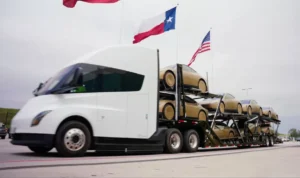
In a notable update, Musk provided the first specific timeline for Full Self-Driving (FSD) integration into the Tesla Semi. He stated that autonomous trucking capabilities are expected to be functional by early 2027. Musk explained that the delay in Semi autonomy was a strategic choice to focus the software engineering team on the high-volume Model 3 and Model Y fleets.

"There is a really serious shortage of truckers," Musk noted, framing the autonomous Semi as a solution to supply chain bottlenecks. Despite this, the Semi’s volume production has been delayed as Tesla waits for the ramp-up of 4680 battery cell production in Nevada.
Optimus Humanoid Robot:
Musk claimed that Optimus is already performing basic tasks in Tesla’s factories, but commercial availability for external customers is not expected until late 2027 or 2028. The high R&D costs associated with Optimus are a significant portion of the $5.8 billion capex that spooked the market.
Historical Context of the Decline
The 14.5 percent drop on July 23 stands as a significant historical marker for Tesla. To put this move in perspective, the company’s largest single-day decline occurred on September 8, 2020, when shares fell 21.1 percent after the stock was unexpectedly excluded from the S&P 500 index. Other major declines include a 19.3 percent drop in January 2012 and an 18.6 percent plunge in March 2020 during the initial COVID-19 market shock.
The July 2026 decline is unique because it was driven not by external macro factors or index exclusions, but by fundamental concerns over the sustainability of Tesla’s business model as it transitions from an automaker to an AI robotics firm. The $140 billion loss in market value in one day is equivalent to the total valuation of several legacy automakers combined, illustrating the immense scale at which Tesla now operates.
Broader Ecosystem: The SpaceX Influence and Big Tech Ties
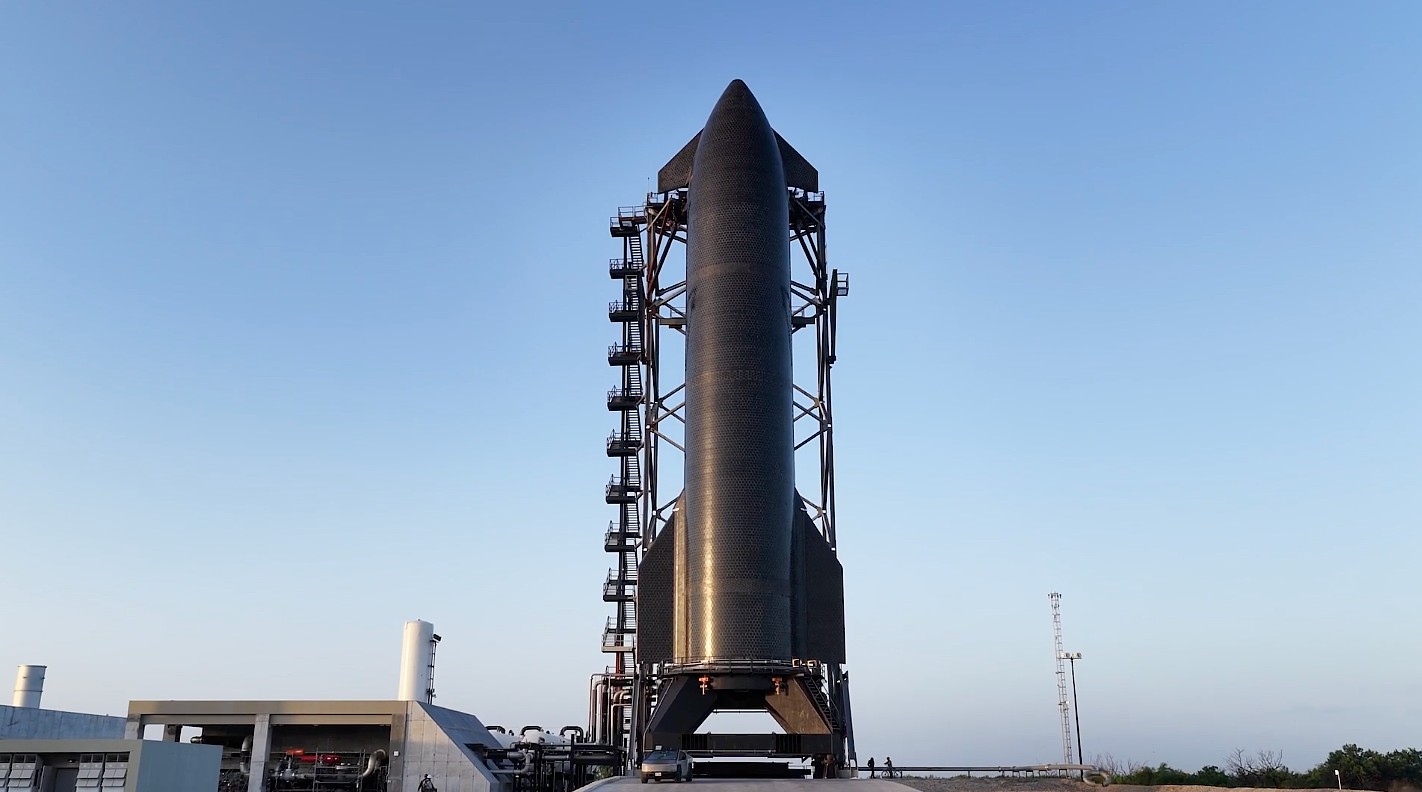
The volatility in Tesla’s stock comes at a time when the broader "Musk Economy" is undergoing a massive transformation. Coincidentally, on the same day as Tesla’s crash, Alphabet Inc. (Google’s parent company) disclosed in its quarterly filing a $94.1 billion equity stake in SpaceX.
SpaceX, which recently completed a blockbuster IPO, has become a cornerstone of Alphabet’s investment portfolio. This disclosure served as a reminder of the massive potential for Musk-led ventures to generate generational wealth, yet it also highlighted the contrast between SpaceX’s successful transition to a public powerhouse and Tesla’s current struggle to maintain its "tech-multiple" valuation.
Analysts suggest that the massive Alphabet stake in SpaceX—valued at nearly 100 times the original 2015 investment—shows that "patient capital" can reap rewards in the Musk ecosystem. However, Tesla investors are currently grappling with whether that same patience is warranted for the Cybercab and Optimus, or if the automotive core is being neglected in favor of "moonshot" projects.
Analyst Reactions and Market Implications
Market analysts remain divided on Tesla’s path forward. Bullish analysts argue that the record deliveries and 26 percent revenue growth prove that Tesla is still the "king of EVs" and that the current margin compression is a temporary "growing pain" necessary for long-term AI dominance. They point to the energy storage business, which saw strong deployment growth in Q2, as a burgeoning second pillar of revenue.

Conversely, bearish analysts contend that Tesla is no longer a growth stock in the traditional sense. With an operating margin of 1.4 percent, Tesla is currently operating with thinner profitability than many of the legacy "Detroit Three" automakers it once sought to disrupt. The negative free cash flow is seen by some as a red flag that could lead to a capital raise if the autonomous transition takes longer than expected.
Conclusion: A Pivot Point for the EV Pioneer
The events of July 23, 2026, represent a pivotal moment for Tesla. The company has successfully scaled to nearly 2 million vehicles per year, but the financial rewards of that scale are being re-invested into a high-stakes bet on the future of autonomy.
For the remainder of 2026, investors will likely focus on three key metrics: the stabilization of automotive margins, the progress of 4680 battery cell production, and any concrete regulatory wins for the FSD software. While Tesla has historically recovered from sharp declines to reach new all-time highs, the magnitude of the current sell-off suggests that the market is demanding more than just vision—it is demanding a return to profitability and a clear, verifiable timeline for the autonomous future.