How a Decade of Digital Footprints Led Investigators to the Mastermind Behind the Qilin Ransomware Empire

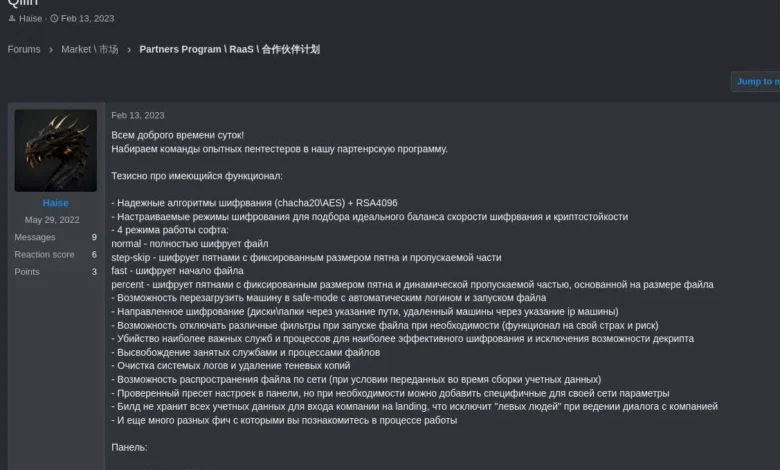
The murky underbelly of international cybercrime has once again suffered a major operational setback as threat intelligence researchers peeled back the layers of anonymity protecting one of the globe’s most prolific digital extortion syndicates. Qilin, a ruthless Russia-based ransomware-as-a-service (RaaS) operation that has claimed at least 365 victim organizations over a recent three-month period, has seen its administrative mastermind unmasked. Despite implementing standard operational security protocols designed to obscure their true identities, a trail of digital breadcrumbs spanning more than a decade has ultimately tied the top-tier ransomware boss to a 36-year-old resident of St. Petersburg, Russia.
The unmasking of the individual known in underground circles as "Haise" marks a significant milestone in the ongoing cat-and-mouse game between global cybersecurity agencies, private threat intelligence firms, and Eastern European threat actors. By cross-referencing historical forum memberships, breached state databases, messaging platform identifiers, and linguistic habits, security investigators have constructed a comprehensive profile of the man alleged to be at the helm of Qilin.
An Industrialized Extortion Machine
Operating continuously since September 2022, Qilin has rapidly ascended to become the most industrious ransomware affiliate program in the global threat landscape. According to a comprehensive threat intelligence report published by cybersecurity firm NCC Group, the syndicate’s output dwarfs many of its competitors. The group’s operational model relies on a lucrative revenue-sharing structure, offering participating affiliate hackers at least 80 percent of any extortion payout extracted from compromised entities.
Qilin pioneered and aggressively utilizes the "double extortion" methodology. Rather than merely deploying file-encrypting malware to paralyze corporate networks, the gang’s operatives systematically exfiltrate sensitive proprietary data, intellectual property, and personally identifiable information prior to encryption. Victims are then faced with a coercive ultimatum: pay the exorbitant ransom demand or watch their confidential files leaked on public dark web forums.
Unlike many Russian-speaking cybercrime cartels that maintain strict linguistic and geographic barriers, Qilin has actively courted English-speaking affiliates. Haise has openly boasted on encrypted messaging channels like Telegram about forging partnerships with notorious cybercrime ecosystems, including the prolific credential-theft collective Scattered Spider and the RansomHub enterprise.
The Anatomy of an Opsec Failure
Even the most sophisticated cybercriminals frequently fall victim to the cumulative weight of their own digital histories. In the realm of operational security (opsec), changing monikers and rotating handles is standard practice. Threat actors routinely shed old aliases to distance themselves from past mistakes or early, less cautious phases of their illicit careers. However, survival in the elite tiers of the cybercrime underground often requires applicants to prove their pedigree. When attempting to join exclusive, vetted forums, members must frequently reference their past aliases to vouch for their trustworthiness.
This exact mechanism catalyzed the unraveling of Haise’s true identity. According to data indexed by the cyber intelligence platform Intel 471, an operator using the handle Haise applied for membership in June 2022 to RAMP, a heavily guarded Russian-language cybercrime forum specifically established as a sanctuary for ransomware affiliate programs. Direct messages recovered from RAMP—which was ultimately seized by the Federal Bureau of Investigation (FBI) in January 2026—reveal that the forum’s administrator approved Haise’s application while explicitly linking the handle to a Telegram username: @Alexbigboss44.

A Chronological Evolution of Cybercrime
A historical tracing of the digital footprint associated with @Alexbigboss44 demonstrates a clear trajectory from low-level digital arbitrage to enterprise-level cyber extortion.
Between 2018 and 2019, telemetry from threat intelligence platforms Flashpoint and IntelHawk indicates that the individual behind the alias operated primarily as a novice credit card fraudster and traffic broker. During this phase, the user focused heavily on the acquisition of compromised Facebook logs and fraudulent Google Ads accounts designed to fuel online gambling schemes and deceptive advertising campaigns.
By 2020, the scope of operations expanded significantly. Using the nickname "Rjun," the same individual became a prolific participant across prominent Russian cybercrime forums, including Exploit, XSS, Darkmarket, Verified, and Zloy. During this period, records show the user increasingly gravitated toward malware distribution, botnet management, and illicit payment infrastructure.
The Convergence of Identities and State Database Breaches
The bridge connecting the modern Qilin administrator Haise to the legacy accounts Rjun and Alexbigboss44 was established through advanced threat intelligence analysis. Researchers utilizing AI-based de-anonymization platforms capable of analyzing historical usernames and stylometric signals mapped the behavioral patterns across these distinct identities.
Intel 471 records indicate that when Rjun originally registered across Russian crime forums such as Darkmarket and Verified, the user consistently utilized a specific email address: [email protected]. Identity threat protection firm Spycloud subsequently discovered that this email address had historically utilized the password "Rjun132."
When this email address was queried against breach tracking records maintained by Constella Intelligence, it appeared in a massive data leak originating from gosuslugi.ru, the official digital portal for state and municipal services in the Russian Federation. The Gosuslugi platform suffered a severe security breach in late 2025, which reportedly exposed more than 20 million citizen records containing full legal names, dates of birth, and registered mobile telephone numbers.
According to the leaked state registry data, the email address [email protected] formally belongs to Aleksey Mikhailovich Yakovtsev, a 36-year-old native of Murmansk who resides in St. Petersburg.
Corroborating the Dossier

Further technical validation cemented Yakovtsev’s connection to the Qilin enterprise. Flashpoint records indicate that the Telegram account linked to Haise utilized User ID 118329521, a profile that has generated more than 5,000 messages since 2018. When this specific Telegram ID is cross-referenced within breach intelligence databases, it maps directly to the Russian mobile phone number +79602347275.
Pivoting on this telephone number reveals additional administrative oversight. According to IntelHawk’s analysis, the mobile number is officially registered to Yakovtsev’s biological sister, though Aleksey frequently utilized her contact information and alternate email addresses—including [email protected] and [email protected]—to register across various web services.
Furthermore, flight manifests secured from Russian travel agencies that experienced historical data breaches corroborate Yakovtsev’s physical movements. Travel records indicate that Aleksey Mikhailovich Yakovtsev, born August 18, 1990, completed multiple flights between St. Petersburg and Murmansk between 2013 and 2014. Educational records obtained from Russia’s federal education oversight agency, Rosobrnadzor, additionally confirm that Yakovtsev completed his formative schooling in Murmansk before pursuing higher education, ultimately earning a master’s degree in computing and information systems.
More recent domestic travel logs show that while Yakovtsev has maintained a low international profile—having no recorded commercial air travel outside of the Russian Federation—he frequently commutes between St. Petersburg and Sochi, Russia’s premier Black Sea resort city located approximately 1,200 miles to the south.
Broader Implications for Global Cyber Enforcement
Independent investigations conducted by anonymous open-source intelligence groups, such as the widely recognized threat-tracking account GangExposed, arrived at identical conclusions regarding Haise’s real-world identity, publicly validating the efficacy of platform-assisted de-anonymization.
Attempts by journalists and security researchers to contact Mr. Yakovtsev via his known email addresses and telephone numbers were unsuccessful. Given his physical location within the Russian Federation, where local authorities traditionally provide a safe haven for domestic cybercriminals who refrain from targeting domestic infrastructure, Yakovtsev faces an exceedingly low immediate risk of local arrest or extradition to Western law enforcement jurisdictions.
Nevertheless, the unmasking of Qilin’s administrator underscores a critical reality for the leaders of enterprise ransomware groups: absolute anonymity is a transient state. Even when operating within protected geographic boundaries, the accumulation of digital exhaust, linguistic markers, historical registration data, and the inevitable fallout from massive state-level database breaches continue to narrow the gap between anonymous monikers and physical accountability. As threat intelligence platforms grow increasingly sophisticated at correlating fragmented underground identities, the administrative architects of global ransomware cartels will find their operational security margins shrinking by the day.