Google Pixel 11 Pro vs. Pixel 10 Pro Review: Is the Latest Flagship Worth the Price Gap?

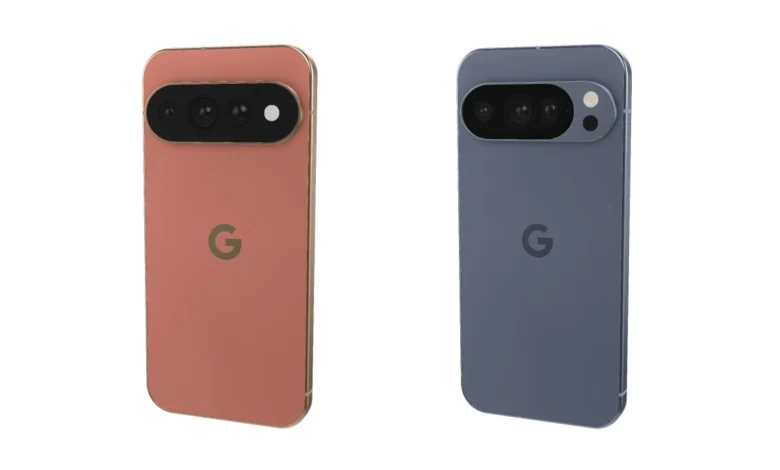
The smartphone market has officially entered its latest cycle with the commercial launch of the Google Pixel 11 series, prompting both new buyers and loyal upgraders to carefully evaluate whether generational leaps justify widening price gaps. At the center of this debate is a high-stakes comparison between Google’s newest flagship offering, the Google Pixel 11 Pro, and its predecessor, the heavily discounted Google Pixel 10 Pro. With base models separated by a substantial financial margin—the Pixel 11 Pro starting at approximately €1,100 for a 256GB configuration, compared to the much more accessible €770 price tag now attached to the 128GB Pixel 10 Pro—consumers are forced to weigh incremental hardware refinements against pragmatic value.
Design, Build Quality, and Ergonomics
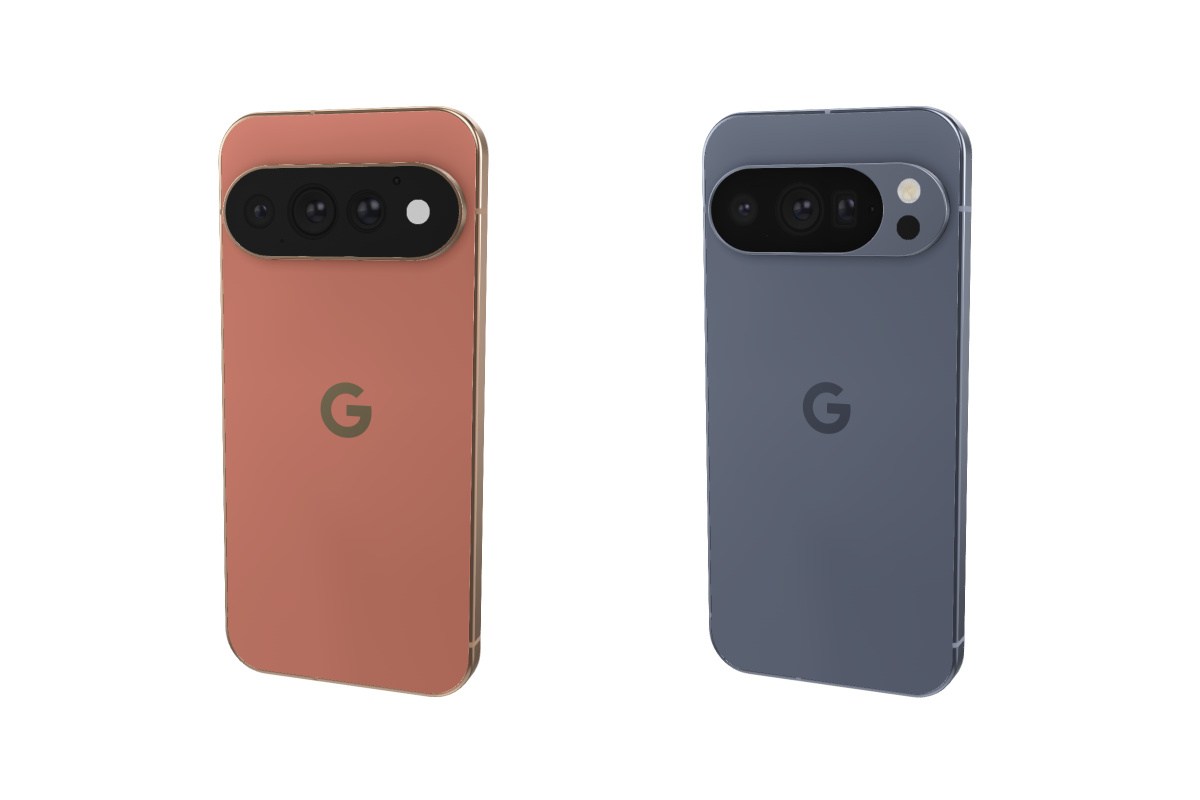
A side-by-side physical inspection of the Google Pixel 11 Pro and the Pixel 10 Pro reveals a striking architectural continuity. Google has maintained an identical footprint, with both smartphones sharing virtually identical dimensions, weight distributions, and tactile profiles. Structurally, both devices rely on premium aerospace-grade aluminum frames sandwiched between resilient Gorilla Glass Victus 2 panels on both the front and back.

Durability credentials remain completely untouched between the two generations. Both flagships boast an official IP68 dust and water resistance rating, ensuring they can withstand submersion and harsh environmental elements to the exact same degree. Beyond subtle variations in the color palettes offered at launch and minor edge-to-edge glass refinements around the rear camera housing, discerning the two devices purely by touch or sight is an exercise in futility. Consequently, consumers prioritizing ergonomic comfort, build materials, or structural resilience will find an absolute parity between the 2025 and 2026 models.

Display Technology and Visual Performance
Turning to the visual interface, both the Pixel 11 Pro and the Pixel 10 Pro utilize identical 6.3-inch LTPO OLED display panels. These screens feature a sharp resolution of 1280 x 2856 pixels, support a fully dynamic 120Hz refresh rate capable of scaling seamlessly down to 1Hz based on onscreen content, and offer full compliance with HDR10+ and Android Ultra HDR standards across mainstream applications.

Official manufacturer specifications hinted at a marginal theoretical advantage for the newer model, citing a maximum automatic brightness of 2,400 nits and a peak brightness of 3,600 nits for the Pixel 11 Pro, compared to 2,200 and 3,300 nits respectively for the Pixel 10 Pro. Rigorous laboratory display testing confirmed these figures, registering actual maximum automatic brightness values of 2,426 nits for the Pixel 11 Pro against 2,351 nits for the Pixel 10 Pro, with peak brightness readings landing at 3,283 and 3,165 nits respectively. In practical, real-world usage scenarios, this fractional variance is entirely imperceptible to the human eye, meaning both panels deliver exceptional color accuracy, deep blacks, and blinding outdoor legibility.

Processing Architecture, CPU Benchmarks, and GPU Realities
Under the hood lies the most polarizing architectural divergence between the two generations: Google’s proprietary Tensor G6 chipset versus last year’s Tensor G5. Built on the same advanced 3-nanometer manufacturing process, the Tensor G6 introduces a radical design shift by reducing the total core count to a 7-core CPU configuration, omitting one core entirely in pursuit of enhanced thermal efficiency and artificial intelligence processing headroom.

The Tensor G6 deploys a layout consisting of one high-performance ARM C1-Ultra core clocked at 4.1 GHz, four ARM C1-Pro cores running at 3.4 GHz, and two additional ARM C1-Pro cores capped at 2.65 GHz. This represents a significant upward clock-speed adjustment over the Tensor G5’s architecture, which featured a 3.78 GHz Cortex-X4 prime core accompanied by lower-clocked utility cores. Consequently, benchmark evaluations demonstrate a substantial generational leap in computational throughput. The Pixel 11 Pro outpaces its predecessor by more than 20% in multi-core processing workloads and approaches a 20% improvement in single-core tasks, alongside notable gains in composite benchmarking suites like AnTuTu 11. Google officially attributes this shift to a 50% increase in raw AI computational power.

Conversely, graphical performance tells a more complicated story. While the Tensor G5 incorporated a modern Series D graphics processing unit, the newer Tensor G6 utilizes an older Imagination Technologies IMG CXTP-48-1536 (Series C) GPU architecture. While Google successfully optimized game compatibility at launch to eliminate historical stuttering, the new GPU lacks native ray tracing support and lags behind competing Android processors in raw gaming headroom. Sustained performance metrics reveal that both devices throttle similarly under prolonged thermal stress, maintaining roughly 60% of their peak CPU capacity and 70% of their GPU speed.

Memory configurations also present a trade-off. The base Pixel 11 Pro arrives with 256GB of storage paired with 12GB of RAM, while its higher-tier 512GB and 1TB variants scale up to 16GB of RAM. In contrast, the Pixel 10 Pro starts at a smaller 128GB capacity but equips every single storage tier—including the entry-level model—with a generous 16GB of RAM.

Battery Longevity and Charging Capabilities
Energy management is an area where the architectural efficiency of the Tensor G6 yields measurable dividends. The Pixel 11 Pro houses a 4,850 mAh battery cell, representing a negligible 20 mAh reduction compared to the 4,870 mAh unit found inside the Pixel 10 Pro. Despite the fractional capacity shrink, the newer processor’s optimized core distribution translates into superior endurance.

In standardized active use testing, the Pixel 11 Pro achieved an impressive Active Use Score of 15 hours and 38 minutes, outperforming the Pixel 10 Pro by a decisive margin of 3 hours and 33 minutes. While voice call and web browsing longevity remained closely matched, the newer model demonstrated dramatic improvements in video streaming endurance and sustained gaming stamina.

Charging speeds, however, remain largely static. Both smartphones support 30W wired charging via USB Power Delivery. Although Google introduced a new "Extreme Charging" mode on the Pixel 11 series—designed to accelerate power delivery when battery levels drop below 50%—real-world charging velocity shows no dramatic improvement over the previous generation. The one notable upgrade is found in wireless charging: the Pixel 11 Pro supports robust 25W wireless power delivery when paired with compatible Qi2.2 magnetic chargers, doubling the 15W wireless threshold of the Pixel 10 Pro.

Audio Performance and Acoustic Profile
Acoustic hardware remains consistent, with both devices employing a hybrid stereo speaker configuration that pairs a dedicated downward-firing primary loudspeaker with the telephone earpiece acting as the secondary channel. Loudness benchmarks indicate that the Pixel 11 Pro is fractionally quieter than its predecessor, landing comfortably within a "Good" evaluation tier. However, audio fidelity has seen a subtle refinement, delivering a richer midrange presentation and a slightly tighter bass response during media playback.

Comprehensive Camera System and Imaging Analysis
Both generations rely on a familiar triple-lens rear camera array comprising a primary wide-angle sensor, an ultrawide module, and a dedicated telephoto lens. However, the Pixel 11 Pro introduces hardware adjustments to its telephoto setup, upgrading to a larger 1/1.95-inch sensor compared to the 1/2.51-inch optical format used on the Pixel 10 Pro. Despite this larger physical footprint, the minimum focusing distance has unfortunately increased to approximately 39 centimeters. The primary 50-megapixel 1/1.3-inch sensor and the ultrawide 50-megapixel module remain largely unchanged.

In daylight conditions, both flagships capture images that strictly adhere to Google’s signature computational photography aesthetic. The Pixel 11 Pro delivers marginally finer detail structures, cleaner edge definitions, and slightly more restrained artificial sharpening algorithms. Color science leans fractionally warmer on the 2026 flagship, though differences are subtle. At intermediate 2x and high-magnification 5x zoom levels, the Pixel 11 Pro manages complex textures and man-made structures with superior composure, avoiding the aggressive over-sharpening occasionally visible in Pixel 10 Pro shots.

Low-light performance yields a similar narrative. Primary sensors on both devices handle nocturnal environments exceptionally well, though the Pixel 11 Pro occasionally exhibits an excess of warmth in dark scenes. Interestingly, direct scrutiny of ultrawide low-light samples revealed that the older Pixel 10 Pro occasionally captures sharper, more resolved images than its successor—an unexpected anomaly confirmed across multiple hardware samples.

Video recording capabilities are largely matched, with both models supporting 4K capture at 60 frames per second across all focal lengths and cloud-assisted 8K video at 30 fps. The primary differentiating factor is that the Pixel 11 Pro extends HDR processing up to 4K at 60 fps, whereas the Pixel 10 Pro restricts 4K HDR recording to 30 fps.

Market Implications and Final Verdict
The launch of the Google Pixel 11 Pro underscores a broader trend within the contemporary mobile industry: iterative upgrades arriving at escalating price points. The Pixel 11 Pro is an undeniably accomplished flagship, bringing genuine improvements in multi-core processing speed, AI compute overhead, battery longevity, 25W wireless charging, and refined daylight camera rendering.

Yet, the market context heavily favors the previous generation. The Google Pixel 10 Pro offers nearly identical industrial design, display quality, audio presentation, and operating system longevity at a heavily discounted price point. Furthermore, its inclusion of 16GB of RAM across base models and an arguably more versatile GPU configuration ensures it remains a formidable daily driver.

For consumers weighing their options, the premium attached to the Pixel 11 Pro is difficult to justify unless specific features—such as 4K60 HDR video recording or maximum battery endurance—are absolute prerequisites. For the vast majority of buyers, capitalizing on current price reductions for the Pixel 10 Pro represents the more pragmatic and financially sound investment.