Nvidia Board of Directors Approaches Arm CEO Rene Haas as Potential Successor to Jensen Huang

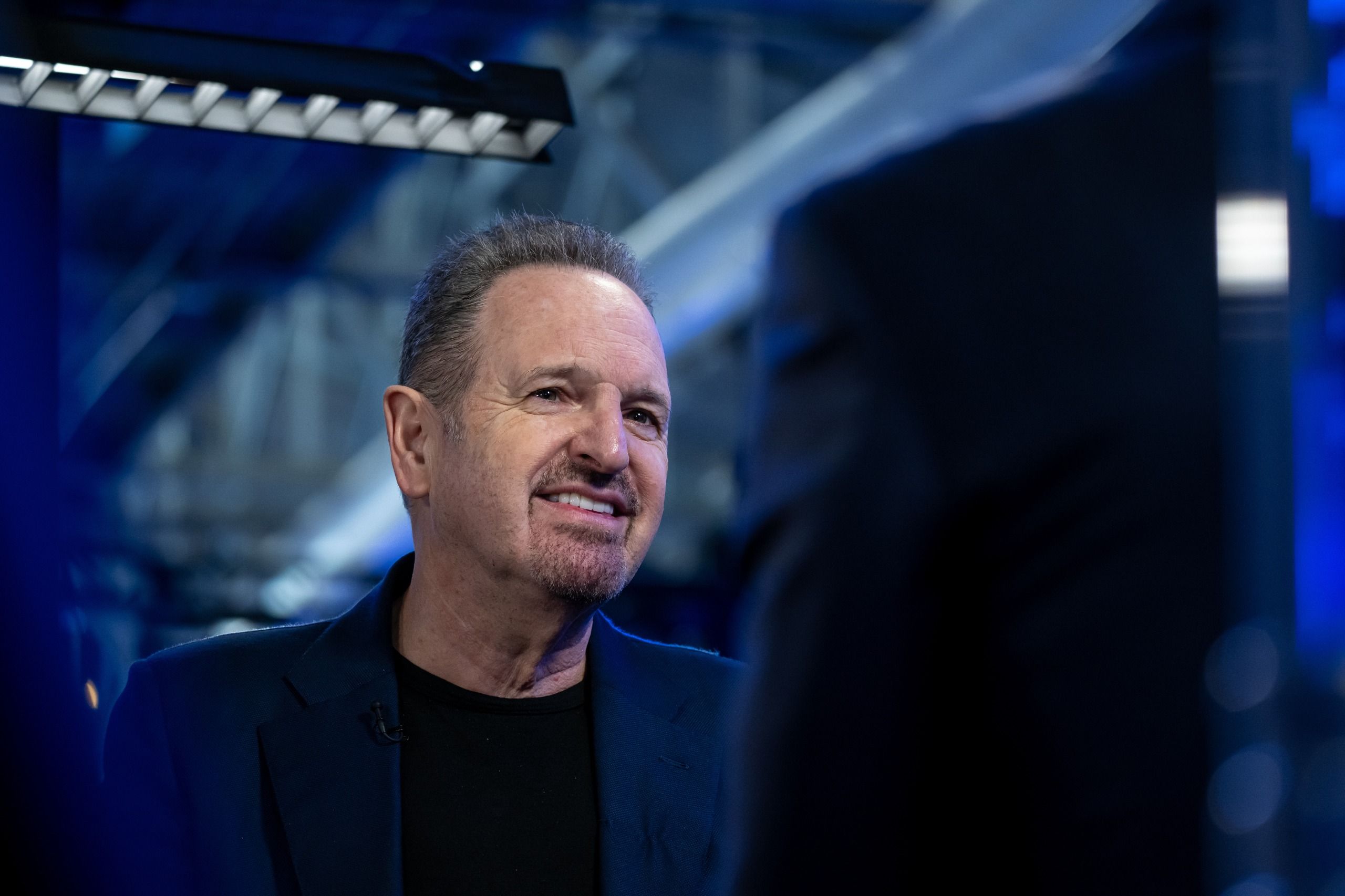
Nvidia’s board of directors has reportedly approached Arm Chief Executive Officer Rene Haas as a prospective successor to long-serving co-founder and CEO Jensen Huang. According to sources familiar with the matter cited by the Financial Times, Haas has emerged as one of several high-profile candidates being evaluated to lead the semiconductor giant when Huang eventually steps down. While the discussions highlight early-stage succession planning at one of the world’s most valuable technology companies, it remains uncertain whether Haas will receive a formal offer or ultimately choose to leave Arm Holdings to take the helm at Nvidia.
The revelation underscores the critical importance of long-term strategic planning for Nvidia, a company whose meteoric rise has made it the epicenter of the artificial intelligence boom. Jensen Huang, who co-founded Nvidia in 1993, has guided the firm from a niche graphics card manufacturer into a trillion-dollar juggernaut powering the global AI revolution. As Nvidia’s market capitalization has shattered records—briefly surpassing major technology stalwarts to contend for the title of the world’s most valuable publicly traded company—the question of succession has naturally become a focal point for investors, analysts, and the company’s board of directors.
Background Context: The Intertwined Histories of Nvidia and Arm
The reported outreach to Rene Haas is particularly notable given the deeply intertwined corporate histories of Nvidia and Arm, as well as their recent regulatory and commercial entanglements. In September 2020, Nvidia announced a landmark agreement to acquire Arm from Japanese conglomerate SoftBank Group for $40 billion. The blockbuster deal was envisioned by Huang as a way to create the premier computing company for the age of artificial intelligence, combining Nvidia’s accelerated computing prowess with Arm’s ubiquitous mobile chip architecture.
However, the proposed acquisition faced immediate and fierce opposition from global antitrust regulators and major technology competitors. Critics argued that combining Nvidia—a dominant force in graphics and AI hardware—with Arm, whose semiconductor designs are licensed to virtually every major smartphone maker and numerous other tech giants, would create an insurmountable bottleneck in the global supply chain. Competitors raised concerns that Nvidia might favor its own hardware or restrict access to Arm’s foundational intellectual property.
Following nearly a year and a half of intense regulatory scrutiny from the U.S. Federal Trade Commission, the European Commission, and the UK’s Competition and Markets Authority, the deal collapsed in February 2022. Nvidia and SoftBank mutually agreed to terminate the transaction, citing significant regulatory hurdles that made completion impossible.
Despite the failure of the acquisition, the relationship between Nvidia and Arm remained cooperative. Arm subsequently pursued an initial public offering (IPO) on the Nasdaq in September 2023, a successful debut that solidified its status as an independent entity. Rene Haas, who took over as Arm CEO in February 2022 following the departure of Simon Segars, successfully steered the company through the turbulent post-acquisition landscape and the complex IPO process. Under Haas’s leadership, Arm has aggressively expanded beyond its traditional mobile stronghold into data centers, automotive applications, and artificial intelligence infrastructure—areas that directly overlap with Nvidia’s core markets.
Succession Planning at High-Stakes Technology Giants
The search for a potential successor to Jensen Huang reflects a broader trend among major technology corporations where visionary founders eventually prepare for transitions of power. Jensen Huang, currently in his early sixties, has shown no immediate signs of stepping down and continues to be actively involved in the day-to-day operations and strategic vision of Nvidia. Under his leadership, the company has capitalized on the generative AI boom, driven by massive enterprise and hyperscale data center demand for its specialized graphics processing units (GPUs), such as the H100 and the newer Blackwell architecture.
Nevertheless, corporate governance experts emphasize that boards of directors for trillion-dollar enterprises are obligated to maintain robust succession pipelines. Given the immense complexity of Nvidia’s business model—spanning hardware design, software ecosystems like CUDA, enterprise AI infrastructure, and geopolitical supply chain management—identifying a leader with the requisite technical acumen and executive experience is an extraordinarily difficult task.
Rene Haas’s background makes him a logical candidate for consideration. With decades of experience in the semiconductor industry, including leadership roles at Nvidia prior to his tenure at Arm, Haas possesses a deep understanding of both companies’ technological ecosystems. His time at Nvidia, where he spent seven years leading the company’s notebook graphics business unit before moving to ARM in 2004, gives him a unique insider’s perspective on Nvidia’s corporate culture and engineering-driven ethos.
Industry Implications and Market Analysis
Financial analysts and market observers have noted that any potential transition involving Rene Haas would carry significant strategic implications for the semiconductor industry. Arm’s business model relies on maintaining strict neutrality, licensing its instruction set architecture to hundreds of competing companies, including Apple, Qualcomm, Samsung, MediaTek, and even Nvidia itself.
If Haas were to be approached by Nvidia and should he ultimately decide to make the move, questions would inevitably arise regarding Arm’s perceived neutrality and leadership stability. However, analysts also point out that Haas is deeply respected by Wall Street and the broader technology sector for his stewardship of Arm through its IPO and subsequent growth in AI-adjacent markets.
Conversely, some industry watchers view the reports as indicative of standard executive scouting by corporate boards rather than an imminent leadership change. Nvidia has cultivated a deep bench of executive talent internally, including prominent leaders overseeing its data center, networking, and software divisions. Yet, the inclusion of an external candidate of Haas’s stature highlights the board’s willingness to look outside the organization for a leader capable of sustaining Nvidia’s unprecedented momentum in the post-Huang era.
Chronology of Events
- 1993: Jensen Huang co-founds Nvidia, serving as its CEO and guiding its growth from a gaming hardware developer to a dominant AI computing giant.
- September 2020: Nvidia announces a $40 billion agreement to acquire Arm Holdings from SoftBank Group.
- February 2022: Rene Haas is appointed CEO of Arm Holdings, succeeding Simon Segars shortly before the Nvidia-Arm acquisition is officially terminated due to regulatory pressure.
- September 2023: Arm successfully completes its initial public offering on the Nasdaq, establishing itself as a publicly traded independent company under Haas’s leadership.
- Current Period: Reports emerge from financial media indicating that Nvidia’s board of directors has approached Rene Haas as part of preliminary succession planning for Jensen Huang.
Outlook and Next Steps
As Nvidia continues to post record financial results driven by unprecedented demand for AI infrastructure, the focus on long-term governance remains a background priority for investors. Neither Nvidia nor Arm has issued official public statements confirming or denying the reports regarding succession talks.
Whether Rene Haas will emerge as a formal candidate or choose to remain at the helm of Arm Holdings depends on numerous factors, including the timeline of Jensen Huang’s eventual retirement and the strategic priorities of Nvidia’s board. For now, the reports serve as a reminder of the massive stakes involved in steering the companies that build the foundational hardware of the modern digital economy.