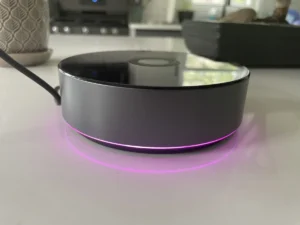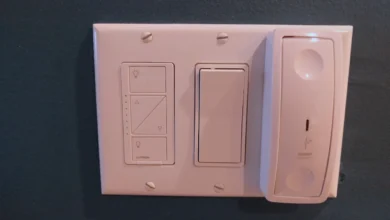
The smart home landscape is undergoing a significant evolution, proving that pre-existing wireless standards are far from obsolete despite the rising dominance of universal protocols like Matter. This resilience is underscored by the official market launch of Trident IoT, a specialized semiconductor and product-development company founded in April, which aims to design, manufacture, and support dedicated Z-Wave chips. Marking a major milestone for an ecosystem historically dependent on a single silicon provider, Trident IoT announced that it is only a month away from taping out its proprietary chips, with customer samples scheduled for distribution before the end of the year.
This development addresses a longstanding vulnerability within the Z-Wave ecosystem. For decades, manufacturers praised the mesh network for its exceptional reliability, secure pairing processes, and long battery life. However, this praise was consistently tempered by industry-wide frustration over a centralized supply chain. Zensys originally developed the technology and remained the sole silicon provider, a dynamic that persisted when Sigma Designs acquired Zensys in 2008. Although the acquisition raised industry hopes for a secondary source or a relaxation of proprietary licensing restrictions, Sigma Designs kept the core radio protocol tightly closed.
A Chronology of Openness and Standardization
The turning point for the protocol’s accessibility began in 2018, when Silicon Labs acquired Sigma Designs, absorbing the Z-Wave asset portfolio. Recognizing that the market was shifting toward open, interoperable ecosystems, Silicon Labs initiated a structural decentralization. In 2020, the company spun out the management of the technology to the independent Z-Wave Alliance, empowering a broader community of stakeholders to dictate the direction of the standard.
By 2022, the Z-Wave Alliance reached a watershed moment by announcing that the complete source code was publicly available for any interested developer, alongside successful efforts to port the underlying technology onto new silicon architectures. Despite these progressive strides, the intervening years had fundamentally transformed consumer smart home priorities. As major technology conglomerates coalesced around the Matter standard—leveraging Wi-Fi and Thread for local, IP-based device communication—mainstream discourse shifted away from legacy radio protocols. Consumers increasingly evaluated smart home devices based on seamless compatibility with prominent ecosystems like Amazon Alexa, Google Home, and Apple HomeKit, leading many industry analysts to predict the gradual fading of Z-Wave.
Market Resilience and Diverse Protocol Integration
Despite the momentum behind Matter and Thread, Z-Wave continues to command a robust market share, particularly within the professional security, access control, and high-end residential integration sectors. Commercial security installers rely heavily on the deterministic reliability and encrypted nature of Z-Wave mesh networks. Furthermore, the Z-Wave Alliance has aggressively innovated, most notably through the deployment of Z-Wave Long Range (Z-Wave LR), a protocol extension capable of transmitting encrypted signals over distances of up to a mile without the need for traditional repeaters.
Data released by the Z-Wave Alliance in March highlights the enduring commercial footprint of the technology, confirming that the ecosystem surpasses 4,000 certified interoperable devices globally. Mariusz Malkowski, founder and Chief Technology Officer of Trident IoT, noted that ongoing dialogues with hardware manufacturers indicate robust, sustained demand for expanding device portfolios built on the standard.

Rather than anchoring its business model exclusively to a single proprietary technology, Trident IoT has positioned itself as a comprehensive multi-protocol silicon and engineering firm. Malkowski emphasized that the company employs hardware and software engineers specializing in a wide array of Internet of Things (IoT) communication protocols. This multidisciplinary expertise enables Trident IoT to assist clients in developing products capable of bridging multiple environments, whether utilizing Z-Wave, Matter, Thread, ZigBee, or bespoke proprietary wireless networks. This strategy mirrors the broader industry evolution pioneered by companies like Silicon Labs, which transitioned into comprehensive, multi-protocol IoT semiconductor powerhouses.
Industry Reactions and Strategic Alignment
Crucially, the emergence of Trident IoT has not been met with market hostility from incumbent silicon providers. According to corporate disclosures, Silicon Labs has expressed support for Trident IoT’s market entry, even featuring statements from Silicon Labs representatives in promotional launch materials. This tacit endorsement points to a mutually beneficial commercial alignment.
For Silicon Labs, the presence of an independent secondary source for Z-Wave silicon mitigates long-standing customer anxieties regarding single-vendor dependencies, supply chain disruptions, and potential pricing inflexibility. By alleviating these systemic concerns, Trident IoT’s entry may successfully retain disillusioned developers within the Z-Wave fold, thereby fortifying the overall health of the ecosystem and sustaining long-term demand for compatible microcontrollers.
Broader Implications for the Evolving Smart Home
The debut of Trident IoT arrives at a time when the smart home market is recalibrating its architectural expectations. While the Matter protocol was heralded as the definitive cure for ecosystem fragmentation, its rollout has encountered notable technical hurdles, firmware delays, and complex vendor implementation challenges. Consequently, smart home hubs are experiencing a strong market resurgence, serving as physical and software-based translators capable of bridging diverse radio frequencies and network topologies.
For developers and enterprise clients, the availability of a secondary Z-Wave chip provider eliminates the existential risk of relying on a monopolized silicon pipeline. Combined with the expanded capabilities of Z-Wave LR—which addresses traditional mesh network limitations by enabling ultra-long-range sensor connectivity for distant outbuildings, perimeter security, and extensive outdoor property automation—the standard offers unique functional advantages that IP-over-Thread and Wi-Fi architectures cannot always replicate efficiently in dense physical environments.
While the proliferation of competing wireless communication protocols continues to evoke familiar industry ironies regarding standardization, the introduction of robust competition to the Z-Wave supply chain ensures that hardware manufacturers maintain viable strategic alternatives. As Trident IoT prepares to issue engineering samples ahead of its commercial rollout, the smart home industry demonstrates that mature, battle-tested technologies can successfully coexist, adapt, and secure their own specialized futures alongside modern universal frameworks.
Related posts: