Orcas Demonstrate Remarkable Hunting Strategy by Exploding Sunfish in Gulf of California

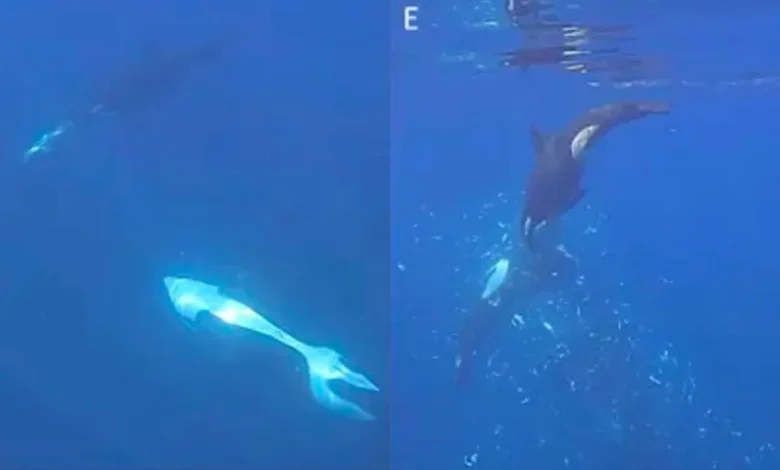
A recent series of underwater observations, culminating in a scientifically documented event in July 2024, has revealed a striking and previously under-documented hunting technique employed by orcas (Orcinus orca) in the Gulf of California. Marine biologist Kathryn Ayres captured remarkable footage of orcas deliberately ramming a sunfish with such force that the massive fish literally disintegrates into thousands of pieces. This behavior, detailed in a new study published in the journal Frontiers in Ethology, offers fascinating insights into the complex predatory strategies and potential social dynamics of these highly intelligent marine mammals.
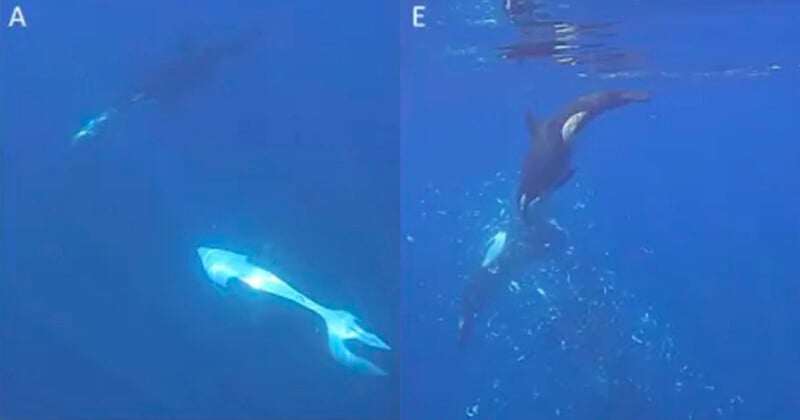
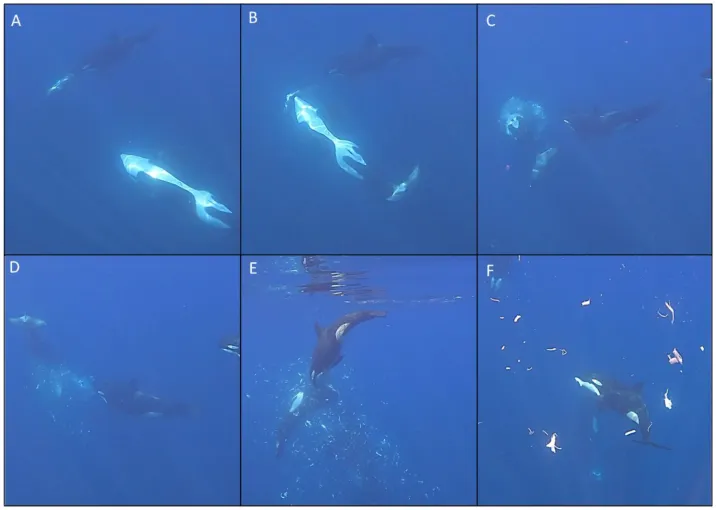
The initial sighting occurred during a shark diving expedition in the Gulf of California, a region renowned for its rich biodiversity and frequent encounters with apex predators. Ayres, alongside her research colleagues, observed a pod of orcas engaging with a dead sharptail sunfish. The footage clearly shows one orca meticulously holding the large, flattened fish in place, while another whale approaches at high speed, belly-up, delivering a powerful, concussive blow to its flank. The impact is described as producing a distinct "crunching sound," followed by the sunfish fragmenting into a cloud of debris. Ayres’ audible reaction of astonishment in the video underscores the dramatic and unexpected nature of this event.
A Calculated Disassembly: The Mechanics of the Attack
The sunfish, scientifically known as Masturus lanceolatus in this instance, is one of the ocean’s largest and heaviest bony fish. Adult sharptail sunfish can reach lengths of up to 10 feet (approximately three meters) and weigh over 4,000 pounds (about 1,800 kilograms). Their unique, laterally compressed anatomy, characterized by a broad, flattened body shape, appears to be a crucial factor in the effectiveness of the orcas’ ramming technique.
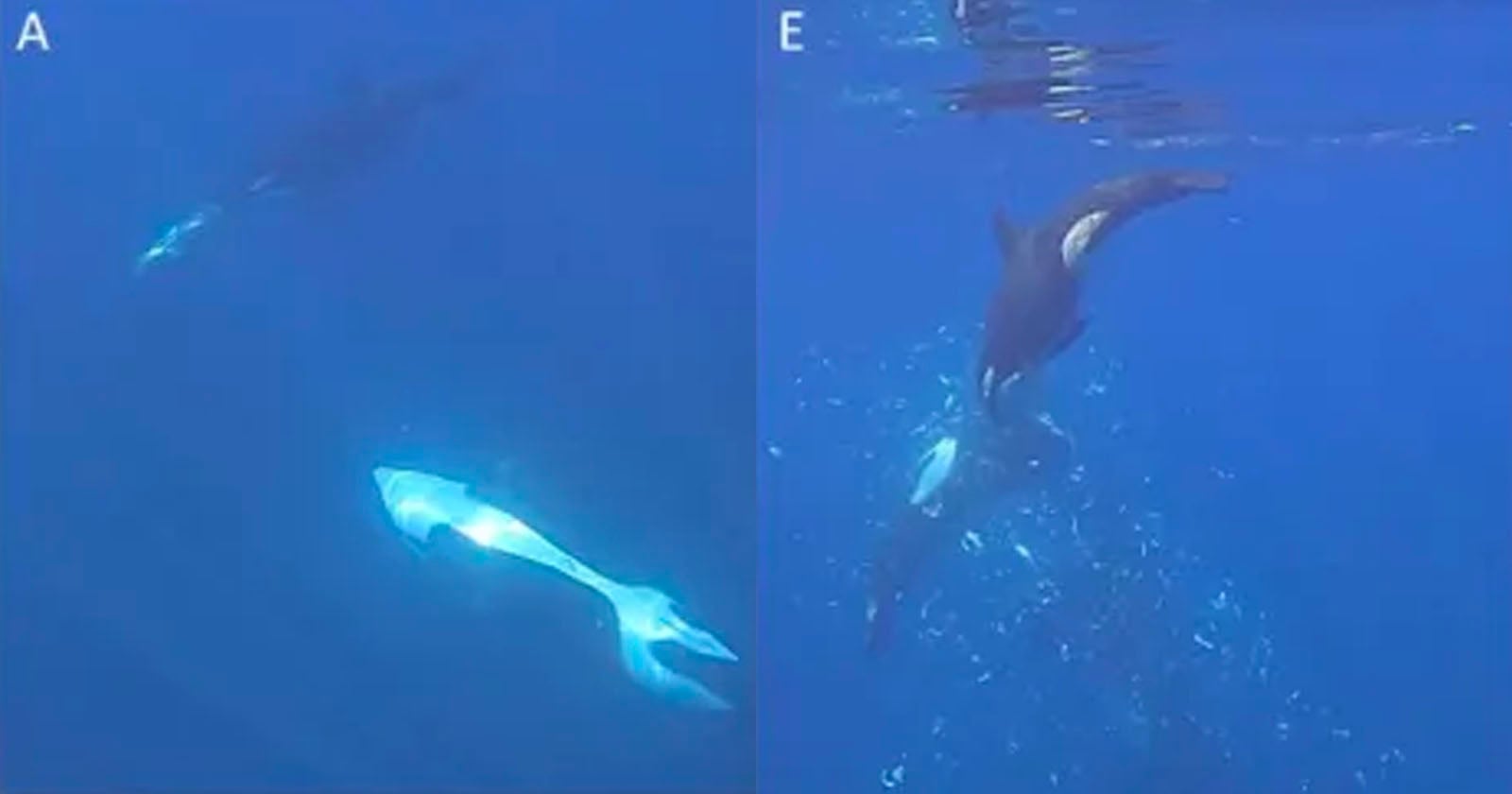
According to the research paper, the orcas had already removed the sunfish’s nutrient-rich internal organs prior to the observed ramming event. This suggests that the subsequent violent fragmentation of the carcass was not solely for immediate consumption of the most desirable parts. Instead, the researchers hypothesize that the deliberate destruction of the fish may serve multiple purposes, ranging from efficient dismemberment for communal feeding to potential play or demonstration of hunting prowess.
"Their bodies are laterally compressed," explained Ayres in an interview with CNN. "Once the nutrient-rich internal organs have been removed, the remaining tissues may be more accessible to rupture under high-impact ramming." This anatomical characteristic of the sunfish, combined with the orcas’ precise application of force, creates an explosive outcome that has captivated marine biologists.
Chronology of Discovery and Research
The documented behavior, while visually dramatic, is not an isolated incident. While Ayres’ footage from July 2024 provides the most detailed visual evidence to date, similar observations have been made previously, albeit with less explicit documentation of the "exploding" effect. The Frontiers in Ethology study consolidates these findings, presenting a growing body of evidence for this specialized hunting tactic.
- Previous Anecdotal Evidence: Reports and informal observations of orcas interacting with sunfish, sometimes involving forceful manipulation, have circulated within marine biology circles for some time. However, the precise mechanics and the dramatic fragmentation were not consistently captured or analyzed.
- July 2024 Expedition: Kathryn Ayres’ shark diving expedition in the Gulf of California proved pivotal. Her keen observational skills and the fortunate timing of her underwater filming allowed for the capture of the definitive footage that would later form the centerpiece of the scientific study.
- September 2025 Observation: A second, independent video capturing similar sunfish-ramming behavior was recorded by a tour operator in the Gulf of California in September 2025. This corroborating evidence further validated the existence and consistency of this hunting strategy. This footage, also shared in the research, depicts a comparable scenario: one orca stabilizing the sunfish while another executes a high-speed ram.
- Publication in Frontiers in Ethology (2026): The culmination of these observations led to the formal publication of the research paper, authored by Ayres and her colleagues. This peer-reviewed study provides the scientific framework for understanding the behavior, presenting data, analysis, and potential evolutionary explanations.
Contextualizing Orca Predatory Behavior
Orcas, often referred to as "killer whales," are the apex predators of the ocean and exhibit an astonishing array of hunting techniques, often tailored to specific prey and environments. Their intelligence, complex social structures, and the transmission of learned behaviors across generations contribute to this remarkable adaptability.
The sunfish-ramming behavior adds another layer to our understanding of their predatory repertoire, which includes:
- Specialized Hunting of Marine Mammals: Orcas are known for their coordinated attacks on seals, sea lions, and even larger whales. Techniques can involve wave-washing seals off ice floes or strategically herding prey.
- Fishing Strategies: In some regions, orcas have developed methods for "kelp-raking" to dislodge prey or "hooking" fish by deliberately snagging their dorsal fins.
- Play and Tool Use: The observed behavior might also be linked to orca’s known playful nature. Researchers have documented orcas tossing seals, playing with their prey, and even, famously, wearing dead salmon as "hats." This suggests that enjoyment or social signaling could be a component of the sunfish fragmentation, beyond mere sustenance.
- Communal Feeding: The ramming action could also be a highly efficient method for breaking down a large carcass into manageable pieces for distribution among a pod. This is particularly relevant for species like sunfish, which are significantly larger than typical fish prey.
Scientific Analysis and Implications
The study by Ayres and her team offers several key interpretations of the observed orca behavior:
- Facilitating Shared Feeding: The fragmentation of the sunfish into smaller, dispersed pieces could make it easier for multiple individuals within a pod to access and consume the meal, especially after the nutrient-dense organs have been removed. This would be crucial for larger pods with many mouths to feed.
- Potential for Play or Social Display: Given the orcas’ known complex social behaviors and inclination for play, the violent disintegration of the sunfish may also serve a non-nutritional purpose. It could be a form of practice for younger orcas, a display of strength and coordination, or simply an activity that provides amusement.
- Exploitation of Prey Anatomy: The researchers suggest that orcas may have learned through observation and experience that the specific anatomical structure of the sunfish, when combined with high-impact force, leads to this spectacular fragmentation. This highlights a sophisticated understanding of their prey’s physical properties.
The implications of this research extend beyond simply cataloging a new hunting method. It underscores the ongoing need for marine conservation efforts that recognize the intricate behaviors and ecological roles of marine predators. Understanding these complex interactions is vital for:
- Informing Conservation Strategies: Knowledge of specialized hunting techniques can inform how marine protected areas are designed and managed to ensure the availability of prey species and the preservation of critical foraging grounds.
- Advancing Understanding of Animal Cognition: The observed behavior provides further evidence of the high level of intelligence, problem-solving abilities, and social learning capabilities of orcas.
- Monitoring Ecosystem Health: The presence and behavior of apex predators like orcas can serve as indicators of the health of marine ecosystems. Changes in their hunting patterns or prey availability can signal broader environmental shifts.
Expert Reactions and Future Research
While the study itself provides a detailed analysis, the broader scientific community is likely to view these findings with significant interest. Dr. A. J. Gallagher, a co-author on the paper and a marine ecologist, has previously commented on the sophisticated predatory skills of orcas. The visual evidence provided by Ayres’ footage is expected to stimulate further research into the specific mechanics, energetics, and social contexts of this behavior.
Future research may focus on:
- Quantifying the Energy Expenditure: Analyzing the energetic cost and benefit of this hunting strategy.
- Investigating Social Learning: Determining how this behavior is transmitted and learned within orca pods.
- Broader Geographic Surveys: Identifying if this behavior is unique to the Gulf of California or if similar tactics are employed by orca populations in other regions.
- Comparative Anatomy: Further exploring the biomechanical properties of different fish species and how they might react to similar predatory pressures.
The remarkable footage and subsequent scientific analysis of orcas exploding sunfish serve as a powerful reminder of the boundless mysteries that still exist within our oceans and the extraordinary capabilities of their inhabitants. As research continues, our understanding of these magnificent creatures and their complex underwater world will undoubtedly deepen, offering further insights into the intricate web of marine life.