Adobe Max 2027 Sneaks Spotlight a Shift Toward Intelligent Automation Over Generative AI


The annual Adobe Max conference, held this year in Miami, Florida, served as the global stage for Adobe’s latest exploration into the future of creative software. While the event’s "Sneaks" session—a highly anticipated showcase of experimental technology—featured a heavy emphasis on generative AI, one particular demonstration captured the audience’s imagination in a way that suggests a significant pivot in user demand. Project Rinse Repeat, a tool designed to automate repetitive editing workflows, stood out as the only featured technology that eschews generative AI, signaling a potential shift in how creative professionals want to integrate machine learning into their daily routines.
The Evolution of the Adobe Max Sneaks
Adobe Max has long served as a bellwether for the creative industry. The Sneaks event, traditionally hosted by industry luminaries and Adobe engineers, provides a rare, transparent glimpse into the company’s R&D pipeline. Historically, these demonstrations act as a litmus test; when a prototype receives a standing ovation, it frequently transitions from a conceptual project to a core feature within the Adobe Creative Cloud suite.
This year’s event showcased 10 distinct projects, spanning the ecosystem of Adobe Photoshop, Lightroom, and the Firefly generative model. However, the omnipresence of generative AI—technology that creates new pixels based on text prompts—has begun to elicit a mixed response from the professional creative community. While generative tools are undeniably powerful for conceptual art and rapid prototyping, many working photographers and designers have expressed fatigue regarding tools that alter the fundamental composition of a photograph.
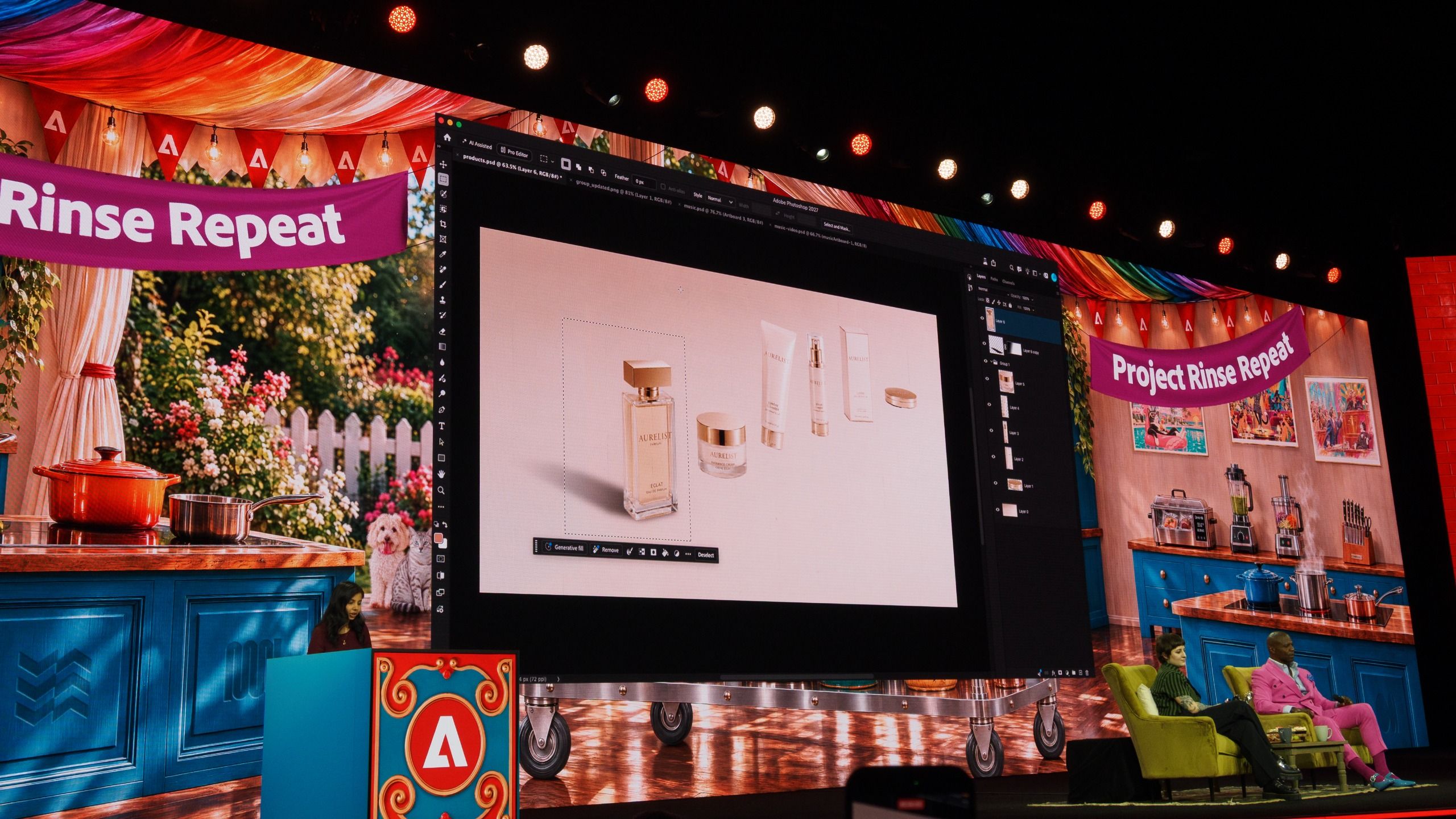
Project Rinse Repeat: A Non-Generative Breakthrough
Project Rinse Repeat, presented by Katelyn Chedraoui, addresses a perennial pain point for professional editors: the tedium of repetitive, manual tasks. Unlike generative AI, which relies on probability to hallucinate new data, Rinse Repeat utilizes a machine-learning-based context-aware system to observe and replicate a user’s specific editing workflow.
In the demonstration, Chedraoui exhibited the software’s capability to apply complex drop shadows to multiple objects within a composite image. The tool analyzed the light source and perspective of the primary object, then automatically generated matching shadows for every other element in the scene. Perhaps more impressively, the tool demonstrated advanced batch-processing capabilities on portraiture. By performing a single high-quality manual edit to remove blemishes from one face, the tool recognized the pattern and automatically applied the same correction to every other subject in a large group photo.
Crucially, the tool relies on the traditional building blocks of Photoshop—masks, healing brushes, and layers—rather than generating new content. This distinction is vital for professionals working in sectors such as high-end retouching, product photography, and journalism, where the integrity of the original captured data is paramount.
Contextual Intelligence vs. Generative AI
The distinction between traditional AI and generative AI (GenAI) is becoming a critical talking point in software development. While the industry has been flooded with tools that use Large Language Models (LLMs) and Diffusion models, Rinse Repeat represents a "middle path" of intelligent automation.
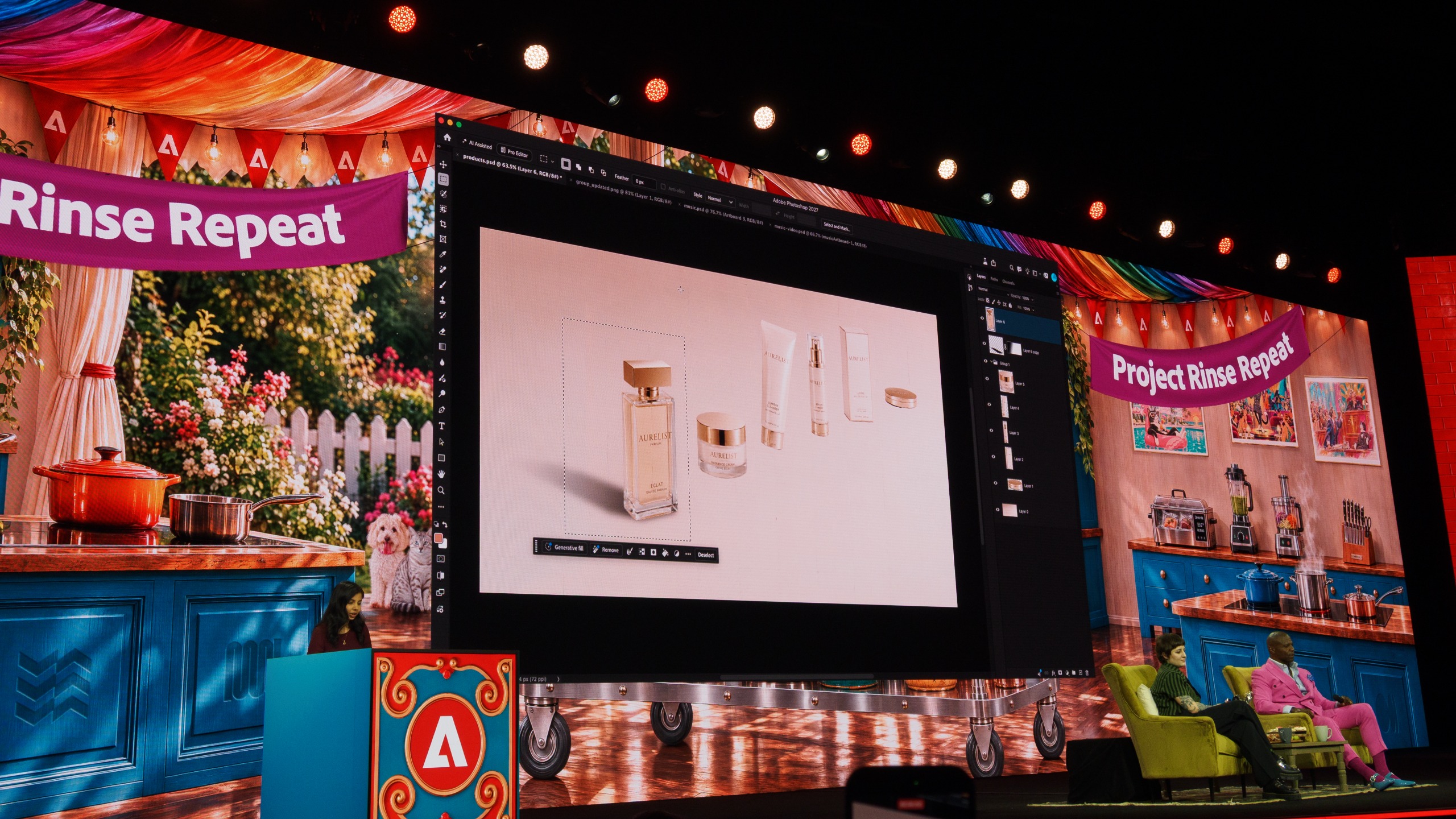
By utilizing AI to understand the intent of the user rather than to invent new pixels, Adobe is bridging the gap between legacy Photoshop "Actions" and modern automation. Photoshop Actions have existed for decades as a way to record and replay sequences of steps, but they have always been limited by their inability to "see" the image. If an Action was recorded to fix a blemish at a specific coordinate, it would fail if the subject’s face was positioned elsewhere in a different photo.
Rinse Repeat solves this by analyzing the context of the edit. It acknowledges the structure of the image, the lighting conditions, and the subject matter. This aligns with recent industry trends observed in 2027, where manufacturers, including camera producers, have begun integrating "hidden" AI into hardware to handle autofocus tracking, noise reduction, and white balance without fundamentally changing the image’s reality.
Broader Implications for the Creative Suite
The current roadmap for Adobe Photoshop seems to be bifurcating. On one side, there is the rapid expansion of GenAI-based tools, which are being pushed heavily into the public beta of the software. On the other side, Adobe is focusing on stability and efficiency. Interestingly, even the company’s push for "stability" is now AI-driven, with the latest version of Photoshop utilizing machine-learning crash reporting to identify and patch bugs before they affect the end user.
For the professional, this is a welcome development. The "AI Assistant" currently in public beta is designed to guide users through complex workflows, but it remains a tool of utility rather than creation. If Rinse Repeat is integrated into the stable version of Photoshop—as industry insiders expect it will be, given the enthusiastic crowd response—it will represent a major milestone in reducing "pixel-pushing" time.

Future Horizons: Deep Brush and Beyond
While Rinse Repeat was the star of the show, other demonstrations at Adobe Max 2027 highlighted the potential for non-generative, context-aware tools to reshape the workflow. Project Deep Brush, for example, showcased an adaptive brush that mimics the geometry and lighting of a surface. Unlike a standard brush that simply paints over pixels, Deep Brush detects whether it is painting on a wall, a piece of fabric, or human skin, adjusting its texture and interaction with the scene accordingly. This is a game-changer for digital artists, photographers adding tattoos, or designers placing graphics onto complex, real-world surfaces.
Furthermore, Project Sight Span, presented by Yiwei Hu, explored the capability of transforming a 2D JPEG into a 3D scene. This allows for the manipulation of camera angles in post-production, a feat that was previously impossible without a 3D scan or multiple images of the same subject.
Conclusion: A Signal from the Community
The overwhelming positive response to Project Rinse Repeat is a clear signal to software developers. While the novelty of generative AI remains a major draw for the casual user, the professional community is increasingly looking for tools that respect the sanctity of the original capture while eliminating the friction of repetitive tasks.
As the industry moves into 2028, the success of Adobe’s product strategy may well depend on this balance. If Adobe can continue to provide tools that act as "smart assistants" that amplify the user’s handiwork rather than replacing it, they will likely retain the loyalty of the professional creative sector. The message from Miami was clear: photographers and designers want to be faster, but they still want to be the ones behind the camera and the creative decision-making process. The future of software is not just about intelligence—it is about empowering the human intent that drives the creative process.