Sila Secures 300 Million Dollars to Scale Titan Silicon Production and Boost Electric Vehicle Range by 20 Percent

The global transition toward electric mobility is currently facing a dual challenge: the need for significantly longer driving ranges and the demand for much faster charging times. While much of the industry’s focus has remained on the long-term promise of solid-state batteries, U.S.-based battery materials startup Sila is proposing a more immediate revolution by optimizing the internal chemistry of existing lithium-ion technology. The company recently announced that its proprietary Titan Silicon anode material could provide electric vehicles (EVs) with a 20% increase in range without the need for larger, heavier battery packs. This breakthrough, supported by a new $300 million infusion of private funding, signals a major shift in how manufacturers may approach energy density and vehicle efficiency in the coming years.
The Evolution of Anode Chemistry: From Graphite to Silicon
For decades, the lithium-ion batteries powering everything from smartphones to high-performance electric sedans have relied on graphite as the primary material for the anode—the negative electrode of the battery. While graphite is stable and abundant, it has reached its theoretical limit for energy storage. To achieve higher performance, researchers have long looked toward silicon, a material capable of holding significantly more lithium ions than graphite.
Sila’s Titan Silicon is the culmination of 15 years of research and development. Unlike traditional graphite anodes, Sila’s silicon-carbon composite material allows for a dramatic increase in energy density. The company reports that its material can deliver an improvement of between 20% and 40% in battery energy density compared to standard graphite solutions. In practical terms, this means an EV that currently travels 300 miles on a single charge could potentially reach 360 miles using the same battery footprint. Alternatively, automakers could choose to maintain the current range while reducing the size and weight of the battery pack, leading to lighter, more agile vehicles and lower manufacturing costs.
Technical Hurdles and the Sila Solution
The primary reason silicon has not already replaced graphite is its physical volatility during the charging cycle. When lithium ions enter a silicon anode, the material swells by as much as 300% in volume. When the battery discharges, the silicon contracts. This repeated "breathing" causes the material to crack and degrade, leading to rapid battery failure.
Sila’s breakthrough involves a nano-engineered structure that accommodates this expansion. By creating a silicon-carbon composite, the company has developed a scaffold that contains the silicon, preventing the physical degradation that has historically plagued high-silicon anodes. This allows the battery to maintain its structural integrity over thousands of charge cycles, meeting the rigorous durability standards required by the automotive industry.
Beyond range extension, the Titan Silicon material also addresses "charging anxiety." Sila claims the material enables significantly faster charging speeds, although specific percentage improvements remain proprietary. However, real-world applications of similar silicon-rich technologies suggest that charging times from 10% to 80% could be slashed to nearly 10 minutes, approaching the convenience of a traditional gasoline fill-up.
Scaling Production at Moses Lake
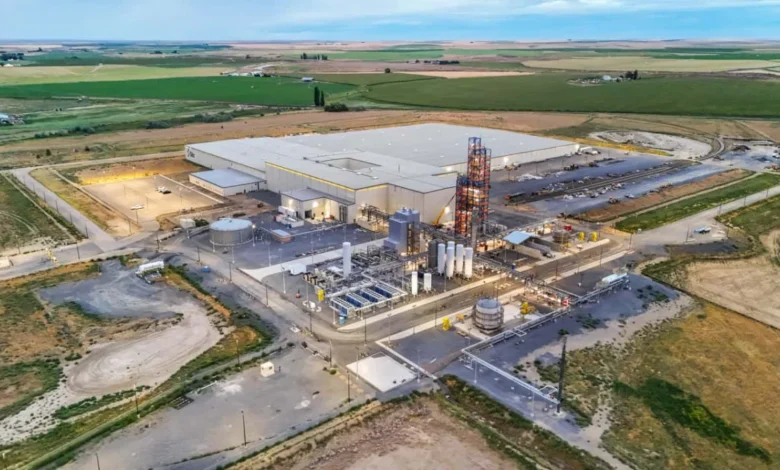
To transition from laboratory success to industrial-scale impact, Sila has secured $300 million in additional private funding. This capital is earmarked for the expansion of its manufacturing operations in Moses Lake, Washington. The 160-acre facility, which began initial operations in the fall of 2025, represents a critical piece of the domestic battery supply chain in the United States.
The company is currently ramping up production from an initial capacity of 2 gigawatt-hours (GWh). However, the roadmap for the Moses Lake site is far more ambitious. Sila intends to reach an annual production capacity of 250 GWh within the next five years. If achieved, this would make the Washington facility the largest anode production site in the world. At full capacity, the plant could supply enough material to power millions of electric vehicles annually, providing a localized alternative to the graphite supply chains currently dominated by overseas markets.
Strategic Partnerships with Mercedes-Benz and Panasonic
The commercial viability of Sila’s technology is underscored by its high-profile partnerships. Mercedes-Benz was an early investor and collaborator, announcing plans to incorporate Titan Silicon into the battery cells of its upcoming electric G-Class (the EQG). The luxury automaker view’s Sila’s material as a way to maintain the off-road capability and iconic boxy aerodynamics of the G-Class—which are traditionally inefficient—by packing more energy into a limited space.
More recently, Panasonic Energy, one of the world’s largest suppliers of EV batteries and a primary partner for Tesla, signed a contract to integrate Sila’s material into its next-generation battery cells. Panasonic’s involvement suggests that silicon-anode technology is moving into the mainstream, as the supplier seeks to provide higher-performance cells to a variety of global automotive clients.
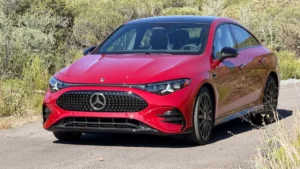
While Sila has not officially confirmed its involvement in the Mercedes-AMG GT 4-Door EV, that vehicle serves as a benchmark for what silicon-rich anodes can achieve. The AMG model features a battery with silicon-integrated anodes that support a peak charging power of 600 kW and a 10% to 80% charge time of just 11 minutes. This performance data provides a glimpse into the future of high-performance EVs equipped with Sila’s materials.
The Broader Industry Impact and Chronology of Development
The rise of silicon anodes comes at a time when the automotive industry is re-evaluating its long-term battery strategies. General Motors (GM) and other major manufacturers have indicated that the industry will likely see a gradual increase in silicon content in batteries over the next decade. This "evolutionary" approach is seen as more cost-effective and less risky than the "revolutionary" jump to solid-state batteries, which still face significant manufacturing and stability hurdles.
A Timeline of Sila’s Progress:
- 2011: Sila is founded by Gene Berdichevsky (Tesla’s seventh employee) and Gleb Yushin, a professor at Georgia Tech.
- 2011-2021: A decade of "stealth" research focuses on solving the expansion and contraction issues of silicon.
- 2021: Sila announces its first commercial product for use in wearable fitness trackers, proving the technology’s stability in consumer electronics.
- 2022: Mercedes-Benz confirms it will be the first automotive customer for Titan Silicon.
- 2024: Sila breaks ground on the expansion of the Moses Lake facility.
- 2025: Production begins at the Moses Lake site with an initial 2 GWh capacity.
- 2030 (Projected): Target for 250 GWh capacity and widespread adoption across multiple automotive platforms.
Economic and Environmental Implications
The move toward silicon anodes also carries significant economic weight. By increasing energy density, manufacturers can reduce the total amount of raw materials—such as cobalt, nickel, and lithium—required per vehicle to achieve a specific range. This reduction in material intensity can lead to lower vehicle weights, which in turn improves tire wear and reduces the energy required for propulsion, creating a virtuous cycle of efficiency.
Furthermore, the focus on U.S.-based manufacturing at the Moses Lake facility aligns with federal initiatives like the Inflation Reduction Act (IRA), which provides incentives for domestic battery production. By establishing a massive production footprint in Washington, Sila is positioning itself to help automakers meet the "domestic content" requirements necessary for federal EV tax credits.
Analysis of the Road Ahead
Sila’s $300 million funding round is a vote of confidence in the "silicon-first" strategy. While the 20% range increase is the headline-grabbing figure, the true value of Titan Silicon may lie in its ability to be integrated into existing lithium-ion manufacturing lines. Unlike solid-state technology, which requires entirely new factory designs and processes, Sila’s anode material is designed as a "drop-in" replacement. This significantly lowers the barrier to entry for battery manufacturers and hastens the time-to-market.
However, challenges remain. Scaling production from 2 GWh to 250 GWh in five years is an industrial feat that requires flawless execution and a stable supply of high-purity silicon. Additionally, Sila will face competition from other startups like Group14 Technologies and Amprius, both of which are also racing to commercialize silicon-anode solutions.
As the EV market matures, the competition will shift from simply "making an electric car" to "making the most efficient electric car." With its massive new production capacity and established tier-one partners, Sila is well-positioned to be at the center of this efficiency race. The next five years will determine if Titan Silicon becomes the new global standard for anodes, effectively ending the era of the pure graphite battery and ushering in a new age of high-density, fast-charging electric mobility.