The Strategic Value of Rapid-Fire Photography: Moving Beyond the Single Hero Shot

In the digital photography era, the ubiquity of high-performance mobile cameras and compact mirrorless systems has fundamentally altered how enthusiasts and professionals interact with their environments. While traditional photography education often emphasizes the "decisive moment"—a term popularized by Henri Cartier-Bresson to describe the perfect intersection of composition and timing—modern workflows frequently involve the capture of "safety frames." These are sets of rapid, often intuitive images captured while the photographer is in motion, designed to serve as a buffer against missed opportunities. However, as photographers accumulate vast libraries of these quick-fire shots, a common editorial bottleneck emerges: the paradox of choice.
The Evolution of Candid Documentation
The practice of taking multiple frames in quick succession, particularly when travel or social obligations limit the time available for formal composition, has become a standard operating procedure for many photographers. Data from recent industry surveys suggests that amateur photographers, on average, capture 30% more images per outing than they did a decade ago. This shift is attributed to the removal of financial barriers associated with film costs and the development of burst-mode capabilities in modern camera technology.
When a photographer is navigating a public space—such as a city park or a historic site—and is accompanied by companions who are not engaged in professional photography, the social pressure to maintain pace creates a constraint. The resulting workflow involves raising the camera, adjusting the frame on the move, and capturing multiple perspectives in under thirty seconds. These frames are intended to act as insurance, ensuring that at least one image captures the essence of the location.
The Psychology of Culling and Analysis Paralysis
Post-production, specifically the process of "culling" or image selection, often results in what behavioral economists refer to as the "paradox of choice." When presented with four or five variations of the same scene, the brain struggles to select a single "hero" image. This phenomenon is characterized by an increase in the time spent evaluating technical parameters—such as 100% crop sharpness, micro-contrast, and minor edge distractions—rather than assessing the emotional resonance of the image.
Psychologists note that when individuals are faced with too many similar options, the decision-making process becomes taxing, often leading to "analysis paralysis." In the context of digital asset management, this results in large folders of unprocessed files, as the photographer becomes overwhelmed by the lack of a clear, singular standout. This is frequently a result of attempting to force a technical evaluation on work that was fundamentally created through intuition and momentum rather than deliberate, static composition.
Shifting the Paradigm: From Hero Shot to Visual Study
A more efficient approach to managing these rapid-fire frames involves moving away from the "elimination contest"—where the goal is to delete all but one image—and toward the development of a visual study. By viewing these images as a cohesive series rather than individual competitors, the photographer can effectively document a subject through multiple facets.
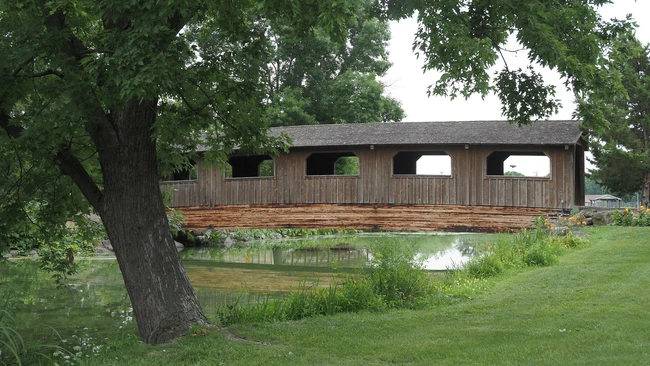
This technique, often utilized in photojournalism and documentary photography, allows for a more holistic representation of a scene. For instance, a series of images capturing a bridge—a wide shot for context, a medium shot for structural detail, and a tight, low-angle perspective for texture—can convey the experience of walking through the space far better than a single, static photograph. By grouping these frames, the photographer transforms a collection of "safety shots" into a coherent narrative. If one frame does not align with the narrative thread, it can be removed based on its inability to contribute to the story, rather than its technical shortcomings.
The Role of Instinct in Photographic Style
The uncalculated nature of rapid-fire photography offers a unique window into a photographer’s subconscious visual baseline. When time constraints prevent the application of formal rules—such as the Rule of Thirds, the Golden Ratio, or deliberate lighting adjustment—the photographer is forced to rely on muscle memory and instinct.
A brief analysis of these unrefined frames can reveal persistent patterns in a photographer’s vision. For example:
- Perspective Bias: Does the photographer instinctively crouch to lower the vantage point, or do they shoot from eye level?
- Framing Tendencies: Does the photographer gravitate toward wide-angle environmental shots, or do they naturally isolate subjects through tight framing?
- Geometry and Texture: Does the photographer instinctively look for repeating patterns and abstract geometry, or are they focused on human elements and narrative action?
When the conscious effort to "make art" is stripped away, the resulting images provide an honest, unvarnished look at the photographer’s internal visual language. This realization can be instrumental in the development of a personal style. By reviewing these "off-the-cuff" sessions, practitioners can identify which compositional choices they make automatically, providing a roadmap for future, more intentional work.
Technical Implications and Software Integration
The burden of managing these large datasets has led to advancements in software integration. Tools such as Adobe Lightroom, Capture One, and various AI-driven culling assistants now offer features designed to group similar images, detect focus, and flag blurry shots. However, software remains a tool, not a substitute for the photographer’s vision.
The most effective workflow for handling rapid-fire sets involves:
- Initial Triage: Identifying the "hero" of the set, if one exists, but keeping the series intact for context.
- Narrative Sequencing: Arranging the images to mimic the experience of the location, such as moving from a wide view to a detailed, intimate shot.
- The "Fit" Test: Evaluating whether each frame serves the collective narrative. If a shot is technically perfect but breaks the flow of the set, it should be set aside for a different project.
Broader Impact on Visual Literacy
The transition from viewing photography as a quest for the perfect single image to viewing it as a documentary practice has broad implications for visual literacy. In an age of high-frequency digital consumption, the ability to synthesize multiple images into a cohesive story is becoming an essential skill.
Industry experts suggest that this shift is helping photographers move away from the obsession with technical perfection—which can often lead to "sterile" images—and toward a focus on authenticity and atmosphere. By embracing the "safety frame" as a legitimate part of the creative process, photographers can reduce the friction of the editing process while simultaneously deepening their understanding of their own creative instincts.
Ultimately, the goal of photography is to communicate a perspective. Whether that perspective is achieved through an hour of tripod-mounted labor or a three-second walk-by, the value lies in the final output’s ability to resonate with the viewer. By reclassifying hurried shots as components of a larger visual study, photographers can turn a potential source of frustration into a productive exercise in self-discovery and storytelling.