Volkswagen Retires the ID.4 to Make Way for the All-New Electric Tiguan

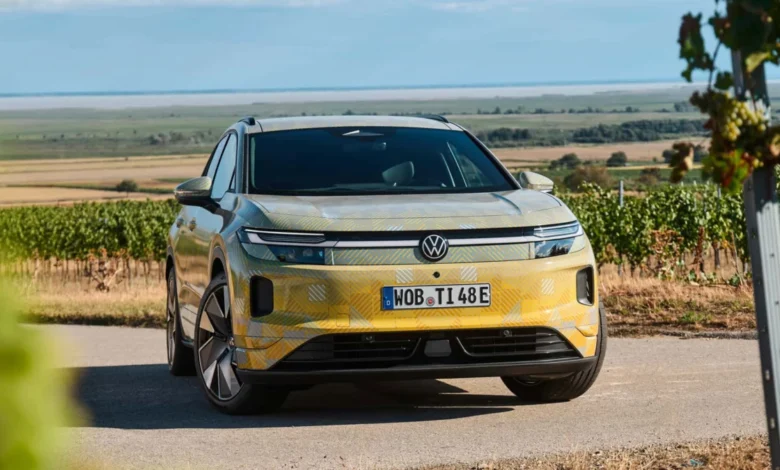
The landscape of electric mobility is undergoing a rapid, often ruthless evolution, and Volkswagen is proving that legacy automakers are willing to adapt just as quickly as their pure-play competitors. Six years after introducing the ID.4—its pioneer all-electric compact crossover—the German automotive giant has officially decided to retire the moniker. In its place comes a vehicle carrying one of the most recognizable and trusted nameplates in the company’s global portfolio: the Volkswagen ID. Tiguan.
This strategic transition marks a pivotal turning point for Volkswagen’s electric vehicle strategy. While the ID.4 served as an important testbed for the automaker’s dedicated MEB platform, it was plagued by early software bugs, divisive interior design choices, and a series of high-profile recalls. By replacing the ID.4 with the ID. Tiguan, Volkswagen is not merely swapping badges; the company is executing a comprehensive course correction. Set to be officially revealed early next month, the ID. Tiguan aims to address every major pain point of its predecessor while capitalizing on the massive brand equity attached to the Tiguan name.
A Chronology of the ID.4 and the Shift Toward the ID. Tiguan
The life cycle of the Volkswagen ID.4 has been eventful since its debut. Introduced to global markets in late 2018 as a concept before hitting assembly lines in 2020, the ID.4 was designed to be Volkswagen’s global volume seller in the burgeoning battery-electric vehicle (BEV) space, acting as a direct challenger to the dominant Tesla Model Y. Production ramped up across multiple continents, with manufacturing facilities established in Zwickau, Germany, and later in Chattanooga, Tennessee, to serve the North American market.
However, the vehicle’s journey was fraught with challenges. Early adopters frequently criticized the car’s convoluted and sluggish infotainment software, which took Volkswagen several major over-the-air updates to resolve. Furthermore, the minimalist interior, while modern, drew heavy criticism for its reliance on capacitive touch surfaces rather than tactile physical buttons. Drivers routinely expressed frustration over the steering wheel controls and the baffling decision to reduce the number of window switches on the driver’s door panel to just two, requiring a secondary "rear" toggle switch to operate the back windows.
Compounding these usability issues were logistical and manufacturing setbacks. In late 2023 and 2024, the ID.4 faced severe scrutiny due to an electronic door latch recall that allowed doors to potentially open while the vehicle was in motion, triggering a government-mandated stop-sale order and halting production lines.
Recognizing that the ID.4 needed a clean break rather than another incremental facelift, Volkswagen took decisive action. In April of this year, the automaker quietly halted the assembly of U.S.-spec ID.4s at its Chattanooga plant, redirecting factory capacity toward its more profitable internal combustion engine (ICE) and hybrid SUVs. To clear out existing dealer inventories, Volkswagen introduced sweeping financial incentives, slashing prices on remaining ID.4 inventory by up to $12,500. For savvy consumers, these discounts turned the ID.4 into an exceptional bargain, but internally, Volkswagen’s leadership was already looking toward the next generation.
Global Rollout Timeline and Regional Strategies
The successor to the ID.4 is nearly complete, and Volkswagen has established a clear timeline for its commercial rollout. The upcoming Volkswagen ID. Tiguan is scheduled for its global official unveiling early next month, with the first customer deliveries slated to begin in Europe by early 2027.
North American buyers will also receive the ID. Tiguan, though local launch dates remain unconfirmed. A company representative clarified Volkswagen’s regional roadmap: "The ID. Tiguan is planned to succeed the ID.4 in the North American market. Following its European launch in early 2027, Volkswagen will share North American timing and additional market-specific details in due course."
This staged rollout suggests that European plants will likely handle initial production runs before local adaptation or localized assembly is finalized for regions outside Europe. The decision to use the Tiguan moniker in North America is particularly strategic. Unlike the "ID" alphanumeric nomenclature, which has struggled to resonate emotionally with mainstream buyers outside of enthusiast circles, the Tiguan name carries nearly two decades of mainstream recognition, signifying rugged practicality, family-friendly dimensions, and reliability.
Engineering and Interior Redemptions: Listening to the Customer
Perhaps the most significant aspect of the ID. Tiguan transition is Volkswagen’s willingness to admit past mistakes regarding interior ergonomics. Industry analysts and consumers alike have noted that the ID. Tiguan will benefit heavily from design lessons learned during the development of recent European models like the ID.3 Neo and the upcoming electric ID. Polo.
The outgoing ID.4 drew continuous fire for its over-digitized cabin. In response, the ID. Tiguan will reportedly reintroduce proper, tactile physical controls. Spy shots and preliminary briefings indicate that the new EV will feature dedicated buttons for all four window switches, conventional volume knobs, and physical climate control toggles. This shift reflects a broader industry realization that tactile feedback is crucial for driving safety and user satisfaction, moving away from the hazardous distraction of buried touchscreen menus.
In addition to physical ergonomics, the ID. Tiguan will incorporate Volkswagen’s latest infotainment architecture, powered by Android Automotive OS. This system is expected to provide vastly improved processing speeds, seamless voice recognition, and native app integration for popular audio streaming and navigation services, effectively neutralizing one of the primary criticisms leveled against early MEB-based vehicles.
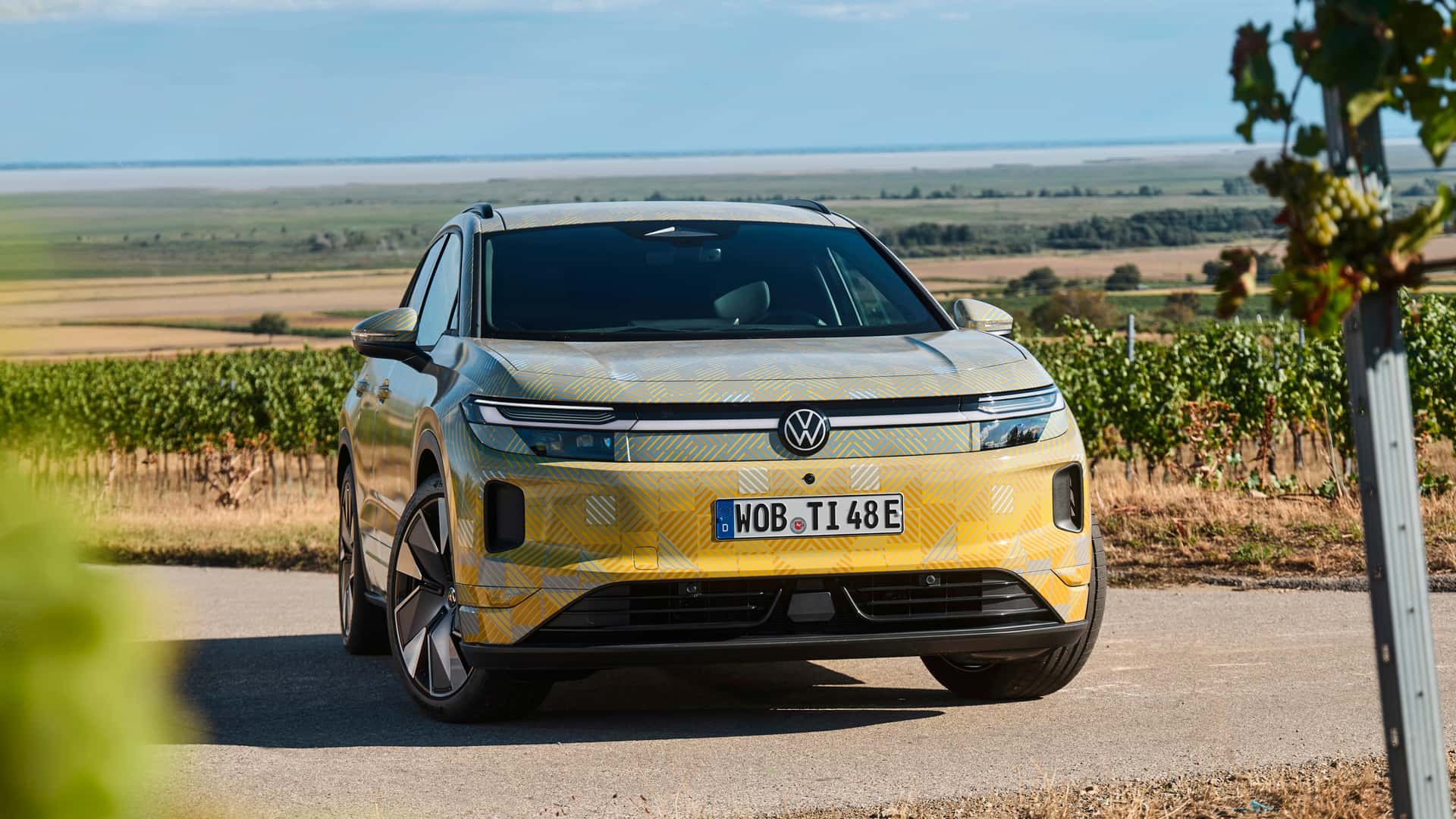
On the exterior, the ID. Tiguan is expected to adopt a more mature, traditional SUV silhouette compared to the somewhat bulbous, aerodynamic profile of the ID.4. It will feature Volkswagen’s latest full-width LED light signatures, aligning its aesthetic language with the brand’s newer generation of electrified vehicles.
Powertrain Expectations and Market Positioning
While Volkswagen has not yet released complete technical specifications for the ID. Tiguan, industry observers anticipate meaningful improvements in powertrain efficiency, battery technology, and charging speeds.
For context, the outgoing 2026 model-year ID.4 utilized a usable 77-kilowatt-hour battery pack, offering an EPA-estimated range of up to 291 miles for the single-motor, rear-wheel-drive variant (producing 282 horsepower) and 263 miles for the dual-motor, all-wheel-drive variant (delivering 335 horsepower). Older iterations also featured a smaller 58-kWh battery pack for entry-level trims.
If the ID. Tiguan follows the evolutionary path set by Volkswagen’s recent platform updates, buyers can expect higher energy-density battery chemistries, faster DC fast-charging capabilities that reduce roadside downtime, and more refined thermal management systems designed to optimize performance in extreme weather conditions.
Broader Industry Implications
The phasing out of the ID.4 and the introduction of the ID. Tiguan illustrate a critical evolutionary phase for legacy automakers transitioning to electrification. The first wave of EVs was defined by futuristic styling experiments and radical minimalism, often at the expense of user experience. By pivoting back to established brand equity—such as the Tiguan name—and listening to consumer demands for intuitive ergonomics, Volkswagen is signaling a pragmatic shift toward mainstream normalization.
As the electric vehicle market matures, brand loyalty and vehicle familiarity are proving just as important as raw technological novelty. Whether the ID. Tiguan can successfully claw away market share from the Tesla Model Y and other dominant crossover offerings will depend heavily on its final pricing structure, manufacturing quality, and range capabilities. However, by righting the wrongs of the ID.4, Volkswagen has positioned its next-generation electric crossover to be a far more formidable contender on the global stage.