Saccharine: Natalie Erika James Delves into the Disturbing Intersection of Body Horror and Psychological Turmoil

Filmmaker Natalie Erika James, renowned for her profound explorations of human suffering, has once again captivated audiences with her latest cinematic offering, Saccharine. Following the critical success of her debut feature, Relic, James continues to weave supernatural dread into narratives that resonate with deeply personal anxieties. In Saccharine, she employs the genre’s potent imagery to dissect societal pressures and the internal struggles of an individual grappling with disordered eating, transforming unsettling themes into a visceral and thought-provoking experience.
A Disturbing Portrait of Societal Obsession
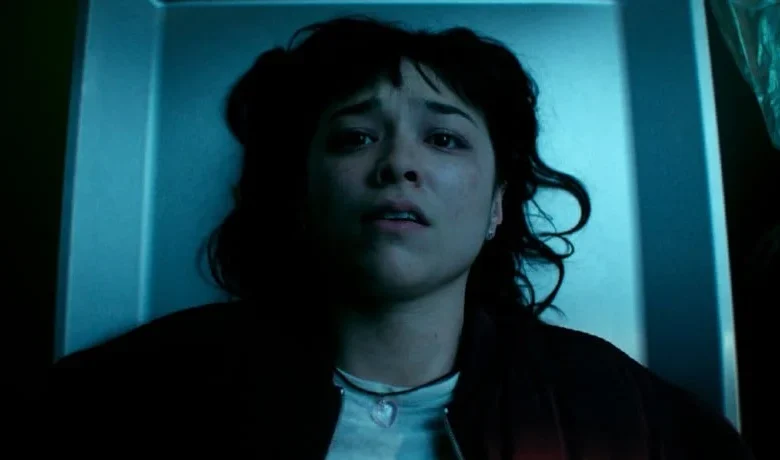
Saccharine centers on Hana, a medical student portrayed by Midori Francis (known for her role in Unseen), whose desperate pursuit of weight loss leads her to consume human ashes. This drastic act, intended to purge perceived imperfections, inadvertently unleashes an unwelcome spectral entity, an unwelcome haunting that mirrors her internal turmoil. As Matt Donato observed in his review for Daily Dead, the film presents a "jarring, troubling, and grotesque" narrative, deeply rooted in society’s pervasive "mirror-gazing obsession." James herself describes the film as a "ride," one that is both terrifying and laced with a dark, tongue-in-cheek humor.
The film’s genesis lies in James’s fascination with the scientific mind confronting the inexplicable. "I was fascinated by this idea of a character who had a really scientific approach to the supernatural," James explained in a recent interview with Daily Dead. "Any scientist or scientifically focused person, if you started experiencing these things, you would prod at them and question them and do tests. It was something that we didn’t see often in horror films. There’s always that question of how a character is grappling with the supernatural encroaching into the real world." This intellectual rigor imbues Hana with a unique agency, transforming her into a character who actively investigates the phenomena plaguing her, rather than passively succumbing.
The Dichotomy of Science and the Supernatural
James skillfully explores the inherent tension between empirical reasoning and the realm of the spiritual. Hana, a medical student, embodies this duality. Her scientific training equips her to analyze and dissect, yet she finds herself confronting a reality that defies logical explanation. "Instead of having your character go to the library, she is the library," James noted, highlighting Hana’s self-reliant approach to understanding the supernatural. This internal conflict is further enriched by the film’s exploration of cultural beliefs and the normalization of a world beyond our immediate perception, particularly the concept of ancestral spirits.
This thematic exploration is deeply personal for James. "For me, growing up, I had a very staunchly atheist view. As I’ve gotten older, I have recognized how little we know about the world, even about consciousness or what’s outside our galaxy. I’ve definitely come to a more spiritual place, and I’m openly skeptical," she shared. This personal evolution informs her approach to storytelling, where the power of the human mind and its influence on reality are central. "What I’ve always believed in is the power of the human mind to create so much and how much it affects our reality. I don’t know, I guess when you think of telling a story through a film character, so much of that is living within their mind. And so, I’ve never really shied away from having their psychological makeup bleed into that character’s reality."
Cinematic Techniques: Visualizing Psychological Descent
James’s directorial vision for Saccharine is meticulously crafted to immerse the audience in Hana’s subjective experience. The cinematography plays a crucial role in externalizing her psychological state. "I’m drawn to subjective storytelling," James stated. "In this film, we’re very much in Hana’s perspective throughout the whole film. A lot of our choices had to do with Hana, her perception of herself within a space as well." The film utilizes lens choices to reflect Hana’s evolving mental landscape. Initially, slightly longer lenses create a sense of compression, emphasizing her confinement. As the narrative progresses and her reality destabilizes, wider lenses are employed, visually shrinking her within her surroundings, amplifying her feelings of vulnerability and isolation.
Complementing the visual storytelling, the film’s sound design is equally vital in conveying Hana’s descent. The "incessant theme" of "food noise" is a recurring motif, intrinsically linked to the presence of the entity, Bertha, and the corporeal manifestations of Hana’s struggles. "A lot of the soundscape had to do with her presence within the house. There’s a lot of breath and a lot of heartbeat-like sounds that we’ve modulated as well. We were really drawing from organic, much like the rest of the film, textural, bodily sounds," James elaborated. The deliberate use of silence is also a key element, allowing moments of dread to fully permeate the narrative and grounding Hana within her increasingly nightmarish environment.
The Beauty and Brutality of Body Horror
Saccharine delves into the multifaceted nature of body horror, exploring its capacity for both tragedy and a peculiar, unsettling beauty. James finds a profound artistic resonance in this juxtaposition. "I’m drawn to stories and imagery that sit between the beautiful and the grotesque. That’s true of most things in life," she explained. This philosophy echoes her work on Relic, where the "horrors of grief" are intrinsically linked to the "love behind it."
In Saccharine, the film aims to depict the "full spectrum of someone in the grips of an eating disorder." James sought to portray not only the destructive aspects but also the fleeting moments of perceived pleasure, such as the "ecstatic rush of a sugar high," alongside the oppressive sensations of "sluggishness and a sense of oppression." Both extremes are presented as integral facets of Hana’s experience, offering a nuanced and unflinching look at the psychological warfare of disordered eating.
Medical Themes and Artistic Inspirations
The film’s setting within the medical field, occupied by a medical student protagonist, provides a fertile ground for exploring themes of life, death, and the body. While James does not claim direct influence from medical professionals for Saccharine, she acknowledges the inherent thematic resonance. "When you talk about the medical field, it’s so much about life and death and the body. It lent itself to being the right setting for this character," she noted. Hana’s meticulousness and perfectionism, traits often honed in high-achieving academic fields, are presented as potentially detrimental when coupled with an unhealthy self-perception. The film subtly suggests that Hana’s academic pursuits might be driven by external expectations rather than genuine passion, adding another layer to her internal conflict.
James’s artistic inspirations for Saccharine are diverse and illuminating. In terms of body horror, she cites Julia Ducournau’s Raw as a significant influence, particularly its thematic exploration of consumption and its connection to a coming-of-age narrative within a university setting. Films like May and Excision also resonated with her due to their focus on unique, isolated protagonists yearning for connection, a sentiment that mirrors Hana’s internal state.
Beyond film, James draws inspiration from the 18th-century anatomical Venus sculptures, which she describes as existing "between the scientific and the erotic." These medical models, sensationalized for their time due to their depiction of the female form, offer a potent visual metaphor for the film’s exploration of the body’s intricacies and societal perceptions. Furthermore, she referenced old medical journals with their "gorgeous illustrations" and the contemporary artist Vincent Olinet, whose "incredible, excessive sculptural cakes" hint at the film’s visual aesthetic.
The Logic of Ash Consumption and the Absurdity of Choice
The genesis of Hana’s ritualistic consumption of ashes stems from a desire to mirror the narrative arc of Oscar Wilde’s The Picture of Dorian Gray. James envisioned a spectral entity that would grow in proportion to Hana’s physical diminishment. "I always wanted something that had the logic of ‘The Picture of Dorian Gray’ in terms of the ghost getting larger as she gets smaller. I needed something that would tie the two together spiritually. Why has this thing latched onto her? Of course, consumption of something is the most relevant way to convey it."
The choice of ashes, rather than a more overtly cannibalistic act, was a deliberate artistic decision. "Cannibalism is a little intense for the start of a film, maybe for this film," James explained. "Whereas there’s something about ash that feels very divorced from the person itself." The act of consuming ashes, while disturbing, is presented as disturbingly plausible given the intense societal pressures surrounding appearance. James noted that when she pitched the idea, people often inquired about its reality, underscoring its unsettling proximity to the edge of possibility. This "bad choice" for her protagonist is crucial, as James observes, audiences are often compelled to follow a character who commits fully to a plan, even a misguided one, a testament to Midori Francis’s captivating performance.
Crafting Tone: Navigating Mania and Humor
James conceived Saccharine as a means of processing her own childhood experiences and "exorcising a part of it." She deliberately infused the film with an "absurd edge," recognizing the inherent connection between horror and absurdity. "In horror films, you’re really breaking reality. Something completely unnatural is generally happening in the supernatural sense or in whatever sense. And so, there’s an inherent absurdness to it in a way."
While Relic adopted a more somber and straightforward tone to address grief, Saccharine embraces its more heightened reality to capture the "mania of how pent-up things can get inside of the mind of someone who’s dealing with an eating disorder." James aimed for the film to operate on "two levels," where it is both "emotionally accurate" and offers moments where the audience can find cathartic laughter amidst the unsettling narrative. This tonal balancing act is crucial to the film’s success, allowing it to explore profound psychological distress without becoming relentlessly bleak.
Saccharine stands as a testament to Natalie Erika James’s growing prowess as a filmmaker. By skillfully blending psychological depth with visceral horror, she continues to carve out a unique space in contemporary cinema, offering audiences films that are as intellectually stimulating as they are emotionally resonant. The film’s exploration of body image, societal pressures, and the uncanny nature of the human psyche ensures its place as a significant contribution to the horror genre.