Iceland Unveils Its First Utility-Scale Wind Farm, Integrating Wind Power with Existing Hydropower Infrastructure to Conserve Water Resources

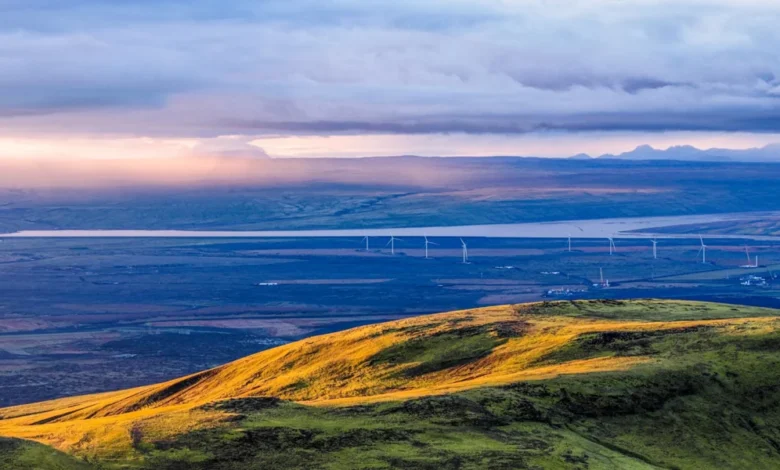
Iceland has officially stepped into a new era of renewable energy generation with the commissioning of its first utility-scale wind farm, the Vaðölduver Wind Project. Developed by the nation’s national power company, Landsvirkjun, the installation is designed to fundamentally change how the country manages its delicate balance between electricity demand and water reserves. By strategically pairing wind turbines with the country’s pre-existing Búrfell hydropower infrastructure, Landsvirkjun has introduced a hybrid energy model that allows the island nation to generate substantial electricity while intentionally preserving precious water levels in its reservoirs during peak winter months.
The official commissioning ceremony took place on September 15, 2026, marking a monumental milestone for an isolated island grid that has historically relied almost entirely on a dual-pillar system of geothermal and hydroelectric power. With the first phase successfully bringing 14 turbines online, the Vaðölduver project represents a decisive step toward diversifying Iceland’s energy portfolio and easing the structural pressures faced by its hydro-centric power grid.
Main Facts and Strategic Infrastructure Integration
The Vaðölduver Wind Farm is situated on a rugged, exposed lava-and-sand plain located east of the Þjórsá River and directly south of the Sultartangi Dam. This geographic placement is no accident. Landsvirkjun strategically selected the site to seamlessly plug the new wind assets directly into the region’s robust, pre-existing Búrfell hydropower ecosystem. Instead of constructing costly and environmentally disruptive new pathways, the wind farm shares the established 220-kilovolt (kV) transmission lines, electrical substations, and comprehensive access roads already servicing seven neighboring hydropower stations in the Þjórsá and Tungnaá river valleys.

Upon its ultimate completion—expected by the end of 2027—the 17.1-square-kilometer (6.6-square-mile) wind farm will feature a total of 28 wind turbines supplied by German turbine manufacturer Enercon. The installation comprises twenty-five turbines rated at 4.26 megawatts (MW) each and three larger units rated at 4.5 MW, bringing the project’s total nameplate capacity to 120 MW. According to projections provided by Landsvirkjun, the facility will yield an estimated annual generation of 440 gigawatt-hours (GWh) with a P50 net efficiency rating of 43%. This output level is considered exceptionally high for onshore wind installations and is calculated to provide enough clean electricity to power the equivalent of approximately 90,000 Icelandic households.
Seasonal Synergy: Wind and Water Interlocking
The primary operational brilliance of the Vaðölduver project lies in its seasonal synchronization with Iceland’s natural hydrological cycles. In a typical year, Iceland experiences its strongest, most consistent wind speeds during the harsh winter months. Coincidentally, this is precisely the period when natural water inflows into the country’s hydropower reservoirs reach their lowest points due to freezing conditions and a lack of glacial melt.
Conversely, during the warmer summer months, wind speeds tend to taper off, but rising temperatures drive heavy glacial melt that naturally replenishes the water availability for the broader hydropower network. By integrating wind power into the energy mix, Landsvirkjun creates a dynamic operational buffer. When winter winds howl and turbines generate abundant electricity, operators can throttle back hydropower generation, deliberately holding back water in the reservoirs. When the wind subsides, the hydropower stations ramp up to pick up the slack.
This reciprocal balancing act grants the utility unprecedented control over its stored water resources, allowing stored reserves to stretch significantly further and mitigating the risk of energy shortages during dry or exceptionally cold spells. Furthermore, because the landscape surrounding the site is largely devoid of dense vegetation and surface obstructions, Enercon’s turbines are able to capture highly productive winds closer to the ground than would be possible in sheltered or heavily forested terrains, even though the turbine blade tips still soar to a towering 150 meters (492 feet) at their peak.

Chronology and Project Development Timeline
The realization of the Vaðölduver Wind Farm was not an overnight endeavor; it represents the culmination of more than a decade of careful planning, pilot studies, and technological adaptation.
- Early 2010s to Mid-2010s: Landsvirkjun initiates a series of pilot wind turbine programs across various testing sites in Iceland. Over ten years of operational monitoring, engineers gather critical performance data regarding turbine durability, icing risks, and wind behavior in sub-Arctic environments, discovering that shorter, robust towers could harvest high wind yields efficiently in open Icelandic landscapes.
- Late 2023 to 2025: Following extensive environmental impact assessments and community consultations, planning for the Vaðölduver project is finalized. Landsvirkjun partners with Enercon to supply the advanced turbine hardware and signs a comprehensive long-term service and maintenance agreement.
- Early to Mid-2026: Construction crews break ground on the lava-and-sand plain near the Sultartangi Dam, laying foundations and integrating electrical balance-of-plant systems directly into the existing Búrfell transmission infrastructure.
- September 15, 2026: Landsvirkjun officially commissions the Vaðölduver Wind Farm in a milestone event, bringing the first batch of 14 turbines online and feeding initial power into the grid via commercial power purchase agreements.
- Late 2026 to Late 2027 (Projected): Installation and grid-connection works commence for the second phase of the project, which will see the remaining 14 turbines erected and tested. The entire 120 MW facility is scheduled to be fully operational by December 2027.
Official Responses and Stakeholder Engagement
The development of Iceland’s first utility-scale wind farm required rigorous cooperation not only among engineering teams but also within local communities and governmental bodies. Landsvirkjun has continuously emphasized that active stakeholder engagement is a non-negotiable prerequisite for modern energy infrastructure. By utilizing an industrial landscape already heavily altered by decades of hydroelectric development, the company minimized the project’s ecological footprint and avoided the contentious land-use debates that often plague greenfield energy developments elsewhere in Europe.
Government officials have closely monitored the project as a vital blueprint for the nation’s energy future. During policy discussions in Reykjavík, the Minister of the Environment, Energy and Climate, Jóhann Páll Jóhannsson, highlighted the overarching national strategy to expand total grid capacity significantly over the coming decade. According to projections shared by the Ministry, Iceland’s total grid capacity—currently hovering around 20 terawatt-hours (TWh)—is expected to surge to between 24 and 25 TWh within the next ten years to accommodate growing domestic needs and strong interest from international investors keen on establishing eco-friendly data centers.
To support this rapid expansion, the Icelandic government has advanced legislative reforms designed to streamline and accelerate the complex energy permitting processes. Financing mechanisms have likewise been put in place to modernize the physical transmission backbone. However, despite these high-level policy pushes, regional officials and utility representatives have acknowledged that physical transmission expansion remains slow due to localized permitting bottlenecks and community pushback.

Broader Impact and Implications for Iceland’s Energy Landscape
Iceland already stands as a global titan in renewable energy production, boasting a power grid that generates nearly 100% of its electricity from zero-emission sources. Historically, this has been divided between hydroelectricity, which accounts for roughly 70% of generation, and geothermal energy, which makes up the remaining 30%. Furthermore, over 90% of Icelandic households utilize direct geothermal hot water for district heating and domestic supply, while the remainder rely on renewable electricity for thermal needs.
Despite this clean energy dominance, Iceland faces the same structural and logistical grid constraints troubling modern economies worldwide. The island operates as an entirely isolated electrical transmission system, meaning it cannot import power from or export surplus power to neighboring nations. Consequently, grid stability, frequency regulation, and reserve capacity are paramount. Heavy industry—including major aluminum smelters and industrial facilities—comprises roughly 80% of Landsvirkjun’s commercial customer base, placing a continuous, high-load demand on the domestic grid.
The introduction of wind power as a formal "third pillar" alongside hydro and geothermal energy addresses these vulnerabilities by diversifying the generation portfolio. Yet, analysts and industry observers point out that further integration challenges remain. During recent dialogues between energy stakeholders, including representatives from publicly owned utility ON Power and the national transmission system operator (TSO) Landsnet hf., questions arose regarding distributed energy resource (DER) integration. While power producers are accelerating generation projects, coordinated strategies involving virtual power plants, localized battery energy storage systems, and deeper collaborative frameworks with the TSO are still in their infancy. Heavy industrial clients, despite their massive energy consumption footprints, have yet to widely deploy on-site storage or flexible demand-response models in tandem with the new wind assets.
Nevertheless, the successful launch of the Vaðölduver Wind Farm demonstrates that Iceland’s energy sector possesses the technical prowess and adaptive capacity to innovate within its natural constraints. By proving that wind and water can coexist in a mutually supportive operational loop, Landsvirkjun has established a resilient framework for renewable expansion. As the final phase of turbines spins into action by late 2027, Vaðölduver will stand not merely as a collection of wind towers on a volcanic plain, but as a foundational blueprint for how isolated, forward-thinking nations can fortify their green energy grids against the unpredictable pressures of a changing climate.
Related posts: