Tesla Announces Massive 3 Billion Euro Expansion at Giga Berlin to Spearhead Autonomous Cybercab Production

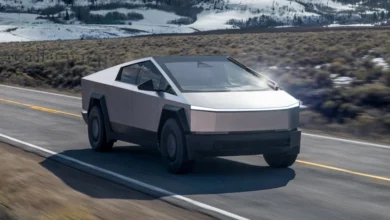
Tesla has officially announced a landmark investment of 3 billion euros, approximately 3.3 billion U.S. dollars, dedicated to the expansion of its Gigafactory in Grünheide, Germany. This strategic capital injection, confirmed on November 16, 2026, marks a pivotal moment in the company’s global transition toward a fully autonomous transport ecosystem. The expansion is specifically engineered to accommodate the mass production of the Tesla Cybercab, a dedicated robotaxi platform designed without traditional steering wheels or pedals.
The project represents the most significant industrial investment in the Berlin-Brandenburg region in recent years. By scaling up the Grünheide facility, Tesla aims to establish a high-volume manufacturing hub capable of outputting one million Cybercabs annually once the site reaches full operational capacity. This facility will function in tandem with the ongoing production of the Tesla Model Y, which has already established a firm footprint in the European market.

Strategic Timeline and Operational Milestones
The roadmap for this expansion is aggressive, reflecting Tesla’s history of rapid infrastructure deployment. According to documentation shared with local authorities and reports from German outlet Tagesspiegel, Tesla intends to file the formal building permit application before the close of 2026. This application will build upon the comprehensive expansion framework submitted in 2023, which initially outlined the goal of reaching an annual production capacity of one million vehicles.
Construction of the new production building—a massive structure slated to be roughly double the size of the existing main hall—is scheduled to commence in the first half of 2027. Following the construction phase, the company targets the initiation of Cybercab assembly by 2029. To support this timeline, Tesla has already begun an extensive recruitment drive, seeking to bring on hundreds of specialized workers for construction management, production planning, and assembly line logistics. The site currently sustains a workforce of approximately 12,600 employees, following a recent surge in hiring that saw 2,000 new personnel integrated into the Giga Berlin operations.
Vertical Integration and Battery Cell Autonomy
Central to the success of this expansion is the localization of battery technology. Plant manager André Thierig confirmed at the Automobilwoche Congress on November 11 that the factory is firmly on track to achieve full-scale battery cell production by mid-2027. Currently, Giga Berlin produces electrodes that are shipped to the United States for assembly into 4680-format cells before being returned to Germany.

The new investment will eliminate this transatlantic logistics loop. By implementing Tesla’s proprietary dry-electrode process on-site, the Grünheide plant aims to produce up to 18 GWh of battery cells annually. This move is estimated to cost nearly 1 billion euros of the total investment and will create over 1,500 specialized jobs. Upon completion, Giga Berlin will become the first Tesla manufacturing site in Europe to achieve full vertical integration—producing everything from individual battery cells to the finished vehicle under a single roof. This will increase the "European content" of Tesla vehicles to roughly 90 percent, effectively insulating the company against supply chain volatility in China and the United States.
Economic and Regional Context
The decision to expand in Germany arrives at a complex time for the broader European automotive sector. While many legacy manufacturers are grappling with high energy costs, softening demand, and significant labor restructuring, Tesla’s expansion is being viewed as a major vote of confidence in the region. Brandenburg government officials have welcomed the investment, characterizing it as a vital economic engine that will stabilize the region’s manufacturing sector.
The investment also highlights a widening gap between Tesla’s growth trajectory and that of its competitors. By focusing on autonomous vehicle platforms, Tesla is pivoting away from the traditional model of personal vehicle ownership toward a fleet-based model. The Cybercab is expected to be a high-volume, low-cost platform that relies on artificial intelligence for operation, a strategy that requires significant geographic diversification to ensure it can navigate the complex regulatory landscapes of different international markets.

The Broader Shift Toward Autonomy
The Cybercab’s arrival in Europe is not merely a manufacturing update; it is a fundamental shift in the company’s strategic identity. Elon Musk has consistently stated his vision for a future where autonomous vehicles represent the majority of Tesla’s output. By anchoring this vision in Europe, Tesla is signaling that it intends to lead the deployment of robotaxi fleets globally.
The integration of local cell production with autonomous vehicle manufacturing provides Tesla with a distinct competitive advantage. It allows for a more responsive supply chain and enables the company to adhere to potential future European Union mandates regarding carbon footprints and localized manufacturing. As the European market moves toward stricter environmental regulations, the ability to build vehicles that are both locally sourced and energy-efficient positions Tesla favorably against firms still reliant on long-distance component shipping.
Challenges and Regulatory Considerations
Despite the enthusiasm surrounding the announcement, the project faces the typical challenges associated with large-scale industrial expansion in Germany. This includes navigating stringent environmental permitting processes, particularly regarding water usage and waste management. The planned construction includes an additional wastewater treatment plant, a necessity to meet the rigorous environmental standards of the Brandenburg region.

Furthermore, the operational success of the Cybercab remains contingent on regulatory approval. While the manufacturing capacity will be in place by 2029, the actual deployment of these vehicles for public use will require close cooperation with European transport regulators. Tesla’s ability to prove the safety and reliability of its autonomous driving software will be the ultimate determinant of whether these one million vehicles can actually hit the road as intended.
Comparison to Other Strategic Initiatives
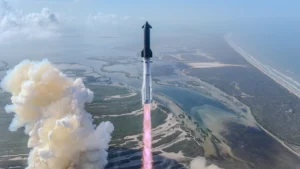
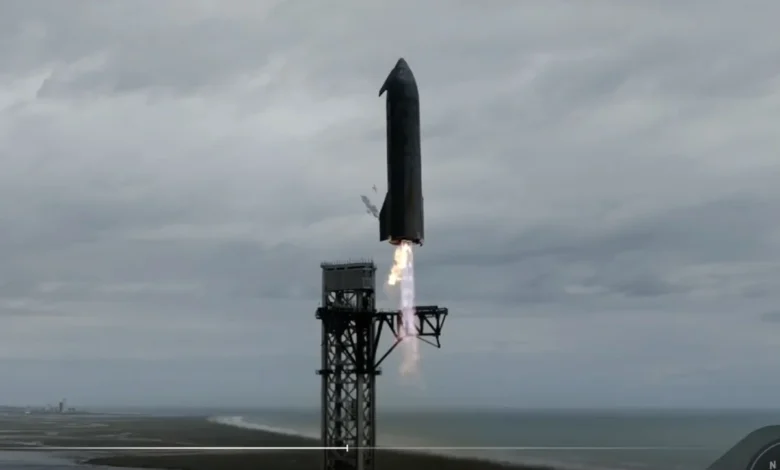
This expansion is part of a wider series of ambitious moves by the company. In the aerospace sector, SpaceX, also led by Elon Musk, recently achieved a major milestone by catching a Starship upper stage with its launch tower. The success of that program—coupled with the development of the more powerful and larger Starship V4—demonstrates a consistent company-wide philosophy: prioritize vertical integration, push for rapid iteration, and invest heavily in the infrastructure required to scale.
Similarly, the ongoing debate regarding the availability of the Cybercab to individual consumers—highlighted by high-profile public wagers and discussions regarding pricing and access—serves to keep the platform in the public consciousness. While the immediate goal of the Giga Berlin expansion is to facilitate high-volume fleet production, the technological advancements developed for the Cybercab will likely influence the entire Tesla lineup, potentially lowering costs and increasing the feature sets of consumer-owned vehicles.
Conclusion: A New Era for European Manufacturing
The 3-billion-euro investment in Giga Berlin represents a watershed moment for the European automotive industry. By committing to such a large-scale project, Tesla is effectively betting on the long-term viability of autonomous, battery-electric transportation in a market that has historically been dominated by internal combustion engines.
If the timeline holds, by 2029, Giga Berlin will stand as one of the most technologically advanced and self-sufficient automotive factories in the world. As the company moves to harmonize its global production capabilities, the Grünheide site is set to become the standard-bearer for Tesla’s European operations, acting as a bridge between the high-tech requirements of artificial intelligence-driven transportation and the robust, traditional manufacturing base of Germany. The coming three years will be critical as Tesla works to navigate the permitting, construction, and recruitment phases necessary to bring this ambitious vision to fruition.