SpaceX Deploys Third-Generation Starlink Satellites on 13th Starship Test Flight Despite Super Heavy Booster Failure

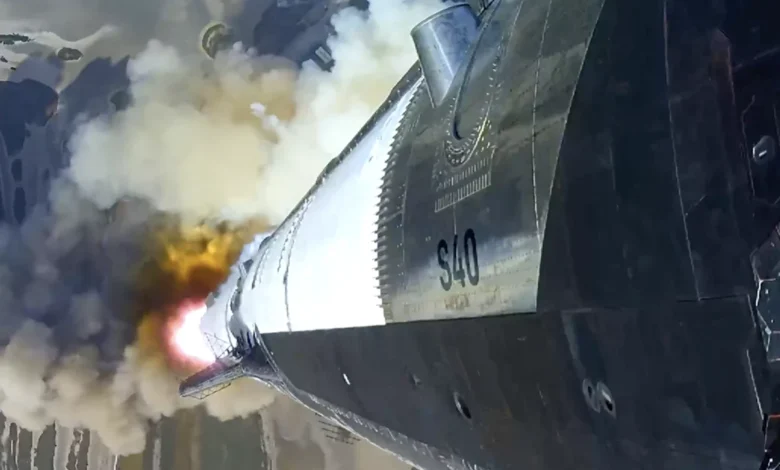
SpaceX achieved a significant milestone on Friday with the successful deployment of its first third-generation (V3) Starlink satellites during the 13th test flight of the Starship mega-rocket. While the mission demonstrated the growing capabilities of the Starship upper stage, it was marred by the loss of the Super Heavy booster during a planned simulated landing attempt in the Gulf of Mexico. The flight, which utilized an upgraded version of the Starship V3 prototype, underscores both the rapid technical evolution of the world’s most powerful launch vehicle and the persistent challenges inherent in its ambitious "fly, fail, fix" development cycle.
The mission marked the second time SpaceX has flown the V3 configuration of the Starship system. The first V3 flight in May encountered a critical failure when the Super Heavy booster experienced an anomaly during its separation from the upper stage. Friday’s launch sought to build upon those lessons, focusing on the successful deployment of a new class of Starlink satellites designed to drastically increase the capacity of SpaceX’s satellite internet constellation. While the upper stage, known as "The Ship," performed its maneuvers with high precision, the Super Heavy booster’s failure to complete a soft water landing highlights the remaining hurdles SpaceX must clear before achieving full and rapid reusability.
Chronology of the 13th Starship Test Flight
The road to Friday’s launch was not without its own immediate setbacks. Just over a week prior, SpaceX attempted to conduct the 13th Starship launch, only to be forced into an immediate abort following engine ignition. Telemetry data indicated that several of the 33 Raptor engines on the Super Heavy booster failed to reach the required performance parameters. In response, SpaceX engineers replaced six of the massive engines at the Starbase facility in Boca Chica, Texas, ensuring the hardware met the rigorous safety and performance standards required for flight.
On Friday morning, the countdown proceeded without further incident. The Starship V3 lifted off the pad, clearing the tower and successfully navigating the period of maximum aerodynamic pressure (Max-Q). Following a clean hot-staging maneuver, where the upper stage engines ignite while still attached to the booster to maximize efficiency, the Super Heavy booster began its return journey toward the Gulf of Mexico.
Unlike the May flight, the booster successfully separated and began its descent. However, as it approached the water’s surface for a simulated landing burn—intended to mimic the precision required for a return to the launch tower—several engines failed to reignite. The lack of sufficient thrust resulted in a high-velocity impact. The booster struck the water at a speed far exceeding the design limits for a soft landing, resulting in a catastrophic explosion that was captured by onboard and drone cameras.
Technical Milestones of the Starship Upper Stage
While the booster faced difficulties, the Starship upper stage demonstrated near-flawless performance. In previous missions, including the first V3 flight in May, the upper stage had struggled with engine reliability, losing at least one Raptor engine during the ascent phase. On Friday, all engines on the Ship remained operational throughout the climb to its suborbital trajectory.
Once in space, the Ship successfully opened its payload bay door to deploy the first batch of V3 Starlink satellites. This was a critical test of the vehicle’s utility as a commercial freighter. Following deployment, the Ship began its high-stakes reentry into Earth’s atmosphere. This phase of the flight is notoriously difficult, as the vehicle must endure temperatures exceeding 3,000 degrees Fahrenheit.
SpaceX’s thermal protection system, consisting of roughly 18,000 hexagonal ceramic tiles, appeared to hold up better than in previous iterations. The Ship successfully navigated the plasma field of reentry and performed a controlled flip and landing burn over the Indian Ocean roughly one hour after liftoff. In a departure from previous tests where the vehicle exploded upon contact with the water, the Ship remained intact after tipping over. This allowed SpaceX to deploy a recovery drone to perform a close-up inspection of the heat shield tiles, providing invaluable data on how the thermal protection system handles the stresses of atmospheric friction.
Starlink V3: The Economic Engine of SpaceX
The primary payload of Friday’s mission, the third-generation Starlink satellites, represents the future of SpaceX’s revenue model. Starlink is currently the only profitable division of the company, and the V3 satellites are designed to maximize that profitability. According to SpaceX, these new satellites offer a "potential twenty-fold increase" in downlink capacity compared to the V2 Mini satellites currently launched by the Falcon 9 rocket.
The V3 satellites are larger and more capable, requiring the massive payload volume and lift capacity that only Starship can provide. By launching 60 of these units at once, SpaceX aims to radically decrease the cost per bit of its internet service. However, the mission also highlighted a temporary limitation: because Starship has not yet achieved a stable Earth orbit, the satellites were deployed into a trajectory that caused them to burn up in the atmosphere approximately 20 minutes after release.
Despite their short lifespan, SpaceX confirmed that ground teams successfully established communication with all deployed satellites while they were in space. This verification of the V3 hardware’s orbital systems is a vital step toward full operational deployment once Starship begins reaching its intended orbital altitudes.
Financial Implications and Market Reaction
Friday’s launch was the first to occur since SpaceX’s historic Initial Public Offering (IPO) in June 2026. As the largest IPO in history, the move transitioned SpaceX from a private venture fueled by venture capital and government contracts to a public entity subject to the volatility of the stock market.
The transition has brought a new level of scrutiny to Elon Musk’s "fly, fail, fix" philosophy. In the private sector, rapid prototyping and spectacular failures were viewed as a necessary part of innovation. In the public market, however, investors have shown a more cautious reaction to hardware losses. Following the launch abort earlier this month, SpaceX stock saw a noticeable decline.
Since the IPO, the company’s stock has trended downward, falling from a peak of over $200 per share to a closing price of $115 on Friday. In the immediate aftermath of the booster failure, shares dipped an additional 2% in after-hours trading before stabilizing. Analysts suggest that while the successful deployment of Starlink V3 is a long-term positive, the continued inability to recover the Super Heavy booster raises concerns about the timeline for full reusability.
SpaceX’s S-1 filing, the document provided to investors ahead of the IPO, explicitly stated that the company’s growth targets for Starlink are heavily dependent on Starship. The filing warned that without a fully reusable Starship, progress on the Starlink network "would be at a slower pace and higher cost." The loss of a booster, while expected in a test phase, represents a significant capital loss that public investors are now closely monitoring.
Analysis of the "Fly, Fail, Fix" Methodology
The 13th flight illustrates the inherent tension between rapid iterative development and the requirements of a public company. SpaceX has consistently argued that destroying hardware in the short term is the fastest way to achieve a reliable system in the long term. By pushing the Super Heavy booster to its limits, the company identifies failure points that computer simulations might miss.
However, the failure of the landing burn engines suggests that the Raptor engine—despite being in its third major iteration—still faces reliability issues under the extreme stresses of relighting during a high-velocity descent. For SpaceX to realize the "twenty-fold increase" in capacity promised by Starship, it must move beyond simulated water landings and begin catching boosters with the "Chopstick" arms at the launch tower. Each lost booster is not just a loss of hardware, but a delay in the data collection needed to certify the tower-catch system.
Official Responses and Future Outlook
While Elon Musk and SpaceX leadership have not issued a formal statement regarding the specific cause of the booster’s engine failure, the company’s social media updates remained optimistic, focusing on the "Ship’s" successful splashdown and the Starlink deployment milestones.
Industry analysts, including those from Bloomberg and TechCrunch, note that the success of the upper stage’s thermal protection system is perhaps the most significant technical takeaway from Flight 13. Reentry has historically been the "Achilles’ heel" of the Starship program. The fact that the Ship survived and floated in the Indian Ocean suggests that SpaceX is nearing a solution for the intense thermal loads of orbital return.
Looking ahead, SpaceX is expected to analyze the telemetry from the failed booster engines before proceeding with the 14th test flight. The company currently has several V3 boosters and ships in various stages of assembly at Starbase. The goal for the remainder of the year will likely be the successful recovery of a Super Heavy booster and the first attempt to place the Starship upper stage into a stable orbit, rather than a suborbital loop.
The 13th flight of Starship serves as a reminder of the scale of SpaceX’s ambition. While the financial markets may be reacting to the immediate costs of the "fail, fix" cycle, the technical progress made in satellite deployment and reentry survivability indicates that the Starship system is steadily maturing. The path to a fully reusable, multi-planetary transport system remains fraught with technical and financial risks, but with each flight, the margin of error continues to shrink.