FAA Unveils $875 Million AI Software Initiative to Combat National Air Traffic Controller Shortages and Modernize US Airspace

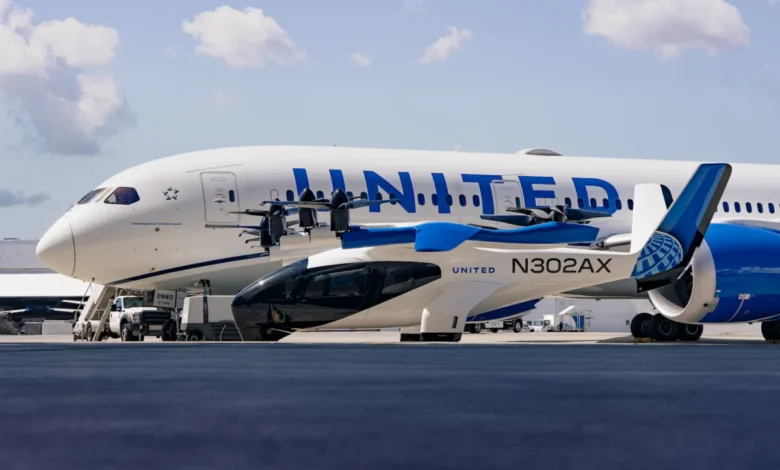
The Federal Aviation Administration (FAA) is taking a decisive step toward resolving chronic staffing shortages and modernizing the nation’s increasingly congested skies by investing in cutting-edge artificial intelligence. As commercial aviation scales to unprecedented heights and next-generation aircraft such as electric vertical takeoff and landing (eVTOL) vehicles prepare to enter metropolitan airspaces, the federal agency has committed to a massive technological overhaul. At the center of this initiative is a transformative $875 million cloud-based software program designed to assist overworked controllers, streamline complex flight paths, and predict airborne bottlenecks long before they materialize into safety hazards or widespread delays.
The multi-million-dollar investment highlights a growing reliance on automated systems to manage the day-to-day complexities of American aviation. With air traffic volume rebounding past pre-pandemic levels and the workforce facing historic attrition, the deployment of advanced software marks a philosophical shift in how the government approaches national airspace management.
The Genesis of the Crisis: A Chronology of Staffing and Infrastructure Strains
To understand the urgency behind the FAA’s recent technological pivot, one must examine the compounding pressures that have weighed on the American aviation network over the past decade. The roots of the current air traffic control (ATC) shortage are multifaceted, stretching across decades of budget battles, training bottlenecks, mandatory retirement ages, and the profound disruptions caused by the global health crisis.
For years, government watchdogs, including the Government Accountability Office (GAO), have issued recurring warnings regarding chronic understaffing within critical air traffic control facilities across the United States. By standard metrics, the majority of the nation’s vital terminal radar approach control (TRACON) facilities and air route traffic control centers (ARTCCs) have operated well below optimal staffing thresholds.
The timeline of this modern crisis accelerated significantly between 2020 and 2026:
- 2020–2021: The pandemic temporarily suppressed commercial air travel, but it also severely disrupted the pipeline of new air traffic controllers. Training academies were forced to scale back operations, closing testing centers and halting hands-on simulation training.
- 2022–2023: As travel demand rebounded with astonishing velocity, airlines rapidly restored schedules. However, the ATC workforce could not keep pace. Thousands of eligible controllers reached mandatory retirement age, while the lengthy multi-year recruitment and training pipeline left facilities scrambling to fill empty seats. Major hubs across the East Coast and Florida experienced severe delays, putting intense political pressure on the FAA.
- Early 2024: Independent studies by labor economists and policy organizations, such as the Brookings Institution, highlighted that recruitment hurdles were compounded by grueling work schedules, mandatory six-day workweeks, and high burnout rates among existing personnel.
- Early 2026: In a bid to turn the tide, the FAA released a comprehensive, high-profile hiring strategy aimed at modernizing its recruitment funnel and dramatically expanding training capacity to finally close the gap.
- September 2026: Recognizing that hiring alone would take years to fully bridge the deficit, the federal government pivoted toward a high-tech augmentation strategy, culminating in the announcement of the $875 million artificial intelligence procurement initiative.
Introducing SMART: Artificial Intelligence Meets Air Traffic Management
The cornerstone of the FAA’s new technological defense is an advanced software platform known as SMART, which stands for Strategic Management of Airspace, Routes and Trajectories. Developed by Air Space Intelligence—a specialized software firm focusing on complex logistical and aerospace routing—the system is engineered to integrate seamlessly with legacy federal infrastructure.
According to technical readouts released by the FAA, SMART functions as a cloud-based platform that overlays and enhances existing air traffic management tools rather than replacing them outright. The core engine utilizes sophisticated machine learning algorithms to ingest and analyze a massive matrix of operational variables simultaneously.
Unlike human controllers, who must mentally synthesize data across multiple radar displays, radio channels, and weather feeds, SMART processes live inputs including:
- Real-time and forecasted meteorological data, such as sudden wind shifts, severe storm cells, and low-visibility conditions.
- Complex, dynamic airline scheduling changes and unexpected carrier deviations.
- Fluctuating airport capacity limits driven by runway maintenance, ground congestion, and staffing adjustments.
- Broader airspace conditions and regional flow constraints.
By evaluating these variables in real time, the platform acts as an advanced predictive oracle. It can accurately forecast traffic flow densities and flag potential aircraft separation conflicts minutes—or even hours—before they materialize. This early-warning capability allows controllers to implement proactive routing adjustments rather than reactive, emergency vectoring, thereby conserving fuel for airlines and drastically reducing the likelihood of cascading delays.

Financial Commitments and Phased Rollout Strategy
The implementation of the SMART program represents one of the largest software investments in the history of the federal aviation sector. Valued at $875 million, the contract spans a 12-year performance period, ensuring that the software will undergo continuous iteration, security updates, and feature expansions as the demands on the national airspace evolve.
Rather than attempting a high-risk, nationwide "big bang" deployment, the FAA and Air Space Intelligence have opted for a methodical, phased rollout. The system will make its operational debut in the Washington, D.C., metropolitan area—a region notorious for its dense air traffic, overlapping military and commercial corridors, and frequent weather-related disruptions.
Following a rigorous evaluation period in the nation’s capital, the platform is scheduled to expand systematically to other high-density regional airspaces across the United States. This incremental approach allows safety inspectors and veteran controllers to vet the software under live operational conditions, ensuring that automation supports human decision-making without introducing unforeseen systemic risks.
Industry Reactions and Expert Perspectives
The announcement of a nearly billion-dollar AI contract has drawn widespread attention, sparking vital discussions across the aviation industry regarding safety, labor relations, and the future of human oversight.
Aviation safety experts have generally praised the initiative, noting that modern airspace has simply outgrown human cognitive limits during peak operational windows. Commercial pilots and airline associations have long advocated for technological modernization, arguing that legacy systems—some of which still rely on decades-old computing architecture—expose the national network to unnecessary inefficiencies.
At the same time, labor representatives for air traffic controllers have maintained a posture of cautious vigilance. While unions acknowledge that staffing shortages have placed an unsustainable burden on their members, they have consistently emphasized that any new software must be thoroughly tested to ensure it alleviates stress rather than creating secondary tasks or introducing automation bias. The FAA has repeatedly stressed that SMART is designed as a decision-support tool rather than an autonomous controller, ensuring that the ultimate authority and responsibility over aircraft separation remain firmly in human hands.
Broader Implications for the Future of Flight
Beyond immediate traffic management, the introduction of SMART arrives at a transformative crossroads for aerospace technology. The coming years will see the commercialization of electric vertical takeoff and landing (eVTOL) aircraft—pioneered by companies like Archer Aviation and Joby Aviation—alongside an expected surge in commercial drone delivery operations and private space launch cadences.
Integrating these novel, low-altitude, and high-frequency operations into an already strained traditional air traffic system would be virtually impossible using legacy manual methods. The scalable computing power provided by cloud-based AI platforms like SMART is viewed by industry analysts as an absolute prerequisite for the multi-modal skies of the 21st century.
By pairing aggressive recruitment initiatives with multi-million-dollar technological investments, the federal government is signaling that the modernization of American airspace is no longer a futuristic concept, but an urgent, present-day reality. As the SMART platform prepares to light up screens in the Washington, D.C. area, the entire aviation world will be watching to see how artificial intelligence can successfully shoulder the heavy burdens of the modern skies.