The Shift to Industrial Scale
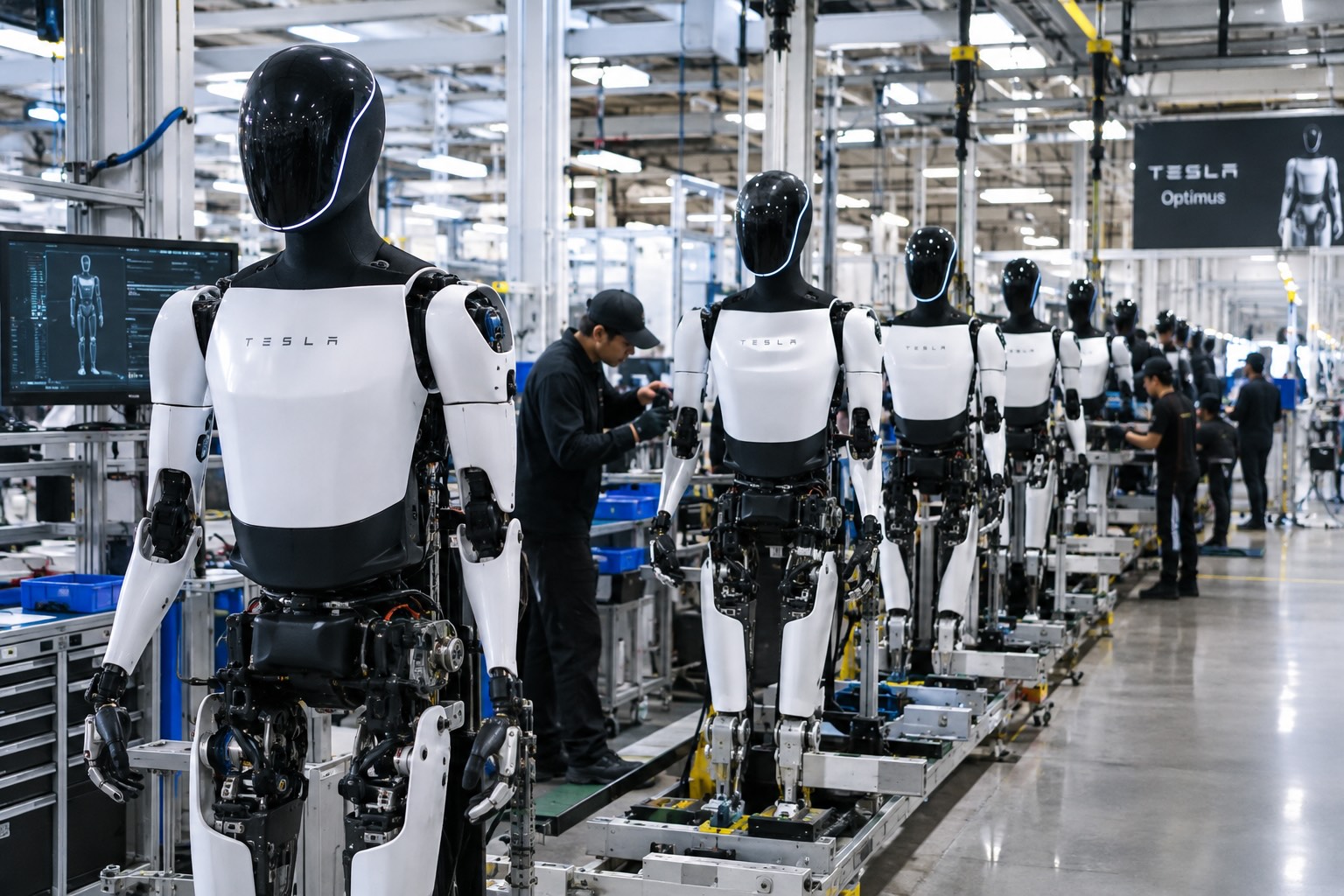
In its third-quarter shareholder letter for 2026, Tesla confirmed that the units currently rolling off the Fremont assembly line represent the first iteration of "production-quality" Optimus robots. This designation indicates that the robots have successfully cleared the necessary quality control benchmarks to be considered a viable commercial product rather than a prototype. The company explicitly stated that the existing manufacturing processes are now sufficiently robust to support commercial-scale distribution.
The facility’s conversion was a feat of rapid industrial engineering. As previously reported, Tesla successfully decommissioned and cleared the legacy vehicle lines in a mere 46 days. This space is now optimized for an ambitious output target of one million units per year. During the most recent earnings call, Elon Musk noted that the majority of the specialized capital equipment required to reach this production volume is already operational. The company expects output to follow a traditional S-curve growth pattern, with a conservative initial slope leading to an eventual ramp-up of approximately 20,000 robots per week.
Refining the AI and Electromechanical Framework
While the hardware is entering a mass-production state, the software remains a primary area of intensive development. Musk emphasized that the engineering team is currently focused on optimizing the robot’s electromechanical reliability and operational service life. These refinements are projected to conclude by the end of 2027, at which point Tesla intends to begin fulfilling orders for external enterprise clients. These early deployments will target high-risk, repetitive, and 24/7 operational environments where human labor is often constrained by physical safety concerns or fatigue.
A critical technological upgrade is scheduled for next year, when Tesla plans to integrate its proprietary AI5 chip into the Optimus architecture. This hardware transition is expected to significantly increase the computational overhead available for real-time decision-making, allowing the robots to move beyond the preprogrammed routines often seen in competitor demonstrations. By moving toward AI-driven motor control, Tesla aims to ensure that Optimus can navigate unpredictable real-world environments with a level of dexterity and judgment that scripted bots cannot replicate.
The Optimus Academy and Data Acquisition
A central challenge in robotics is the acquisition of training data. Unlike Tesla’s autonomous driving program, which benefits from billions of miles of real-world data harvested from millions of customer vehicles, the Optimus fleet lacks a pre-existing data-gathering infrastructure. To bridge this gap, Tesla has introduced the "Optimus Academy."
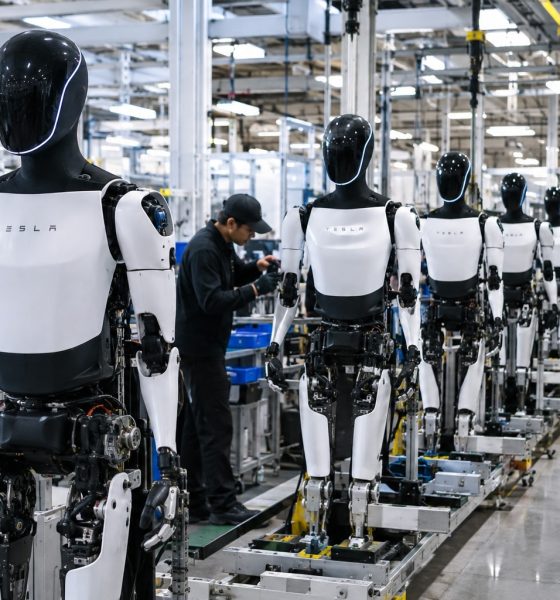
The concept is straightforward yet transformative: between 10,000 and 20,000 robots will be tasked with performing a diverse array of industrial activities. Every movement, failure, and success is captured and fed into the centralized neural network to inform the next generation of the model. By turning the manufacturing and training pipeline into a feedback loop, Tesla intends to accelerate the learning rate of its robots exponentially. Each unit produced in Fremont is, by design, an active participant in this collective learning process.
Supply Chain Integration and Global Expansion
The scale of the Optimus ambition requires a global supply chain capable of matching Tesla’s vertical integration philosophy. In September 2026, the company finalized certifications for key mass-production partners, including Tuopu, Joyson, and Sanhua. These suppliers are now providing the critical components necessary for the robot’s chassis, motor systems, and thermal management modules.
Furthermore, the Fremont plant is only the beginning of a larger manufacturing footprint. Construction at Giga Texas continues at an accelerated pace, with recent drone imagery confirming that the primary steel structure of the dedicated Optimus facility is nearing completion. Long-term production targets for the Texas plant are set at 10 million robots annually. Tesla’s financial disclosures indicate that the unit cost for Optimus is being engineered to trend toward the manufacturing cost of the Cybercab. This deliberate cost-containment strategy is intended to ensure that the robots remain economically viable for businesses across various sectors, from manufacturing to logistics.

Addressing the Technical Frontier: The Hand
Despite the rapid progress in autonomy and production, the robotic hand remains the most complex engineering hurdle. During the recent X Takeover event, Musk reaffirmed that the fine-motor capabilities required for human-like manipulation are the primary focus of current R&D efforts. Achieving human-level dexterity—the ability to handle fragile, irregularly shaped, or small objects with precision—is considered the "holy grail" of humanoid robotics. Tesla’s engineering teams are currently iterating on various actuator designs to minimize weight while maximizing torque and tactile feedback.
Broader Implications for Industry
The move to mass-produce humanoid robots signals a fundamental shift in the global labor market. By focusing on "dangerous, repetitive and around-the-clock" jobs, Tesla is positioning Optimus as a tool to augment the labor force rather than simply replace it. This is particularly relevant in the context of the recent surge in demand for automated energy storage solutions. For instance, the ramp-up of Tesla’s Megapack production—which is already sold out through 2027—highlights the increasing reliance on automated, high-output manufacturing to meet global energy and infrastructure needs.
As Tesla prepares to debut new video evidence of AI-driven tasks within the next one to two months, the industry is bracing for a shift in the robotics landscape. The transition from controlled laboratory experiments to a mass-production line in Fremont suggests that the era of the humanoid robot is no longer a theoretical exercise.

Strategic Context and Market Positioning
This latest development occurs against a backdrop of intense competition in the humanoid sector. However, Tesla’s unique advantage lies in its ability to leverage its existing vehicle manufacturing infrastructure and AI stack. By treating the robot as a mobile, physical iteration of its "Full Self-Driving" (FSD) software, the company is attempting to achieve a level of autonomy that competitors relying on traditional, non-neural approaches may struggle to match.
The timeline for delivery, projected for late 2027, suggests that Tesla is comfortable with its current roadmap despite the inherent volatility of such an ambitious technological rollout. As the company moves toward the commercial launch, the performance of the first units deployed to external partners will be the ultimate litmus test for the viability of the "Optimus Academy" and the scalability of the current design.
Summary of Ongoing Initiatives
- Production: Active high-volume assembly lines in Fremont, California.
- Capacity: Targeting 1 million units annually in the long term, with immediate ramp-up plans to 20,000 robots per week.
- Training: Deployment of 10,000–20,000 robots to the "Optimus Academy" for real-world experiential learning.
- Hardware: Integration of AI5 chips scheduled for 2027; ongoing refinement of the robotic hand for human-like dexterity.
- Supply Chain: Partnerships secured with global suppliers (Tuopu, Joyson, Sanhua) to support mass manufacturing.
- Expansion: Construction of a dedicated, high-capacity facility at Giga Texas, aimed at a 10-million-unit annual ceiling.
As Tesla continues to refine its hardware and software, the integration of Optimus into the global economy represents a multi-decade shift in manufacturing efficiency. With the regulatory environment and public discourse surrounding AI-driven labor still evolving, Tesla’s ability to execute on its production promises will likely serve as the primary catalyst for the widespread adoption of humanoid robotics in the coming decade.
Related posts: