The Great Electric Retreat Why Major Automakers are Discontinuing EV Models in the United States

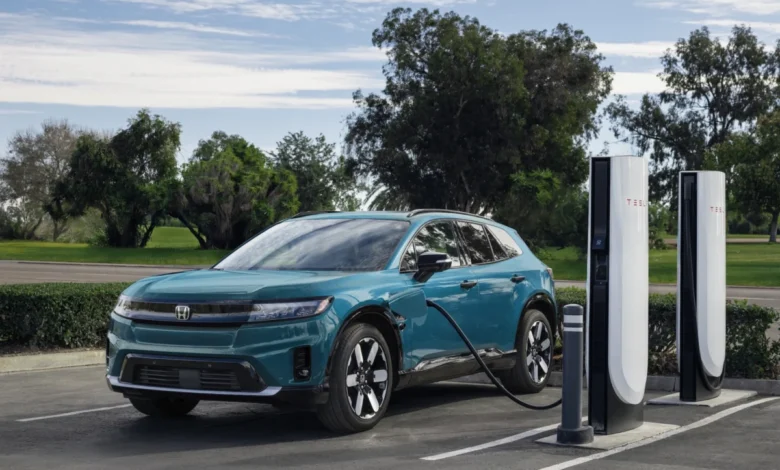
The Honda Prologue is officially dead, a decision the company recently confirmed, effectively removing the last all-electric vehicle from the automaker’s current U.S. portfolio. This departure signals more than a simple shift in one company’s product roadmap; it serves as a high-profile illustration of a broader electric vehicle (EV) industry retreat from the United States market. While the global transition toward electrification continues at a rapid pace in Europe and China, the American landscape is currently defined by a "K-shaped" divergence, where the U.S. is increasingly being left behind by international trends.
The demise of the Honda Prologue has sparked an industry-wide examination of the factors driving automakers to pull electric models from American showrooms. The reasons are multifaceted, ranging from the expiration of federal incentives and the implementation of aggressive trade tariffs to shifting consumer preferences and the high capital costs associated with maintaining unprofitable EV lines. As of mid-2026, several high-profile electric nameplates have either been discontinued, placed on indefinite hiatus, or barred from entry entirely.

The Economic Catalyst: The End of the Federal Tax Credit
To understand the mass exodus of EV models, one must first look at the financial framework that supported their initial growth. The end of the $7,500 federal tax credit in late 2025 had an immediate and outsized effect on EV sales across the country. For many middle-market consumers, this credit represented the difference between an affordable monthly payment and a prohibitive luxury expense.
According to data published in July 2026 by Kelley Blue Book and Cox Automotive, approximately 247,226 EVs were sold in the second quarter of the year, accounting for roughly 5.8% of the total automotive market. While this represented a slight growth between the first and second quarters of 2026, the figures remain significantly lower than the same period in the previous year. The market has struggled to regain the momentum it lost when the tax incentives expired. Fourth-quarter 2025 sales were 36% lower than the same period in 2024, and while the gap has narrowed, Q2 2026 sales were still 20.5% lower than those recorded in 2025.
In response to this cooling demand, automakers are recalibrating. They are weighing the cost of regulatory compliance against the reality of inventory buildup. For many, the math no longer favors a diverse all-electric lineup in the U.S.

Honda and Acura: The Collapse of the 0 Series and the Prologue
Honda’s journey in the U.S. EV market has been characterized by grand ambitions followed by sudden retractions. Only two years ago, the company announced its "0 Series," a futuristic line of EVs intended to define its next decade. This included a mid-sized SUV prototype debuted at CES 2025 and the Saloon and Space-Hub concepts revealed a year prior. These vehicles were slated for production at Honda’s "EV Hub" in Ohio, with a North American launch planned for the first half of 2026.
However, in March 2026, Honda abruptly stopped the development of the Acura RDX EV, the Honda 0 sedan, and the 0 SUV. The company cited a combination of high U.S. tariffs on components and fierce competition from Chinese manufacturers as the primary drivers for this overhaul.
The subsequent cancellation of the Honda Prologue, confirmed in July 2026, marked the end of an era. The Prologue was a unique product of a partnership with General Motors, built on GM’s Ultium platform at the Ramos Assembly Plant in Mexico. It shared much of its DNA with the Chevrolet Blazer EV. While the Prologue performed respectably at first—selling roughly 33,000 units in 2024 and 39,000 in 2025—it could not survive the "free fall" in sales that followed the expiration of federal tax credits.

Sony-Honda Mobility: The Afeela That Never Was
The Afeela brand, a high-tech joint venture between Sony and Honda, serves as a cautionary tale of the "marketing-to-production" gap. Initially revealed as the Vision-S prototype at CES 2020, the project evolved into the Afeela brand in 2022. Despite a constant barrage of updates and high-profile appearances at trade shows like TechCrunch Disrupt, the vehicle never reached a commercial assembly line.
In March 2026, coinciding with Honda’s broader retreat, the joint venture officially abandoned the two Afeela-branded EVs planned for the U.S. market. The project, which emphasized in-car entertainment and AI-driven interfaces, was ultimately deemed too costly and risky given the deteriorating U.S. market conditions for premium electric sedans.
Tesla: The End of the Model S and Model X
Perhaps the most shocking development in the 2026 retreat was Tesla’s decision to end production of its legacy flagship vehicles: the Model S sedan and the Model X SUV. For over a decade, the Model S was the gold standard for electric luxury, but its relevance had faded as the more affordable Model 3 and Model Y took over the bulk of Tesla’s volume.

In January 2026, Tesla announced it would phase out the S and X to refocus its resources on what CEO Elon Musk describes as the company’s true future: artificial intelligence, autonomous "Cybercabs," and the Optimus humanoid robot. The final units rolled off the assembly line in Fremont, California, in the spring of 2026. Almost immediately, the company began dismantling the S and X production lines to make room for robot manufacturing, signaling a definitive pivot away from the traditional premium passenger car segment.
The Regulatory Barrier: Polestar’s Forced Exit
While some companies left the U.S. market voluntarily, others were forced out by geopolitical tensions. Polestar, the Swedish EV maker owned by the Chinese automotive giant Geely, has been effectively barred from the United States. This follows a comprehensive ban by the U.S. government on Chinese-connected vehicle technology, citing national security concerns regarding data privacy and infrastructure safety.
Polestar sought specific authorization from the U.S. Department of Commerce to continue its operations, but the request was denied. While Polestar’s sibling company, Volvo, received authorization to continue selling its connected cars, Polestar was not as fortunate. Consequently, the company has ceased imports of the Polestar 3 and Polestar 4. While the company will continue to support its existing customer base and service network, it has no path forward for new vehicle sales in the current regulatory environment.

Strategic Revisions: Hyundai, Nissan, and Volkswagen
Other major players have opted for surgical removals of specific models rather than total brand retreats.
Hyundai: Despite being a leader in EV adoption, Hyundai announced in March 2026 that it would no longer sell the Ioniq 6 sedan in the U.S. This decision was largely driven by logistics and tariffs. The Ioniq 6 was imported from South Korea, making it more expensive to sell in the U.S. compared to the Ioniq 5 and Ioniq 9, which are assembled at the company’s "Metaplant" in Georgia. Hyundai will continue to import only the high-performance, low-volume N-model of the Ioniq 6.
Nissan: The Ariya SUV, Nissan’s first major EV follow-up to the pioneering Leaf, will not see a 2026 model year in the United States. After a slow launch plagued by supply chain issues, Nissan decided to pull the plug on the Ariya for the American market, refocusing its efforts on hybrid technology and future solid-state battery development.

Volkswagen: In a significant move, Volkswagen announced in April 2026 that it would cease production of the ID.4 electric SUV at its Chattanooga, Tennessee, factory. This shift marks a return to high-volume, internal combustion engine (ICE) vehicles, such as the gas-powered Atlas SUV. VW stated that while existing inventory of the ID.4 may last into 2027, no new units will be manufactured for the U.S. market. Additionally, the highly anticipated ID. Buzz microbus has been placed on hiatus for 2026, though a return is tentatively scheduled for 2027.
Volvo’s Retraction of the EX30
Volvo, despite its stated goal of becoming a fully electric automaker, was forced to scale back its U.S. ambitions in early 2026. The company withdrew the subcompact EX30 and its Cross Country variant from the American market. The EX30 was intended to be Volvo’s most affordable entry point into the EV space, but production shifts and the aforementioned trade complications made the vehicle’s price point unsustainable for the U.S. market. Volvo will instead focus on its larger, higher-margin electric SUVs, the EX60 and EX90.
Analysis: Implications for the American Automotive Future
The mass withdrawal of these models suggests a significant cooling of the "EV fever" that gripped the U.S. automotive industry between 2021 and 2024. The implications are profound for both consumers and the environment.

- Reduced Consumer Choice: As automakers consolidate their lineups, the variety of available EVs—particularly in the sedan and small SUV categories—is shrinking. This may push consumers back toward internal combustion or hybrid vehicles.
- The Rise of Hybrids: In the absence of affordable all-electric options and federal credits, hybrid vehicles have seen a resurgence. Automakers like Toyota and Honda are doubling down on gas-electric powertrains as a pragmatic "middle ground" for American drivers who are wary of charging infrastructure and high entry costs.
- A Widening Global Gap: The U.S. is increasingly becoming an outlier. While American showrooms lose EV models, the global market continues to expand, driven by aggressive subsidies in China and strict emissions mandates in the European Union. This could eventually lead to a technological rift, where the vehicles developed for the global market are no longer compatible with or desired by the U.S. market.
- The Infrastructure Challenge: The retreat of these models may also slow the build-out of charging infrastructure. With fewer EVs on the road, the economic incentive for private companies to install and maintain high-speed chargers diminishes, creating a cyclical problem for future EV adoption.
Despite these setbacks, the U.S. market is not entirely devoid of hope. New entries like the Rivian R2 and continued domestic production from Ford and GM suggest that while the market is winnowing, it is also maturing. The "Great EV Retreat" of 2026 may eventually be viewed not as the death of the electric car in America, but as a painful and necessary market correction as the industry moves away from hype and toward sustainable, long-term business models.