Zoox Issues Software Recall After Robotaxi Struggles with Smoke at Emergency Scene

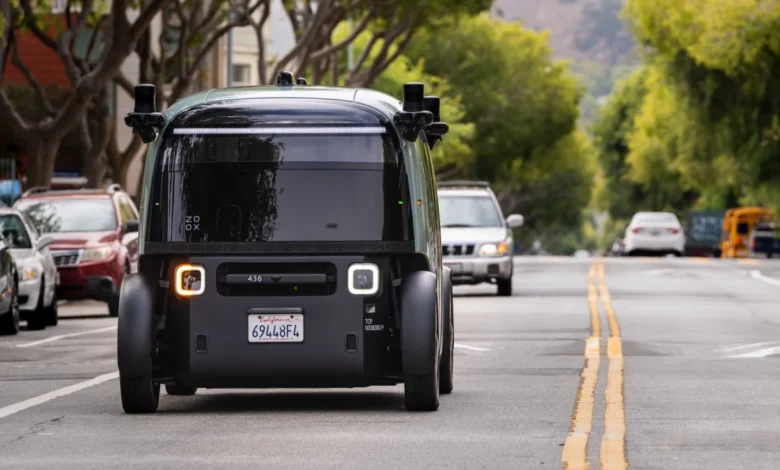
The autonomous vehicle industry is facing renewed scrutiny as Zoox, the self-driving subsidiary of Amazon, officially issued a software recall for its entire fleet of 105 robotaxis. The move follows a June incident in which one of the company’s vehicles became disoriented and struggled to navigate a smoke-filled emergency scene. While no injuries were reported, the event has triggered a mandatory software update and intensified the ongoing dialogue between federal regulators and autonomous vehicle (AV) developers regarding the safety of first responders and the public.
According to documents filed with the National Highway Traffic Safety Administration (NHTSA), the recall concerns a specific software limitation that hindered the vehicle’s ability to interpret environmental hazards—specifically heavy smoke—during an active fire emergency. The company confirmed that it has already deployed an over-the-air (OTA) software update designed to enhance the fleet’s perception capabilities, allowing the vehicles to better detect and respond to smoke-filled environments in the future.
The June Incident and Immediate Technical Response
The incident that prompted the recall occurred on June 20, when a Zoox robotaxi encountered an active fire scene that had not yet been cordoned off with traffic cones or emergency tape. As the vehicle approached the area, it was met with "heavy smoke" that obscured the road and the surrounding environment. The onboard sensors, which rely on a combination of lidar, radar, and cameras, were unable to categorize the smoke accurately as a transient environmental factor rather than a solid obstacle or a clear path.
In response to the visual and sensor interference, the Zoox vehicle "braked hard" and attempted to steer away from the perceived hazard before coming to a complete stop in a position that potentially obstructed the scene. The situation required the intervention of a Zoox teleoperator—a remote human assistant—who took control of the vehicle to reverse it away from the emergency zone. This allowed first responders to proceed with placing traffic cones and managing the fire.
Zoox’s statement to the NHTSA emphasized that the vehicle was unoccupied at the time and that the company is not aware of any crashes or injuries stemming from the event. However, the failure to navigate the scene autonomously highlighted a "functional insufficiency" in the software’s logic regarding extreme environmental conditions.
Technical Analysis of the Software Update
The recall, identified by NHTSA ID 26E044000, targets the vehicle’s perception and prediction software. In a statement provided to TechCrunch, Zoox explained that the update "enhances the existing capability of detecting active [emergency] scenes by adding the ability to detect and respond to heavy smoke in certain situations."
From a technical standpoint, smoke represents a significant challenge for autonomous systems. Lidar (Light Detection and Ranging) sensors, which emit laser pulses to create a 3D map of the surroundings, can be confused by particulates in the air. Smoke, like heavy fog or dust, can cause "noise" in lidar data, as the laser beams reflect off the particles rather than solid objects. If the software is not calibrated to recognize these reflections as smoke, the vehicle may perceive an impenetrable wall where there is actually a traversable, albeit obscured, path—or conversely, it may fail to see a hazard hidden within the smoke.
The software update aims to refine the filtering algorithms that process sensor data. By improving the "semantic segmentation"—the process by which the AI identifies what each pixel or data point represents—the vehicles can now distinguish between a solid obstruction and a plume of smoke, allowing for a more controlled and predictable response, such as slowing down or seeking an alternative route without abrupt, hard braking.
Regulatory Pressure and the Call to Action
The timing of Zoox’s recall is particularly notable, coming just one week after a stern warning from federal regulators. On July 8, NHTSA Administrator Jonathan Morrison sent a formal letter to various self-driving car companies, demanding that they stop interfering with the work of first responders.
In his letter, Morrison was blunt about the industry’s current shortcomings. "Let me be clear: the inability to detect and appropriately respond to such situations represents a functional insufficiency," he wrote. He further dismissed the notion that emergency scenes are rare occurrences that companies can afford to ignore, stating, "Emergency scenes are not rare or extreme ‘edge cases.’ As such, NHTSA is today issuing a call to action for AV developers and operators to immediately focus their resources on fixing this issue."
The "edge case" argument has long been a defense used by AV companies to explain away unusual accidents or system failures. By categorizing emergency scenes as standard operating environments, the NHTSA is effectively raising the bar for what constitutes a "safe" autonomous system. Zoox’s decision to issue the recall on July 7, just one day before the public release of Morrison’s letter, suggests a proactive attempt to align with the regulator’s hardening stance.
A Pattern of Regulatory Challenges for Zoox
This is not the first time Zoox has had to address safety concerns through the recall process. The company has faced a series of challenges over the past 18 months as it moves closer to a full commercial launch:
- March 2025: Zoox voluntarily recalled software on its vehicles to resolve a hard-braking issue. This followed a 2024 NHTSA investigation into reports of the vehicles stopping unexpectedly, which had led to minor rear-end collisions by human-driven cars following the robotaxis.
- May 2025: The company issued two separate recalls in a single month. One followed a collision with a passenger car, and the second involved an incident where a Zoox vehicle was struck by an electric scooter rider.
- June 2026: The current smoke-related recall involving 105 vehicles.
These incidents highlight the "two steps forward, one step back" nature of autonomous vehicle development. While Zoox continues to expand its testing footprint, each new city and environment introduces variables that the AI must learn to navigate.
The Broader Context: Waymo and the AV Industry
Zoox is far from the only company struggling with the complexities of urban emergency response. Waymo, the Alphabet-owned leader in the space, has also faced criticism. Reports indicate that Waymo vehicles have had at least six documented run-ins with first responders as of March 2026. In some instances, firefighters or police officers were forced to physically move the robotaxis because the vehicles became "stuck" or refused to yield to emergency signals.
The friction between high-tech transit and public safety services has become a flashpoint for local governments. In San Francisco and Phoenix, city officials have expressed concerns that robotaxis can block fire hydrants, park over fire hoses, or prevent emergency vehicles from reaching their destinations. The NHTSA’s recent "call to action" serves as a federal acknowledgement that these local frustrations have reached a critical mass.
Amazon’s Ambitions and the Path to Commercialization
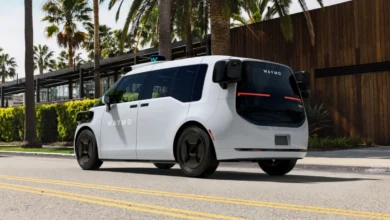
Amazon acquired Zoox in 2020 for an estimated $1.2 billion, signaling the retail giant’s interest in autonomous logistics and passenger transport. Unlike competitors who retrofit existing passenger cars (such as Waymo’s use of the Jaguar I-Pace), Zoox is developing a "purpose-built" robotaxi. The vehicle is a carriage-style pod with no steering wheel, no pedals, and bidirectional driving capabilities.
This unique design presents a higher regulatory hurdle. To deploy these vehicles commercially, Zoox must obtain exemptions from certain Federal Motor Vehicle Safety Standards (FMVSS), which were originally written with human drivers in mind. The NHTSA has recently proposed removing the requirement for manual brake pedals in fully autonomous vehicles—a move that would benefit companies like Zoox and Tesla—but such deregulation is contingent on the companies proving their systems are as safe, if not safer, than human drivers.
Zoox is currently offering free rides to employees and select members of the public in Las Vegas and San Francisco as part of its final testing phase. The company’s planned commercial launch is viewed as a pivotal moment for Amazon’s broader transportation strategy, potentially integrating autonomous tech into its massive delivery network.
Implications for the Future of Autonomous Safety
The Zoox smoke recall serves as a case study in the evolving relationship between the tech industry and safety regulators. For years, the AV industry operated in a relatively permissive environment, but the NHTSA’s recent actions signal a shift toward more rigorous oversight.
The core of the issue lies in the definition of "safe enough." While AVs do not get tired, distracted, or intoxicated—factors that contribute to the vast majority of human-caused accidents—they still struggle with the nuance of human environments. A human driver sees smoke and understands the context of an emergency; an AI sees a data anomaly.
As Zoox and its competitors work to refine their algorithms, the focus will likely shift from basic navigation to "high-fidelity" environmental understanding. This includes recognizing hand signals from traffic officers, responding to the specific flash patterns of different emergency vehicles, and, as this recall demonstrates, navigating through environmental hazards like smoke or debris.
The success of the recent software update will be closely monitored by both Amazon and the NHTSA. If the 105-vehicle fleet can demonstrate consistent, reliable performance in complex emergency scenarios, it will pave the way for the regulatory exemptions Zoox needs to launch its steering-wheel-less pods. However, if "functional insufficiencies" continue to emerge, the road to a driverless future may remain under a yellow caution flag for the foreseeable future.