High Amperage Requirements and Older Charging Adapters Lead to Melting Incidents During Rivian R2 Performance Testing

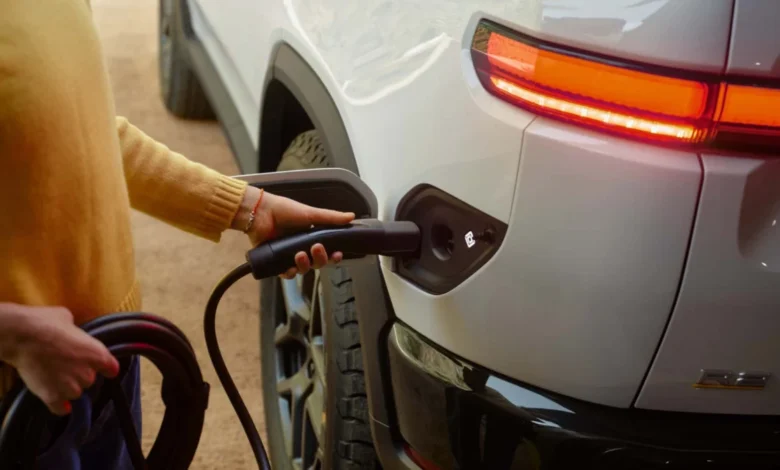
The emergence of the Rivian R2 as a pivotal contender in the mass-market electric vehicle (EV) sector has brought with it a series of technical revelations regarding the intersection of legacy charging infrastructure and modern high-output battery systems. During a recent evaluation conducted by veteran automotive journalist Tom Moloughney, host of the "State of Charge" YouTube channel, a critical hardware failure occurred that highlights a burgeoning challenge for the EV industry. While testing the charging capabilities of the pre-production Rivian R2 at a CCS (Combined Charging System) station, Moloughney utilized an older-generation Tesla NACS-to-CCS adapter. The result was a thermal event that led to the melting of one of the adapter’s internal pins, rendering the unit unusable and raising significant questions about the compatibility of older charging accessories with next-generation high-amperage vehicles.
This incident, while alarming, was not identified as a malfunction of the Rivian R2 itself. Rather, it served as a stark demonstration of the physical limitations of early-generation charging hardware when subjected to the extreme electrical demands of modern 400-volt architectures. As Rivian prepares to transition its fleet to the North American Charging Standard (NACS), the incident underscores a critical learning curve for consumers who may assume that all adapters are created equal.
The Technical Divergence: Voltage versus Amperage
To understand why a charging adapter would melt under normal operating conditions, it is necessary to examine the engineering decisions behind the Rivian R2’s power delivery system. In the competitive landscape of electric SUVs, manufacturers generally choose between two primary battery architectures: 400-volt and 800-volt systems. High-end competitors, such as the Porsche Taycan and the Hyundai Motor Group’s E-GMP platform (which powers the Ioniq 5 and Kia EV6), utilize 800-volt systems. These higher-voltage architectures allow for faster charging speeds with lower current (amperage), which reduces the amount of heat generated during the process.
In contrast, Rivian opted to retain a 400-volt architecture for the R2, a decision driven largely by the need to maintain a competitive starting price of approximately $45,000. By utilizing the same 400-volt foundation found in the flagship R1T and R1S, Rivian could leverage existing supply chains and engineering data to reduce costs. However, to achieve the rapid charging times promised for the R2—specifically the ability to charge from 10% to 80% in under 30 minutes—the vehicle must compensate for its lower voltage by drawing a significantly higher amount of current.
Physics dictates that heat is a byproduct of electrical resistance, and resistance increases with amperage. When the Rivian R2 is connected to a high-output DC fast charger, it is capable of pulling upwards of 600 amps. For a sustained period, this level of current places immense thermal stress on every component in the charging chain, including the station’s cable, the vehicle’s inlet, and, most crucially, any intermediate adapters.
The Role of Thermal Throttling in Modern Adapters
The failure of the adapter in Moloughney’s test was attributed to the age and design of the hardware. Older NACS-to-CCS adapters were often engineered during an era when few vehicles sustained amperage draws exceeding 350 to 400 amps for long durations. These legacy units frequently lack the sophisticated thermal management systems found in contemporary accessories.
Modern, high-quality adapters are equipped with internal temperature sensors that communicate with the vehicle or the charging station. If the sensor detects that the heat generated by the high current is approaching the melting point of the plastics or the structural integrity of the metal pins, the system will automatically "throttle" or reduce the charging speed. This safety mechanism prevents hardware damage by sacrificing a few minutes of charging time to ensure the equipment remains within safe operating temperatures.
In the case of the older Tesla adapter used in the R2 test, this communication or thermal detection was either absent or incompatible with the R2’s high-output demand. The adapter continued to allow the full 600-amp flow until the heat reached a level where the thermoplastic housing began to deform and the metal pins suffered structural failure. Moloughney noted that while the charge was successfully completed, the physical damage to the adapter made it clear that the hardware was pushed beyond its design limits.
The High-Amperage Club: Beyond Rivian
While the Rivian R2 has become the focal point of this discussion due to its recent testing phase, it is far from the only vehicle that poses a risk to subpar charging equipment. Several other prominent EVs on the market are capable of drawing high amperage on 400-volt systems.
- Tesla Model 3 and Model Y: These vehicles frequently utilize high amperage at V3 and V4 Superchargers.
- Polestar 2 and 3: Recent updates to these models have increased their peak charging rates.
- BMW i4 and iX: BMW’s electric fleet is known for aggressive charging curves that demand high current from DC fast chargers.
The distinguishing factor for the Rivian R2 is the duration for which it can sustain these high rates. Early data suggests the R2’s thermal management system for its battery pack is exceptionally efficient, allowing it to stay at peak amperage longer than many of its rivals. While this is a benefit for the driver in terms of time spent at a station, it increases the cumulative heat load on the charging adapter, making the quality of that adapter a non-negotiable safety factor.
The NACS Transition and Consumer Responsibility
The automotive industry is currently in the midst of a massive shift toward the North American Charging Standard (NACS), a connector design originally proprietary to Tesla. Rivian, along with nearly every major automaker selling vehicles in North America, has committed to adopting this port. The R2 is designed with a native NACS port, allowing owners to plug directly into Tesla’s vast Supercharger network without an adapter.
However, the North American charging landscape remains a patchwork of standards. Thousands of existing DC fast chargers operated by Electrify America, EVgo, and ChargePoint utilize the CCS1 standard. Consequently, R2 owners will frequently find themselves in situations where an adapter is required to bridge the gap between their NACS-equipped vehicle and a CCS-equipped charging station.
To mitigate the risk of hardware failure, Rivian has taken proactive steps. In states that follow California Air Resources Board (CARB) mandates, Rivian includes an officially sanctioned, high-capacity adapter in the purchase price of the vehicle. These official adapters are rigorously tested to handle the 600-plus amp draw of the R2 and include the necessary thermal safeguards to prevent melting. The company urges customers to avoid "white label" or uncertified third-party adapters found on discount e-commerce platforms, as these often lack the internal copper thickness and thermal sensors required for high-output charging.
Chronology of the NACS-CCS Integration
The incident involving the R2 and the melted adapter is part of a larger timeline of infrastructure evolution:
- May 2023: Ford becomes the first major automaker to announce a switch from CCS to NACS, sparking an industry-wide trend.
- June 2023: Rivian follows suit, announcing that its future vehicles (including the R2 and R3) will feature native NACS ports.
- Early 2024: Tesla begins opening select Supercharger locations to non-Tesla vehicles via the "Magic Dock" (a built-in NACS-to-CCS adapter) and software updates.
- Late 2024: Rivian begins intensive real-world testing of the R2, leading to the discovery of high-amperage compatibility issues with older legacy adapters.
- 2026 (Projected): The official market launch of the Rivian R2, by which time the company aims to have standardized high-capacity adapter distribution.
Implications for the Future of EV Infrastructure
The melting of a charging adapter serves as a "canary in the coal mine" for the EV industry. As battery capacities grow and consumers demand faster charging, the physical limits of current and heat management will become increasingly prominent.
Industry analysts suggest that this incident may accelerate the push toward 800-volt systems across the board. While 400-volt systems like the one in the Rivian R2 are more cost-effective today, the infrastructure required to support them safely at high speeds—such as liquid-cooled charging cables and high-spec adapters—adds its own layer of cost and complexity.
Furthermore, this event may lead to stricter regulatory oversight for charging accessories. Currently, the market for EV adapters is relatively under-regulated compared to the vehicles themselves. There is a growing call for mandatory safety certifications (such as UL listing) for any adapter capable of handling DC fast charging currents, ensuring that a "hand-me-down" adapter from 2018 is not used to power a 2026 high-performance SUV.
For the average consumer, the takeaway is clear: the charging ecosystem is not yet "plug and play" in the way that gasoline refueling is. Owners of the Rivian R2, and indeed any modern EV, must be diligent in verifying that their charging accessories match the technical specifications of their vehicle. Using a subpar or outdated adapter is not merely an inconvenience that might slow down a charge; it is a legitimate fire and safety hazard that can result in permanent damage to both the vehicle and the charging station.
As Rivian continues to refine the R2 ahead of its official release, the focus will likely remain on educating the public about the nuances of high-amperage charging. The brilliance of the R2’s design—bringing high-end performance to a mid-range price point—remains intact, provided the bridge between the car and the grid is built to handle the load.