Lyft Accelerates Autonomous Strategy with Waymo Nashville Partnership and Global Expansion Goals

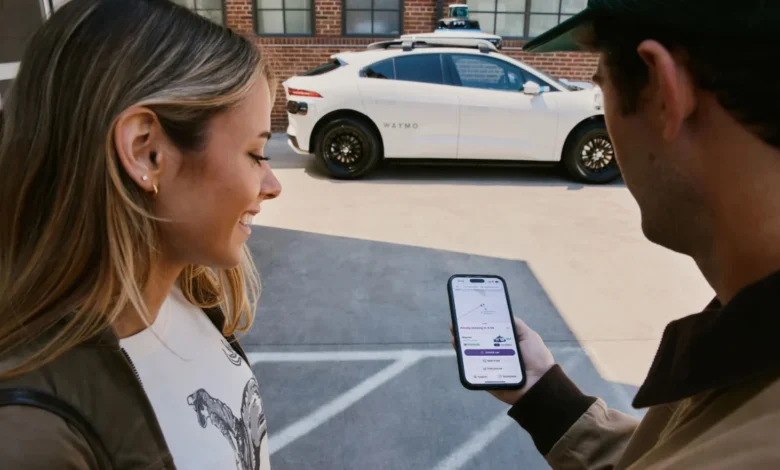
The landscape of personal mobility is undergoing a tectonic shift as Lyft, one of the world’s leading ride-hailing platforms, officially integrates fully driverless Waymo robotaxis into its service ecosystem in Nashville. This deployment represents a critical inflection point for Lyft, moving the company from a history of tentative autonomous vehicle (AV) testing into a new phase of commercial, operator-free service. By leveraging its subsidiary, Flexdrive, to handle fleet maintenance, vehicle readiness, and depot operations, Lyft is signaling a strategic pivot toward becoming the infrastructure backbone for third-party autonomous fleets.
A Chronology of Lyft’s Autonomous Evolution
Lyft’s journey toward an autonomous-integrated business model has been defined by a cycle of internal development, divestment, and strategic partnership. In its early years, the company sought to control its own technological destiny through its "Level 5" division. For four years, Lyft invested hundreds of millions of dollars into developing proprietary software and hardware stacks for self-driving vehicles. However, the capital-intensive nature of this pursuit eventually led the company to divest its autonomous unit in 2021, selling the division to Toyota’s Woven Planet Holdings for $550 million.
Following that divestment, Lyft largely sidelined its AV aspirations to stabilize its core ride-hailing business and focus on profitability. During this interim, it maintained a light footprint in the sector, conducting limited pilots with partners such as Aptiv (now Motional) in Las Vegas and May Mobility in Atlanta. The Nashville launch with Waymo, however, represents the first instance where a passenger can hail a fully driverless, human-operator-free vehicle through the Lyft app, marking the end of the company’s "wait-and-see" approach.
The Mechanics of the Nashville Partnership
The integration of Waymo into the Lyft platform in Nashville is designed to maximize utilization. Customers in the service area now have two primary avenues to access the technology: they may use the dedicated Waymo app for a guaranteed robotaxi experience, or they may request a ride via the Lyft app, which acts as a demand-aggregator. If a Waymo vehicle is available in the vicinity, the Lyft algorithm can dispatch it to the passenger, blending the seamless nature of standard ride-hailing with the cutting-edge reality of Level 4 autonomous transit.

This model is supported by Lyft’s operational expertise. By utilizing Flexdrive, the company manages the logistical burden—cleaning, charging, and software-updating the fleet—which allows Waymo to focus strictly on its "Driver" stack and safety protocols. This division of labor is expected to become the blueprint for future partnerships as Lyft expands its reach into other cities.
Strategic Vision and Global Expansion
Jeremy Bird, Lyft’s executive vice president of growth, oversees a portfolio that includes the company’s international ambitions, luxury ride segments, and the burgeoning AV sector. In discussions regarding the company’s trajectory, Bird emphasized that 2026 is positioned as a pivotal year for diversification. While the Nashville launch is the primary focus, Lyft’s long-term roadmap hinges on its ability to scale similar hybrid networks—where human-driven cars and autonomous shuttles coexist—on a global scale.
The company’s renewed interest in international markets, particularly London, suggests that Lyft is no longer content to remain a U.S.-centric entity. Bird noted that regulatory environments in foreign markets are now a primary filter for where the company chooses to deploy its resources. If a market is conducive to AV integration from a legal and infrastructure standpoint, it is prioritized. This reflects a broader shift in the company’s corporate philosophy: transitioning from a regional ride-share provider to a global "transportation-as-a-service" utility that views autonomous fleets as a core component of its future revenue stream.
Defensive Tech and Industry Consolidation
Parallel to its public-facing mobility milestones, the broader automotive industry is seeing an influx of defense-related talent, hinting at a convergence between autonomous civilian transport and military-grade robotics. Ford, for instance, has recently onboarded a suite of experts from organizations like Raytheon, General Dynamics, and Lockheed Martin. By hiring personnel with deep backgrounds in generative AI and continuous improvement from the defense sector, legacy automakers are clearly preparing for a more complex, high-stakes operational environment where security and reliability are paramount.
This trend underscores the maturation of the AV industry. As robots take over the driver’s seat, the requirements for fleet management, cybersecurity, and situational awareness begin to mirror the needs of defense logistics, creating a talent war for engineers who understand both machine learning and high-reliability systems.

A Wave of Capital and Infrastructure Development
The mobility sector is currently seeing a surge in high-value deals that indicate strong investor confidence despite lingering economic headwinds. Most notably, The Boring Company, Elon Musk’s tunnel-building venture, secured $3 billion in a round led by the United Arab Emirates, bringing its total valuation to $23 billion. This capital injection is directly tied to the expansion of subterranean transit networks, including a planned 150-kilometer project in the Middle East.
Simultaneously, the autonomous shuttle sector is receiving significant backing. Beep, a company specializing in campus-based autonomous transit, closed a $20 million Series B round led by Mobileye, bringing its total funding to $130 million. These investments, coupled with Porsche’s recent divestment of its Bugatti Rimac stakes for approximately 1 billion euros, illustrate a broader trend of liquidity and portfolio optimization among major automotive players.
Even specialized sectors are finding capital: Fryte Mobility, a German startup focused on electric truck charging logistics, secured $4 million, while Poseidon Aerospace raised $60 million to advance its uncrewed cargo plane, the "Egret." These investments highlight that the future of transportation is not limited to passenger cars, but includes logistics, aviation, and infrastructure.
The Global Competitive Landscape
While U.S. developers often dominate the news cycle, the race for autonomy is truly international. In recent weeks, China’s Pony.ai has moved to scale its commercial robotaxi operations in Doha, Qatar, and is conducting driverless tests in other regions. In Europe, the regulatory environment is also evolving, as evidenced by Spain granting its first national operating permits for Level 4 autonomous passenger vehicles to a coalition including WeRide, Uber, and Avomo.
Meanwhile, Zagreb, Croatia, has seen the launch of fully driverless public road testing by Verne, a company associated with entrepreneur Mate Rimac. These developments signal that the "geography of autonomy" is expanding rapidly. For a company like Lyft, the challenge will be to navigate these disparate regulatory landscapes while maintaining a cohesive user experience across international borders.

Implications and Future Outlook
The implications of Lyft’s current strategy are twofold. First, by offloading the development of autonomous hardware to specialists like Waymo and focusing on the "coordination layer"—the app interface and the fleet management—Lyft is mitigating the immense financial risk that previously hampered its own AV division. Second, by moving into global markets, the company is positioning itself to be a primary orchestrator of the transition to a driverless future.
As 2026 approaches, the industry can expect further consolidation. Smaller, niche players in the AV space will likely be absorbed by larger platforms, while the regulatory frameworks governing driverless travel will continue to harmonize. The success of the Nashville pilot will serve as a bellwether for whether the public is ready to embrace a world where the driver is a lines-of-code algorithm rather than a human contractor. For Lyft, the goal is clear: to remain the dominant interface through which that transition occurs, whether the vehicle is guided by a human or an AI.