Waymo Resumes San Francisco Robotaxi Service Following Brief Suspension Amid Major Citywide Power Outage

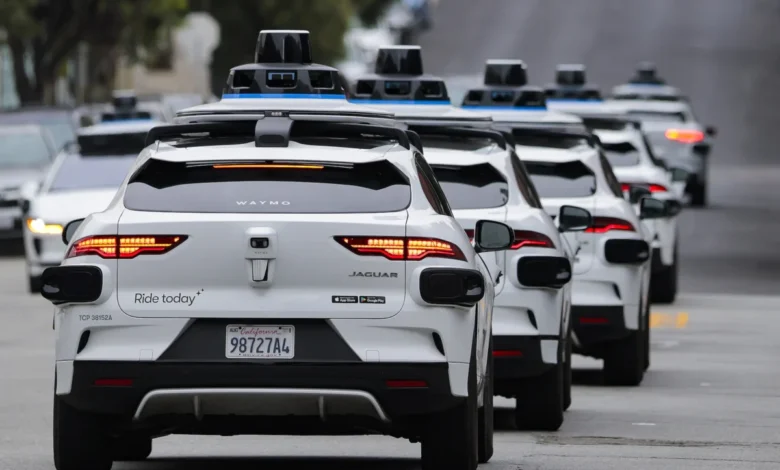
Waymo, the autonomous driving subsidiary of Alphabet Inc., officially resumed its robotaxi operations in San Francisco on July 18, 2026, following a strategic one-hour service suspension triggered by a significant power outage. The disruption, which left approximately 7,000 Pacific Gas and Electric (PG&E) customers without electricity, prompted the ride-hailing giant to enact "temporary adjustments" to its fleet management to ensure passenger safety and operational integrity. While the majority of city streets have returned to standard autonomous service, Waymo confirmed that certain freeway routes remain temporarily unavailable as the company continues to monitor local conditions and infrastructure stability.
The decision to pause operations highlights the ongoing challenges faced by autonomous vehicle (AV) operators when navigating the unpredictable nature of urban infrastructure failures. According to internal communications shared by users on social media, Waymo notified customers via its mobile application that service was "temporarily paused" shortly after the outage began around midday. The notification specifically highlighted the unavailability of freeway routes, a critical component of Waymo’s recent service expansion in the Bay Area. A Waymo spokesperson later clarified that the hour-long hiatus was a precautionary measure intended to allow the company’s operations team to coordinate with San Francisco municipal officials and assess the geographic scale of the blackout.
Chronology of the July 18 Service Disruption
The events of July 18 began at approximately 11:45 AM PDT, when PG&E reported a localized but impactful power failure affecting several key neighborhoods in San Francisco, including districts with high robotaxi traffic. By 12:30 PM PDT, Waymo’s dispatch system began throttling ride requests, eventually leading to a full service suspension within the city limits.
During this window, Waymo’s remote assistance teams and fleet technicians worked to ensure that vehicles currently in transit reached their destinations safely or transitioned to "minimal risk conditions"—a programmed safety state where the vehicle pulls over to a safe location if it detects an environment it cannot navigate. At 1:30 PM PDT, following a comprehensive review of the city’s traffic light functionality and communication network stability, Waymo began a phased restoration of service. By the mid-afternoon, the company issued an updated statement confirming that while surface street operations had resumed, freeway access would remain restricted as a "safety-first" protocol until the electrical grid showed total stabilization.
The Intersection of Autonomous Technology and Grid Reliability
The reliance of autonomous vehicles on external infrastructure remains a focal point of technical and regulatory debate. While Waymo’s "Driver" technology is designed to operate using onboard sensors—including LiDAR, radar, and cameras—the broader ecosystem of a "smart city" relies heavily on consistent power. Traffic signals, street lighting, and cellular towers (which facilitate the V2X or Vehicle-to-Everything communication) are all vulnerable during a PG&E outage.
When power is lost, traffic signals often default to a flashing red light or go dark entirely. Under California law, a dark intersection must be treated as a four-way stop. While Waymo’s software is programmed to recognize and navigate these scenarios, the presence of thousands of human drivers reacting inconsistently to a blackout creates a high-entropy environment. By pausing service, Waymo effectively removed its fleet from a high-risk situation, preventing potential traffic snarls that have plagued the company during previous infrastructure failures.
Historical Context: A Pattern of Urban Challenges
The July 18 incident is not the first time Waymo has had to contend with the realities of San Francisco’s aging power grid and dense urban events. In December 2025, a similar blackout led to several robotaxis stalling on city streets, creating significant bottlenecks and drawing criticism from local transit advocates. Furthermore, a high-profile incident during the Fourth of July fireworks display near the Golden Gate Bridge earlier this month saw dozens of autonomous vehicles become paralyzed by gridlocked traffic and heavy pedestrian crowds, leading to a "traffic fiasco" that lasted several hours.
These recurring incidents have fueled a growing tension between autonomous vehicle companies and San Francisco city officials. While Waymo has maintained an impressive safety record compared to human-driven ride-hail services, the "predictability" of the vehicles during anomalies remains a point of contention. The December 2025 blackout, in particular, served as a catalyst for the company to refine its "offline" navigation capabilities, yet the decision to pause service entirely on July 18 suggests that a conservative approach remains the company’s primary safety directive.
Political and Regulatory Reactions
San Francisco Mayor Daniel Lurie has been a vocal proponent of increased oversight regarding how AV companies manage emergencies. In the wake of the July 18 outage, the Mayor’s office reiterated calls for tougher state-level regulations. Currently, the California Public Utilities Commission (CPUC) and the Department of Motor Vehicles (DMV) hold the primary authority over AV deployments, often leaving local city governments with limited power to dictate operational hours or emergency protocols.

"We need a framework that ensures autonomous vehicles do not become obstacles during a crisis," a spokesperson for Mayor Lurie stated following the service resumption. "Whether it is a planned event like a parade or an unplanned incident like a PG&E power outage, the city must have the assurance that these fleets can be managed in real-time to prioritize emergency vehicle access and public safety."
The Mayor’s push for "tougher rules" includes a proposal for a centralized emergency "kill switch" or a direct communication line that allows city dispatchers to request the immediate grounding of AV fleets during major civic emergencies. Waymo, for its part, has stated it remains in constant communication with the San Francisco Municipal Transportation Agency (SFMTA) and emergency responders, though the efficacy of this coordination is frequently tested by the rapid onset of power failures.
Technical Analysis of "Temporary Adjustments"
Waymo’s "temporary adjustments" during the outage likely involved more than just a pause in ride requests. Technical experts suggest that during such periods, the company may adjust the "confidence thresholds" of its driving software. In areas where traffic signals are unpowered, the vehicles may be programmed to take longer routes to avoid complex unprotected left turns or high-volume intersections that lack police oversight.
The decision to keep freeway routes "unavailable" is particularly telling. Freeway driving requires the highest level of sensor precision and the lowest latency in communication. If the cellular networks used for remote assistance are degraded due to the power outage, the risk of a vehicle "stranding" itself on a high-speed highway increases. By restricting service to surface streets, Waymo ensures that if a vehicle does encounter a technical issue, it can be reached more easily by a ground support team and poses a lower risk to the overall flow of high-speed transit.
Broader Implications for the Robotaxi Industry
The July 18 outage serves as a case study for the entire autonomous vehicle industry, including competitors like Tesla and Cruise, the latter of which has been working toward a full return to San Francisco streets. The incident underscores a fundamental reality: the "driver" may be autonomous, but the "environment" is not.
For Alphabet, the parent company of Waymo, these disruptions represent a minor but significant hurdle in the quest for a profitable, 24/7 transportation utility. As Waymo seeks to expand into more complex environments and weather conditions, the ability to withstand—or gracefully retreat from—infrastructure failure will be a key differentiator in gaining public trust.
Financial analysts note that while a one-hour pause has negligible effects on quarterly revenue, the reputational cost of "stalled" cars is much higher. "Waymo is choosing the path of maximum caution," said one industry analyst. "In the current regulatory climate, one viral video of a stalled robotaxi blocking an ambulance during a blackout is more damaging than an hour of lost fares."
Future Outlook and Infrastructure Resilience
As PG&E continues to work on upgrading San Francisco’s electrical grid, the frequency of such outages remains a variable that Waymo must account for in its operational algorithms. The company is reportedly investing in more robust edge-computing capabilities that would allow its vehicles to navigate with even less reliance on cloud connectivity, potentially mitigating the need for full service pauses in the future.
For now, San Francisco residents can expect a cautious approach from the leader in autonomous ride-hailing. As of the evening of July 18, Waymo service has returned to near-normal levels, though the company has not provided a specific timeline for when freeway routes will be fully restored. Passengers are advised to check the Waymo app for real-time availability and potential delays as the city’s power grid returns to full capacity.
This incident reinforces the necessity of a symbiotic relationship between high-tech transportation solutions and the fundamental physical infrastructure of the cities they serve. As the "autonomous revolution" continues, the resilience of the power grid may prove to be just as important as the sophistication of the AI driving the cars.