Rivian CEO RJ Scaringe Confirms Upcoming R3 Crossover Will Be Materially Cheaper Than R2 With R4 Set to Push Prices Even Lower


Rivian Automotive is charting a definitive path toward mass-market affordability, with Chief Executive Officer RJ Scaringe revealing that the forthcoming R3 crossover will arrive at a price point "materially lower" than the R2 SUV. Furthermore, the company has already laid out long-term intentions for an R4 model designed to push entry-level thresholds down even further. While official pricing details remain unreleased, these strategic hints confirm that the electric vehicle manufacturer is steadily pivoting its product portfolio toward the high-volume core of the global automotive market.
The statements were detailed during a wide-ranging executive interview with the national press, where Scaringe discussed the brand’s iterative product rollout and long-term financial maturation. When questioned about development pipelines beyond the currently scaling R2 architecture, Scaringe acknowledged the upcoming compact crossover, playfully noting that the engineering team had creatively designated the product as the R3. Although exact MSRP figures are currently withheld, the executive’s commentary reinforces previous assertions that the R3 family is engineered to capture the mid-to-high $30,000 segment, effectively expanding Rivian’s consumer reach.
Decoding the R2 Pricing Baseline
To understand the positioning of the forthcoming R3, analysts must carefully examine the staggered rollout of the R2 platform. While market observers frequently categorize the R2 as a $45,000 vehicle, that entry-level cost structure represents a delayed phase in the production timeline rather than an immediate market entry.
When Rivian officially unveiled the comprehensive R2 lineup and corresponding price architecture in March, the initial vehicle scheduled for assembly was the Performance launch edition, carrying a price tag of $57,990. Subsequent trims were slotted sequentially across production schedules: the $53,990 Premium model followed later in the year, followed by the $48,490 Standard Long Range variant in early 2027, and finally the base $45,000 Standard Rear-Wheel-Drive configuration slated for late 2027.
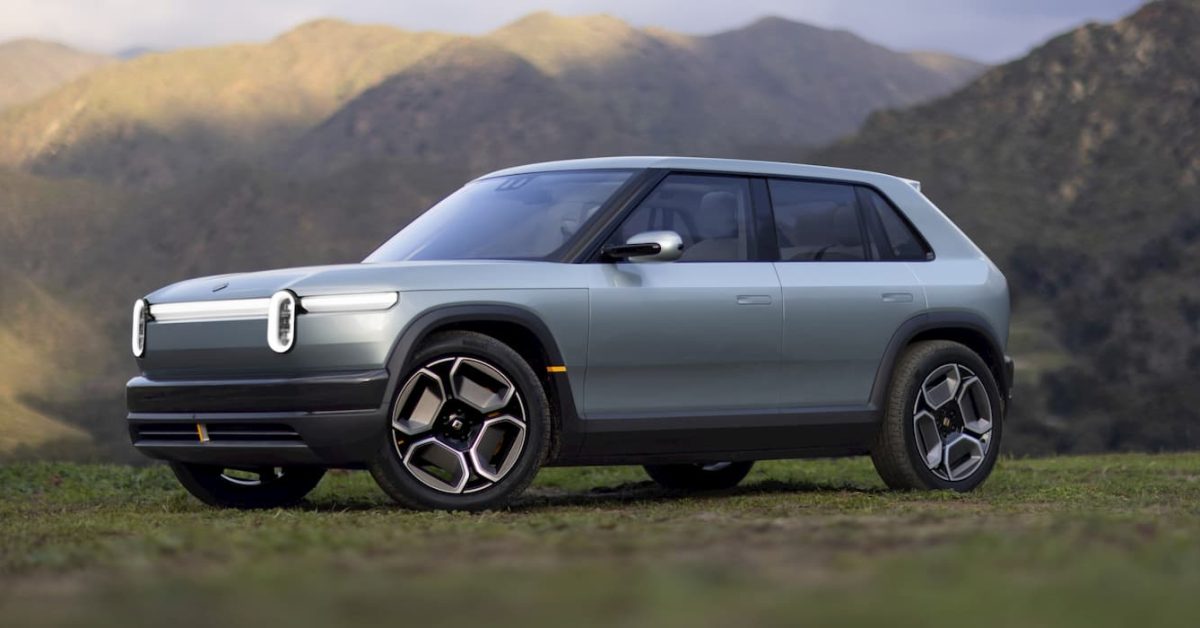
Consequently, a price point described as "materially lower than R2" requires contextualization against this staggered baseline. Scaringe’s prior public statements suggested that the R3 would position Rivian squarely within the mid-to-high $30,000 bracket, establishing a distinct tier beneath the base R2 configurations. This tiered pricing strategy mirrors the classical automotive ladder, allowing consumers to graduate upward through performance, battery capacity, and luxury features while maintaining an accessible entry point for budget-conscious buyers.
Production Roadmaps and Manufacturing Footprint
Translating these product ambitions into physical inventory requires extensive manufacturing capabilities. Rivian has designated its sprawling facility in Georgia as the primary production hub for the R3 crossover, with construction and assembly schedules targeting an official manufacturing kickoff in 2028. The site has been engineered with significant industrial scale in mind, boasting a projected annual production capacity of up to 400,000 units across two distinct operational phases.
As for the prospective R4 and R5 models, executive commentary suggests a more distant horizon. Scaringe has previously categorized these conceptual platforms as sibling vehicles built upon an entirely new generational architecture. Because dedicated engineering teams have not yet been assigned to these far-future programs, the R4 currently exists primarily as a strategic price direction rather than a tangible vehicle with a definitive production calendar.
The immediate corporate focus remains fixed on ramping up R2 operations and navigating the complex financial realities of scaling an electric vehicle enterprise. Rivian’s operational metrics indicate that the R2 is successfully fulfilling its short-term commercial mandate. Following the commencement of R2 deliveries, the company adjusted its full-year delivery guidance upward to a range of 65,000 to 70,000 total vehicles, marking a substantial increase from the roughly 42,000 units delivered during the previous fiscal year.
Despite these positive delivery milestones, Rivian continues to operate at a net financial loss as it invests heavily in manufacturing infrastructure. Adjusted earnings before interest, taxes, depreciation, and amortization (EBITDA) losses for the current fiscal year are projected to land between $1.8 billion and $2 billion, underscoring the immense capital expenditures required to establish modern automotive production lines.

Strategic Evolution: The Playbook of Scaling
The decision to launch high-end flagship vehicles before introducing lower-cost mass-market options is a calculated strategy that Scaringe has defended through the lens of industry economics. As an unproven startup attempting to source components for the initial R1 platform, Rivian lacked the commercial leverage necessary to negotiate favorable volume discounts from established tier-one automotive suppliers. According to Scaringe, the company was initially forced to absorb a significant cost premium—estimated at 40 to 50 percent—on supplier pricing due to lower initial production volumes and perceived corporate risk.
As the company has matured, established manufacturing credibility, and expanded its operational footprint, that dynamic has completely reversed. Supplier executives now routinely initiate direct travel to Rivian’s corporate offices to pitch partnerships and secure contracts, reflecting the brand’s rising stature and long-term viability in the global mobility sector.
This sequential product strategy closely mirrors the playbook utilized by industry pioneer Tesla, which leveraged its high-end Model S and Model X platforms to fund the eventual development and mass production of the more accessible Model 3 and Model Y lines. By establishing brand equity, technological credibility, and robust manufacturing facilities at higher price points, electric vehicle startups can absorb initial engineering inefficiencies before attempting high-volume, margin-sensitive production runs.
Broader Market Implications and Competitive Outlook
Rivian’s systematic progression from high-end adventure vehicles to more affordable crossovers arrives at a critical juncture for the North American and global automotive markets. Consumer demand for battery-electric vehicles has shown sensitivity to price points, making the sub-$40,000 segment the ultimate battleground for sustained volume growth.

Industry analysts note that traditional legacy automakers have occasionally struggled to balance profitability with affordable electric vehicle production, often citing high battery costs and complex supply chain transitions. By structuring its manufacturing operations around flexible platforms like the Georgia facility, Rivian aims to achieve economies of scale that can insulate the company against pricing pressures while satisfying consumer demand for versatile, multi-segment utility vehicles.
Furthermore, the expansion of Rivian’s lineup positions the company to aggressively target international markets once its domestic production ramps up sustainably. The introduction of the R3, followed by future iterations on subsequent platforms, creates a comprehensive ecosystem of electric vehicles that spans multiple price brackets, vehicle sizes, and utility profiles.
As Rivian navigates the remaining developmental hurdles for the R3 and manages the financial balancing act of scaling the R2, the automaker stands as one of the few independent, pure-play electric vehicle startups in the United States to successfully transition from a niche luxury manufacturer to a broad-market competitor. The success of this upcoming vehicle generation will likely determine whether the company can achieve sustained profitability and secure a permanent, foundational role in the future of global personal transportation.