Ilford Photo Releases Delta 400 Professional Collector’s Edition in a Sneak Peek Market Test for a Clearer Film Base

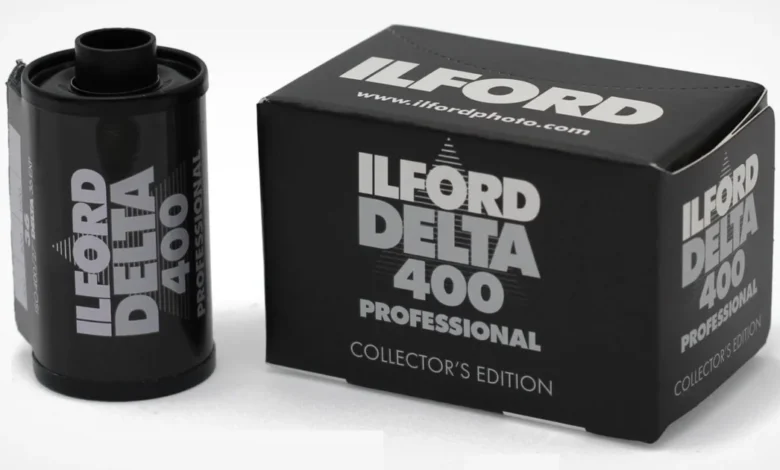
The enduring resurgence of analog photography has reached a fascinating new milestone as legacy manufacturers continue to experiment with emulsion technology and base materials. Ilford Photo, one of the most respected names in traditional black-and-white photography, has officially unveiled a limited-run emulsion: the Ilford Delta 400 Professional Collector’s Edition. Available exclusively in the 135 (35mm) format, this new iteration marries the beloved performance characteristics of the standard Delta 400 Professional film with a structural innovation traditionally reserved for medium and large format roll films: a clearer film base equipped with anti-halation protection.
The introduction of this product has immediately captured the attention of film enthusiasts, professional photographers, and gear reviewers worldwide. While analog shooting has enjoyed a steady multi-year renaissance—driven by a demographic of younger photographers discovering physical media alongside seasoned veterans returning to the darkroom—innovation in 35mm base materials has remained relatively static for decades. By introducing a transparent base with advanced anti-halation properties to a 35mm canister, Ilford is testing the waters for what could become a significant evolutionary step in modern black-and-white photography.
Breaking Down the Technical Specifications
At its core, the Ilford Delta 400 Professional Collector’s Edition retains the foundational photographic speed, exposure latitude, and processing chemistry of its standard counterpart. Photographers can shoot and develop this film using standard ISO 400 protocols, meaning no specialized or proprietary chemistry is required to achieve results. However, the physical architecture of the film itself represents a major departure from traditional 35mm production.
The most critical differentiator is the substrate. Standard 35mm black-and-white films typically utilize an opaque or grey-tinted base designed to prevent light piping and manage back-reflections during exposure. In contrast, the Collector’s Edition utilizes a clearer roll film base combined with a specialized anti-halation layer.
In traditional photography, halation occurs when bright points of light pass through the emulsion layer, hit the rear of the film base, and reflect back into the sensitive silver halide crystals, creating an unwanted glowing halo effect around high-contrast edges. While some photographers embrace halation for its vintage, dreamy aesthetic—as seen in specialty color films like cinestill—scientific accuracy, sharpness, and clean highlights are typically prioritized in professional emulsions.
According to official product documentation and technical briefings provided by Ilford, the inclusion of this clearer base and anti-halation layer yields measurable improvements in several key areas:
- Dynamic Range and Shadow Detail: The cleaner transmission of light through the substrate allows for a more refined rendering of tonal transitions, particularly in high-contrast lighting scenarios.
- Scanning Performance: One of the primary pain points for modern analog shooters is the digital scanning process. A clearer base reduces background fog and increases contrast fidelity during scanning, making it significantly easier for both flatbed and dedicated camera scanners to capture maximum shadow and highlight data.
- Overall Sharpness: By mitigating internal light scattering, the emulsion achieves crisper edge definition, delivering the ultra-fine grain structure that the Delta series is renowned for, but with heightened micro-contrast.
Packaging, Pricing, and Availability
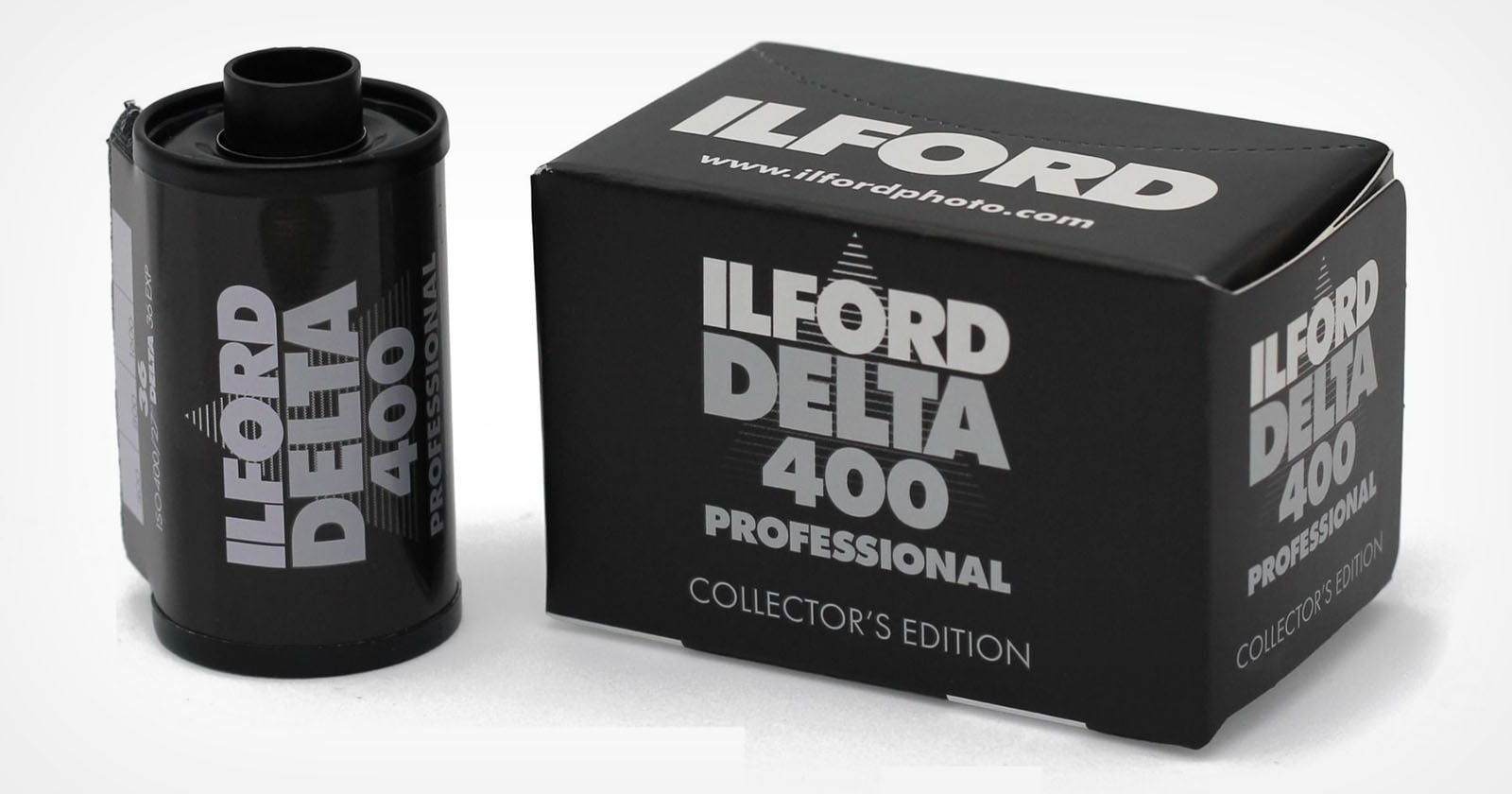
Aesthetically, the film makes an immediate impression. Eschewing the classic, highly recognizable white-and-grey Ilford branding, the Collector’s Edition arrives in a sleek, minimalist all-black cassette and matching outer carton. This understated luxury packaging clearly designates the product as a specialty item tailored for discerning enthusiasts and collectors.
Priced at $15.19 per roll, the film matches the standard retail cost of the conventional Ilford Delta 400 Professional. However, acquiring a roll requires navigating a unique distribution strategy. Ilford has chosen not to sell the Collector’s Edition through its direct-to-consumer online storefront. Instead, the product is available exclusively via brick-and-mortar retail channels through authorized dealers on a strictly limited basis. Because production runs are small, stocks are expected to vanish quickly from shelves, prompting a rush among global analog communities to secure whatever inventory remains.
The Strategic Intent Behind a Limited Release
The decision by a major manufacturer to launch a superior technical product under a strictly limited-edition label naturally raises eyebrows across the photography industry. The immediate logical question posed by consumers and industry analysts alike is simple: If the new film base offers superior sharpness, better scanning capabilities, and enhanced shadow detail, why restrict its availability? Why not simply replace the legacy formula with this improved version?
Ilford addressed this core concern directly through social media channels, specifically engaging with the community in the comment section of their official Instagram launch announcement.
"It’s a test to see what people think and if there’s a market for it," the company stated, clarifying the experimental nature of the release.
The manufacturer further elaborated that if the market response from photographers who manage to acquire the film is overwhelmingly positive, Ilford would seriously consider bringing the formulation back as a permanent, regular-production product. However, the company offered a candid caveat regarding future pricing: if integrated into the permanent catalog, the cost of production would "likely be higher than the existing product."
This pricing transparency highlights the economic realities of modern film manufacturing. Coating a 35mm film onto a specialized clearer base equipped with advanced anti-halation layers involves complex engineering and manufacturing overhead. Absorbing these costs during a limited, trial run is a manageable risk for a corporate entity, but scaling up production without raising the retail price could prove commercially unsustainable. Consequently, the Collector’s Edition acts as a market research vehicle, allowing Ilford to gauge whether consumers are willing to pay a premium for incremental technical enhancements in their black-and-white workflow.
Industry Context and the Evolution of Analog Manufacturing
To understand the significance of this release, one must look at the broader landscape of the photographic film industry over the past two decades. Following the digital revolution of the early 2000s, traditional photographic manufacturing faced an existential threat. Facilities closed, chemical formulas were lost, and legacy giants such as Kodak filed for bankruptcy, while other brands disappeared entirely.
Ilford Photo, operating out of its historic manufacturing plant in Mobberley, Cheshire, UK (under parent company Harman Technology), managed to survive this tumultuous period by maintaining a laser-like focus on quality, cost management, and community engagement. While other legacy brands have frequently raised prices or experienced prolonged supply chain bottlenecks, Ilford has remained a steady, reliable anchor for the global darkroom community.
In recent years, however, the conversation has shifted from mere survival to active innovation. With film sales surging—particularly among younger generations who value the tactile, intentional nature of mechanical photography—manufacturers are once again investing in research and development. Recent years have seen the revival of discontinued black-and-white stocks, the introduction of new color emulsions, and continuous improvements in packaging and distribution.
The introduction of the Delta 400 Professional Collector’s Edition fits neatly into this new era of proactive experimentation. Rather than resting on its laurels, Ilford is actively testing the limits of what traditional silver-halide technology can achieve when paired with modern material science.
Broader Implications and Future Outlook
The implications of this market test extend far beyond a single batch of 35mm film canisters. If the trial succeeds and consumer demand proves robust, it could pave the way for a broader paradigm shift in how black-and-white films are engineered.
For commercial labs, professional photographers, and archival printers, a clearer base with superior anti-halation properties represents a tangible workflow enhancement. Easier scanning translates to less time spent in post-processing software removing digital dust, correcting base fog, and recovering clipped highlights. Enhanced sharpness and dynamic range elevate the ceiling of what is achievable in traditional 35mm street, portrait, and documentary photography—genres where Delta 400 has historically excelled.
Conversely, if the market response is lukewarm—perhaps hampered by the higher projected price point or the friction of in-store-only purchasing—Ilford will have gathered valuable data without disrupting its core, highly efficient manufacturing lines for standard Delta 400.
For now, the photographic community finds itself in a period of eager anticipation. As rolls of the Ilford Delta 400 Professional Collector’s Edition make their way into the hands of working photographers, the results of real-world testing—ranging from home-developed negatives to high-end drum scans—will dictate the next chapter of the product’s lifecycle.
Whether this unique emulsion remains a fleeting collector’s item or evolves into the benchmark for a new generation of high-performance black-and-white film, Ilford’s willingness to innovate and consult its community directly underscores the vibrant, forward-looking health of contemporary analog photography. Photographers looking to secure a piece of this experimental run will need to act quickly, checking local authorized dealers while stock lasts, and watching closely to see if the clearer base becomes the new standard for the silver-gelatin age.