Pelican Products Launches First Major Television Campaign Featuring Global Ambassador Chris Burkard

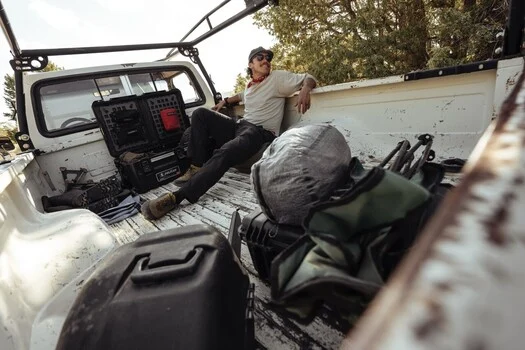
For decades, the name Pelican has been synonymous with industrial-grade protection. From the hardened, watertight shells that protect sensitive military equipment to the customizable foam-lined cases that have become a standard fixture for professional photographers navigating airport terminals and remote expedition sites, the company’s reputation has been built on durability. However, despite this dominance in the hard-case market, Pelican has historically maintained a conservative marketing profile, allowing the longevity and reliability of its products to serve as their own advertisements. This paradigm shifted significantly with the recent launch of a major television advertising campaign designed to showcase the company’s Aegis line—a series of soft-shell camera bags and travel packs including the PX25 Travel Pack and the SX5 Padded Sling.
To anchor this strategic expansion, Pelican turned to Chris Burkard, a veteran photographer and filmmaker whose career has been defined by extreme environments. With a 20-year history of shooting in locations ranging from the high-altitude plateaus of the American Southwest to the volcanic fields of Iceland, Burkard has become a natural fit for the brand. His appointment as a Global Ambassador marks a transition for Pelican, as it pivots from a focus on static industrial protection toward a lifestyle-oriented narrative that emphasizes mobility and the unpredictability of professional fieldwork.
The focal point of this campaign is a short film titled The Detour, which serves as both a commercial for the Aegis line and a candid look at the rigors of high-stakes photography. The film, shot on location at Great Sand Dunes National Park, highlights the necessity of gear that can withstand both human error and environmental extremes.
A Legacy of Reliability and Market Evolution
The relationship between Pelican and Burkard is rooted in long-term field usage rather than recent corporate outreach. For photographers of Burkard’s generation, the Pelican case was an essential barrier against the harsh realities of maritime and adventure photography. Burkard recalls his early years as a surf photographer, where the combination of water housings and Pelican cases was the difference between a successful shoot and irreparable equipment loss.
The transition of the Pelican brand into the soft-goods sector represents a calculated effort to capture a segment of the photography market that values portability as much as protection. The Aegis series utilizes a semi-rigid construction, aiming to bridge the gap between the impenetrable nature of the brand’s traditional hard cases and the ergonomic needs of modern, mobile content creators. According to internal projections from the company, this move is intended to address the "in-between" use case: scenarios where a fully armored hard case is cumbersome, but standard fabric bags lack the structural integrity required to protect high-value lenses and sensor arrays.
Chronology of the Partnership and Production
The collaboration emerged following a period of product testing during which Burkard provided direct feedback on the development of the Aegis series. The production of the campaign film, The Detour, took place over several days in the San Luis Valley, a location chosen for its challenging terrain and unique lighting conditions.
The production timeline was constrained by the meteorological realities of high-altitude environments. At 8,000 feet, the thermal activity in the San Luis Valley creates intense, unpredictable wind currents by mid-morning, limiting the window for aerial photography to the first hour of daylight. This necessitated a strict 4:00 a.m. daily start for the production crew. The filming process itself served as a real-world test for the equipment; the crew utilized experimental aircraft and navigated rugged, high-altitude dunes, forcing the gear to endure the same stresses as the project’s human subjects.
The Technical Specs of the Aegis Series
The Aegis PX25 and SX5 models are designed to meet specific professional requirements. The PX25, a larger travel pack, is optimized for photographers who need to move between transit and shooting environments without reconfiguring their entire kit. The SX5 Padded Sling, conversely, is engineered for quick access, allowing the user to maintain a minimal footprint while keeping primary camera bodies and optics within reach.
The engineering behind these products focuses on material resilience. Unlike many consumer-grade camera bags that degrade through fraying and structural collapse, the Aegis line is designed to acquire a "patina"—a cosmetic wearing-in that the designers intend to reflect the history of the bag’s usage. Pelican’s move toward these materials suggests a pivot in their design philosophy: acknowledging that while hard cases are meant to be invincible, soft-shell gear is meant to be lived in.
Strategic Implications of the Campaign
Pelican’s decision to launch a television-focused campaign is a departure from their historical reliance on word-of-mouth and trade-show exposure. Industry analysts suggest that this shift reflects a broader trend among legacy hardware companies: the need to humanize the brand. By pairing the product with a recognizable personality like Burkard, Pelican is attempting to move beyond the "industrial" label and appeal to a demographic of younger, adventure-focused creators who are less interested in technical specifications and more interested in the "lifestyle" of the professional nomad.
The narrative of "The Detour" is itself a meta-commentary on this shift. The story emphasizes that the most compelling creative work is often found when the itinerary is discarded. This messaging serves to position the Aegis bag not merely as a storage device, but as an enabler of creative spontaneity.
Field Testing and Future Reliability
Looking ahead, the collaboration between Pelican and its ambassadors will likely continue to center on extreme-environment testing. Burkard notes that the most rigorous testing grounds remain volcanic landscapes, such as those in Iceland, where fine ash and abrasive rock surfaces provide the ultimate stress test for zippers, stitching, and structural panels.
The ability to maintain a bag’s functionality after exposure to extreme heat, cold, and abrasive particulate matter remains the gold standard for the brand. For photographers, the "best" bag remains the one that allows for the fastest deployment of equipment; if a bag is too difficult to open, or if the internal organization is too complex, it becomes a hindrance. Pelican’s shift toward more accessible, semi-rigid solutions suggests a focus on this "accessibility vs. protection" metric.
Conclusion
The partnership between Pelican and Chris Burkard serves as a bridge between the company’s storied history in industrial protection and its future in the consumer-facing photography market. By focusing on the narrative of the photographer—the "yes-saying" adventurer who relies on their gear to survive in hostile conditions—Pelican is attempting to translate the trust they have earned from military and industrial clients into the photography and travel sectors. As the Aegis line continues to gain market traction, the success of this campaign will likely determine whether the company can successfully diversify its portfolio without diluting the core reputation for reliability that has anchored its business for over half a century. The campaign, through its emphasis on authentic, real-world trials, provides a blueprint for how a legacy hardware manufacturer can evolve in an increasingly digital and lifestyle-driven economy.