Decoding Earths Original Language How Osmo Is Bringing Artificial Intelligence to the Sense of Smell

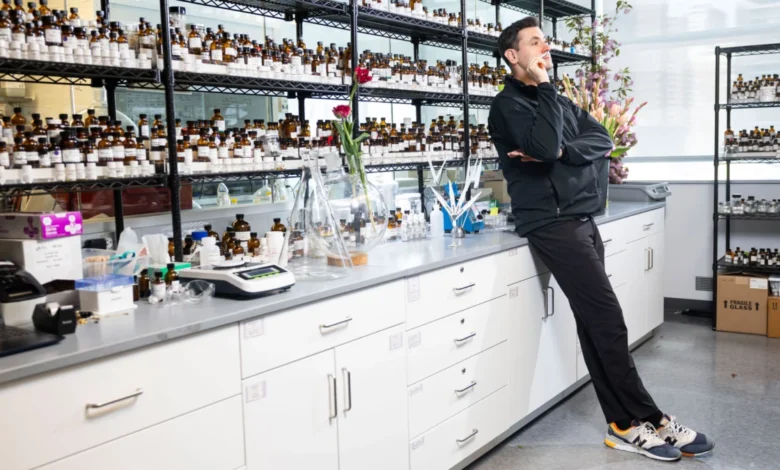
In a specialized laboratory situated near Newark Liberty International Airport in New Jersey, a dedicated team of approximately 30 experienced human evaluators methodically works through an exhaustive catalog of the planets volatile organic compounds. These professionals record precise sensory descriptors—such as nutty, peachy, and marine—which are subsequently cross-referenced with advanced chemical analyses. This rigorous data collection forms the bedrock of training information for Osmo, an artificial intelligence startup working to build what it describes as the worlds first foundational model for human olfaction. The overarching ambition, according to company founder and chief executive officer Alex Wiltschko, is to translate complex chemical properties into computational data, effectively giving digital systems a sense of smell.
Scent molecules represent a fundamental mode of communication shared across biological species. According to Wiltschko, because the majority of organisms lack the physiological architecture for complex visual or auditory language, olfaction functions as Earths original language. For human beings, the sense of smell holds profound evolutionary significance, tied deeply to memory and emotional processing. A single olfactory encounter can trigger vivid autobiographical recall decades later, bridging temporal gaps through neural pathways that bypass the thalamus and connect directly to the limbic system.
The Evolution of Olfactory AI: From Google Brain to Osmo
The origins of Osmo trace back to Wiltschko’s tenure at Google Brain, the former artificial intelligence research division of the search engine giant. In 2023, Wiltschko spun the initiative out of Google to establish an independent enterprise focused exclusively on computational olfaction. The startup adopted a methodological playbook common to contemporary artificial intelligence development: applying massive computational power and extensive datasets to complex, data-poor scientific domains.
Prior to Osmo’s entry into the field, the primary hurdle facing researchers was a severe deficit of standardized, machine-readable olfactory data. Existing public repositories contained fewer than 200,000 structured human descriptions of chemical scents. Furthermore, the specialized analytical hardware required to capture comprehensive chemical profiles—such as gas chromatography-mass spectrometry instruments—remains cost-prohibitive. Compounding these technical challenges, the global fragrance industry has historically guarded its proprietary formulations and sensory databases as closely held trade secrets.
To overcome this data scarcity, Osmo embarked on an ambitious data-generation campaign. The company has compiled a proprietary dataset comprising more than 10 million human sensory labels and approximately 800 million structural descriptors referred to as scent tokens. These tokens denote the precise molecular identities and relative concentrations required to produce specific perceptual odors. Continuous-operation spectrometers and advanced chemical sensors analyze the molecular makeup of diverse materials, ranging from fresh produce and botanical specimens to pantry staples and biological tissues. This analytical output is continually paired with evaluations from a distributed workforce of approximately 70 trained data labelers operating in the United States and abroad, who utilize a standardized fragrance vocabulary to classify physical samples.
Crossing Computational Thresholds and Unexpected Parallels
Within the past few months, leadership at Osmo reported that its computational model has achieved human-level olfactory intelligence. In the companys framework, this milestone indicates that the artificial intelligence system performs comparably to an average human subject when detecting, identifying, and discriminating between diverse scents. Furthermore, the model reportedly matches the proficiency of a junior perfumer in designing novel aromatic formulations.
This technological capability has already transitioned from experimental research to commercial application. Major consumer goods manufacturers utilize Osmo’s algorithms to accelerate the design and synthesis phases of fragrance development. In comparative evaluations conducted last month, the startup’s generative model reportedly outperformed in-house perfumers at one of the worlds largest multinational consumer goods corporations.
The mathematical mapping of scent space has also yielded counterintuitive structural parallels. Much like syntax in human language, where rearranging words alters the semantic meaning of a sentence, modifying the proportions of specific scent tokens can drastically transform perceived odors. According to Wiltschko, the molecular scent tokens that characterize the natural aroma of a newborn infant exhibit substantial overlap with those found in a freshly prepared plate of commercially manufactured pasta, specifically referencing the profile of Barilla spaghetti. Such findings highlight the non-linear relationship between chemical structure and human sensory perception.

To physically manifest these computational designs, Osmo operates a large-scale automated formulation system, colloquially referred to as a smell-printing robot. Roughly the dimensions of a school bus, this apparatus dispenses and blends chemical ingredients according to precise algorithmic formulas. The system is capable of producing custom physical samples for internal research and commercial clients based entirely on natural language text prompts, functioning similarly to generative text models like ChatGPT.
During demonstrations, users can input specific briefs—such as a fragrance mimicking a traditional Portuguese custard tart tailored for specific demographic profiles—and receive immediate molecular formulas alongside physical prototypes within days. Commercial partners such as Procter and Gamble have integrated these tools into their development pipelines, while marketplace platforms like StockX have explored deploying Osmo’s chemical analysis systems to authenticate high-value consumer goods, such as designer sneakers, by detecting compositional anomalies in manufacturing materials.
Scientific Skepticism and Industry Validation
Despite commercial traction and high-profile backing—including an initial 5 million dollar investment from the Bill and Melinda Gates Foundation followed by a subsequent 3.5 million dollar grant to identify novel insect repellents—Osmo’s claims have encountered skepticism from independent sensory scientists.
Avery Gilbert, an olfactory researcher and author of the book What the Nose Knows, has voiced public criticisms regarding the company’s marketing assertions. Writing on his analytical platform, Gilbert questioned the empirical documentation supporting several of Osmo’s performance benchmarks. He noted a perceived contradiction between the enterprise’s branding as an advanced artificial intelligence firm and its reliance on traditional human sensory panels and conventional perfumery techniques in its patent documentation.
Conversely, other academic experts acknowledge the substantial engineering achievements represented by the platform. Michael Schmuker, a former professor of neural computation at the University of Hertfordshire and a former consultant for Osmo, notes that the underlying architecture represents a significant step forward in computational biology. While academic researchers have previously developed open-source, reverse-engineered iterations of earlier Osmo models—such as the OpenPOM repository—independent academic efforts frequently lack access to the vast proprietary datasets accumulated by the startup.
Nevertheless, Schmuker highlights inherent limitations in current computational models regarding contextual dependency. Human olfaction relies heavily on cognitive and environmental context to interpret sensory inputs. For instance, chemical compounds responsible for the characteristic aroma of mature French cheeses like Camembert share molecular similarities with compounds found in waste products. Human subjects effortlessly distinguish between these sources based on contextual cues, a nuance that purely chemical and computational architectures may struggle to replicate reliably outside of controlled laboratory environments.
Broader Implications and Future Horizons
As Osmo looks toward future applications, the strategic focus extends beyond commercial perfumery into high-stakes sectors such as industrial safety, agriculture, and healthcare diagnostics. Deploying olfactory intelligence as an integrated sensory channel for broader artificial intelligence systems could enable automated inspection protocols, such as detecting food spoilage along manufacturing supply lines or identifying specific volatile organic compounds associated with disease pathology.
While the medical diagnostic sector represents the ultimate validation for olfactory technologies, historical precedent suggests significant challenges. Numerous startups attempting to commercialize disease detection via chemical sensors have encountered high failure rates due to the extreme complexity and cost associated with clinical translation. Addressing these barriers will require simultaneous advancements in chemical sensor hardware, computational modeling, and a deeper neurobiological understanding of human sensory processing.
Rather than attempting to conquer medical diagnostics immediately, Osmo’s leadership emphasizes an incremental, foundational approach. By mapping the chemical landscape of the physical world systematically, the organization aims to establish a reliable baseline infrastructure. As Wiltschko characterizes the long-term strategy, the enterprise is building a foundation at the foothills of these complex scientific challenges, dispatching continuous technological expeditions to decode the language of scent across the globe.