The Sound of Azeroth: How World of Warcraft: Forever Prompted a Re-evaluation of Video Game Soundscapes

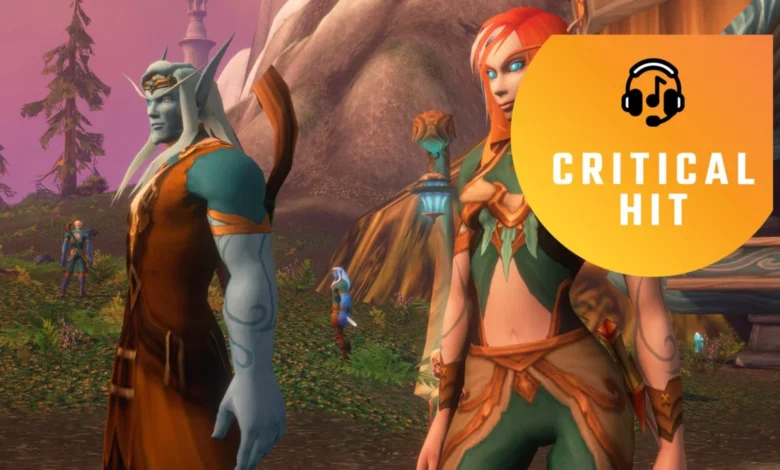
The release of the beta phase for World of Warcraft: Forever has reignited a long-standing debate within the gaming community regarding the evolution and purpose of video game audio design. While initial player feedback centered on the title’s reliance on subtle atmospheric soundscapes rather than overt dramatic cues, extended engagement with the game has prompted critics and players alike to re-examine the role of ambient music within massively multiplayer online role-playing games (MMORPGs). This shift in perspective highlights a broader stylistic dichotomy in modern game development: the choice between grand, leitmotif-driven orchestrations and understated, environmental soundscapes designed to blend seamlessly into the background.
Background and Context of Video Game Audio Design
The evolution of video game music has moved in tandem with hardware capabilities. In the early eras of gaming, limited audio channels necessitated simple, highly melodic, and repetitive loops that could immediately capture a player’s attention. As storage media expanded from cartridges to CDs and eventually to digital downloads, composers gained the freedom to experiment with full orchestral arrangements, dynamic audio layers, and fully realized vocal performances.
In contemporary gaming, two distinct philosophies have come to dominate the landscape. The first is the maximalist, thematic approach, frequently championed by Japanese role-playing games (JRPGs). Titles such as the Final Fantasy series—most notably Final Fantasy XIV, under the direction of composer Masayoshi Soken—rely heavily on distinct musical motifs associated with specific characters, regions, or narrative beats. In these environments, music acts as an active narrative driver, heightening emotional stakes and ensuring that every in-game location possesses a memorable, prominent auditory identity.
Conversely, the minimalist or ambient approach prioritizes immersion through subtlety. Games like Minecraft utilize sparse piano melodies and environmental textures to cultivate a sense of solitude and vastness. Similarly, the Mirror’s Edge series employs a primarily ambient electronic soundscape that remains subdued during exploration and intensifies strictly when the player enters high-stress, perilous scenarios. Within this framework, audio functions not as a standalone concert piece, but as an invisible architectural element that shapes the player’s psychological state.
Chronology of the World of Warcraft: Forever Beta and Audio Reception
The discussion surrounding World of Warcraft: Forever gained momentum following the rollout of its closed and open beta phases. Initially, early adopters noted a distinct departure from the bombastic orchestral suites that defined earlier expansions of the franchise. Players accustomed to the driving, brass-heavy battle tracks and sweeping choral arrangements of past iterations observed that the new content favored longer stretches of acoustic silence, punctuated only by environmental sound effects and gentle ambient pads.
As players spent more collective hours navigating the updated regions of Azeroth, community sentiment began to evolve. The discovery of specific audio configuration options—such as the loop music setting, which allows certain atmospheric tracks to play continuously without abrupt transitions—led to a reassessment of the new sound design. Rather than viewing the sparse audio as a lack of content, critics began to recognize it as a deliberate artistic choice aimed at enhancing world-building and reducing auditory fatigue during prolonged play sessions.
Comparative Analysis of Audio Philosophies
The juxtaposition between World of Warcraft: Forever and titles like Final Fantasy XIV underscores a fundamental divergence in how players interact with virtual spaces.
Maximalist Soundtracks:
- Characteristics: Prominent melodies, frequent use of leitmotifs, rich orchestral instrumentation, and vocal integration.
- Impact: Creates strong emotional associations, enhances cinematic storytelling, and establishes instant recognition for specific areas or characters.
- Potential Drawback: Can lead to auditory fatigue over extended gaming sessions if tracks loop too aggressively or clash with repetitive grinding activities.
Ambient Soundscapes:
- Characteristics: Subdued instrumentation, reliance on textures and pads, integration with environmental noise, and variable pacing.
- Impact: Fosters deep immersion, allows the natural sound effects of the game world to take precedence, and supports long-term engagement without overwhelming the player.
- Potential Drawback: Risk of being perceived as uninspired or lacking in immediate memorability upon first exposure.
Industry Implications and Broader Impact
The ongoing discourse sparked by World of Warcraft: Forever reflects broader trends in interactive media design. As developers strive for greater realism and sustained player engagement, the psychological impact of audio has become a critical area of study. Industry analysts note that sound design directly influences player retention, session length, and emotional resonance.
By balancing ambient immersion with occasional melodic focal points, developers can create soundscapes that accommodate the hundreds of hours typically invested in modern MMORPGs. The re-appraisal of World of Warcraft: Forever suggests that players are increasingly receptive to audio designs that respect the pacing of open-world exploration, valuing atmosphere and tranquility just as much as theatrical grandeur.
Conclusion
The debate over the soundtrack of World of Warcraft: Forever illustrates that video game audio is far from a monolithic art form. Whether through the intricate, character-driven melodies of traditional JRPGs or the sweeping, unobtrusive environments of modern MMORPGs and indie titles, music remains a vital pillar of digital storytelling. As player preferences continue to diversify, composers and sound designers face the ongoing challenge of crafting auditory experiences that not only complement the visual fidelity of a game but also deeply resonate with the player’s subjective journey through virtual worlds.
Related posts: