Korean Indie Game Contest Challenges Developers to Create Games Smaller Than a Floppy Disk

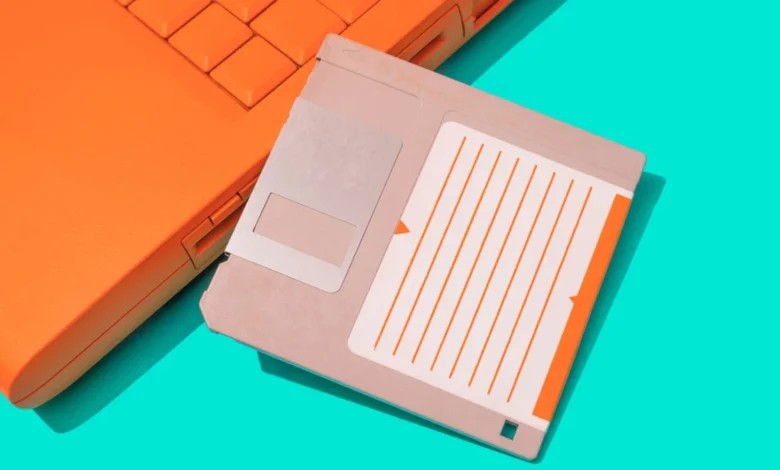
A unique and nostalgic challenge has emerged from the Korean indie game scene, calling on developers to create original games that must fit within the minuscule confines of a single 3.5-inch floppy disk. The contest, hosted by the Korean indie game site 2P Game Arcade, sets a strict file size limit of 1,474,560 bytes, equivalent to the 1.44 MB capacity of a standard high-density floppy disk, after decompression. This initiative harks back to an era when game development was constrained by severe hardware limitations, forcing extreme ingenuity and efficiency.
The Floppy Disk Challenge: A Return to Form
The contest, which officially began accepting submissions on May 26, 2024, requires participants to develop entirely new games. There are no restrictions on the game engines or programming languages that developers can utilize. However, the final product must be a self-contained, standalone executable. Browser-based games are explicitly excluded from eligibility, ensuring that the focus remains on creating a compact, installable experience. The deadline for submissions is set for midnight on September 4, 2024.
The premise of the contest is a stark contrast to the current landscape of video game development, where file sizes frequently exceed tens or even hundreds of gigabytes. Modern gaming experiences often demand extensive storage space, with some titles requiring over 100 GB for installation. This trend is driven by increasingly sophisticated graphics, high-resolution textures, expansive open worlds, and extensive in-game content. The 1.44 MB limit imposed by the 2P Game Arcade contest stands as a powerful reminder of the technological evolution and the creative hurdles faced by developers in the early days of computing.
Historical Context: The Era of Size Constraints
In the late 1980s and early 1990s, floppy disks were the primary medium for distributing software and games. The 3.5-inch, 1.44 MB floppy disk was a significant improvement over its predecessors, offering a considerable capacity for the time. Developers had to be exceptionally skilled in optimizing their code and assets to fit within these limitations. Techniques such as data compression, procedural generation, and clever programming were essential. Games like "Commander Keen" (1990), which originally shipped on floppy disks, demonstrate the impressive scope that could be achieved within such tight constraints. These games often featured innovative gameplay mechanics and memorable experiences, proving that size was not necessarily a barrier to quality or enjoyment.
The resurgence of interest in such extreme size limitations can be seen as a response to the perceived bloat in modern game development. It encourages a return to fundamental design principles, emphasizing gameplay mechanics, core loops, and efficient art and sound design over sheer visual fidelity or scale. The contest provides a platform for developers to showcase their mastery of optimization and their ability to craft compelling experiences with minimal resources.

Prizes and Judging Criteria: Simplicity and Substance
While the contest aims to celebrate ingenuity, the rewards are modest compared to the lucrative prize pools found in some larger industry events. The 2P Game Arcade contest page, as translated, indicates that prizes are described as "a small souvenir." The first-place winner will receive 720,000 Korean Won, which currently equates to approximately $490 USD. This suggests that the primary motivation for participants is the challenge itself and the opportunity to showcase their skills, rather than significant financial gain.
The judging criteria are refreshingly straightforward and directly address the core objectives of the competition:
- Game Completeness: The game must be functional and playable.
- Capacity Adherence: The game’s final file size must not exceed the 1.44 MB limit.
- Fun Factor: Ultimately, the game must be enjoyable to play.
This emphasis on "fun" is crucial, as it ensures that the contest isn’t just an exercise in technical prowess but also a celebration of engaging game design. The organizers are looking for games that are not only technically impressive in their size optimization but also provide a genuinely entertaining experience for players.
The Broader Implications: A Refreshing Perspective
In an industry often dominated by massive budgets and increasingly demanding hardware requirements, this contest offers a valuable and refreshing perspective. It highlights the fact that compelling gameplay and innovative design can transcend the need for cutting-edge graphics and colossal file sizes. By forcing developers to work within such severe constraints, the contest fosters a deeper understanding of computational efficiency and resource management.
The implications of such a challenge extend beyond the individual developers participating. It can inspire a wider conversation about the sustainability of current game development trends, the accessibility of games to players with limited hardware or internet bandwidth, and the potential for creativity when faced with limitations. In an era where games are often measured by their graphical fidelity and scale, this contest serves as a potent reminder that the heart of a great game lies in its design, its mechanics, and its ability to connect with players on an emotional or intellectual level.
The success of this initiative could potentially encourage similar events or even influence mainstream development practices to consider more resource-conscious approaches. While it’s unlikely that AAA titles will suddenly shrink to megabyte-sized downloads, the principles of efficient development and thoughtful asset management can still be applied to create more accessible and sustainable gaming experiences.

Developer Reactions and Anticipation
While official statements from major game development studios regarding this specific contest are not available, the sentiment among indie developers and those nostalgic for retro computing is generally positive. Many have expressed excitement about the opportunity to test their skills against such a unique challenge. Social media platforms and gaming forums have seen discussions about creative ways to approach the size limit, with developers sharing ideas on optimizing graphics, sound, and code.
One common sentiment echoed by those interested in the contest is the sheer difficulty of the task. "Fitting a game into 1.44 MB today is an art form," commented a prominent indie developer who wished to remain anonymous. "It forces you to think about every single byte. You can’t afford any wasted space. It’s a return to the core of what game development is about: making something fun and memorable with the tools you have."
The contest also provides a valuable educational opportunity. For newer developers, it’s a chance to learn advanced optimization techniques that are often overlooked in modern development. For experienced developers, it’s a nostalgic journey back to the fundamentals and a test of their enduring skills. The "fun" criterion is particularly intriguing, as it suggests that the organizers are not just looking for technical marvels but for games that are genuinely engaging, even in their minimalist form. This implies that clever mechanics, engaging narratives, or unique art styles can still shine through, even with limited visual and auditory resources.
A Look Ahead: The Future of Minimalist Gaming
The 2P Game Arcade contest is more than just a competition; it’s a cultural statement about the evolution of video games. It challenges the prevailing notion that bigger is always better and celebrates the ingenuity that arises from constraint. As the deadline approaches, the gaming community will be eagerly awaiting the submissions, curious to see the innovative and compact experiences that emerge from this unique challenge.
The success of this event could pave the way for similar initiatives, fostering a niche for "minimalist gaming" that prioritizes clever design and efficient development over graphical extravagance. It also serves as a powerful reminder that the core of video games lies in their ability to entertain, engage, and evoke emotion, regardless of their file size. The era of the floppy disk may be long past, but the spirit of innovation it fostered continues to inspire developers today. The 1.44 MB limit is not just a technical hurdle; it’s a canvas for creativity, a testament to human ingenuity, and a nostalgic nod to the foundational principles of game development. The world will be watching to see what wonders can be squeezed into such a tiny digital space.
Related posts: