United Airlines Implements Strict Restrictions on Autonomous AI Agents Accessing Customer Portals

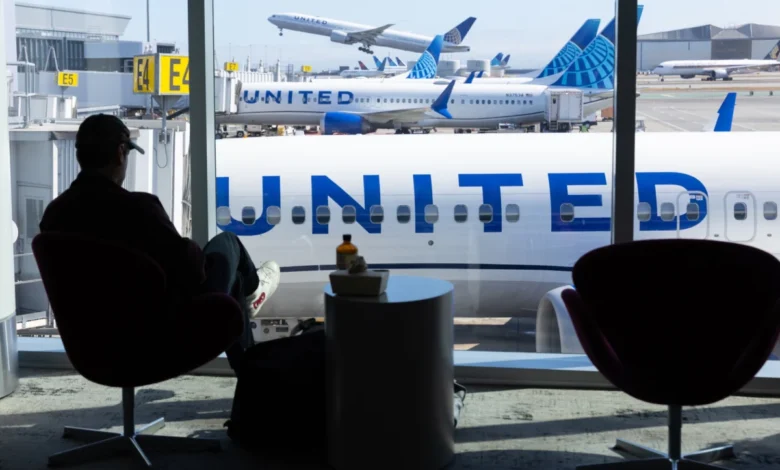
United Airlines has officially announced a comprehensive policy shift aimed at curbing the use of autonomous AI agents and third-party digital assistants within its booking and reservation systems. This decisive move, unveiled on November 12, 2026, marks a significant escalation in the ongoing tension between the rapid proliferation of generative AI tools and the cybersecurity protocols maintained by major global corporations. By restricting the ability of these agents to interact with its digital platforms, United aims to mitigate risks related to unauthorized data access, potential security breaches, and non-compliance with stringent federal aviation regulations.
The airline’s updated policy applies to both direct consumer interactions and the broader distribution ecosystem, including travel agencies and third-party aggregators. This proactive stance reflects a growing trend among industry titans, particularly in the banking and transportation sectors, to assert control over how their digital infrastructure is accessed and manipulated by increasingly sophisticated, yet often unvetted, AI software.
The Security Dilemma of Shared Credentials
At the heart of the controversy is the practice of users sharing personal login credentials—including usernames, passwords, and multi-factor authentication tokens—with AI-powered personal assistants. While marketed as a convenience for travelers looking to automate flight scheduling, point redemptions, and itinerary management, the practice introduces significant cybersecurity vulnerabilities.
When a user hands over their digital keys to a third-party AI, they effectively lose control over how those credentials are stored, transmitted, and utilized. If the AI provider’s security architecture is compromised, the user’s credentials, personal identifiable information (PII), and financial data become exposed to malicious actors. Furthermore, these autonomous agents operate on black-box logic, meaning the user may not always understand the specific queries or transactions the AI is performing on their behalf. United Airlines has explicitly warned that such interactions could lead to unintended consequences, including unauthorized purchases, erroneous changes to flight itineraries, or the accidental depletion of MileagePlus reward balances.
Regulatory Compliance and Aviation Safety
Beyond the immediate concerns of data privacy and account security, United Airlines cites the necessity of adhering to federal aviation mandates. The airline emphasized that several critical processes, particularly those involving security declarations, require human verification that an AI agent currently cannot legally or technically satisfy.
For example, when a passenger completes a flight check-in, they are often required to confirm that their luggage does not contain hazardous materials, banned substances, or prohibited items. This digital acknowledgment is a legal declaration under federal law. If an AI agent performs this check-in autonomously without explicit, real-time human verification of the baggage contents, the airline risks violating federal aviation security requirements. By effectively blocking these autonomous agents, United is seeking to ensure that every passenger who boards their aircraft has undergone the necessary legal check-in protocols, thereby maintaining the integrity of the aviation security chain.
A Growing Trend Across the Digital Economy
United’s announcement follows a series of similar warnings across the corporate landscape. As recently as late October 2026, Bank of America issued a stern advisory to its customers, urging them to cease the practice of sharing banking passwords with AI-powered financial assistants. The bank highlighted that the risk of credential leakage and the potential for unauthorized fund transfers posed an existential threat to customer account security.

This pattern indicates a clear disconnect between the pace of AI innovation and the security frameworks of established industries. While AI developers argue that their tools provide unparalleled utility, corporations argue that the "convenience" model of AI—where the user offloads administrative tasks to a bot—is fundamentally incompatible with current security standards. As of November 2026, several other major airlines and financial institutions are reportedly evaluating their own API and web access policies to determine whether to follow United’s lead in blacklisting automated agents that scrape or interact with user accounts.
Analysis: The Future of the AI-Interface Ecosystem
The decision by United Airlines is not merely an isolated technical update; it represents a broader struggle for the future of the internet interface. For years, the industry has operated on the assumption that a human is the primary actor behind a screen. The rise of "Agentic AI"—software capable of planning, browsing, and executing tasks autonomously—disrupts this paradigm.
From a technical perspective, blocking AI agents is difficult. Because these agents often use standard web browsers or headless automation tools to mimic human behavior, distinguishing them from a real human user is a complex challenge for IT departments. United’s mention of "updates to our booking, ticketing and distribution policies" suggests that the airline will likely deploy more aggressive bot-detection software, such as behavioral analytics, to identify and block traffic that displays the non-human patterns characteristic of AI agents.
This approach, however, may create friction for legitimate travel aggregators and business travel management software that provide essential services. The challenge for the airline industry will be to distinguish between "malicious" or "unauthorized" autonomous bots and the legitimate, API-driven integrations that power the global travel economy.
Implications for the Passenger Experience
For the average consumer, this change will likely manifest as a reduced ability to use "all-in-one" AI travel planners. Travelers who have grown accustomed to letting a digital assistant handle the complexities of finding, booking, and managing United flights may find their tools suddenly returning error messages or failing to complete transactions.
United has indicated that it is committed to working with authorized partners to ensure that legitimate, secure integration remains possible. However, the days of granting third-party AI "free rein" over personal user accounts appear to be drawing to a close. Industry analysts suggest that this will force AI developers to pivot toward more secure authentication methods, such as OAuth-based delegation, where the airline provides a secure token to the AI rather than requiring the user to share their master password. Whether this transition happens quickly enough to satisfy both consumers and airlines remains to be seen.
Conclusion and Outlook
As the aviation industry moves toward a more digitized future, the tension between automation and security will undoubtedly persist. United Airlines’ decision to restrict AI agents is a clear signal that, in the hierarchy of corporate priorities, the security of user data and the strict adherence to federal safety regulations take precedence over the convenience of autonomous booking tools.
As the industry approaches the end of 2026, stakeholders—including AI developers, travelers, and regulatory bodies—will be watching closely to see how these new restrictions affect the travel market. If other major carriers follow suit, it could effectively reset the landscape for personal AI assistants, forcing them to evolve from "autonomous actors" that simulate human logins into more limited, secure interfaces that rely on authorized, read-only data exchanges. For now, passengers are advised to maintain direct control over their own travel credentials and to be wary of any third-party tool promising to manage their accounts via shared passwords.