The Economics of Agentic AI Confront Reality as SpaceX Scales Back Grok Bot Usage Limits

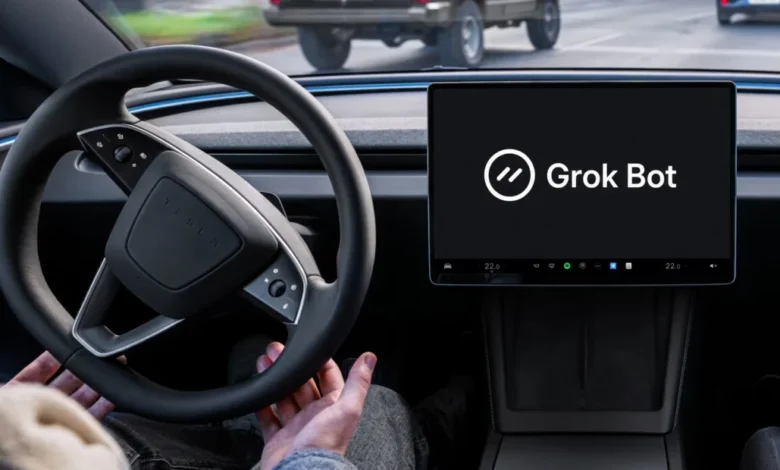
The rapid ascent of SpaceX’s Grok Bot, once heralded by Elon Musk as the fastest-growing product in his career, has encountered a significant technological and economic bottleneck. While the platform was celebrated in October for its unprecedented adoption rates and utility as an autonomous AI agent, the reality of maintaining such a compute-intensive service has forced the company to implement stricter usage caps. This shift marks a pivotal moment in the industry, highlighting the delicate balance between the high-octane demand for agentic artificial intelligence and the immense capital expenditure required to power it.
The transition from a period of unbridled optimism to one of operational austerity began in earnest on November 1, 2026. After a surge in complaints from paying subscribers who found their accounts hitting usage ceilings well before the end of their weekly cycles, Elon Musk addressed the situation directly on X. When questioned by a user regarding a reset for their exhausted 100 percent quota, Musk provided a stark, candid assessment: "The cost of serving Grok Bot was unsustainably high relative to revenue."
This blunt admission stands in sharp contrast to the narrative presented only weeks earlier during the SpaceX third-quarter earnings call. At that time, leadership framed Grok Bot not just as a successful feature, but as a revolutionary tool that was fundamentally changing user workflows by automating research, scheduling, and multi-step digital tasks.
The Rise of the Agentic Era
Grok Bot represents a shift from passive, reactive chatbots to proactive, agentic AI. Unlike traditional models that wait for a prompt to generate a single response, Grok Bot acts as an always-on personal assistant. It operates in a persistent cloud environment, capable of executing complex, multi-step workflows—such as browsing the web, cross-referencing information, and managing digital errands—even when the user is offline.
Launched in August, the product was bundled into premium X subscription tiers and specific enterprise plans, such as those offered via Cursor. By mid-October, the growth metrics were, by all accounts, historic. Internal figures indicated that paid weekly users had surged to approximately 800,000, effectively doubling in a matter of weeks. Even more telling was the trajectory of daily active users, which climbed from fewer than 100,000 in early September to over 600,000 by late October.
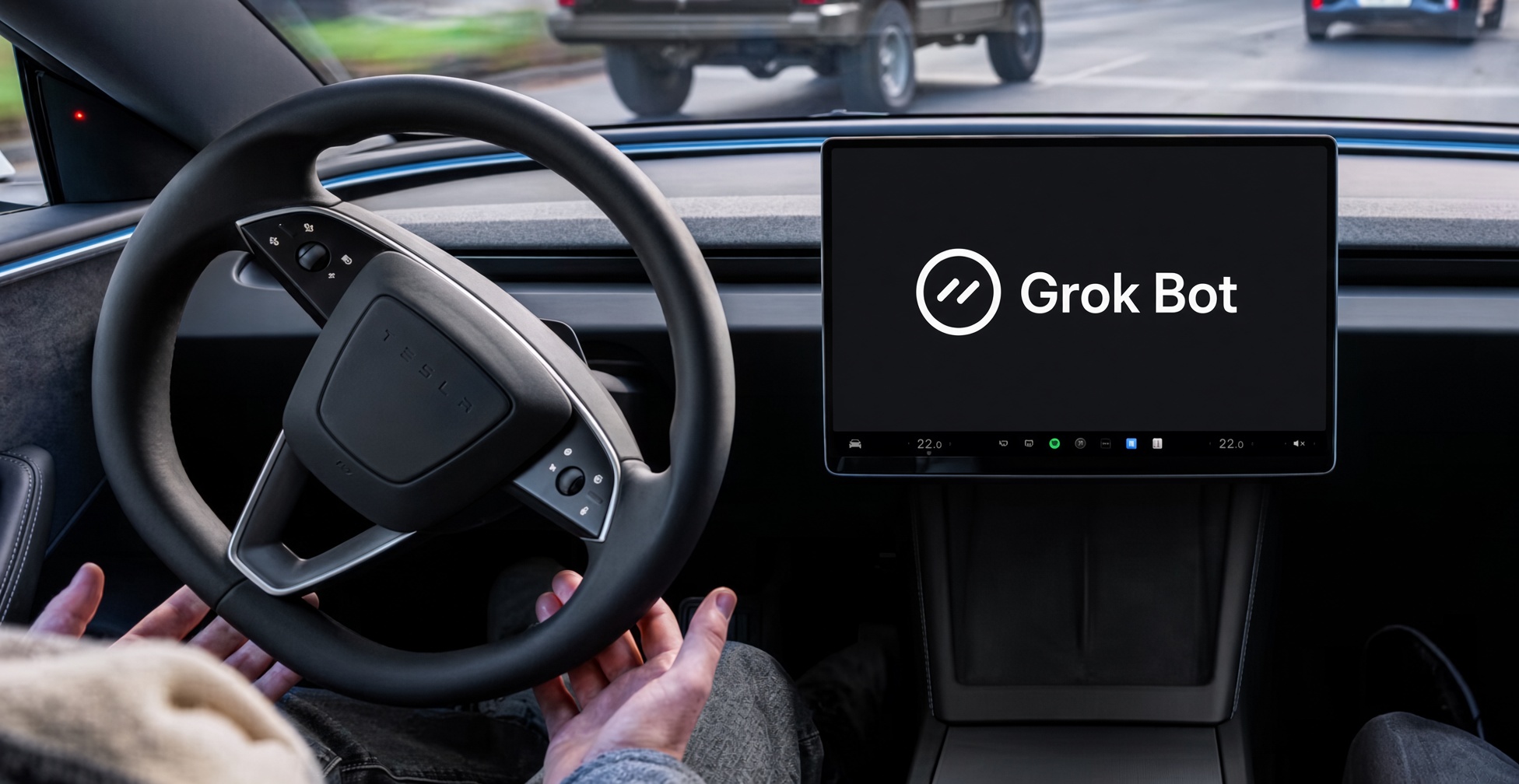
Musk’s excitement during the Q3 earnings call was palpable. He noted that the product was defying the typical "decay pattern" associated with new software, where usage often plateaus or declines as the novelty wears off. Instead, Grok Bot users were integrating the agent into their daily lives, with per-user usage trending upward. For a product with no free tier, this was viewed as the ultimate validation of its value proposition.
The Compute Paradox: Growth vs. Sustainability
The core of the current crisis lies in the fundamental architecture of agentic systems. While a traditional Large Language Model (LLM) interaction involves a relatively predictable amount of compute—a prompt is sent, and a response is generated—an autonomous agent is a different beast entirely.
An "agent" implies a loop of reasoning, tool invocation, and repeated model calls. To complete a single request, such as "research this product and find the best price," the agent may need to perform multiple web searches, scrape several pages, synthesize data, and then perform a follow-up action. This iterative process consumes exponentially more GPU time than a standard chat interaction.
When this compute-heavy architecture is scaled to 600,000 daily active users, the infrastructure requirements become massive. Even with the high subscription fees—ranging from $30 to $200 per month—the revenue per user is often dwarfed by the cost of the raw GPU hours consumed. Industry analysts have pointed out that SpaceX is currently in a difficult position: the very same high-performance GPUs required to power Grok Bot are in extreme demand elsewhere. With SpaceX leasing its massive compute clusters to high-paying third parties like Anthropic, the "opportunity cost" of every cycle spent on a Grok Bot user becomes a significant financial consideration.
A Chronology of the Constraint
The timeline of this tension is relatively short, illustrating how quickly AI economics can shift:
- August 2026: Grok Bot is officially launched as a premium feature, promising to offload monotonous digital tasks through autonomous agents.
- Early September 2026: Daily active users remain under 100,000, allowing for a manageable, albeit growing, load on the infrastructure.
- Mid-October 2026: SpaceX Q3 earnings call. Musk publicly celebrates Grok Bot as the fastest-growing product of his life, citing 600,000+ daily active users and high engagement levels.
- Late October 2026: Users begin reporting that their weekly usage quotas are hitting 100 percent capacity unexpectedly, often with little to no explanation from the platform.
- November 1, 2026: Following a direct inquiry on X, Elon Musk confirms that the cost of serving the bot has become "unsustainably high," marking the official start of more restrictive usage policies.
The Broader Implications for the AI Industry
The Grok Bot scenario serves as a case study for the broader artificial intelligence industry. Many companies are currently in a "land grab" phase, attempting to acquire as many users as possible through compelling AI features. However, the move toward agentic AI introduces a variable cost structure that many subscription-based models are ill-equipped to handle.

Unlike software-as-a-service (SaaS) models of the past, where the marginal cost of an additional user is near zero, the marginal cost of an "agent" user is substantial. If an agent is truly useful, it will be used constantly; the more it is used, the more it costs the provider. This creates a perverse incentive: the more successful a company is at creating a truly helpful AI, the more money it potentially loses per user.
Experts suggest that this will force a transition in the industry toward more sophisticated, usage-based billing models. Flat-rate subscriptions, while attractive to consumers, may prove to be fundamentally incompatible with the high-compute nature of advanced AI agents. Companies may eventually move toward "compute-credit" models, where users pay for the specific amount of GPU time or the complexity of the tasks their agents perform, rather than a flat monthly fee.
Transparency and Future Outlook
For the user base of Grok Bot, the current climate is one of uncertainty. While Musk’s November 1 post clarified the reason for the limits, it provided little comfort to those who had restructured their workflows around the tool’s capabilities. There have been no immediate promises of a return to previous, more generous allowances or the implementation of a secondary, pay-as-you-go tier for power users.
The episode also highlights a lack of transparency regarding "metering." Many users expressed frustration that their limits were reached without clear, granular reporting on what specific tasks or processes consumed their quotas. As agentic AI becomes more integrated into the workplace and personal life, the expectation for transparent, predictable usage monitoring will likely become a point of friction between consumers and service providers.
Ultimately, the SpaceX experience proves that the "Agent Era" is arriving with significant growing pains. The demand for autonomous, helpful AI is clearly verified by the rapid adoption rates Musk touted in October. However, the ability to deliver that value at a scale that is profitable—or even just sustainable—remains the industry’s greatest hurdle. As the technology matures, both the developers of these agents and the users who rely on them will need to adjust to a new economic reality where intelligence is a finite, expensive resource. The era of "unlimited" autonomous assistance appears to be coming to a close, replaced by a more pragmatic approach to capacity, cost, and utility.