GTA 6 Japanese release reveals targeted censorship of male nudity in Leonida

Grand Theft Auto 6, the highly anticipated open-world epic from Rockstar Games, has officially begun its global rollout, bringing the chaotic streets of Leonida to players across various international markets. While the game has been met with widespread critical acclaim for its technical ambition and scale, the Japanese release has highlighted significant regional variances in content moderation. Players in Japan have observed that the title includes specific modifications to character models, most notably the implementation of black thongs on male characters during scenes that feature full nudity in international versions of the game.
The Scope of Regional Censorship
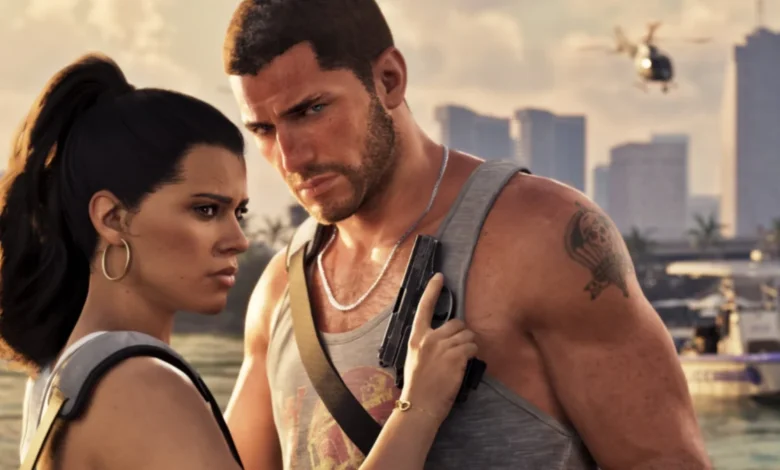
The discrepancy between the Japanese release and the global version was first hinted at by discrepancies in the game’s file size and a notable absence of "sexual content" descriptors on local age-rating filings. Now that the game is playable, those suspicions have been confirmed by user reports on social media platforms such as X (formerly Twitter). Players have documented instances, including scenes featuring the protagonist Jason in the shower, where the character’s nudity is partially obscured by a thin, black undergarment.
This modification appears to be a systemic approach to meeting the compliance standards set by Japan’s Computer Entertainment Rating Organization (CERO), which frequently mandates the alteration of graphic content—particularly sexual and violent imagery—to ensure a product receives a marketable rating. While international versions of the game present a more unvarnished depiction of life in Leonida, the Japanese version aligns with a long-standing tradition of localized editing for major AAA Western releases.
A Chronology of Regulatory Hurdles
The history of Grand Theft Auto in Japan is marked by a series of high-profile negotiations between Rockstar Games and local authorities. To understand the current situation, one must look at the trajectory of the franchise within the Japanese market:

- 2008: Grand Theft Auto IV: This title faced significant challenges in the Japanese market, requiring substantial edits to violent sequences to pass local ratings boards. It set a precedent for future Rockstar titles, establishing that "uncut" versions of their games were rarely viable for official distribution in the country.
- 2013: Grand Theft Auto V: The game encountered intense scrutiny during its initial Japanese launch. One of the most infamous sequences—a mission involving the torture of a suspect—was heavily modified for the Japanese release. These edits were necessary to secure a "Z" rating (the Japanese equivalent of an 18+ classification), which is the strictest tier available for games.
- 2024–2026: Pre-Launch Speculation: Leading up to the release of Grand Theft Auto 6, analysts noted that the game’s marketing materials in Japan lacked the explicit "sexual content" warnings seen in Western territories. This served as a primary indicator that the game would undergo localized censorship.
- November 2026: Official Launch: Following the game’s release, players confirmed that while the core narrative remains intact, the visual representation of nudity has been sanitized to conform to local sensibilities.
Supporting Data and Comparative Analysis
The practice of regional censorship is not unique to the Grand Theft Auto franchise. Japan’s regulatory environment for entertainment media is notoriously stringent regarding nudity and extreme violence. Other major titles, such as The Witcher 3: Wild Hunt and Baldur’s Gate 3, have previously undergone similar procedures. In the case of The Witcher 3, developers implemented changes to specific scenes involving intimacy, while Baldur’s Gate 3 required adjustments to ensure that graphic biological representations met local standards.
The file size disparity reported prior to the game’s launch serves as a technical footnote to these changes. By swapping high-fidelity character models or removing specific, uncensored assets, developers can inadvertently reduce the total storage footprint of the software. While the size difference is relatively minor in the context of a game that spans hundreds of gigabytes, it serves as a quantifiable marker of the behind-the-scenes engineering required to facilitate these regional variations.
Official Stance and Industry Implications
Rockstar Games has maintained a policy of minimal public comment regarding the specific mechanics of regional compliance, typically deferring to local publishing partners and the requirements of rating boards. However, the industry-wide consensus is that these measures are essential for global distribution. Without these compromises, major publishers would face a binary choice: release a heavily modified version that complies with local laws, or abandon the Japanese market entirely.
For the Japanese consumer, these edits represent a trade-off. While the core gameplay loop, the narrative structure, and the technical marvel of the open world remain largely untouched, the aesthetic experience is altered. For the developer, the implication is a complex logistical burden—maintaining multiple builds of a massive, state-of-the-art title to ensure that the game remains legally compliant in every territory in which it is sold.
Broader Impact on the Gaming Landscape
The release of Grand Theft Auto 6 has already shattered records, with millions of concurrent viewers on streaming platforms and significant engagement metrics on social media. Despite the controversy surrounding localized censorship, the game’s momentum remains largely unaffected. The fact that the Japanese market is willing to accept these modifications speaks to the cultural ubiquity of the Grand Theft Auto brand.

Furthermore, the "thong-censorship" incident highlights a growing trend in digital distribution. As games become more realistic and graphic, the friction between Western creative freedom and international regional standards is likely to intensify. Developers must now account for these cultural sensitivities during the early stages of production, rather than treating them as an afterthought.
Looking forward, the success of GTA 6 in Japan, despite the visual alterations, reinforces the notion that content moderation is a standard, albeit occasionally controversial, component of global publishing. As the industry continues to push the boundaries of hyper-realism, the divide between the "global" version of a game and the "regional" version is likely to become a more prominent topic of discourse among players and developers alike.
Ultimately, while some players have expressed amusement or frustration regarding the aesthetic adjustments in the Japanese version, the core experience—a sprawling, satirical, and highly detailed simulation of modern American culture—remains available to the Japanese public. The incident serves as a reminder that even in a globalized digital marketplace, national borders continue to exert a profound influence on how entertainment media is consumed and experienced. Rockstar’s ability to navigate these diverse regulatory landscapes is a testament to the scale of the operation required to bring a project of this magnitude to a worldwide audience, ensuring that the legacy of the franchise continues to reach players regardless of the specific, locally mandated boundaries on their screens.
Related posts: