Tesla Expands Autonomous Robotaxi Operations to Dallas and Houston Following Austin Success and Safety Scrutiny

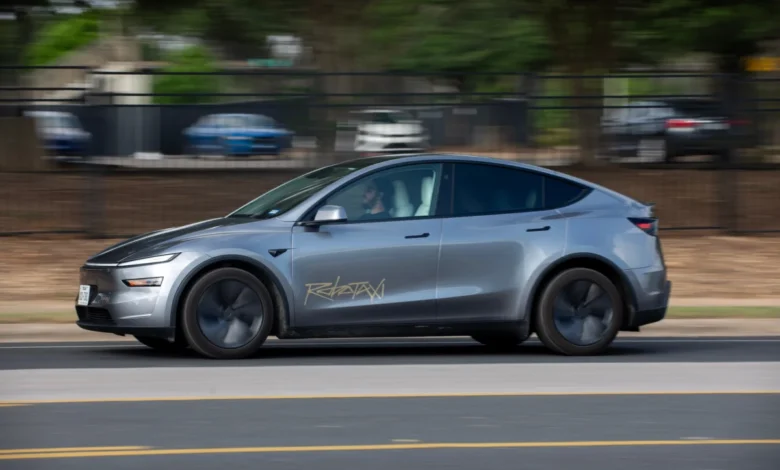
Tesla has officially announced the expansion of its autonomous ride-hailing service to Dallas and Houston, marking a significant milestone in the company’s efforts to dominate the burgeoning robotaxi market. The announcement, delivered via a social media post on the company’s dedicated Robotaxi account, featured a 14-second video showcasing Tesla vehicles navigating urban environments without a human safety driver or any occupants in the front seats. This move solidifies Texas as the primary testing ground and operational hub for Tesla’s autonomous fleet, as the company now operates in three of the state’s largest metropolitan areas.
The expansion follows the initial launch of Tesla’s robotaxi service in Austin in 2025. While the Austin operation began with human safety monitors behind the wheel, the company transitioned to fully driverless operations in January 2026. The move into Dallas and Houston suggests that Tesla is confident in its ability to scale its Full Self-Driving (FSD) technology across diverse urban geographies, despite ongoing regulatory scrutiny and questions regarding the long-term safety of vision-based autonomous systems.
The Strategic Importance of the Texas Market
Texas has emerged as a uniquely favorable environment for autonomous vehicle (AV) companies, largely due to its permissive regulatory framework. In 2017, the state legislature passed Senate Bill 2205, which established a comprehensive legal structure for the operation of automated motor vehicles. Unlike California, which requires rigorous reporting of "disengagements" and specific permits for driverless testing and commercial deployment through the Department of Motor Vehicles (DMV) and the Public Utilities Commission (CPUC), Texas law allows AVs to operate as long as they comply with federal safety standards and are registered with the state.
This regulatory ease, combined with Texas’s generally favorable weather conditions and high-quality road infrastructure, has made the state an attractive theater for Tesla. By focusing on Austin, Dallas, and Houston, Tesla is capturing a significant portion of the Texas "Triangle," a region that contains the majority of the state’s population and economic activity.
However, current data suggests that the rollout in Dallas and Houston is in its nascent stages. According to Robotaxi Tracker, a crowdsourced platform that monitors the activity of autonomous fleets, only a single active vehicle has been logged in both Dallas and Houston as of late 2026. In contrast, the Austin fleet is significantly more robust, with 46 active vehicles currently registered. This suggests that the current expansion may be a "soft launch" designed to map the cities and refine local navigation before a broader consumer rollout.
A Chronology of Tesla’s Autonomous Ambitions
The path to the Dallas and Houston expansion has been nearly a decade in the making. Tesla CEO Elon Musk has long touted autonomous driving as the primary driver of the company’s long-term valuation.
- 2016: Tesla began equipping all new vehicles with the hardware necessary for what it claimed would eventually be Full Self-Driving capability.
- 2019: At the company’s "Autonomy Day," Musk predicted that Tesla would have over one million robotaxis on the road by 2020, a timeline that proved overly optimistic.
- 2023–2024: Tesla shifted its FSD architecture to "end-to-end neural networks," moving away from human-coded heuristics to a system that learns driving behavior entirely from massive datasets of video.
- October 2024: Tesla held its "We, Robot" event at the Warner Bros. Discovery studio, unveiling the "Cybercab," a dedicated two-seater robotaxi without a steering wheel or pedals.
- June 2025: Tesla officially launched its ride-hailing service in Austin, initially restricted to employees and a select group of beta testers with human safety drivers.
- January 2026: The Austin service removed the requirement for a human monitor, transitioning to Level 4 autonomy within designated geofenced areas.
- Late 2026: Expansion to Dallas and Houston is confirmed.
Technical Infrastructure and the Vision-Only Approach
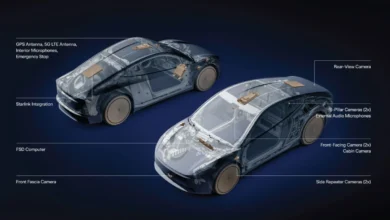
The expansion into Dallas and Houston serves as a critical test for Tesla’s "vision-only" philosophy. Unlike competitors such as Waymo (owned by Alphabet) and Zoox (owned by Amazon), which utilize a suite of sensors including LiDAR, radar, and ultrasonic sensors, Tesla relies almost exclusively on high-resolution cameras and onboard AI processing.
Tesla’s AI5 computer (the successor to Hardware 4) processes real-time visual data to identify objects, predict trajectories, and make driving decisions. Proponents of this approach argue that it is more scalable and cost-effective, as it does not require the expensive hardware suites or high-definition 3D maps that competitors rely on. Critics, however, argue that cameras alone may struggle in adverse weather or complex lighting conditions where LiDAR—which uses light pulses to measure distance—provides a more reliable "ground truth" for the vehicle’s surroundings.
The Dallas and Houston deployments will likely utilize Tesla’s existing fleet of Model 3 and Model Y vehicles, modified with the necessary software configurations for autonomous ride-hailing. The eventual integration of the Cybercab is expected to follow once mass production begins, which Musk has projected for 2027.
Safety Records and Regulatory Oversight
As Tesla expands its footprint, the safety of its autonomous systems remains a focal point for federal regulators. In a February filing, Tesla disclosed that its Austin-based robotaxi fleet had been involved in 14 crashes since its inception. While the company has not provided a detailed breakdown of these incidents, the National Highway Traffic Safety Administration (NHTSA) has maintained an ongoing investigation into Tesla’s FSD and Autopilot systems following several high-profile collisions.
The 14 crashes in Austin represent a metric that analysts are watching closely. When compared to the millions of miles driven by human operators, autonomous advocates argue that robotaxis are statistically safer. However, the nature of these crashes—whether they were caused by software errors, "phantom braking," or the negligence of other human drivers—remains a matter of intense debate.
In the San Francisco Bay Area, Tesla offers a more limited ride-hailing service that still requires a human driver to remain behind the wheel. This contrast highlights the regulatory hurdles Tesla faces in California, where the state’s stringent safety reporting requirements have slowed the deployment of fully driverless systems compared to the rapid pace observed in Texas.
The Competitive Landscape: Tesla vs. Waymo and Cruise
Tesla’s expansion into Dallas and Houston puts it on a collision course with Waymo, which has already established a strong presence in Phoenix, San Francisco, and Los Angeles. Waymo is widely considered the industry leader in terms of autonomous miles driven without a safety driver and has maintained a relatively clean safety record.
However, Tesla’s advantage lies in its massive fleet of consumer vehicles. By leveraging the data collected from millions of Tesla owners who use FSD in their daily commutes, the company possesses a data flywheel that competitors cannot easily replicate. While Waymo operates a bespoke fleet of several hundred vehicles, Tesla has the potential to turn a significant portion of its existing customer base into a distributed ride-hailing network.
General Motors’ Cruise, which paused operations in late 2023 following a pedestrian accident in San Francisco, is also in the process of a gradual comeback. Cruise has resumed testing with safety drivers in several markets, including Houston, making the Texas city a primary battleground for the future of autonomous mobility.
Economic and Societal Implications
The shift toward robotaxis represents a fundamental change in the economics of transportation. By removing the cost of a human driver—which typically accounts for 60% to 70% of the cost of a ride-hailing trip—Tesla aims to make point-to-point transport cheaper than owning a private vehicle or using public transit.
For cities like Dallas and Houston, which are characterized by urban sprawl and a heavy reliance on highways, robotaxis could offer a solution to last-mile connectivity issues. However, urban planners have raised concerns about "zombie miles"—autonomous vehicles driving empty between fares—which could exacerbate traffic congestion if not properly managed through city-level policy.
Furthermore, the expansion of robotaxis has significant implications for the labor market. The ride-hailing industry currently supports hundreds of thousands of gig-economy drivers in Texas. A widespread transition to autonomous fleets would necessitate a significant economic pivot for those currently employed by platforms like Uber and Lyft. Notably, Uber has recently signaled a willingness to partner with autonomous developers, though Tesla has indicated it intends to run its own proprietary "Tesla Network."
Future Outlook and Scaling Challenges
As Tesla begins its operations in Dallas and Houston, several challenges remain. The company must prove that its vision-based system can handle the unique complexities of these cities, from the sprawling interchanges of the High Five in Dallas to the unpredictable flooding and heavy rains common in Houston.
Scaling the fleet from a few dozen vehicles to thousands will also require a robust service infrastructure. Tesla will need dedicated hubs for cleaning, charging, and maintaining its autonomous fleet to ensure high uptime. Furthermore, the company must continue to navigate the patchwork of state and federal regulations that govern autonomous vehicle safety.
The expansion into Dallas and Houston is a clear signal that Tesla is moving past the experimental phase and into the commercialization phase of its autonomous journey. Whether the company can maintain safety standards while scaling at the pace Elon Musk envisions will be the defining question for Tesla’s future as an AI and robotics powerhouse. For now, residents of Dallas and Houston may soon see more empty driver’s seats navigating their city streets, a glimpse into a future where the steering wheel becomes an optional relic of the past.