Sony Bravia Theatre System 6 Receives Prestigious What Hi-Fi Award Amidst Significant Price Reduction at B&Q

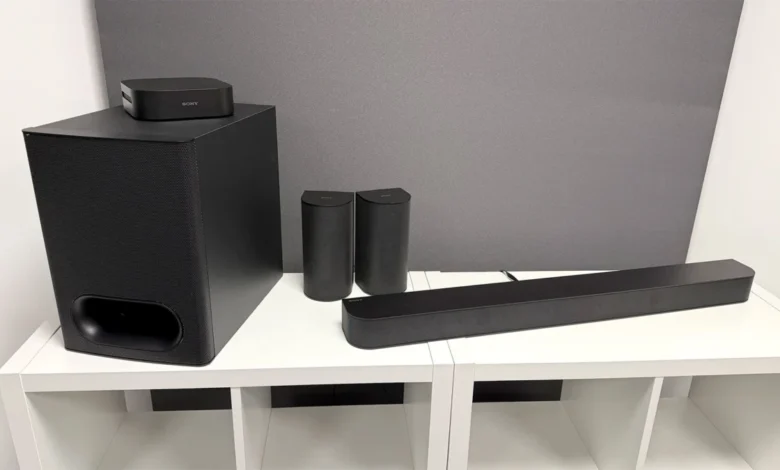
The home cinema market has long been defined by a compromise between the convenience of soundbars and the expansive, directional immersion of traditional home theater setups. Sony, a long-standing leader in consumer audio electronics, has recently sought to bridge this gap with the Sony Bravia Theatre System 6. This system has now garnered industry-wide recognition, securing a "What Hi-Fi? Award" for the best soundbar system in the £250 to £500 price category. This accolade arrives alongside a promotional price adjustment at B&Q, where the unit is currently available for £419, representing a significant discount from its standard retail price of £499.
Engineering an Immersive Experience
The Sony Bravia Theatre System 6 is not a conventional "all-in-one" soundbar. Instead, it utilizes a sophisticated, modular architecture designed to solve the perennial issue of home cinema setup: cable management. The system integrates the primary amplification components within the subwoofer unit, which serves as the hub of the configuration. This subwoofer is physically linked to the main soundbar via a wired connection, ensuring high-bandwidth data transmission.
To achieve a true surround sound experience without running cables across a living space, Sony has employed a wireless transmission bridge. The subwoofer communicates wirelessly with a dedicated receiver module positioned at the rear of the viewing area. This receiver then powers the two rear surround speakers through short, manageable cable runs. This hybrid approach allows users to enjoy 5.1-channel audio fidelity while maintaining a cleaner, more aesthetically pleasing room layout. The system boasts an impressive 1000W of total power output, a figure that significantly exceeds the capabilities of many competing products in the mid-range market.
Technical Performance and Audio Fidelity
The technical success of the Bravia Theatre System 6 lies in its proprietary digital signal processing. During extensive testing, the system demonstrated exceptional proficiency in handling complex, high-dynamic-range audio tracks, particularly those utilizing Dolby Atmos and DTS:X codecs.
In a controlled environment, the system was evaluated using the complex soundscape of Blade Runner 2049. Observers noted that the system maintained precise spatial localization. When reproducing dialogue—often a weakness in entry-to-mid-level bars—the Bravia Theatre System 6 ensured that voices remained anchored to the screen, even when the surround channels were tasked with rendering intricate, layered sound effects such as atmospheric city noise or ambient musical cues. The system’s ability to render "height" information via its Atmos processing remains a key differentiator, allowing for a hemispherical soundstage that is rarely achieved at this price point. Furthermore, the unit exhibits notable tonal flexibility, performing with rhythmic agility when shifting from film soundtracks to high-fidelity music playback.
Chronology and Market Positioning
The trajectory of the Bravia Theatre System 6 reflects Sony’s broader strategy of dominating the "prosumer" home cinema market. Following its launch, the product was positioned to compete with entry-level discrete home theater systems and high-end soundbars from brands like Sonos and Samsung.
- Launch Phase: The system was introduced as a premium mid-range offering, focusing on users who prioritize audio immersion over the minimalist design of compact soundbars.
- Evaluation Phase: Following its release, independent audio testing bodies conducted a series of benchmarks, culminating in the "What Hi-Fi?" review process.
- Award Recognition: In late 2024, the product was formally recognized with the "Best Soundbar System" award for the £250–£500 bracket, solidifying its status as a benchmark for value-to-performance.
- Current Retail Strategy: The move by B&Q to lower the price to £419 indicates a strategic push to capture market share during the current retail cycle, making the award-winning system more accessible to budget-conscious enthusiasts.
Industry Context and Competitive Landscape
The current home cinema landscape is characterized by intense competition. Brands such as Sonos, with its Beam (Gen 2) series, have set the industry standard for software-driven audio, while manufacturers like Hisense have aggressively pursued the budget-conscious segment with products like the AX5125H.
The Sony Bravia Theatre System 6 distinguishes itself by prioritizing raw power (1000W) and a dedicated physical surround-sound architecture. While many competitors rely on "virtual" surround sound—using psychoacoustic trickery to bounce sound off walls—Sony’s commitment to physical rear speakers provides a tangible, verifiable improvement in spatial accuracy.
Industry analysts suggest that the "oddball" design—specifically the reliance on a central, powered subwoofer hub—is a calculated trade-off. By centralizing the amplification, Sony reduces the weight and complexity of the soundbar itself while ensuring that the rear speakers receive a robust, stable signal. This design philosophy appeals to consumers who are willing to accommodate a slightly more complex installation process in exchange for superior acoustic performance.
Connectivity and Future-Proofing
Modern home cinema components must contend with a rapidly evolving array of connectivity standards. The Bravia Theatre System 6 features an HDMI eARC (Enhanced Audio Return Channel) port, which is essential for transmitting high-bitrate, uncompressed audio formats like Dolby Atmos from a smart television.
Beyond its primary HDMI connectivity, the inclusion of optical inputs and a 3.5mm analog input ensures compatibility with legacy devices, such as older gaming consoles or CD players. The system’s integration of Bluetooth 5.3 further positions it as a viable hub for wireless music streaming, highlighting Sony’s intent to make the system a centerpiece for both home cinema and home audio.
Implications for the Consumer
The recent price reduction at B&Q carries significant implications for consumers currently in the market for a system upgrade. Historically, high-performance, discrete-speaker home cinema systems were reserved for those with the budget and technical expertise to manage AV receivers and passive speaker setups.
The Sony Bravia Theatre System 6 effectively democratizes this experience. By bundling the amplification, processing, and speakers into a single, cohesive package, Sony has effectively lowered the "barrier to entry" for home theater. Consumers who opt for this system at the current £419 price point are receiving a product that has been vetted by industry experts, validated by award-winning performance, and discounted to a level that challenges even the most basic soundbar offerings.
Furthermore, the system’s longevity is bolstered by Sony’s commitment to its Bravia ecosystem. As more televisions incorporate sophisticated processing, the Theatre System 6 is designed to handshake seamlessly with Sony’s display range, offering features like Acoustic Center Sync, which can further elevate dialogue clarity by utilizing the TV’s own speakers in tandem with the soundbar.
Final Assessment
The Sony Bravia Theatre System 6 stands as a testament to the fact that innovative engineering can still yield significant improvements in consumer audio. While the physical footprint and the unique, wired-to-wireless connection setup may deviate from the industry trend of ultra-slim, "invisible" soundbar designs, the performance benefits are clear.
For the average consumer, the combination of 1000W output, genuine 5.1 surround sound capabilities, and official industry accolades provides a compelling argument for investment. With the current price of £419, the system represents an exceptional value proposition, balancing the performance requirements of a dedicated enthusiast with the ease of use expected by the modern home consumer. As the market continues to evolve, the Bravia Theatre System 6 remains a benchmark for what is possible when power, design, and audio-processing technology are aligned to create a truly immersive cinematic experience.