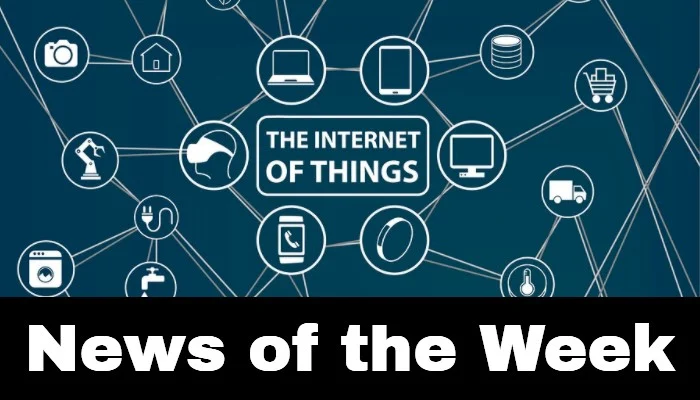
The landscape of the Internet of Things (IoT) continues its rapid evolution, marked this week by significant investment in sustainable building technologies, strategic acquisitions in edge AI, critical advancements in electric vehicle (EV) charging infrastructure, and ongoing debates shaping the smart home sector. These developments underscore a pervasive trend towards efficiency, intelligence, and interconnectedness across various industries, from urban infrastructure to personal living spaces, reflecting both the industry’s ambitions and the challenges it navigates.
Advancements in Sustainable Infrastructure: Verdigris Secures $10M for Smarter Buildings
In a significant move for green technology, Verdigris, a company pioneering AI-powered energy management solutions for commercial buildings, successfully raised $10 million in Series B funding. This round was co-led by deep tech venture capital firm DCVC and energy investment specialist Solea Energy, signaling strong investor confidence in the company’s vision and technology, even amidst a challenging economic environment characterized by tighter capital markets. The funding is earmarked to accelerate the deployment of Verdigris’s innovative platform, which leverages artificial intelligence and connected HVAC systems to optimize energy consumption and significantly reduce the carbon footprint of large commercial properties.
The impetus behind Verdigris’s growth is rooted in the urgent global demand for energy efficiency and sustainability in the built environment. Commercial and residential buildings collectively account for approximately 40% of global energy consumption and a substantial portion of greenhouse gas emissions. Traditional building management systems often operate inefficiently, leading to wasted energy, inflated operational costs, and missed opportunities for environmental stewardship. Verdigris addresses this critical issue by deploying a network of proprietary smart sensors that collect granular energy data and an AI-driven analytics engine. This platform monitors real-time energy usage patterns, identifies inefficiencies at the equipment level, and autonomously adjusts building systems like HVAC, lighting, and plug loads. This proactive, data-informed approach not only cuts energy bills but also contributes significantly to corporate sustainability goals and adherence to evolving environmental, social, and governance (ESG) standards, which are increasingly critical for businesses.
The market for smart buildings is experiencing robust growth, projected to reach over $100 billion globally by 2028, driven by factors such as rising energy prices, stringent government regulations promoting green building practices, and continuous technological advancements in IoT and AI. Verdigris’s ability to secure substantial funding in this climate highlights the perceived value and maturity of its solution. DCVC, known for backing companies with transformative technologies, and Solea Energy, with its focus on sustainable energy solutions, provide not only capital but also strategic expertise to navigate the complex energy and real estate sectors. This investment validates Verdigris’s long-standing commitment to applying advanced analytics and IoT to real-world problems, a journey that began nearly a decade ago with the foundational idea of leveraging AI for greener buildings. The infusion of capital is expected to fuel further product development, expand market reach into new geographies and building types, and solidify Verdigris’s position as a leader in intelligent building energy management.
Enhancing EV Charging Reliability: ChargePoint’s Network Operations Center
The accelerating global transition to electric vehicles (EVs) hinges critically on the reliability and accessibility of charging infrastructure. Addressing a core challenge in this burgeoning sector, ChargePoint, a prominent EV charging network provider, announced the establishment of a sophisticated Network Operations Center (NOC). This new facility is designed to continuously monitor the operational health of its extensive network of 243,000 EV chargers spread across the United States and Europe. The initiative represents a crucial step towards ensuring consistent service delivery for EV drivers and bolstering confidence in the nascent EV ecosystem.
The move comes as federal governments, particularly in the United States, implement new legislation aimed at bolstering EV adoption. These regulations often include stringent uptime requirements for public charging stations, a direct response to widespread consumer frustration over malfunctioning or unavailable chargers. For instance, the U.S. federal government’s Bipartisan Infrastructure Law allocates billions for EV charging infrastructure development and mandates high uptime percentages—often 97% or higher—for charging stations to qualify for federal funding. This regulatory push has evidently prompted ChargePoint’s substantial investment in its NOC capabilities, aligning its operational strategy with national infrastructure goals.
A Network Operations Center, a concept long foundational in telecommunications and other critical infrastructure industries, provides centralized monitoring and management of complex systems. For ChargePoint, the NOC will employ advanced diagnostic tools, real-time data analytics, and remote management capabilities to detect issues, predict potential failures, and dispatch maintenance teams proactively. This contrasts sharply with a reactive maintenance model, where problems are only addressed after a charger fails and a customer reports it, leading to significant downtime and user dissatisfaction. The deployment of a NOC is expected to significantly improve charger uptime, enhance the user experience by ensuring availability, and build greater consumer confidence in EV technology, which is paramount for mass adoption.
Industry experts have often pointed to charger reliability as a major hurdle for mass EV adoption. Studies frequently reveal that a significant percentage of public chargers are non-functional at any given time due to various issues, from software glitches and network connectivity problems to physical damage and hardware malfunctions. By adopting a proactive, telco-like approach to network management, ChargePoint is setting a new standard for reliability in the EV charging space. This strategic investment not only ensures compliance with emerging regulatory mandates but also positions ChargePoint favorably in a competitive market where service quality is becoming a key differentiator. The long-term implications include a more robust and dependable EV charging ecosystem, which is essential for alleviating range anxiety and accelerating the global shift away from fossil-fuel vehicles.
The Evolution of Edge AI: Nordic Semiconductor Acquires Atlazo IP
In a strategic move to bolster its capabilities in on-device machine learning, Nordic Semiconductor, a leading provider of low-power wireless chips for the IoT, announced the acquisition of intellectual property (IP) from Atlazo. Atlazo, a San Diego-based company, has been at the forefront of developing ultra-low-power microcontrollers (MCUs) specifically optimized for machine learning tasks at the edge. This acquisition is poised to significantly enhance Nordic’s portfolio, enabling the integration of advanced AI functionalities directly into compact, battery-powered IoT devices.
The acquisition underscores the growing importance of TinyML, or Tiny Machine Learning, a field dedicated to bringing AI and machine learning capabilities to resource-constrained devices like microcontrollers. Traditionally, AI processing required substantial computational power, often performed in power-hungry cloud data centers. However, for many IoT applications—ranging from predictive maintenance in industrial sensors and environmental monitoring to gesture recognition in wearables and voice processing in smart home devices—low latency, enhanced privacy, and significantly reduced power consumption necessitate processing data closer to its source, at the "edge." Atlazo’s expertise lies precisely in designing MCUs that can execute complex ML algorithms with minimal energy expenditure, a critical factor for extending battery life and reducing operational costs in widespread IoT deployments.
Nordic Semiconductor has long been a dominant player in the low-power wireless communication market, supplying chips that power a vast array of Bluetooth Low Energy, Wi-Fi, and cellular IoT devices. Its strategic rationale for acquiring Atlazo’s IP is clear: to maintain and extend its leadership in an IoT landscape increasingly defined by embedded intelligence. By integrating Atlazo’s specialized MCU technology, Nordic aims to offer a more comprehensive and competitive solution to its customers, enabling them to develop next-generation IoT products with integrated AI capabilities without compromising on the power efficiency that is Nordic’s hallmark.
Company statements indicate that this "bolt-on" acquisition is expected to yield tangible benefits within 12 to 18 months, suggesting a relatively quick integration of Atlazo’s technology into Nordic’s existing product roadmap. This timeframe aligns with the rapid pace of innovation in the semiconductor industry and the urgent market demand for sophisticated edge AI solutions. The implications of this acquisition are far-reaching. It will likely accelerate the development of more intelligent, autonomous, and energy-efficient IoT devices across various sectors, from smart health and industrial automation to consumer electronics, further blurring the lines between sensing, processing, and acting in the connected world, while maintaining crucial battery life for long-term deployments.
Smart Home Ecosystems: Shifting Dynamics and User Choices
The smart home market continues to be a dynamic arena, characterized by evolving business models, the push for interoperability, and persistent debates over security and privacy. Recent developments highlight both the industry’s ambitions and the challenges it faces in delivering a truly seamless and secure connected living experience.
Monetizing the Smart Home: Shelly’s Premium Subscription Model
Following a growing trend among smart home device manufacturers, Shelly, a notable player in the smart home sector known for its diverse range of smart relays and sensors, has introduced a premium subscription option focused on advanced energy management. Priced at €3.99 (approximately $4.34) per month, this service targets European and U.S. consumers, offering sophisticated features designed to optimize household energy consumption and potentially reduce electricity bills by up to 18%.
The allure of recurring subscription revenue is a powerful motivator for hardware companies, providing a stable income stream beyond initial product sales and fostering deeper customer relationships. For Shelly, this premium tier unlocks functionalities such as proactive notifications when lights are left on unnecessarily, alerts for abnormal electricity usage by connected appliances (e.g., a refrigerator suddenly drawing more power than usual, potentially indicating a fault), and detailed monitoring tools to track individual device energy consumption in real-time. This data-driven approach allows users to identify "energy vampires," understand their usage patterns, and make informed decisions to conserve energy and reduce their carbon footprint.
The introduction of such a service reflects a broader industry shift from purely transactional hardware sales to a more service-oriented model. As smart home devices become more ubiquitous, their value proposition increasingly moves beyond basic automation to intelligent management, optimization, and predictive insights. Given rising energy costs globally and a heightened environmental consciousness, especially in Europe where energy prices have been particularly volatile, a service promising significant savings on electricity bills could prove highly attractive. The claimed 18% reduction, if consistently achievable for users, positions the subscription as a cost-effective investment, potentially recouping its monthly fee through tangible savings. This strategy also deepens customer engagement, transforming device ownership into an ongoing relationship centered on value-added services and proactive management.
The Matter Standard: Progress and Pitfalls with Aqara
The promise of the Matter standard, designed to simplify smart home interoperability, faced a practical challenge this week with the launch of Aqara’s new LED Strip Lights T1. While the T1 lights proudly support the Matter standard, offering broad compatibility with various smart home platforms like Apple Home, Google Home, and Amazon Alexa, a crucial caveat emerged: a key advanced feature, Adaptive Lighting, is not fully supported when using Matter for connection. To utilize Adaptive Lighting—which automatically adjusts light brightness and color temperature throughout the day to mimic natural light cycles for optimal ambiance and circadian rhythm support—users must forgo Matter and instead connect the T1 via an Aqara hub using its native Zigbee radio.
This "either-or" scenario encapsulates the current state of Matter’s rollout: a significant step forward for basic interoperability across diverse ecosystems but still limited in its ability to support the full spectrum of advanced, vendor-specific features. Matter’s initial specification prioritizes fundamental device types and functionalities, with more complex features like Adaptive Lighting being integrated in subsequent updates. This phased approach, while understandable from a development perspective to ensure a stable foundation, creates a dilemma for early adopters who might have expected Matter to immediately unify all smart home capabilities, including nuanced functionalities.
For Aqara, a company with a strong presence in the HomeKit and Zigbee ecosystems, the T1 represents