Critical WordPress Core Vulnerability wp2shell Exposes Millions of Websites to Pre-Authentication Remote Code Execution

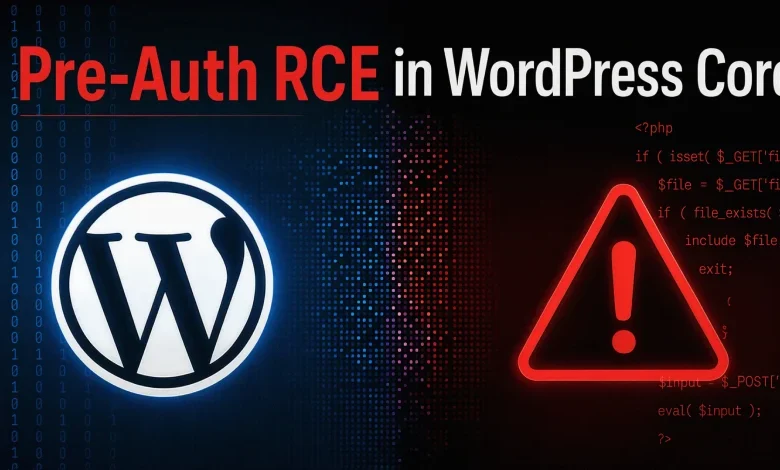
The global cybersecurity community is on high alert following the discovery of a critical vulnerability within the core of the WordPress Content Management System (CMS), designated by researchers as "wp2shell." This flaw, which resides in the foundational code of the platform rather than in third-party plugins or themes, allows an unauthenticated, anonymous attacker to execute arbitrary code on a target server. The discovery is particularly significant because it affects default installations of the world’s most popular website builder, potentially placing millions of digital assets at risk.
The vulnerability was identified by Adam Kues, a researcher at Assetnote, the attack surface management division of Searchlight Cyber. Kues reported the flaw through WordPress’s official bug bounty program on HackerOne, leading to a rapid response from the WordPress core security team. On July 17, 2026, WordPress issued emergency security updates—versions 6.9.5 and 7.0.2—to address the issue. Despite the swift patch, the nature of the vulnerability and the sheer scale of the WordPress ecosystem have raised concerns about the speed of remediation across the broader internet.
Technical Analysis of the wp2shell Vulnerability
The wp2shell vulnerability is classified as a pre-authentication Remote Code Execution (RCE) flaw. In the hierarchy of cybersecurity threats, pre-auth RCE is considered the most severe category, as it requires no user interaction, no administrative credentials, and no specific configuration settings to exploit. An attacker simply needs to send a specially crafted HTTP request to a vulnerable WordPress instance to gain control over the underlying server.
According to technical advisories, the root cause of the flaw lies in a "REST API batch-route confusion" combined with a SQL injection vulnerability. The WordPress REST API, introduced as a core feature in version 4.7 and significantly expanded since, allows applications to interact with sites by sending and receiving JSON objects. The "batch" endpoint, specifically /wp-json/batch/v1, was designed to allow developers to combine multiple API requests into a single HTTP call to improve performance.
The "confusion" element of the exploit involves how the server parses these batched requests. By manipulating the routing logic, an attacker can bypass standard authentication checks and inject malicious SQL queries into the site’s database. This SQL injection then serves as a vector for the RCE, allowing the attacker to write files to the server or modify system settings to facilitate persistent access. Because the flaw exists in class-wp-rest-server.php, class-wp-query.php, and rest-api.php, it bypasses the security layers that typically protect the CMS.
Chronology of Discovery and Remediation
The timeline of the wp2shell vulnerability highlights the narrow window between discovery and the potential for mass exploitation.

- December 2, 2025: WordPress 6.9 is released, introducing the specific code changes that inadvertently created the vulnerability.
- Early 2026: WordPress 7.0 is launched, carrying the same vulnerable REST API logic.
- June 2026: Adam Kues of Assetnote identifies the flaw during a routine audit of core web frameworks.
- July 2026: The vulnerability is reported to the WordPress security team via HackerOne. Internal development begins on a "forced update" mechanism to push the patch to as many sites as possible.
- July 17, 2026: WordPress officially releases versions 6.9.5 and 7.0.2. The release notes characterize the update as a critical security fix. Searchlight Cyber publishes a high-level overview of the discovery but withholds full technical exploitation details to give administrators time to patch.
- July 18, 2026: Security researchers observe a spike in scanning activity targeting the
/wp-json/batch/v1endpoint, though no successful mass-exploitation campaigns are confirmed in the immediate 24 hours following the patch.
Scale of the Threat and Affected Versions
Searchlight Cyber estimates that approximately 500 million websites currently run on the WordPress platform, accounting for nearly 43% of all websites on the internet. While not all 500 million sites are vulnerable, the population at risk is substantial. The flaw specifically affects sites running WordPress version 6.9 through 7.0.1.
Because version 6.9 was released in late 2025, every vulnerable site is running a version of the CMS that is less than eight months old. This suggests that the affected users are generally those who keep their systems relatively up to date, making the vulnerability particularly "noisy" among active enterprise and professional web environments.
A complicating factor in assessing the impact is the lack of an assigned CVE (Common Vulnerabilities and Exposures) ID as of mid-July 2026. Without a CVE, many automated vulnerability scanners and enterprise asset management tools may fail to flag the vulnerability. This creates a "blind spot" for security operations centers (SOCs) that rely on CVE-keyed databases for threat intelligence.
Official Responses and Researcher Stance
The response from WordPress has been focused on the "forced push" of the update. WordPress utilizes an automatic background update system that, by default, installs minor security releases. However, many enterprise environments and high-traffic sites disable this feature to prevent unexpected compatibility issues with custom code or plugins.
In their official release post, WordPress urged all administrators to manually verify their version numbers. "While we have triggered a forced update for all sites capable of receiving it, we cannot guarantee that every environment has successfully updated, particularly those with restrictive file permissions or those that have opted out of the auto-update system," the statement read.
Searchlight Cyber has taken a cautious approach to disclosure. Rather than releasing a Proof of Concept (PoC) script, they launched "wp2shell.com," a web-based tool that allows site owners to check if their specific instance is vulnerable without exposing the underlying exploit code. This "responsible disclosure" model aims to balance the need for public awareness with the necessity of preventing a "script kiddie" epidemic of automated attacks.
Historical Context: The Industrialization of WordPress Exploits
The wp2shell event does not occur in a vacuum. The exploitation of WordPress has evolved from a hobbyist pursuit into a multi-million dollar underground industry. Earlier in 2026, a group known as WP-SHELLSTORM was linked to a server leak that revealed they had successfully compromised over 17,000 sites using a single vulnerability in a popular caching plugin.

The wp2shell vulnerability is significantly more dangerous than the WP-SHELLSTORM vector because it does not depend on a specific plugin. In the past, major "core" vulnerabilities like the Drupalgeddon flaws in the Drupal CMS led to widespread "cryptojacking" (unauthorized cryptocurrency mining) and the deployment of ransomware. Security analysts fear that if the wp2shell exploit becomes public, it could lead to a similar wave of global cyberattacks.
Analysis of Implications for Web Security
The wp2shell discovery underscores a fundamental tension in open-source security: the "Map to the Bug" dilemma. Because WordPress core is open-source, the act of patching the code provides a roadmap for attackers. By comparing version 7.0.1 to 7.0.2, a sophisticated actor can identify the exact lines of code changed in class-wp-rest-server.php and reverse-engineer the exploit.
This reality places a premium on "time-to-patch." In the modern threat landscape, the window between a patch release and the commencement of active exploitation is often measured in hours. For organizations with thousands of WordPress instances, the logistics of manual verification and patching can be overwhelming, highlighting the need for robust, centralized management and automated security workflows.
Furthermore, the involvement of Searchlight Cyber’s attack surface management arm reflects a growing trend where security firms are focusing on "unauthenticated" entry points. As perimeter defenses improve, attackers are looking for flaws in the very protocols—like REST APIs—that are designed to make the web more interconnected and functional.
Recommended Mitigations and Defensive Posture
For organizations unable to update to 6.9.5 or 7.0.2 immediately, several stopgap measures have been suggested by the research community, though each carries risks of breaking site functionality:
- Restrict Access to the Batch Endpoint: Using a Web Application Firewall (WAF) or server-level configuration (such as
.htaccessor Nginx rules) to block all traffic to/wp-json/batch/v1. This is the most direct mitigation but may break administrative dashboards or third-party integrations that rely on batched API calls. - Disable the REST API for Anonymous Users: Implementing code snippets or plugins that require authentication for all REST API requests. This effectively closes the "anonymous" vector of the wp2shell attack.
- Strict SQL Injection Filtering: Enhancing database security layers to detect and block the specific SQL injection patterns associated with the batch-route confusion.
Ultimately, these measures are temporary. The only permanent solution is the migration to the patched versions of WordPress core. As the industry waits for a CVE assignment and broader recognition from organizations like CISA (Cybersecurity and Infrastructure Security Agency), the burden of defense remains firmly on the shoulders of individual website administrators. The wp2shell incident serves as a stark reminder that even the most well-vetted and widely used software is not immune to critical, foundational flaws.
Related posts: