The Subtle Art of Home Cinema Synergy: Why Matching Your Gear is Crucial for True Immersion

Home cinema, when meticulously crafted, transcends mere entertainment; it becomes an immersive portal to other worlds, a sanctuary of sensory delight within the confines of one’s own dwelling. The experience of losing oneself in a beloved film, projected onto a grand screen, all while ensconced in the ultimate comfort of home – perhaps adorned in the casual attire of one’s choosing, with a contented feline companion nearby and a thoughtfully chosen beverage in hand – is, for many enthusiasts, the pinnacle of domestic leisure. As the lyricist might observe, it can indeed feel like "the closest to heaven that I’ll ever be." It is this profound allure, this pursuit of unparalleled audiovisual fidelity, that drives passionate individuals and dedicated teams, such as those at What Hi-Fi?, to meticulously test and evaluate the latest advancements in home entertainment hardware. Their mission: to empower others to achieve this elusive cinematic magic.
However, the journey to achieving a truly spectacular home cinema setup is often more intricate than casual observers might assume. The inherent magic is intrinsically tethered to the quality and, crucially, the synergistic interplay of the hardware employed. This becomes particularly evident when aiming for what seasoned professionals, like Ketan Bharadia, technical editor at What Hi-Fi?, would deem a "proper home cinema" – a sophisticated configuration typically involving a multi-speaker surround sound system, a high-performance long-throw projector, a capable AV receiver (AVR), and a robust source component.
The common misconception, even among some engaged members of online audio-visual forums, is that home cinema sound operates on a fundamentally different paradigm than traditional hi-fi audio. This leads to the erroneous belief that simply assembling a collection of individually five-star rated components will automatically result in a superior, cohesive system. The reality, however, underscores the enduring and paramount importance of component matching. This principle was vividly illustrated during recent testing sessions involving the KEF R Meta speaker package and the Denon AVC-A1H, a process that offered a compelling real-world demonstration of this critical concept.
The Initial Pairing: A Symphony of Refinement
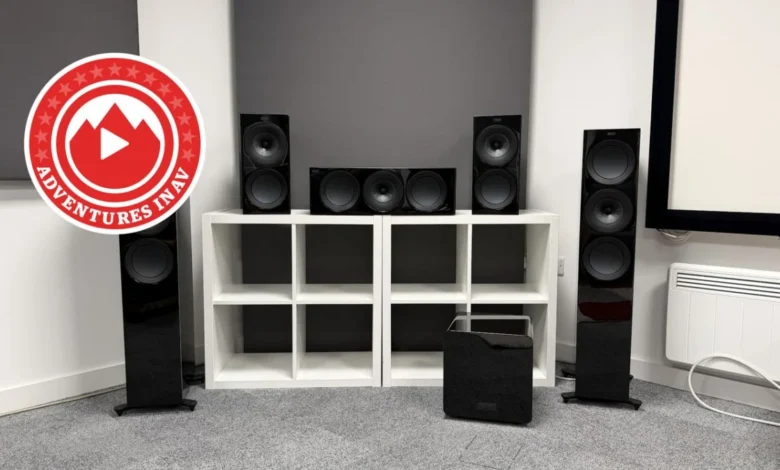
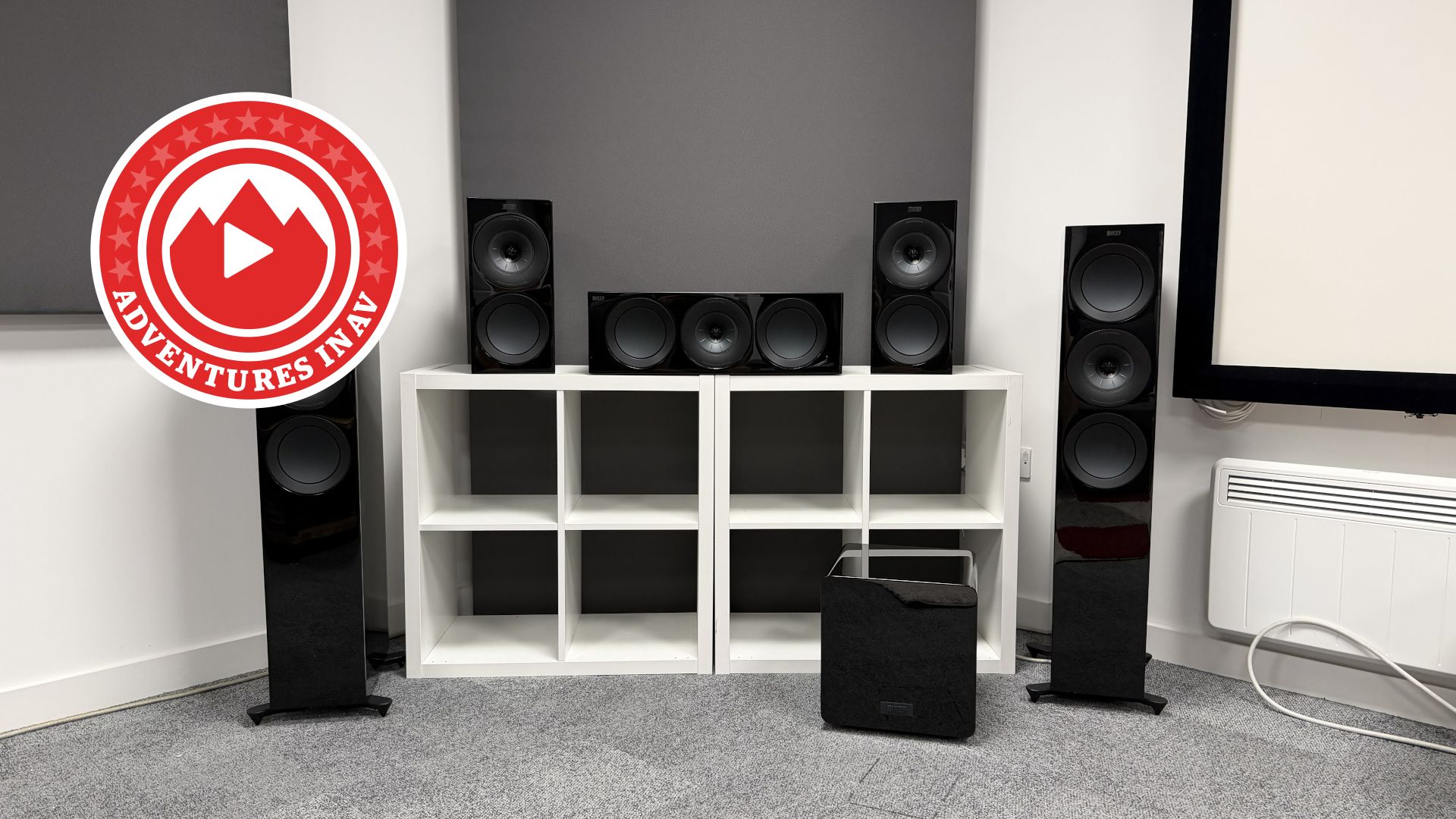
The initial evaluation focused on the KEF R Meta speaker package, integrated with a reference Marantz Cinema 30 AVR. The outcome, as anticipated for such accomplished pieces of audio-visual equipment, was undeniably impressive. The combined system delivered an expansive, cohesive, and remarkably controlled soundscape, effectively conjuring a richly immersive home cinema experience.
During playback of a particularly demanding test sequence from the 4K Blu-ray edition of Dune: Part One, the system demonstrated masterful command over the entire frequency spectrum. Subtle dynamic nuances, lurking beneath the thunderous percussive elements of the scene, were rendered with palpable presence. The directional cues, essential for conveying the sensation of ornithopters swooping from right to left and then disappearing behind the viewer, were precisely articulated, creating a genuine sense of spatial realism.
This high level of performance was not an anomaly. The system excelled across various demanding audio passages. When transitioning to a specialized F1 test disc, designed to push the boundaries of dynamic range and spatial imaging, the KEF and Marantz pairing continued to impress. Even when engaging with stereo music playback, the inherent quality of the components was evident.
The Subtle Shift: When Smoothness Becomes a Limitation
Yet, as the testing progressed, a subtle but discernible characteristic began to emerge. Senior staff writer, Lewis Empson, a seasoned audio critic known for his discerning ear, began to exhibit a familiar expression – a subtle frown that typically signals an imperfection in the sonic presentation. This reaction was soon echoed by other team members. In near unison, the question arose: "Does anyone else think this sounds just a touch too smooth?"
While the sound profile was undeniably refined and effortlessly composed – a testament to the high caliber of the components – it was noted that the combination might have been leaning a fraction too heavily towards an excessive degree of smoothness. This was not indicative of a lack of quality; quite the contrary. However, there were moments where a greater degree of sonic "bite" and urgency would have been more impactful, particularly in fast-paced action sequences or during impactful musical crescendos.
This observation was not entirely unexpected. Tom Parsons, What Hi-Fi?’s TV and AV editor, who was spearheading the review of the KEF speaker package, had independently described its sonic signature as "smooth and refined." This characteristic, while often a desirable trait in many audio systems, presented a unique challenge when paired with an AVR that shared a very similar sonic philosophy.
The Marantz Cinema 30 and KEF R Meta: A Case of Sonic Overlap
A review of the Marantz Cinema 30 itself, readily available in the What Hi-Fi? archives, highlights similar descriptive terms at the forefront of its sonic characterization: "smooth, refined, and always in control." When these two components, each possessing such closely aligned sonic personalities, are brought together, the result is a beautifully cohesive presentation. However, this very cohesion can inadvertently push the overall balance slightly further towards refinement than might be ideal for certain playback scenarios.
The issue is not that the pairing fails to function; it demonstrably does. Rather, the confluence of two components with such akin sonic temperaments can subtly soften the overall sense of attack and impact. The system was performing exceptionally well, producing a spacious, balanced, and highly accomplished sound. However, the inherent refinement of the Cinema 30, when combined with the naturally smooth presentation of the KEF R7 Meta front speakers, tipped the balance a little too far towards a relaxed listening experience, potentially at the expense of crucial sonic dynamism.
This phenomenon can be likened to culinary arts, as Lewis Empson aptly articulated: "Even if you like salty food, if you add several salty ingredients, it’s not going to taste good." The principle of balance and complementarity is just as vital in audio as it is in the kitchen.
Enter the Denon AVC-A1H: Injecting Dynamic Energy
The introduction of the Denon AVC-A1H into the testing environment provided a clear and compelling counterpoint. During the evaluation, the Denon demonstrated a demonstrably more dynamic and assertive sonic character. This distinct personality proved to be an ideal complement to the KEF speaker package, injecting a welcome measure of energy and attack without disrupting the inherent sonic balance of the KEFs.
The transformative effect was immediately apparent. Upon the commencement of Led Zeppelin’s iconic "Whole Lotta Love," the F1 test scene, which had previously felt refined, now possessed a heightened sense of electricity. The Denon enhanced the raw groove of Jimmy Page’s guitar work, adding a palpable grit and urgency.
Subsequently, when John Bonham’s legendary drum line crashed in, it delivered a visceral, gut-churning impact that resonated with the power and precision for which the drummer was universally lauded. Critics frequently lauded his "hard-hitting" and uncompromising playing style, a quality that the Denon AVC-A1H successfully conveyed. This was even before considering the amplified sense of heft and kinetic energy imparted to the race sequences, which now felt more thrilling and immediate.
The Broader Implications of Component Synergy
It is imperative to emphasize that this analysis is not intended as a critique of the Marantz Cinema 30. In fact, the Marantz/KEF combination represents an excellent system in numerous respects, capable of producing a sonically impressive and remarkably coherent audio experience. The observation is purely about the specific synergy within this particular configuration.
The takeaway is that the choice of AVR can significantly influence the overall sonic signature of a system. If the Marantz Cinema 30 were paired with more overtly energetic speakers, or if the KEF speakers were matched with a more assertive AVR, the sonic balance would undoubtedly shift in a different, potentially more desirable direction for some listeners.
Building Your Perfect Home Cinema: A Holistic Approach
The meticulous process of assembling a home cinema system demands a holistic perspective. It is not sufficient to simply select individual components based solely on their standalone merits or accolades. The true art lies in understanding how these components will interact and complement each other as an integrated whole.
Even for the solitary cinephile, the realm of home cinema hardware is fundamentally a team sport. Each element plays a crucial role in the overall performance. The receiver provides the power and processing, the speakers translate those signals into sound, and the source delivers the initial content. When these elements are in harmony, the result is an experience that transcends the sum of its parts.
Supporting Data and Industry Context
The concept of component synergy in audio systems is a well-established principle within the audiophile community and the professional audio industry. Manufacturers often design their product lines with internal consistency in mind, aiming for a recognizable sonic signature across different models within a series. However, the interplay between different brands and product lines can introduce variations that require careful consideration.
For instance, high-end speaker manufacturers like KEF often aim for a neutral and accurate sound reproduction. This can be achieved through sophisticated driver technology, precise cabinet design, and advanced acoustic engineering. Similarly, AVR manufacturers like Marantz and Denon invest heavily in proprietary amplification technologies, signal processing algorithms, and user-friendly interfaces. The specific implementation of these technologies can lead to subtle but audible differences in their sonic output.
Market research consistently indicates that consumers often purchase AV receivers and speaker systems separately, making the matching process a critical decision point. According to industry reports from organizations like Futuresource Consulting, the home theatre market continues to evolve, with a growing demand for immersive audio formats like Dolby Atmos and DTS:X, which place even greater emphasis on the precise reproduction of sound from multiple channels. This further underscores the importance of a well-matched system to fully realize the potential of these advanced audio technologies.
Future Trends and Consumer Guidance
As home cinema technology continues to advance, with innovations in display technology (e.g., 8K resolution, MicroLED), audio formats, and smart home integration, the complexity of system design will likely increase. However, the fundamental principle of synergy will remain a cornerstone of achieving optimal performance.
Consumers seeking to build or upgrade their home cinema systems are encouraged to:
- Research thoroughly: Consult reviews from reputable sources like What Hi-Fi? that not only evaluate individual components but also discuss their performance in various system configurations.
- Consider sonic signatures: Pay attention to descriptive terms used in reviews, such as "warm," "bright," "neutral," "dynamic," or "smooth," and consider how these might interact.
- Demo when possible: If feasible, audition components together in a showroom environment to experience their synergy firsthand.
- Seek expert advice: Consult with experienced AV retailers or custom installers who can provide personalized recommendations based on your specific needs and budget.
By understanding and prioritizing component synergy, enthusiasts can move beyond simply acquiring high-quality equipment and instead craft a truly magical and deeply immersive home cinema experience.
MORE:
These are the best projectors we’ve tested.
We rank the best surround sound systems.
Our picks of the best AV receivers.