Google’s Gemini Spark Expands to US AI Pro Subscribers, Ushering in a New Era of Automated Personal and Professional Productivity

Google’s ambitious personal AI agent, Gemini Spark, is now actively rolling out to AI Pro subscribers across the United States, following its initial launch in May with AI Ultra. This significant expansion marks a pivotal moment in Google’s strategy to integrate advanced artificial intelligence directly into the daily workflows of its users. While currently focused on the US market, Google has confirmed that availability will "soon" extend to AI Pro members in other countries, signaling a global push for this innovative productivity tool.
The Dawn of Automated Task Management with Gemini Spark
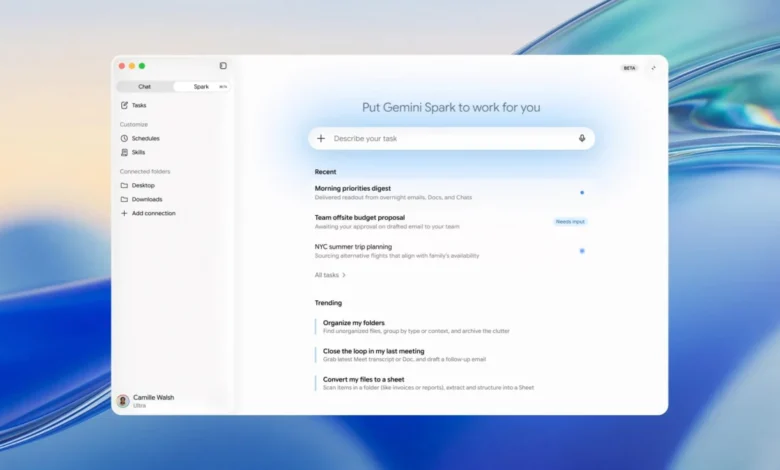
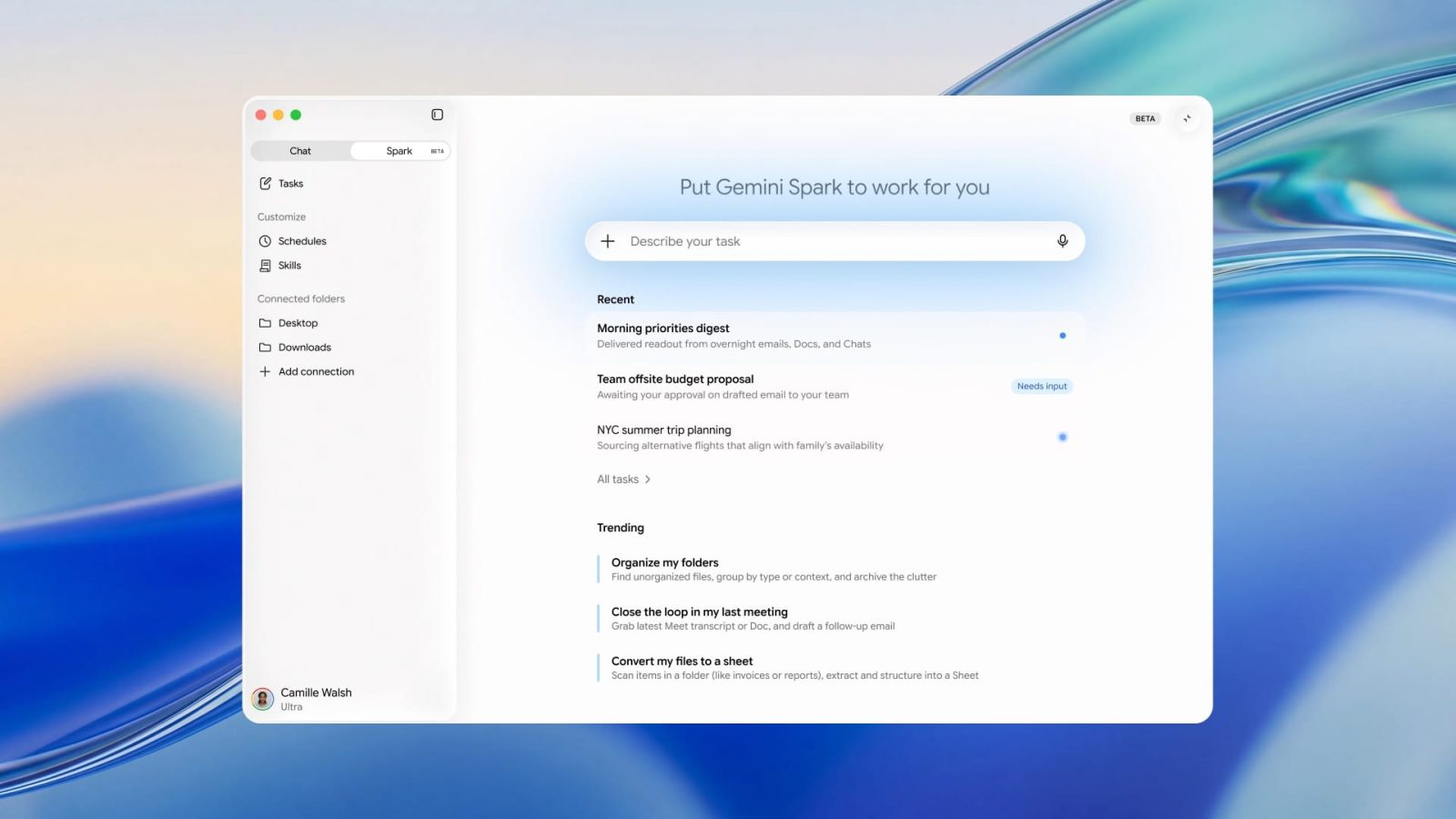
Gemini Spark is positioned as Google’s sophisticated personal AI agent designed specifically for automating complex, multi-step tasks. Unlike traditional chatbots or basic AI assistants, Spark aims to transcend simple queries by executing intricate workflows across various platforms and applications. Users accessing Gemini Spark will notice its distinct presence within the Google ecosystem: on the web, it manifests as a dedicated new tab located prominently at the top of the navigation drawer, while on mobile devices, it appears as a new, dedicated page within the Gemini Android and iOS applications. This streamlined access underscores its role as a central hub for personal automation.
At its core, Gemini Spark leverages an interconnected suite of capabilities to achieve its goals. It seamlessly integrates with Google’s Connected Apps, including the ubiquitous Google Workspace suite (Gmail, Calendar, Docs, Sheets, Slides, Drive) and the powerful Google Search engine. Beyond these, Spark taps into "Personal Intelligence" – the AI’s evolving understanding of a user’s habits, preferences, and data – to personalize its actions. Further augmenting its capabilities are a remote web browser for information retrieval, a computer with code execution for advanced problem-solving, and integrated chat functionalities for user interaction and refinement. The inclusion of "Canvas" provides a visual workspace for brainstorming and organization, while location awareness allows for contextually relevant automation. These combined elements empower Spark to undertake a wide array of tasks, from drafting comprehensive reports to managing complex schedules and analyzing data.
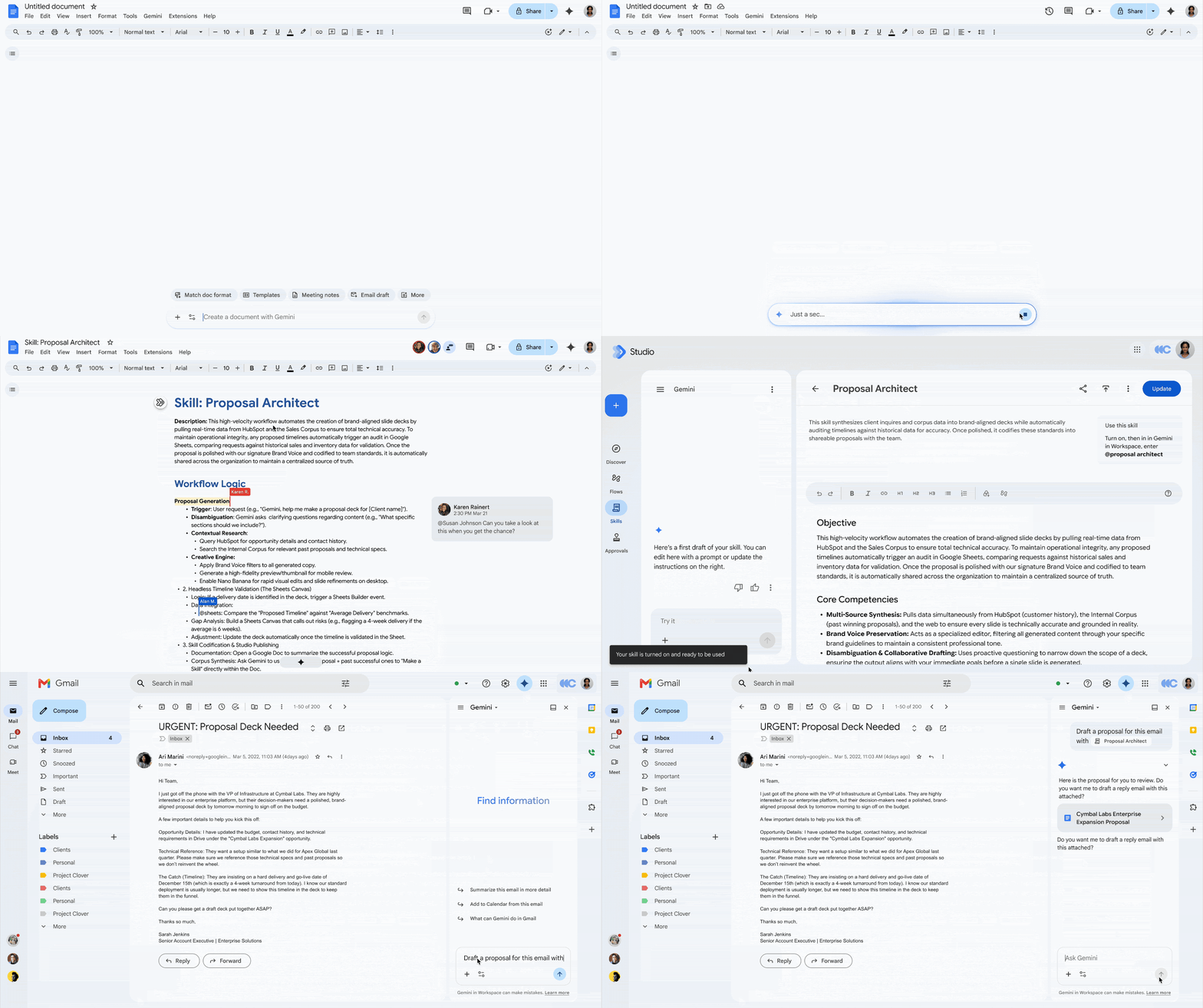
Google is introducing a new vocabulary to describe Spark’s operational framework: "Skills," "Schedules," and "Tasks." A "Task" represents the high-level objective a user wishes to achieve, such as "Prepare my weekly sales report" or "Organize my travel itinerary for the upcoming conference." "Skills" are essentially reusable sets of instructions embedded with additional context, allowing Spark to perform specific actions efficiently. For instance, a "Skill" might be "Summarize meeting notes" or "Draft a professional email." "Schedules" introduce the element of automation, enabling tasks to be triggered automatically based on predefined conditions like a specific time (e.g., "Every Monday morning") or an event (e.g., "When a new project proposal is received"). This modular approach allows users to build and customize highly specific automation routines tailored to their individual needs.
For practical usage, Google has set a limit allowing users to have "up to 15 tasks running at a given time." This concurrency limit is designed to manage computational resources and ensure optimal performance, aligning with the same compute-based usage limits that govern other aspects of the broader Gemini platform. Since its initial soft launch, Google has been actively expanding Spark’s capabilities, with particular emphasis on enhancing its functionality within the Google Workspace ecosystem. A notable development includes the integration with the Gemini macOS application, which allows users to initiate and manage tasks, such as browsing files or drafting documents, directly from their mobile devices, further blurring the lines between desktop and mobile productivity.
The Evolution of Google’s AI Ambition: From Bard to Gemini Spark

The introduction of Gemini Spark is not an isolated event but rather a significant progression in Google’s long-term commitment to artificial intelligence. Google has been at the forefront of AI research and development for decades, with foundational work emerging from its DeepMind and Google Brain divisions. The journey to Gemini began publicly with the launch of Bard, an experimental conversational AI service. Bard served as a proving ground, allowing Google to gather user feedback and rapidly iterate on its large language models.
In early 2023, Google announced its ambitious plan to unify its diverse AI efforts under the "Gemini" brand, signaling a more comprehensive and multimodal approach to AI. Gemini was envisioned as a family of models capable of understanding and operating across text, code, audio, image, and video. This strategic pivot aimed to create a more versatile and powerful AI foundation than its predecessors. The launch of Gemini Ultra, the most capable and largest model in the Gemini family, marked a significant milestone, offering advanced reasoning, comprehension, and coding capabilities that rivaled or surpassed leading competitor models.
Gemini Spark, launching as a premium feature for AI Pro subscribers, represents the natural evolution of this strategy. While Gemini models provide the intelligence, Spark provides the agency. It moves beyond conversational AI to actionable AI, transforming the powerful language models into proactive agents that can execute complex tasks autonomously. This shift from "talking to AI" to "AI doing for you" is central to Google’s vision of ambient computing and helpful AI that seamlessly integrates into users’ lives. The competitive landscape, with players like Microsoft’s Copilot and OpenAI’s burgeoning agent capabilities, has undoubtedly fueled Google’s urgency in developing and deploying such advanced personal AI.
Deep Integration with Google Workspace: A Productivity Powerhouse
The true power of Gemini Spark lies in its deep and sophisticated integration with Google’s vast suite of Workspace applications. This synergy allows Spark to become an indispensable assistant for both personal and professional productivity.
-
Calendar Integration: Spark can intelligently manage schedules, proactively identifying and resolving meeting conflicts, suggesting optimal times for new appointments based on availability and preferences, sending reminders, and even drafting follow-up emails post-meeting. For instance, a task like "Schedule a team sync for project X next week" could see Spark analyzing team calendars, proposing times, sending invites, and adding relevant meeting notes to the event description.
-
Gmail Automation: Email management, often a time-consuming chore, becomes significantly streamlined. Spark can summarize lengthy email threads, draft contextual replies based on the content of incoming messages, filter and prioritize important emails, and even extract key information to create calendar events or tasks. Imagine Spark automatically drafting a polite decline for a meeting request that conflicts with a higher-priority event, or summarizing a week’s worth of client correspondence into a concise digest.
-
Docs, Sheets, Slides, & Drive Mastery: This is where Spark’s capabilities truly shine for professional users.
- Google Docs: Spark can assist in drafting documents from scratch, summarizing existing reports, rephrasing paragraphs for clarity, generating content based on provided outlines, and even collaborating on edits.
- Google Sheets: Data analysis becomes accessible. Spark can clean data, generate charts and graphs from raw numbers, perform complex calculations, update records based on external inputs, and identify trends.
- Google Slides: Creating professional presentations is simplified. Spark can transform a document into a slide deck, reformat existing slides, suggest relevant imagery, and ensure design consistency.
- Google Drive: Spark can intelligently organize files, search for specific documents across vast repositories, manage sharing permissions, and even archive old projects based on predefined criteria.
- Important Note on Shared Documents: Google has implemented a critical safeguard for editing shared documents, spreadsheets, and presentations. Users will "need to review and confirm Gemini Spark’s planned edits." This measure is crucial for maintaining data integrity, ensuring user oversight, and addressing potential concerns about AI autonomy, especially in collaborative professional environments where accuracy and accountability are paramount. It underscores Google’s commitment to responsible AI deployment by placing the final decision-making power in the hands of the user.
-
Google Keep for Enhanced Note-Taking: Spark can transcribe spoken notes, organize them by topic or project, extract action items from free-form text, and even link notes to relevant calendar events or tasks.
-
Google Tasks for Proactive Management: Spark can create new tasks based on emails or meeting discussions, prioritize existing tasks, set deadlines, and manage complex project lists.
- Important Note on Private Tasks: A specific caveat applies to Google Tasks: "Gemini can perform bulk actions on private tasks in Google Tasks without your confirmation. Please review your request before you submit or manage directly in Google Tasks." This functionality, while powerful for efficiency (e.g., marking dozens of completed sub-tasks at once), highlights the need for user vigilance. It’s a trade-off between convenience and control, where the user must trust Spark’s interpretation of their bulk command for private data, emphasizing the importance of clear instructions and regular review.
The cross-device synergy, particularly with the Gemini macOS app, further enhances the user experience. The ability to initiate a task on a mobile device and have Spark execute it on the desktop (e.g., browsing local files or launching specific desktop applications) demonstrates a vision of seamless, "ambient" computing where AI assistance is always available, regardless of the device in use.
Broader Implications and the Future Landscape of Productivity
The rollout of Gemini Spark carries significant implications for personal and professional productivity, the competitive AI landscape, and broader ethical considerations.
Productivity Revolution: For individuals and businesses alike, Spark promises a significant leap in efficiency. By automating repetitive and complex tasks, it frees up valuable human capital to focus on strategic thinking, creativity, and tasks requiring nuanced human judgment. Imagine project managers spending less time on administrative updates and more time on client engagement, or researchers dedicating more energy to analysis rather than data compilation. This could redefine the very nature of work, shifting the emphasis from task execution to outcome management.
Google’s Ecosystem Advantage: Gemini Spark powerfully leverages Google’s unparalleled ecosystem. The deep integration with Workspace, Android, Chrome OS, and Google Search creates a formidable, unified AI experience that competitors may struggle to replicate without similar breadth of services. This strengthens Google’s position as a leading provider of productivity tools and could significantly increase user lock-in within its services. The seamless flow of information and actions across Google’s suite of products positions Spark as more than just an AI tool; it’s an intelligent orchestrator of the entire digital workspace.
Data Privacy and Security: The deep access Spark requires to personal and professional data (emails, documents, calendars, tasks) naturally raises questions about data privacy and security. Google’s explicit prompts for confirmation on shared document edits and warnings for bulk private task actions indicate an awareness of these concerns. However, the sheer volume and sensitivity of data an AI agent like Spark interacts with necessitate robust security protocols, transparent data handling policies, and continuous user education on privacy settings and controls. Building and maintaining user trust will be paramount for Spark’s long-term success.

Ethical Considerations and Control: The concept of an autonomous AI agent performing actions on a user’s behalf introduces ethical considerations. How much agency should the AI have? What are the mechanisms for intervention if Spark misinterprets a command or takes an unintended action? The "review and confirm" prompts are crucial safeguards, but as AI capabilities advance, the balance between automation and user control will remain a critical area of development and debate. Ensuring that users always retain ultimate oversight and the ability to audit Spark’s actions will be vital for responsible AI deployment.
Competitive Landscape: Gemini Spark’s advanced capabilities intensify the competition in the burgeoning AI assistant market. Microsoft’s Copilot, deeply integrated with Microsoft 365, offers similar automation promises. OpenAI is also exploring agentic capabilities for its models. Google’s unique advantage lies in its vast and deeply integrated ecosystem, from search to mobile operating systems. Spark’s success will depend on its ability to demonstrate superior performance, ease of use, and a clear value proposition that differentiates it from rivals, particularly in the enterprise space where productivity gains are highly valued.
Future Development: The current iteration of Gemini Spark is likely just the beginning. Future developments could include more sophisticated "Skills" that are easier for users to create and share, more proactive suggestions based on evolving user habits, multi-modal task execution that incorporates voice or image inputs more deeply, and even expanded integrations with third-party applications beyond Google’s own ecosystem. The vision is likely toward an "ambient" AI that not only responds to commands but anticipates needs, making computing truly helpful and intuitive.
Industry Reactions and Outlook
While Google has not released official statements beyond the rollout announcement, industry analysts are quick to recognize the strategic importance of Gemini Spark. "Gemini Spark represents Google’s strong intent to move beyond foundational large language models into highly practical, actionable AI agents," noted one prominent tech analyst. "Its deep integration with Google Workspace is a powerful differentiator, positioning it as a significant productivity tool for both individuals and businesses. However, Google will need to continuously address concerns around data privacy and user control to foster widespread adoption and trust."
Early adopters and professional users subscribing to AI Pro are expected to provide crucial feedback on Spark’s real-world efficacy. Initial reports suggest a learning curve in effectively leveraging Spark’s full potential, but also highlight immense enthusiasm for its capabilities in streamlining complex, multi-application workflows. As Gemini Spark becomes more widely available, its impact on how individuals and organizations approach digital tasks and automation will undoubtedly be a central theme in the ongoing narrative of AI’s transformative power. The journey of Gemini Spark has just begun, promising a future where AI not only understands but actively assists in shaping our daily productivity.