Beyond the Generation Crisis: Why the AI Boom is an Architectural Power Challenge

The exponential expansion of artificial intelligence infrastructure has placed unprecedented demands on global electrical grids, frequently framing the crisis as a severe shortage of energy generation. Policymakers, utility providers, and technology conglomerates routinely debate the urgent need for more natural gas turbines, solar arrays, wind farms, and high-voltage transmission corridors to fuel the next generation of data center campuses. However, a series of recent catastrophic grid failures in key technology hubs suggests that the primary vulnerability is not merely a lack of electrons, but a fundamental mismatch in power architecture. As gigawatt-scale artificial intelligence facilities come online, the traditional methodologies used to condition, distribute, and protect electrical loads are reaching a breaking point. The resulting volatility threatens not only the operational integrity of individual corporate campuses but the stability of interconnected regional power grids as a whole.
A Paradigm Shift in Electrical Consumption
To understand the scope of the crisis, industry analysts must examine how legacy power systems were designed to operate. Historically, electrical grids were engineered around predictable, industrial-scale loads such as steel mills, chemical refineries, and municipal consumption peaks like residential heating or cooling at dinnertime. While these facilities drew substantial amounts of power, their consumption curves were relatively smooth. When anomalies occurred, equipment typically misbehaved gradually, providing operators and grid protection systems ample time to respond, isolate faults, and recover gracefully.
Artificial intelligence data centers break every rule of traditional load behavior. A modern AI training campus housing tens of thousands of specialized graphics processing units can experience dramatic load swings, altering its power consumption by up to 70 percent within milliseconds. Conversely, at the first sign of an upstream voltage disturbance, these facilities are programmed to trip offline instantly to protect billions of dollars in sensitive semiconductor hardware.
While an immediate disconnection is a rational economic choice for a single data center operator, the simultaneous tripping of multiple gigawatt-scale facilities creates a massive, coordinated demand drop that the surrounding grid was never designed to handle. As the scale of planned AI campuses continues to expand into multiple gigawatts per site, this operational volatility transforms ordinary data centers into systemic liabilities for regional grid operators.
Anatomy of a Regional Grid Crisis: The Ashburn Precedents
The dangers of this architectural mismatch are no longer theoretical. Northern Virginia, specifically the Ashburn area in Loudoun County—widely recognized as Data Center Alley and the largest data center concentration globally—has served as a real-world testing ground for these systemic vulnerabilities.
On July 22, 2026, a transmission line fault in Ashburn triggered a sudden, massive disruption that knocked more than 3 gigawatts of electrical load off the grid within seconds. The incident reverberated across the PJM Interconnection regional transmission organization, testing the limits of automated grid protections and alarming energy regulators.
This event followed a remarkably similar precedent two years prior. In an incident analyzed extensively by power system engineers, the failure of a single surge arrester in Virginia triggered a cascading response that caused roughly 60 data center facilities to drop approximately 1,500 megawatts of load simultaneously. Investigators discovered that the vast majority of the lost load was not the result of physical damage to the data centers, but rather the programmed behavior of internal protection schemes. These legacy systems were designed to count voltage dips and automatically disconnect the facility upon detecting the third transient—a textbook engineering response intended to protect equipment, executed precisely at the worst possible moment for the grid.
The Vulnerabilities of the Legacy Power Stack
The root cause of these cascading failures lies in an outdated infrastructure model that has governed data center design for decades. The standard internal power stack follows a rigid sequence: medium-voltage power arrives from the utility, transformers step the voltage down to lower levels, and low-voltage uninterruptible power supply units condition the electricity before it finally reaches the server racks. When applied to AI-scale workloads, this legacy stack cracks in three distinct places.
First, traditional uninterruptible power supplies are located deep within the interior of the data center building, positioned in close proximity to the server halls. Their internal battery arrays are engineered to serve as an emergency spare tire, designed to sustain operations for a few minutes during a total outage rather than continuously absorbing massive, sub-millisecond load swings around the clock.
Second, to maximize energy efficiency, legacy power converters spend the vast majority of their operational lives in eco-mode or bypass. Because older conversion electronics waste significant amounts of energy, operators use a static switch to feed the server racks directly from the utility grid, bypassing filtering mechanisms. Consequently, the volatile power swings generated by high-density compute clusters flow outward into the grid unchecked, while sub-millisecond grid transients enter the facility unimpeded, threatening sensitive computing hardware.
Third, protection logic formulated decades ago—when a large industrial load rarely exceeded 50 megawatts—fails to comprehend the massive scale of modern interconnected campuses. Lacking visibility into the broader health of the regional grid, these local protection systems react to minor voltage fluctuations by severing the connection entirely, exacerbating regional supply imbalances rather than mitigating them.
Engineering a New Power Path: Moving Up, Out, and Inline
Addressing the structural flaws of the legacy power stack requires a fundamental redesign of how power is delivered, conditioned, and managed within high-density technology facilities. Industry innovators and energy specialists argue that the necessary remediation relies on three synchronized architectural shifts: moving the power protection layer up, moving it outside, and placing it directly in the power path.
- Moving Up: The transition must elevate the protection threshold from low-voltage systems (such as standard 480-volt architectures) to medium-voltage levels of 13.8 kilovoltages and higher, matching the voltage at which large industrial sites draw power directly from utility transmission and distribution networks.
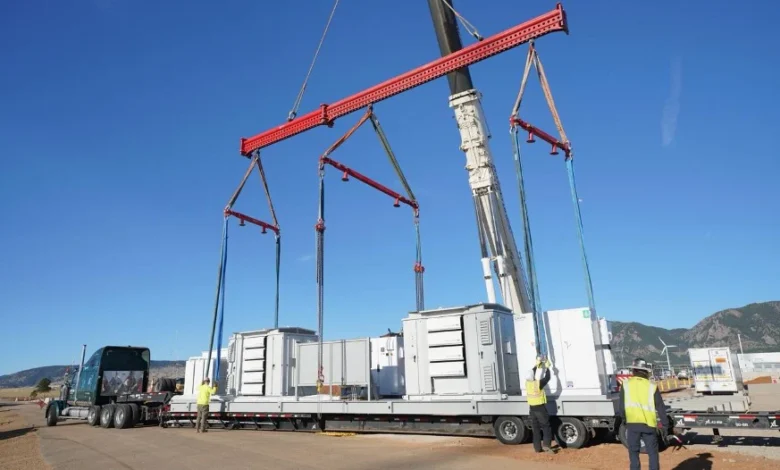
- Moving Out: Physical power conditioning and storage infrastructure must be relocated from the interior data halls to modular, weather-resistant enclosures positioned externally near the facility’s main substation. This ensures that the primary data center building is dedicated exclusively to computation and the specialized cooling systems required to maintain thermal equilibrium.
- Moving Into the Path: Rather than utilizing reactive battery systems that monitor and switch during an emergency, the modern architecture deploys an inline system through which every electron flows continuously. Because the power management infrastructure intercepts all incoming and outgoing energy in real time, there are no transfer delays, no switching latency, and no transient gaps.
Transforming Grid Liabilities into Operational Assets
Implementing a medium-voltage, inline power architecture fundamentally alters the operational economics and regulatory compliance profile of hyperscale data centers. When thousands of artificial intelligence accelerators spin up or down simultaneously, the inline medium-voltage system absorbs the kinetic energy of the swing, presenting the external utility grid with a smooth, predictable load profile. Conversely, when external grid disturbances occur, the delicate computing infrastructure behind the barrier remains completely insulated from voltage sags and spikes.
This architectural shift also streamlines the complex utility interconnection process. Instead of forcing regional transmission organizations and electric utilities to conduct exhaustive, time-consuming reviews of every individual transformer, uninterruptible power supply, chiller, pump, and switchgear assembly within a sprawling campus, utilities can certify a single standardized medium-voltage enclosure. Engineering teams can subsequently upgrade server chips and computing generations without triggering lengthy, repetitive interconnection studies, shaving months off facility permitting timelines.
Inside the perimeter fence, reclaiming the physical real estate formerly occupied by massive internal uninterruptible power supply rooms allows operators to expand high-density compute capacity or install advanced liquid-cooling infrastructure, significantly increasing revenue density per construction dollar. Furthermore, equipment operating at medium voltage that incorporates localized energy storage often qualifies for lucrative federal tax credits and can participate in grid-support ancillary services, such as peak shaving and demand response programs. In this framework, backup power transitions from a costly operational insurance policy into a revenue-generating asset.
Rigorous Validation at National Research Laboratories
To verify the resilience of these advanced architectural concepts under extreme conditions, full-scale medium-voltage inline systems underwent rigorous empirical testing in early 2026. The trials were conducted at the National Renewable Energy Laboratory’s Flatirons Campus (formerly the National Laboratory of the Rockies), a premier U.S. Department of Energy facility equipped to replicate real-world grid faults and multi-megawatt artificial intelligence load swings simultaneously within a closed-loop testing environment.
During the evaluations, engineers subjected the medium-voltage architecture to severe stress tests from both directions. Realistic, high-frequency artificial intelligence training load profiles were slammed into the compute side at full medium-voltage capacity, while simultaneous grid-side faults—including complete zero-voltage events—were injected from the utility simulator.
The results demonstrated that neither the computing infrastructure nor the simulated electrical grid experienced destabilizing anomalies. The medium-voltage inline system successfully cleared the stringent large-load voltage ride-through requirements mandated by grid operators such as the Electric Reliability Council of Texas, with substantial operational margin to spare.
Broader Industry Implications and the Path Forward
As regional grid operators face mounting pressure to maintain grid reliability amid unprecedented load growth, regulatory compliance is shifting from a flexible guideline to a non-negotiable prerequisite for industrial development. While many technology operators view these evolving regulatory hurdles as burdensome obstacles to rapid deployment, a medium-voltage inline architecture achieves compliance inherently out of the box.
The ongoing evolution of artificial intelligence infrastructure demonstrates that much of what appears to be an external electricity generation deficit is, in reality, an internal architectural challenge rooted in legacy equipment sizing. By elevating power protection to medium voltage, relocating infrastructure outside the main data halls, and placing energy management directly in the path of the electrical current, the data center industry can convert potential grid liabilities into valuable grid assets.
As the next wave of artificial intelligence factories takes shape across the globe, the engineering pathways to stable, resilient integration have been proven. Whether these massive computing facilities ultimately arrive as a destabilizing strain on public electrical grids or as a robust pillar of support depends entirely on the architectural choices made at the foundation of every new campus.