Tesla Diner turns one on July 21 with Optimus, roller skates, and a Franz-signed hat.

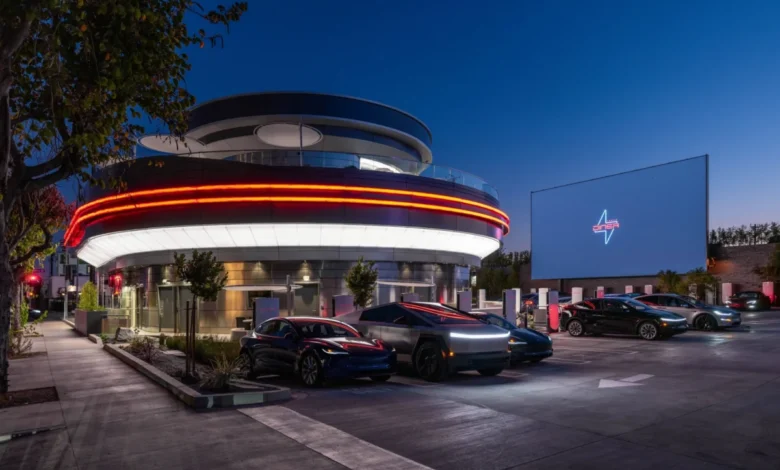
The milestone marks a year of operational success for a project that many industry analysts once dismissed as a whimsical distraction for Tesla Inc. Located on the historic Santa Monica Boulevard in Hollywood, the Tesla Diner and Supercharger complex has transitioned from a viral social media concept into a functional blueprint for the future of autonomous commerce. To commemorate the first anniversary, Tesla has scheduled a series of high-profile events and product demonstrations that highlight the convergence of the company’s automotive, robotic, and infrastructure divisions.
The anniversary festivities are set to begin at midnight on July 21, 2026. In a move designed to reward the brand’s most dedicated enthusiasts, Tesla announced that the first 50 customers who place a food order directly through their vehicle’s touchscreen interface at the stroke of midnight will receive a limited-edition Tesla Diner birthday hat. These collectibles carry significant value for the Tesla community, as each will be personally signed by Franz von Holzhausen, Tesla’s Chief Designer and the man responsible for the aesthetic direction of the Model S, Model 3, Model X, Model Y, and the Cybertruck.
A Fusion of Nostalgia and Futurism
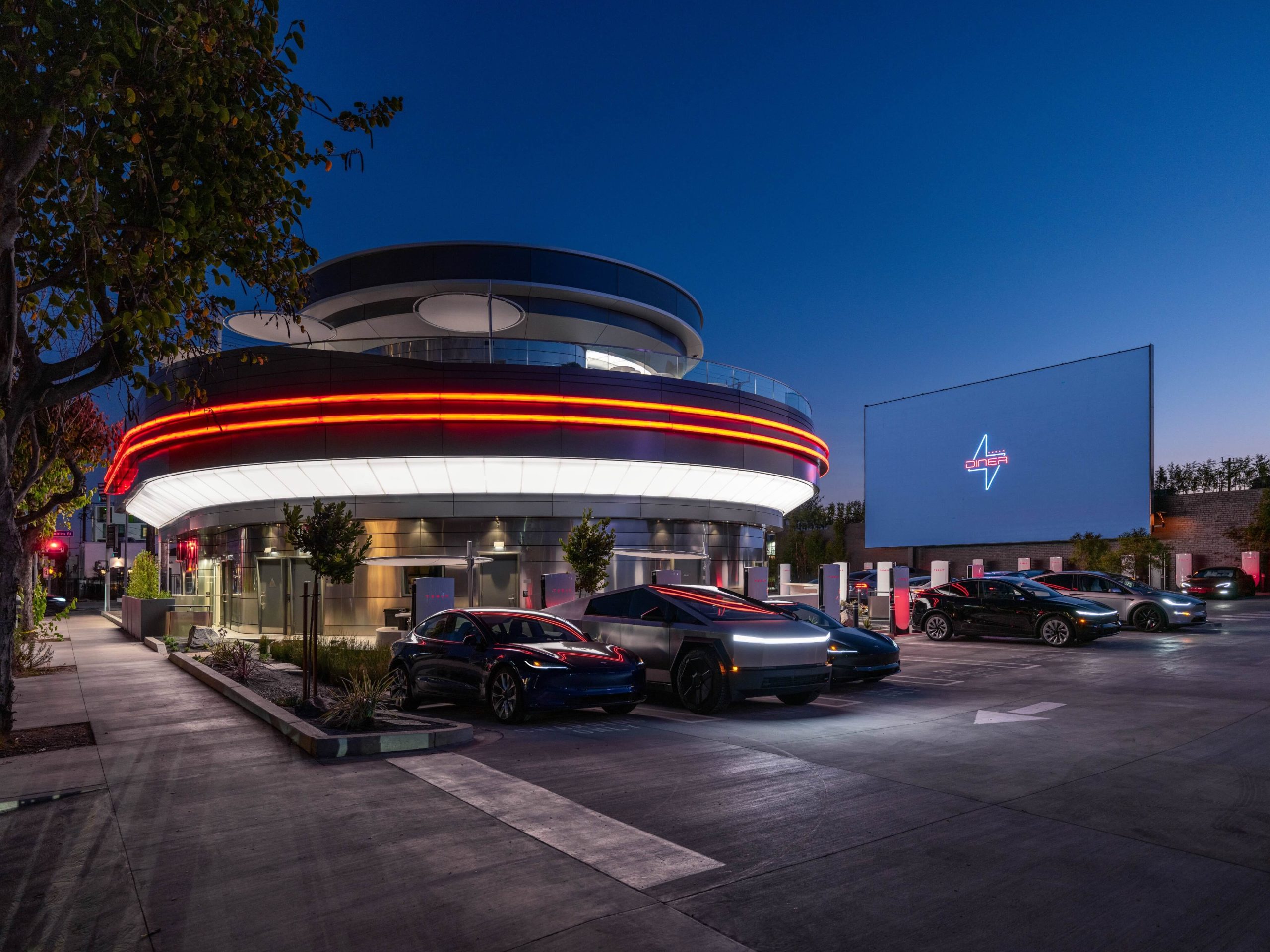
The Hollywood location represents the physical manifestation of a vision first articulated by CEO Elon Musk in 2018. At the time, Musk took to X (then Twitter) to describe a concept that blended the Americana of a 1950s drive-in with the high-tech utility of a Supercharger station. He famously characterized the aesthetic as "Grease meets The Jetsons."
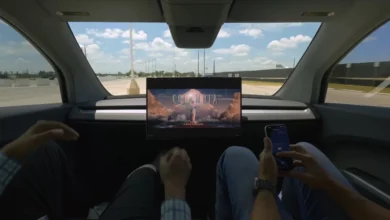
One year after its grand opening, the diner has proven that the "retro-future" theme resonates with both locals and tourists. The facility features two large movie screens playing clips of classic cinema, a rooftop seating area with views of the Hollywood skyline, and a staff of servers on roller skates—a direct nod to the drive-in culture of the mid-20th century. However, the true innovation lies beneath the surface-level nostalgia. The diner was built not just to serve burgers and shakes, but to serve as a testbed for how humans and autonomous machines interact in a retail environment.
The presence of the Tesla Optimus Gen 3 humanoid robot at the anniversary event underscores this mission. While earlier versions of Optimus were confined to laboratory settings or factory floors, the Gen 3 iteration is being integrated into public-facing roles. At the anniversary celebration, Optimus is expected to interact with guests, demonstrating the dexterity and social-navigational capabilities that Tesla hopes will eventually make the robot a staple in homes and businesses worldwide.
The Robotaxi Business Model
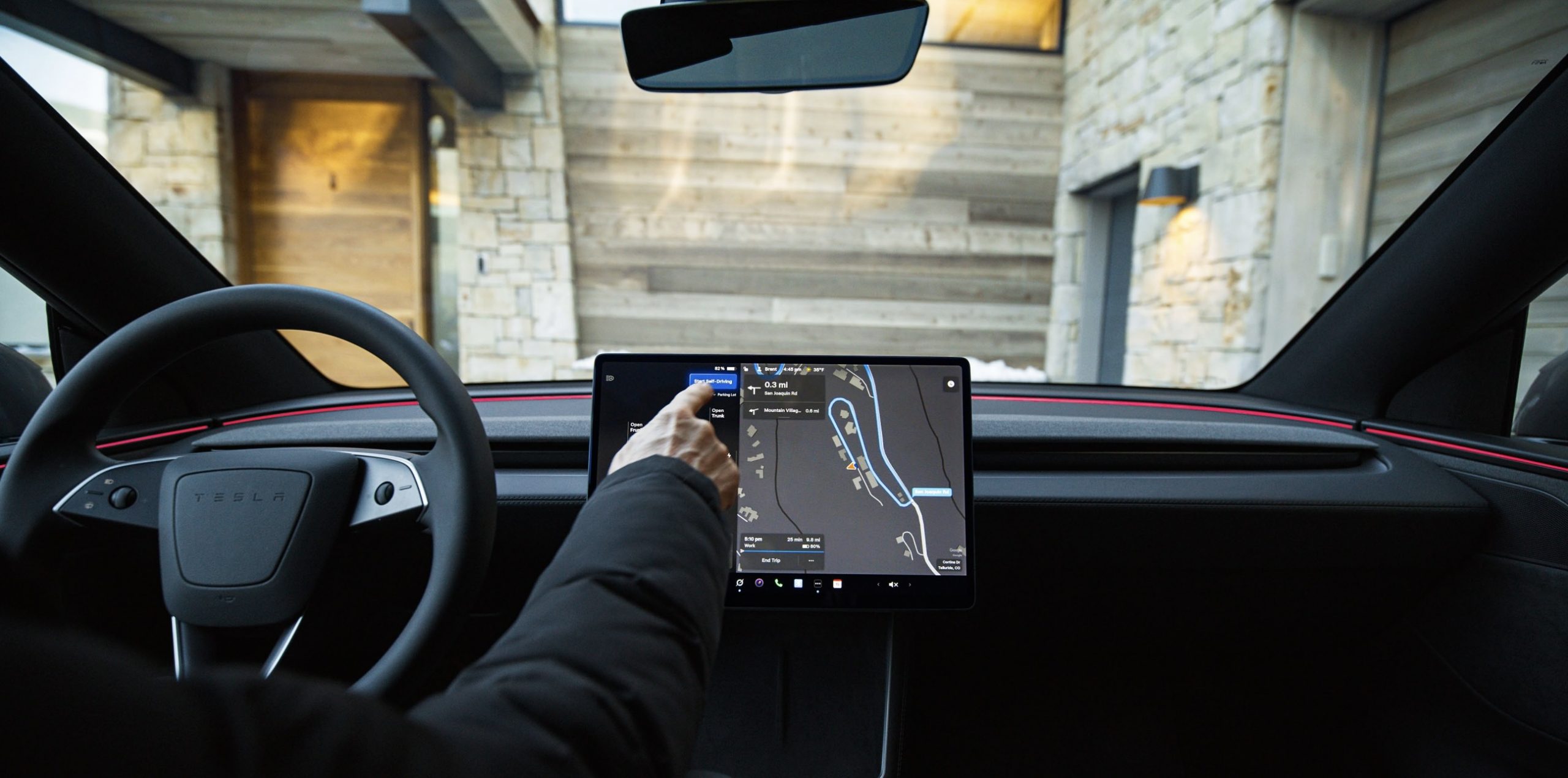
The most significant aspect of the Tesla Diner’s first year is the validation of its unique ordering model. Unlike traditional drive-throughs or sit-down restaurants, the Tesla Diner is optimized for the "in-car economy." Tesla owners can browse the menu and pay for their meals via the vehicle’s central infotainment system while still miles away from the location.
This system is a critical precursor to the launch of the Cybercab and the broader implementation of unsupervised Full Self-Driving (FSD). As Tesla moves toward a future where the car is the primary driver, the diner serves as a template for autonomous commerce. In this framework, a robotaxi can pull into a stall, initiate a charging session via an automated robotic arm, and have a pre-ordered meal delivered to the window by a server (or eventually, an Optimus unit) without the passenger ever needing to disengage from their work or entertainment.
"The vehicle is no longer just a mode of transport; it is a mobile point-of-sale terminal," noted one retail analyst. "By controlling the charging infrastructure, the software, and the dining experience, Tesla is creating a closed-loop ecosystem that maximizes the revenue generated per charging session."

Chronology of the Tesla Diner Project
The journey from a social media post to a profitable Hollywood landmark was marked by several years of regulatory hurdles and architectural shifts:
- January 2018: Elon Musk first tweets about opening an "old school drive-in, roller skates, and rock restaurant" at a new Supercharger location in Los Angeles.
- May 2022: Tesla officially submits plans to the City of Los Angeles for a 24-hour diner and a 32-stall Supercharger station at 7001 West Santa Monica Boulevard.
- August 2023: Construction begins after Tesla secures the necessary permits, including those for two large movie screens and a rooftop deck.
- July 21, 2025: The Tesla Diner officially opens to the public. Lines wrap around Santa Monica Boulevard as thousands of fans attempt to be among the first to experience the "Jetsons-style" service.
- October 2025: Tesla introduces "Diner Mode" software updates to its fleet, allowing for seamless food ordering and climate-controlled in-car dining presets.
- July 21, 2026: The first anniversary celebration, featuring the Cybercab display and Optimus Gen 3.
Integration with Advanced FSD Capabilities
The success of the diner coincides with Tesla’s latest breakthroughs in artificial intelligence. Recently, Elon Musk confirmed that Tesla vehicles will begin to learn and adapt to individual driver preferences. This development is expected to have a direct impact on how customers utilize the diner.
Currently, many interventions in Tesla’s Full Self-Driving system occur not because of safety risks, but because of personal preference. Drivers may take over because they prefer a specific parking spot, a different route, or a more aggressive or cautious driving style. By utilizing a neural network to remember these specific interventions, Tesla aims to create a personalized autonomous experience.

In the context of the Hollywood diner, this means the car will eventually know exactly which charging stall a customer prefers, their usual food order, and even the interior lighting and temperature settings they enjoy while eating. This level of personalization is viewed as the final step toward achieving truly unsupervised driving, where the car functions as a private lounge or office.
The Broader Musk Ecosystem: SpaceX and Market Context
The celebration at the Tesla Diner comes at a time of intense activity across all of Elon Musk’s ventures. While Tesla celebrates its retail success, SpaceX is navigating a high-stakes period following its recent debut on the public stock market. Trading under the ticker SPCX, SpaceX has seen its valuation scrutinized as it pushes toward the 13th test flight of Starship.
The 13th flight, originally scheduled for mid-July, was recently postponed after an automated abort triggered at T-zero. Musk revealed that four of the Super Heavy booster’s 33 Raptor engines failed to ignite during the startup sequence. This abort highlights the "fail fast, learn fast" philosophy that characterizes both SpaceX and Tesla. As SpaceX engineers replace the faulty engines and prepare for a new launch window on July 20—just one day before the diner’s anniversary—the synergy between Musk’s companies is more visible than ever.

The Starship Flight 13 mission is particularly consequential because it aims to deploy 20 operational Starlink V3 satellites, the first time Starship has carried a commercial payload. The success of these missions directly fuels the capital required for Tesla’s ambitious infrastructure projects, like the global expansion of the diner concept.
Future Implications and Global Expansion
The Hollywood location is widely considered a pilot program. Musk has signaled that if the model remains profitable and operationally efficient, Tesla will look to expand the diner concept to major metropolitan areas worldwide and along high-traffic Supercharger corridors on long-distance routes.
The anniversary event on July 21 will serve as a showcase for what these future locations might look like. The scheduled events include:
- Cybercab Display: A static display of the latest robotaxi prototype, allowing the public to see the interior design optimized for passengers rather than drivers.
- Skypad DJ and Light Show: A synchronized performance utilizing the diner’s architectural lighting and the "Light Show" feature found in Tesla vehicles.
- Roller Skating Servers: A full day of traditional drive-in service, emphasizing the brand’s commitment to the "Grease" aesthetic.
- Face Painting and Photo Booths: Family-friendly activities designed to broaden the diner’s appeal beyond tech enthusiasts.
As the Tesla Diner enters its second year, it stands as a testament to the company’s ability to turn unconventional ideas into tangible assets. What began as a tweet about roller skates and rock and roll has evolved into a sophisticated hub of autonomous technology, personalized AI, and modern retail. For the investors holding SPCX and TSLA stock, the Hollywood diner is more than a restaurant; it is the first chapter in a new book of autonomous commerce that could redefine the service industry in the decade to come.