Sigma 20-60mm f/2.8-4 DG Contemporary Lens Review: A Versatile Powerhouse for Mirrorless Creators

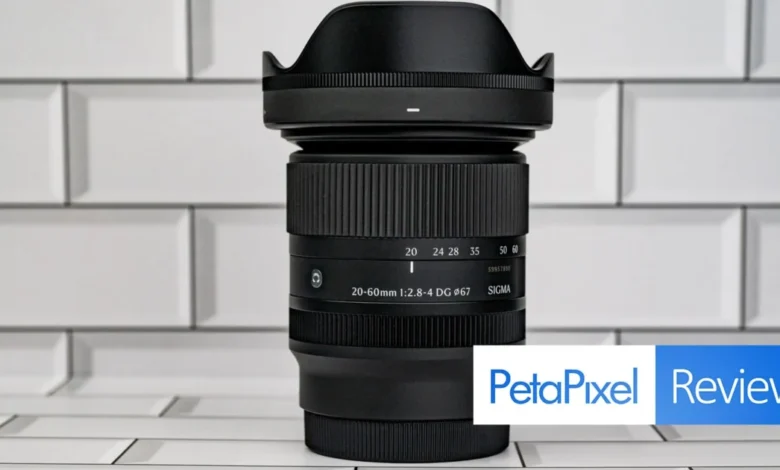
The contemporary landscape of digital photography and videography continues to shift heavily toward practical portability, with modern content creators increasingly prioritizing reduced gear weight and all-in-one versatility over absolute, lab-tested optical perfection. Addressing this ongoing demand for lightweight, wide-angle zoom solutions, independent optics manufacturer Sigma has officially announced its latest addition to the mirrorless market: the Sigma 20-60mm f/2.8-4 DG Contemporary lens. Available for both Sony E-mount and Leica L-mount camera systems at a competitive retail price of $849, this new optic enters a specialized market segment previously dominated by slower variable-aperture lenses or more expensive fixed-aperture alternatives. By combining an ultra-wide 20mm starting focal length with a brighter f/2.8 maximum aperture at the wide end, the lens aims to bridge the gap between landscape utility, vlogging convenience, and low-light performance without imposing a heavy physical burden on the photographer.

Engineering and Physical Ergonomics
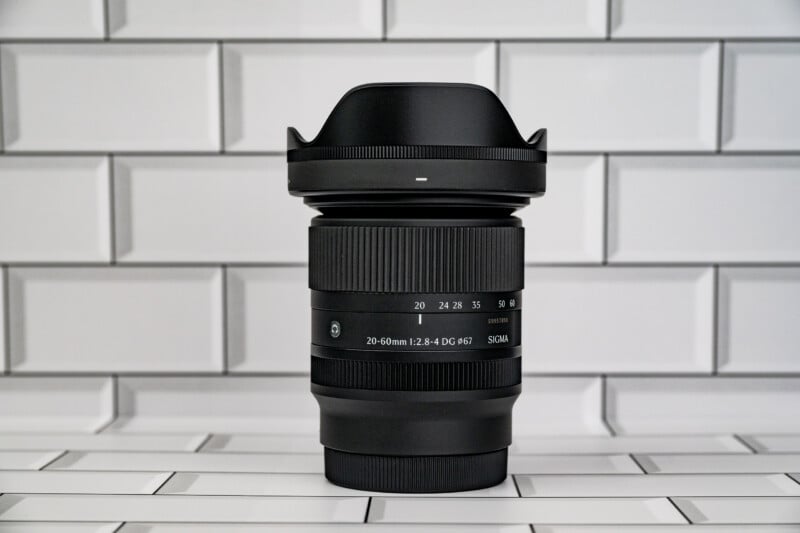
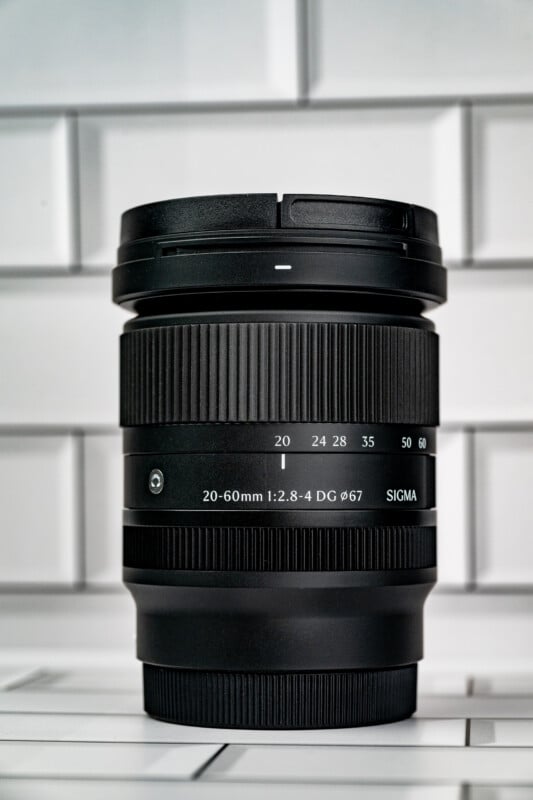
Weighing a remarkably light 13.2 ounces (375 grams) and measuring with a manageable 67mm front filter thread diameter, the Sigma 20-60mm f/2.8-4 DG Contemporary is engineered specifically for mobility. Its physical footprint undercuts several direct competitors, including the Sony 20-70mm f/4 G, while maintaining a robust structural integrity characteristic of Sigma’s Contemporary product line. The exterior chassis incorporates weather-sealing gaskets and dust-resistant construction around the mount and vulnerable seams, ensuring reliable field operation in adverse environmental conditions.
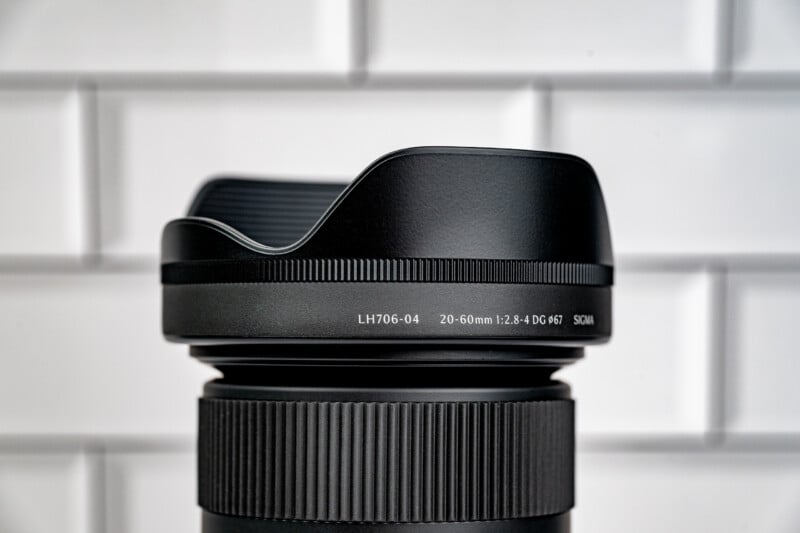
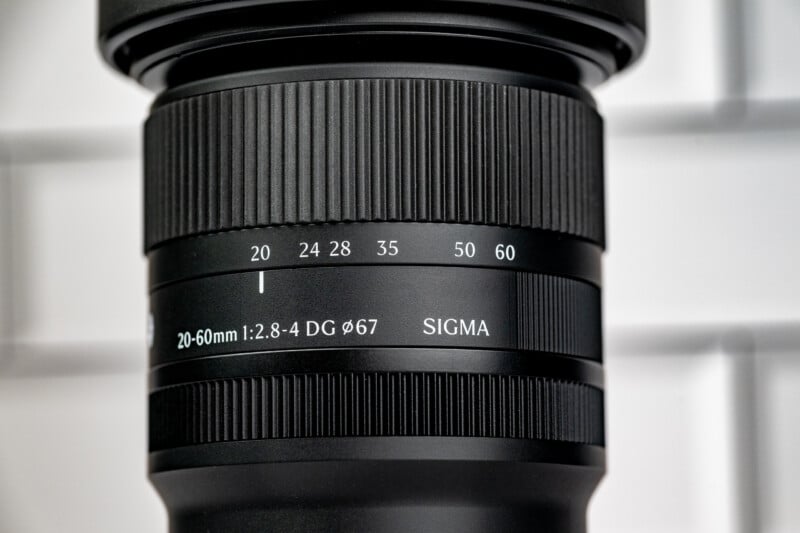
Despite its compact dimensions, the lens design makes certain ergonomic compromises to achieve its low weight and accessible price point. The lens barrel features a clean, minimalist layout devoid of customizable function buttons, an aperture control ring, or a dedicated autofocus-to-manual-focus toggle switch. Users must handle focus mode switching directly through their camera body’s menu system. Furthermore, the manual focus ring offers a slightly loose tactile feedback loop, though it remains entirely functional for precision adjustments. Internal autofocus duties are driven by a high-speed linear motor, delivering swift, near-silent tracking performance that meets the demands of both rapid photo acquisition and dynamic video recording environments.

Optical Performance and Image Quality
Rigorous field testing reveals a nuanced optical profile that balances impressive sharpness with minor behavioral quirks typical of compact, wide-angle zoom designs. Evaluated at its widest 20mm setting and f/2.8 aperture, the lens exhibits strong central contrast and detail, though corner sharpness suffers from initial softness that requires stopping down the aperture to resolve cleanly. By the time the lens reaches the 60mm focal length, center-to-corner consistency improves significantly, yielding sharp results at f/4.
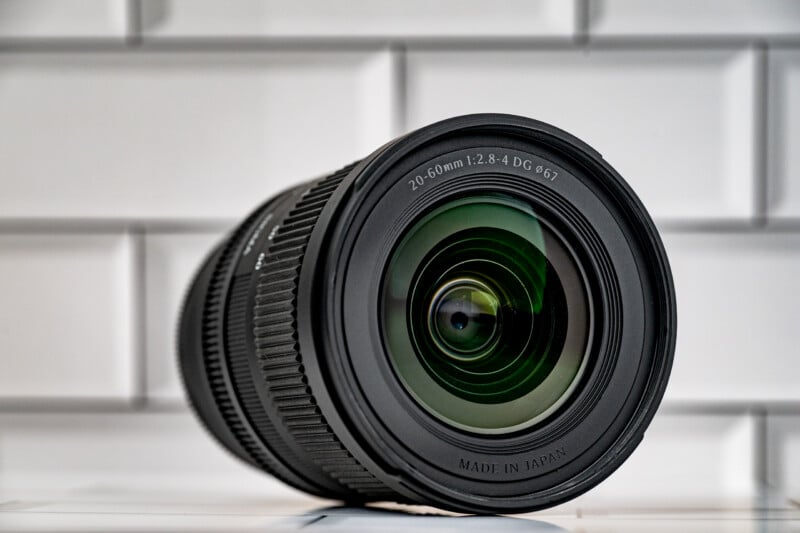
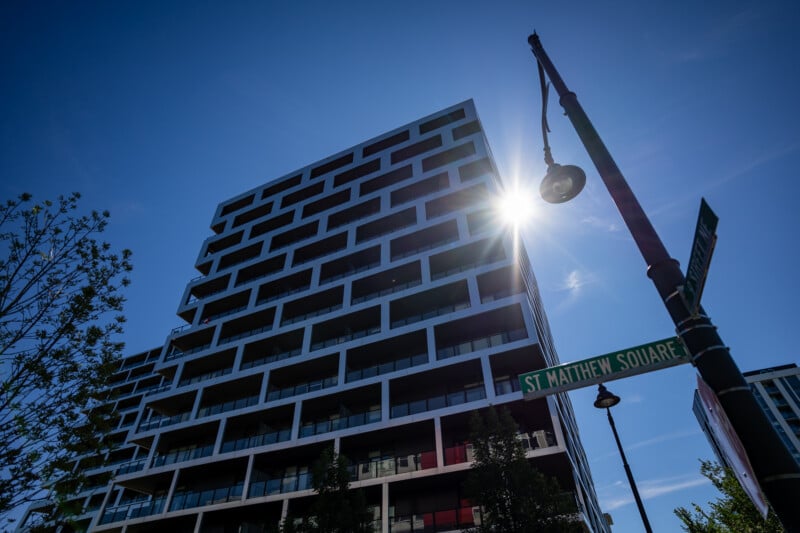
Flare resistance stands out as a major technical strength. Utilizing Sigma’s proprietary multi-layer coating technology, the lens effectively suppresses ghosting and veiling flare when shooting directly into bright light sources at 20mm. However, aggressive stopping down under harsh point light sources can induce minor purple ghosting diagonally across the frame. Additionally, technical evaluations note that the lens produces relatively standard, unremarkable sunstars, making it less ideal for landscape photographers who heavily rely on dramatic diffraction spikes. Longitudinal chromatic aberration (LoCA) is kept minimal, appearing only marginally at 20mm and f/2.8, while background bokeh displays a slightly harsh character with visible onion-ring patterns in specular highlights—landing performance firmly in the average tier for this lens class.
Macro Capabilities and Close-Up Utility
One of the standout design achievements of the Sigma 20-60mm f/2.8-4 DG Contemporary is its unexpected proficiency in close-up photography. Versatile zoom lenses often struggle with minimum focus distances, but Sigma has optimized this optic to achieve its highest reproduction ratio—an impressive 1:2.3—around the 35mm focal range. This capability allows photographers and videographers to capture detailed close-up imagery of small subjects, such as flora and insects, seamlessly in the field. This macro functionality significantly enhances the lens’s overall utility, transforming a standard travel zoom into a capable tool for detailed texture and macro storytelling without requiring the user to pack a dedicated macro prime lens.

Video Production and Gimbal Integration

Videographers and content creators represent a primary target demographic for the Sigma 20-60mm f/2.8-4 DG Contemporary. The combination of an ultra-wide 20mm perspective and a brighter f/2.8 maximum aperture offers distinct advantages for handheld vlogging and low-light gimbal operations. Because zooming the lens does not induce a dramatic shift in the physical center of gravity, operators can adjust framing on motorized gimbals with minimal recalibration required.

Nevertheless, cinematographers should note the presence of noticeable focus breathing—a phenomenon where the effective field of view shifts noticeably as the focus distance is adjusted. While professional cine lenses are strictly corrected for this behavior, the breathing present in the Sigma 20-60mm remains within expected tolerances for a consumer-grade hybrid zoom and will not deter vloggers or independent content creators looking for a lightweight video solution.

Market Position and Competitive Analysis

The introduction of the Sigma 20-60mm f/2.8-4 DG Contemporary creates compelling new purchasing dynamics within both the Sony E-mount and Panasonic/Sigma/Leica L-mount ecosystems. For Sony shooters, the lens enters direct competition with the established Sony 20-70mm f/4 G. While the Sony optic offers an extra 10mm of reach on the telephoto end and a constant f/4 aperture, it commands a significantly higher retail price of approximately $1,200 compared to Sigma’s $849 tag. The Sigma alternative provides a faster f/2.8 aperture at the crucial wide end, allowing for better low-light light gathering and shallower depth of field, albeit with a shorter 60mm maximum reach.
For Panasonic L-mount users, the comparison centers heavily against the budget-friendly Panasonic 20-60mm f/3.5-5.6. While Panasonic’s offering frequently appears in discounted camera body bundles, the Sigma lens outperforms it substantially in maximum aperture brightness and overall optical construction across the board. For users willing to invest a modest sum above entry-level kit pricing, the Sigma 20-60mm delivers a measurable upgrade in light transmission and build quality.
Implications and Final Verdict

The launch of the Sigma 20-60mm f/2.8-4 DG Contemporary underscores a broader industry trend toward aggressive price-to-performance disruption by third-party manufacturers. By identifying a specific gap in the mirrorless lens market—specifically, the demand for an ultra-wide zoom that does not sacrifice low-light capability at its widest setting—Sigma has delivered a product that successfully balances portability, financial accessibility, and optical competence.

While optical purists may point to average bokeh characteristics, slight corner softness at wider focal lengths, and the absence of physical control toggles as compromises, the practical reality of the lens favors the modern hybrid creator. Offering robust weather sealing, rapid linear autofocus, respectable macro reproduction, and an appealing $849 price point, the Sigma 20-60mm f/2.8-4 DG Contemporary establishes itself as a highly attractive, versatile alternative for photographers and videographers operating within the Sony E-mount and L-mount ecosystems.
Related posts: