Pushing the Limits of Low-Light Photography: A Comprehensive Evaluation of High ISO Performance on Modern Mirrorless Sensors

For decades, digital photography enthusiasts and working professionals alike viewed pushing a camera’s ISO beyond 2500 as an agonizing compromise. In the era of early digital single-lens reflex (DSLR) cameras, venturing into high-sensitivity territory meant sacrificing image integrity. Colors would visibly degrade, dynamic range would collapse, and images would take on an undesirable, painterly texture reminiscent of an amateur canvas due to aggressive luminance and chrominance noise. Photographers were forced to weigh the necessity of capturing a fast-moving subject against the absolute ruin of their file quality. However, rapid advancements in sensor architecture, backside-illuminated (BSI) sensor technology, and image processing pipelines over the past several years have dramatically rewritten this equation.
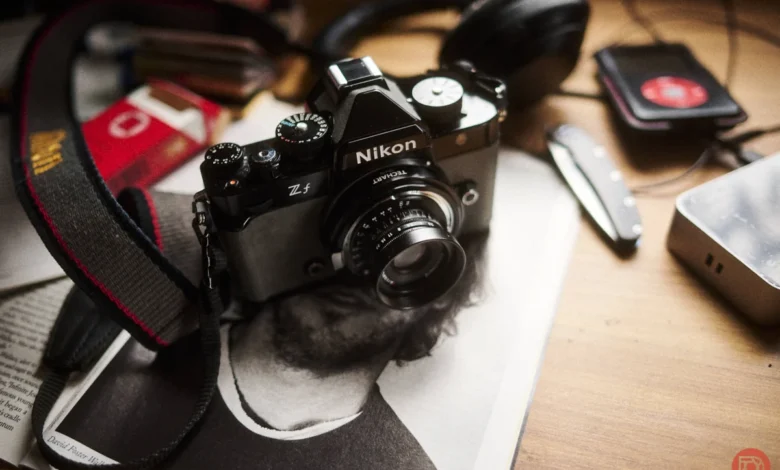
To determine how far modern equipment can be pushed, a recent hands-on technical assessment was conducted using one of the industry’s reigning champions of low-light performance: the Nikon Zf. Evaluated exclusively through unedited, native NEF RAW files captured in challenging low-light nocturnal conditions, the test aimed to establish a definitive baseline for modern high-ISO usability, specifically addressing the threshold at which high ISO settings become detrimental to physical prints.

The Imperative of High ISO in Professional Fields
The fundamental engineering purpose of ISO in digital photography remains identical to its historical counterpart in analog film: mimicking sensor or emulsion sensitivity to light in a given environment. Yet, throughout the first decade and a half of consumer digital photography, high-ISO captures rarely yielded acceptable results without heavy intervention.
To understand why high-sensitivity shooting is indispensable, one must examine demanding commercial genres such as professional sports and wildlife photography. In professional sports—particularly evening or indoor stadium events—technicians and photojournalists care very little about achieving a pristine image at ISO 100, 400, or even 1250 if the primary subject suffers from motion blur. Because athletes operate at high speeds, photographers routinely rely on lightning-fast shutter speeds of 1/500s, 1/1000s, or faster. Under dim stadium lights or shadowed athletic fields, maintaining these shutter speeds forces the camera’s sensitivity setting well past ISO 3200 as a matter of routine survival.

A parallel challenge exists in wildlife photography. A motionless bird bathed in direct morning sunlight may permit a low ISO and a slow shutter speed. However, that same avian subject perched deep within the shaded canopy of a tree or moving rapidly across the frame demands an immediate adjustment. To freeze motion and prevent blur, the camera must compensate by elevating the ISO to 3200 or 6400.
Historically, these necessary adjustments came at a steep technical cost. Elevating the ISO inherently reduces the available dynamic range, particularly at the upper limits of the camera’s range. Noise becomes prominently visible, color fidelity breaks down, and fine surface textures vanish as traditional noise reduction algorithms inadvertently scrub away micro-details.
The Evolution of Sensor Technology and Methodology

The landscape of digital imaging has shifted dramatically with the advent of modern prosumer and professional mirrorless cameras. Today’s sensors routinely outclass the flagship DSLR models of the 2010s, pushing the boundaries of high-ISO usability by multiple stops. The Nikon Zf, despite its retro-inspired physical aesthetic, houses advanced internal computing and sensor technology that positions it at the forefront of low-light performance.
To evaluate the true capabilities of this hardware, a rigorous, controlled field test was executed. The testing environment utilized a dimly lit indoor parking structure illuminated exclusively by a sequence of overhead fluorescent tube lights, presenting a low-light scenario without falling into absolute darkness. The camera utilized was a Nikon Zf paired with a Nikon Z 35mm f/1.4 lens. Throughout the test, the aperture was locked at f/2.2, while the shutter speed was varied proportionally to accommodate each successive step upward in ISO sensitivity.
Crucially, all proprietary in-camera noise reduction protocols were deactivated within the system menu, and Nikon’s Active D-Lighting feature was turned off to ensure that the resulting NEF RAW files reflected raw sensor data without computational assistance. No post-processing, exposure adjustments, or sharpening filters were applied to the files prior to evaluation.

Step-by-Step ISO Performance Analysis
The evaluation encompassed a broad spectrum of native sensitivity settings, beginning at ISO 2500 and culminating at the camera’s maximum native limit of ISO 64000.
At ISO 2500, the resulting images displayed exceptional clarity. Any minor halation or blooming observed around light sources could be directly attributed to the extreme atmospheric humidity present on the evening of the test rather than sensor artifacting. When inspected at a 100 percent pixel-level zoom, the image exhibited virtually zero discernible noise, maintaining rich contrast and accurate color rendition.

Advancing to ISO 4000 yielded nearly identical results. Even under close inspection of shadow regions and mid-tones, visible noise remained entirely absent, proving that modern full-frame sensors handle intermediate high-ISO steps with remarkable efficiency.
At ISO 6400, the performance defied historical expectations. Rather than exhibiting the heavy color speckling and red/blue chromatic noise characteristic of legacy bodies like the Nikon D3—which frequently produced prominent red blotches in shadow areas—the Zf delivered an image as clean as a whistle. Fine details remained remarkably sharp, preserving structural integrity across both highlighted surfaces and deep shadows.
Moving into ISO 8000, the image retained a high degree of fidelity suitable for general commercial application. Fine details remained intact, and neither prominent color nor luminance noise disrupted the visual composition. A secondary test frame focusing tightly on a vehicle’s wheel hub began to reveal minute traces of color noise concentrated strictly within the metallic center badge, though the surrounding textures remained robust.

By ISO 25600, a distinct grain structure manifested visibly within the deepest shadow regions and absolute black areas of the frame. However, this grain remained uniform and non-disruptive, accompanied by zero perceptible loss of structural detail in the illuminated portions of the scene.
At ISO 51200, the noise profile of the Nikon Zf began to mirror the characteristics historically observed in older flagship DSLRs like the Nikon D4 operating at a much lower setting of ISO 6400. While grain was noticeably heavier, the file remained remarkably cohesive and structurally sound.
Reaching the absolute ceiling of the camera’s native range at ISO 64000, the limitations of physical light capture became apparent. Minor color noise emerged alongside a quantifiable reduction in micro-detail. Nevertheless, the image remained entirely usable. The presence of subtle red grain in the deepest shadows confirmed that the sensor was operating at its maximum electrical amplification, yet the overall composition retained structural legibility.

Implications for Professional Workflow and Print Quality
The findings from this technical evaluation underscore a profound paradigm shift in digital image capture. For working professionals operating in unscripted environments—such as photojournalists, event coordinators, nocturnal street photographers, and wedding documentarians—the fear of utilizing high ISO settings is largely obsolete.
When considering physical output, the threshold for direct, unedited printing begins around ISO 51200. Beyond this point, minor artifacts require basic post-processing intervention. However, in contemporary professional workflows, raw files are virtually never sent straight to print without a baseline pass of digital development. When standard in-camera noise reduction or modern AI-assisted editing suites are factored into the equation, even files captured at the maximum native setting of ISO 64000 can be successfully rehabilitated into clean, professional-grade assets.

Ultimately, modern mirrorless engineering has transformed high ISO from a desperate compromise into a viable creative tool, empowering photographers to conquer extreme lighting conditions without sacrificing the moments that matter.