Bridging Hollywood and Handhelds: How Honor and ARRI Are Redefining Smartphone Cinematography

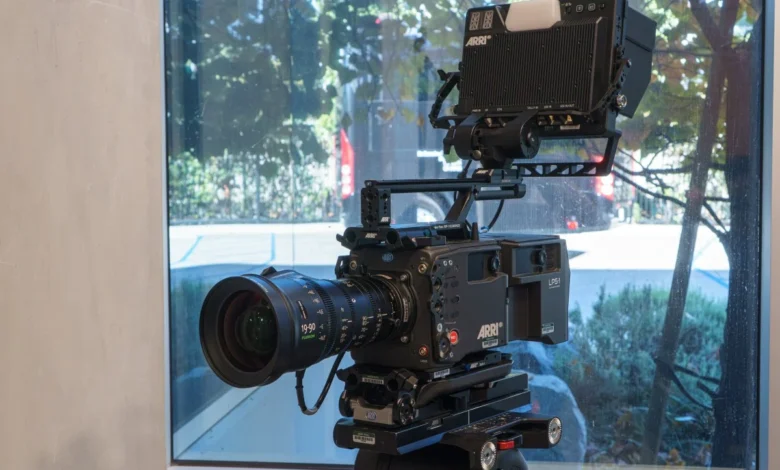
The intersection of professional cinematography and mobile technology reached a significant milestone recently, as smartphone manufacturer Honor offered an exclusive, behind-the-scenes look at its technical partnership with legendary German camera developer ARRI. Invited to ARRI’s historic North American headquarters in Burbank, California—just minutes away from the epicenter of the global film industry—industry analysts and media representatives were given an unprecedented glimpse into the image science driving the upcoming Honor Magic9 Pro Max. The collaboration seeks to answer a compelling question in modern digital media: what creative common ground exists between a $100,000 Hollywood cinema rig and a pocket-sized handheld device operating at a fraction of the cost?
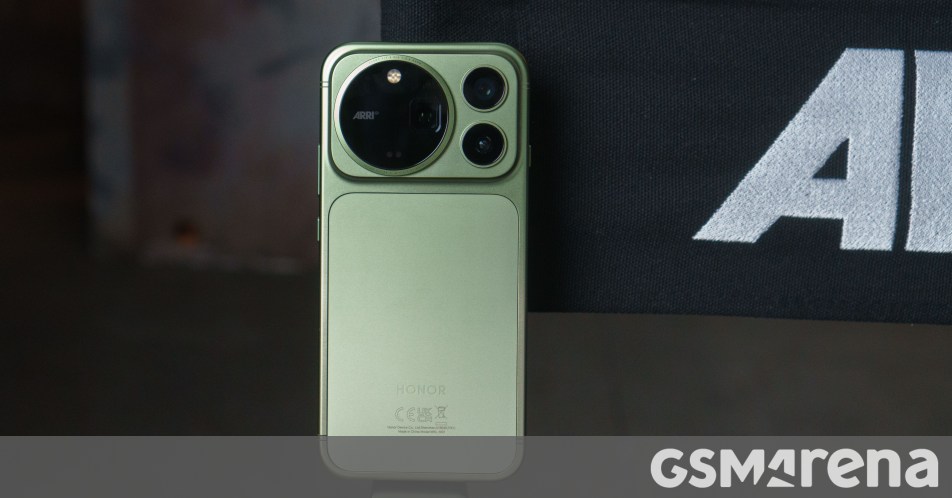
Rather than relying on superficial marketing partnerships or simple cosmetic color filters, the joint engineering effort between Honor and ARRI represents a deep, foundational overhaul of mobile image processing. By integrating professional cinematic color science into consumer hardware, the initiative aims to bridge the gap between high-end digital filmmaking and mobile content creation, offering filmmakers and creators a versatile tool that respects established professional workflows.
A Legacy of Cinematic Excellence in Burbank
To understand the weight of the partnership, one must first examine the venue. ARRI, formally known as Arnold & Richter Cine Technik, has been a cornerstone of the motion picture industry for over a century. Founded in Munich in 1917 by August Arnold and Robert Richter, the company evolved from a small enterprise into the gold standard of professional cinematography equipment. From Academy Award-winning blockbusters to independent art-house features, ARRI cameras have captured countless cinematic moments.
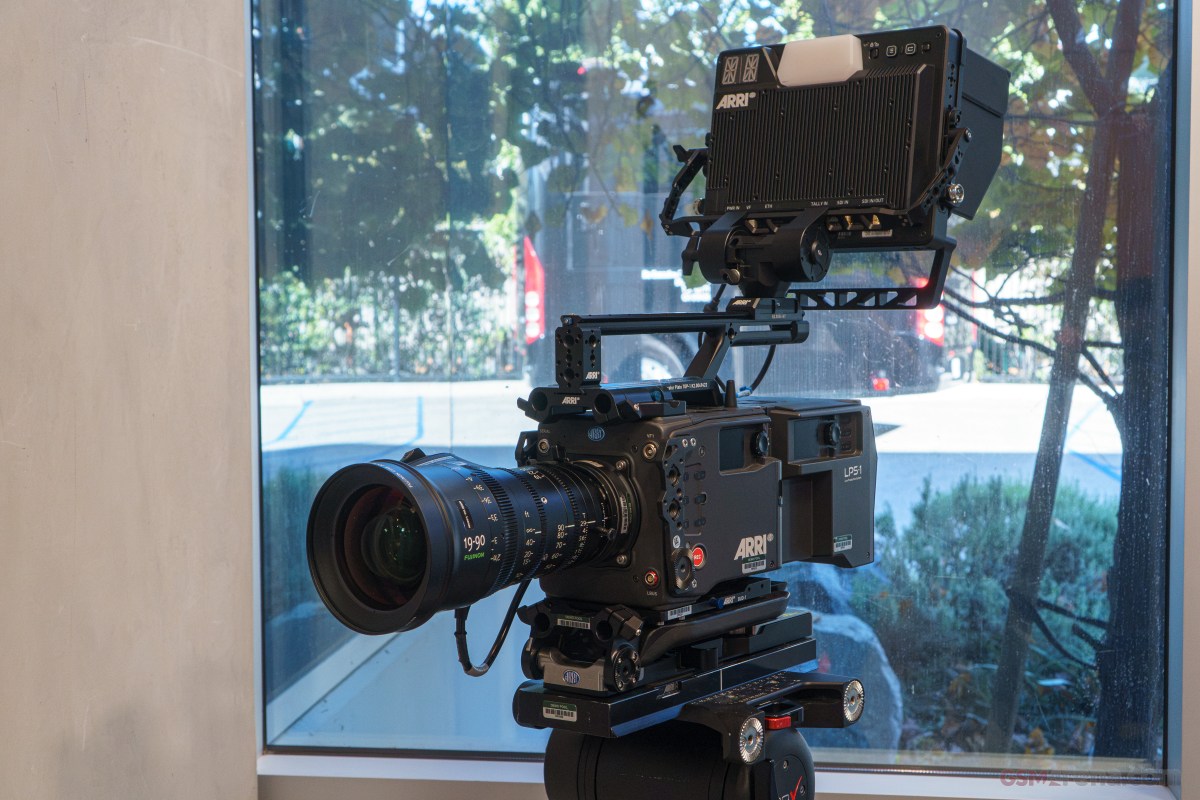
During the guided tour of the Burbank facility, visitors were immersed in the heritage and rigorous engineering standards that define the brand. The centerpiece of modern digital production showcased during the visit was the ARRI ALEXA LF and its compact sibling, the ALEXA Mini LF. These systems are universally prized by cinematographers for their organic color rendition, exceptional dynamic range, and distinctive highlight roll-off—the smooth, natural graduation of bright areas transitioning toward white rather than clipping harshly into digital blown-out highlights.
The ALEXA LF utilizes a large-format sensor slightly larger than a traditional photographic full-frame sensor, capturing native 4.5K resolution. This expansive sensor area allows cinematographers to utilize longer focal lengths while retaining a wide field of view, yielding an intimate aesthetic characterized by a shallow depth of field. When fully outfitted with professional cinema prime lenses, matte boxes, follow-focus systems, and external power solutions, an ARRI setup easily approaches a six-figure investment.

Replicating the qualitative essence of such an elite ecosystem on a smartphone required an approach that transcended standard mobile photography paradigms. Honor recognized that mimicking the look of an ARRI camera could not be achieved merely by adjusting contrast sliders or applying software filters. It required a ground-up reconstruction of how a mobile device handles, processes, and outputs video data.
Engineering the Honor Magic9 Pro Max
The technical realization of this collaboration culminated in the development of the Honor Magic9 Pro Max. Rather than attempting to cram physical cinema-grade sensors and massive optical glass into a slim chassis—a physical impossibility given current laws of physics and thermal constraints—Honor focused on harmonizing its computational photography pipeline with ARRI’s proprietary image science.
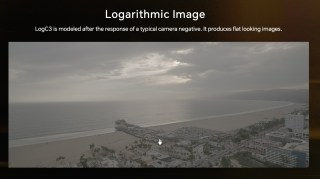
The foundational hardware layer begins with the integration of Honor’s custom-designed imaging silicon, the Honor H1 chip. This dedicated processor intercepts RAW image data at the earliest possible stage of capture, performing advanced noise reduction before downstream algorithms alter the pixel data. By executing heavy computational lifting prior to standard processing, the system preserves critical shadow detail and expands usable dynamic range.
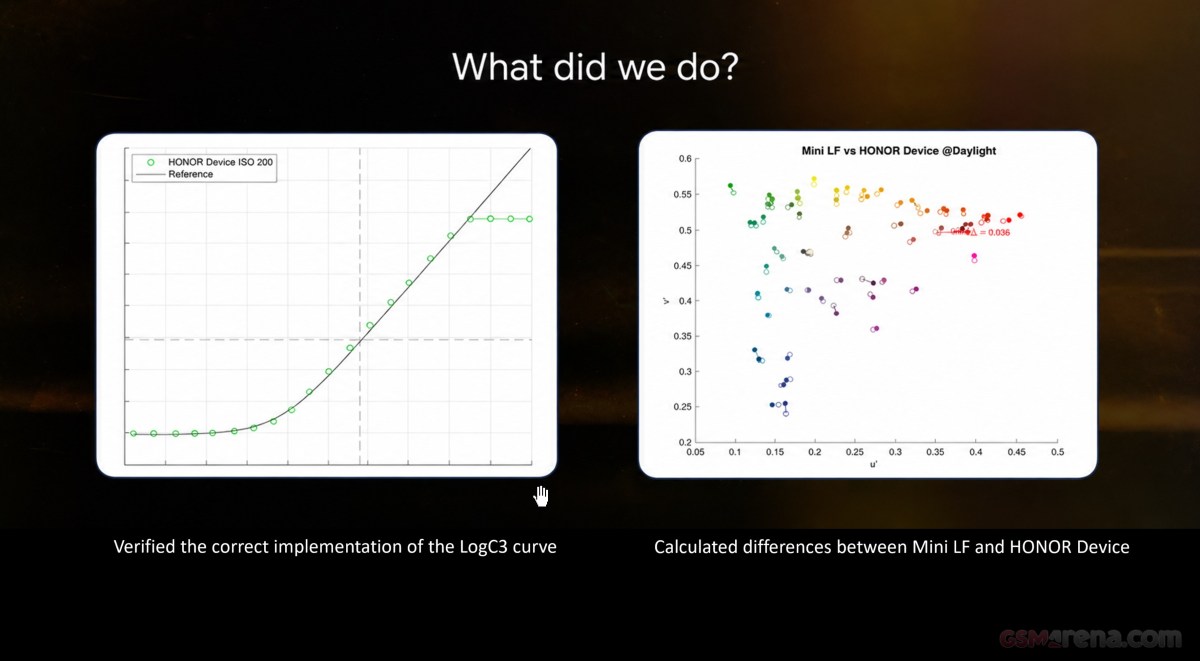
Building upon this optimized hardware foundation, Honor and ARRI collaborated to integrate ARRI’s professional LogC3 tonal response curve directly into the smartphone’s video architecture. In professional filmmaking, Log (logarithmic) recording is an essential tool. Unlike standard video profiles that bake contrast and saturation directly into the file, Log profiles compress the dynamic range to record maximum data in both highlights and shadows. This flat, desaturated image provides colorists with immense flexibility during post-production color grading.

By adapting the LogC3 curve to the Magic9 Pro Max, Honor enables creators to shoot footage that behaves predictably within professional editing suites. Furthermore, the inclusion of the ARRI Wide Gamut 3 color space ensures that smartphone footage can sit alongside material captured on an ALEXA Mini LF in a multi-camera timeline, requiring minimal effort to achieve visual continuity. For creators seeking a cinematic aesthetic without engaging in extensive manual grading, the device also features ARRI Looks—a curated library of 87 distinct color treatments derived from traditional film and digital cinematic workflows.
Practical Implementation and Technical Limitations
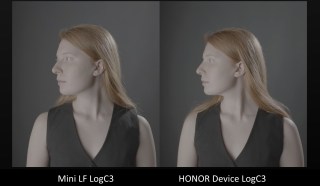
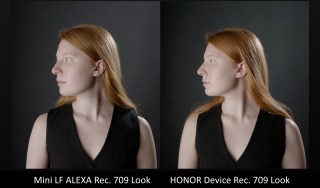
During the media showcase in Burbank, Honor demonstrated side-by-side comparisons of studio footage captured on the Magic9 Pro Max and the professional ALEXA Mini LF. When subjected to professional color grading using identical workflows, the results underscored the efficacy of the collaboration. The Magic9 Pro Max successfully replicated the nuanced skin tones, rich shadow latitude, and smooth highlight transitions characteristic of ARRI’s flagship systems.
However, industry observers and technical leads were quick to delineate between color science and physical optical performance. While the tonal response and colorimetry approached parity, the laws of optics dictate that a smartphone sensor and its miniature lenses cannot match the sheer optical resolution, micro-contrast, and spatial detail of a large-format cinema camera outfitted with professional glass. The ALEXA Mini LF remains in a fundamentally superior tier regarding absolute image sharpness and spatial fidelity.
Moreover, the hardware dependencies of the integration highlight that this is not a universal software trick. The ARRI-tuned LogC3 output and Wide Gamut 3 color spaces are natively supported exclusively on the primary main and telephoto camera modules of the Magic9 Pro Max, while the ultra-wide camera is excluded. This hardware constraint emphasizes that high-end computational and colorimetric styling still relies on robust underlying sensor capabilities.
Industry Implications and Future Outlook
The partnership between Honor and ARRI reflects a broader, accelerating trend within the consumer electronics and entertainment industries: the democratization of high-end cinematic tools. As mobile processors grow increasingly powerful and computational imaging matures, the traditional boundaries separating professional cinema equipment from consumer devices continue to blur.
For independent filmmakers, documentary crews, and digital content creators, the implications are profound. The ability to capture supplementary B-roll on a compact smartphone that matches the color science of an A-camera shooting on ARRI hardware streamlines production workflows significantly. It reduces the time and expense traditionally required to match disparate camera sources in post-production, enabling faster turnarounds and greater creative agility on set.
From an industry perspective, alliances of this caliber signal a maturation in smartphone marketing. Consumers and professionals alike have largely moved past the era of megapoint inflation and generic software filters, demanding instead authentic tools rooted in verified optical and scientific principles. By partnering with a century-old cinematic institution, Honor has positioned the Magic9 Pro Max not merely as a high-end communication device, but as a legitimate auxiliary tool for visual storytelling.
As mobile sensor technology continues to evolve and computational imaging algorithms grow more sophisticated, the collaboration between Honor and ARRI may well serve as a blueprint for future cross-industry partnerships. By respecting the rigorous standards of professional filmmaking while pushing the boundaries of mobile engineering, both companies have demonstrated that the pursuit of cinematic excellence is no longer confined to the heavy metal and glass of Hollywood soundstages—it is increasingly within reach of anyone with a creative vision and a device in their pocket.