Elon Musk Issues Stern Warning to SpaceX Short Sellers as Tesla Advances Toward Full Autonomy and Retail Integration

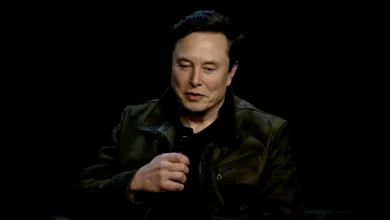
Elon Musk, the CEO of SpaceX and Tesla, has issued a stark warning to financial institutions and individual traders maintaining short positions against SpaceX, asserting that the "survival probability" of such firms is "very low" over the long term. This declaration, made via the social media platform X, follows a period of significant market volatility for the aerospace giant, which recently transitioned to a public entity under the ticker symbol $SPCX. The warning comes at a pivotal moment for Musk’s industrial empire, coinciding with major software updates for Tesla’s Full Self-Driving (FSD) suite and the first anniversary of the Tesla Hollywood Diner—a facility that serves as a pilot for the company’s future robotaxi ecosystem.
The SpaceX initial public offering (IPO), which took place in June 2026, was widely regarded by financial analysts as the largest in history. In the weeks following its debut, the company’s market capitalization surged past $2.6 trillion, briefly eclipsing the valuations of legacy tech titans like Microsoft and Amazon. However, the five weeks since the peak have seen a correction of approximately 30%, a downturn that has provided short sellers with estimated gains of $8.7 billion. Despite this immediate downward pressure, Musk’s recent commentary suggests a deep-seated confidence in the company’s long-term trajectory, framing short selling not merely as a financial risk but as a fundamental miscalculation of the burgeoning space economy.
The Financial Architecture of the Space Economy
The bearish sentiment surrounding $SPCX largely focuses on near-term valuation metrics and the capital-intensive nature of deep-space exploration. However, Musk’s warning is grounded in a broader vision of SpaceX as the primary infrastructure provider for a multi-planetary economy. Bullish analysts argue that the successful deployment and cost-efficiency of the Starship launch system will act as a catalyst for a market potentially worth over $100 trillion.
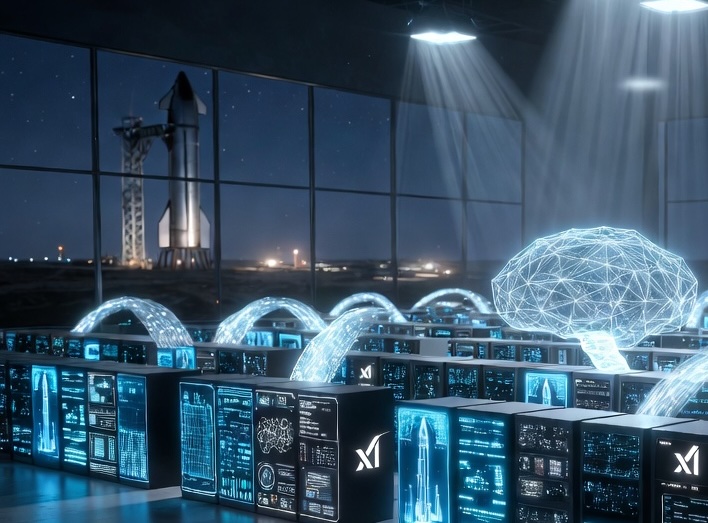
This projected economy is built upon several pillars of innovation. First is the concept of orbital data centers, which would leverage the vacuum of space for cooling and high-speed satellite links to provide global low-latency computing. Second is the prospect of space-based solar power, where massive arrays capture unfiltered sunlight and beam energy back to Earth via microwaves. Third, and perhaps most speculative, is asteroid mining—the extraction of rare earth elements and precious metals from near-Earth objects.
In this framework, SpaceX is positioned similarly to Amazon Web Services (AWS) in the early days of cloud computing. By providing the essential "rails" for transport and communication (via the Starlink constellation), SpaceX aims to capture monopoly-like revenues from every sector of space-based commerce. For short sellers, the risk lies in betting against a company that is essentially building a new frontier of industrial civilization.

Historical Precedent: Musk’s Long-Standing Conflict with Short Sellers
Musk’s latest warning echoes his previous campaigns against short sellers of Tesla (TSLA). For over a decade, Tesla was one of the most shorted stocks on the Nasdaq, with high-profile investors betting against the company’s ability to achieve mass-market electric vehicle production. Musk famously taunted these investors in 2018, warning them that their positions would "explode" shortly before a massive rally that forced a historic short squeeze.
In July 2024, Musk expanded this rhetoric to include the development of the Optimus humanoid robot and the achievement of vehicular autonomy. He stated that once Tesla successfully combined these two technologies, anyone holding a short position would be "obliterated," specifically mentioning Microsoft co-founder Bill Gates, who has reportedly held significant short bets against Tesla. Musk’s philosophy views short selling as "value-destroying" and a bet against human progress, often suggesting that the practice should be legally restricted to prevent what he perceives as market manipulation by pessimistic interests.
Tesla FSD: Transitioning from Safety to Preference
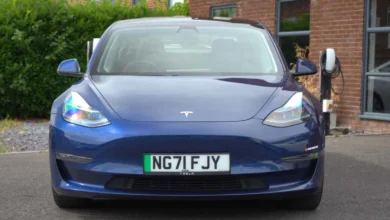
While SpaceX dominates the headlines in the aerospace sector, Tesla is making significant strides in its quest for unsupervised driving. Recent updates from the company indicate a shift in development focus. Having addressed many of the "critical interventions" required for safety, Tesla engineers are now focusing on "preference-based" interventions.
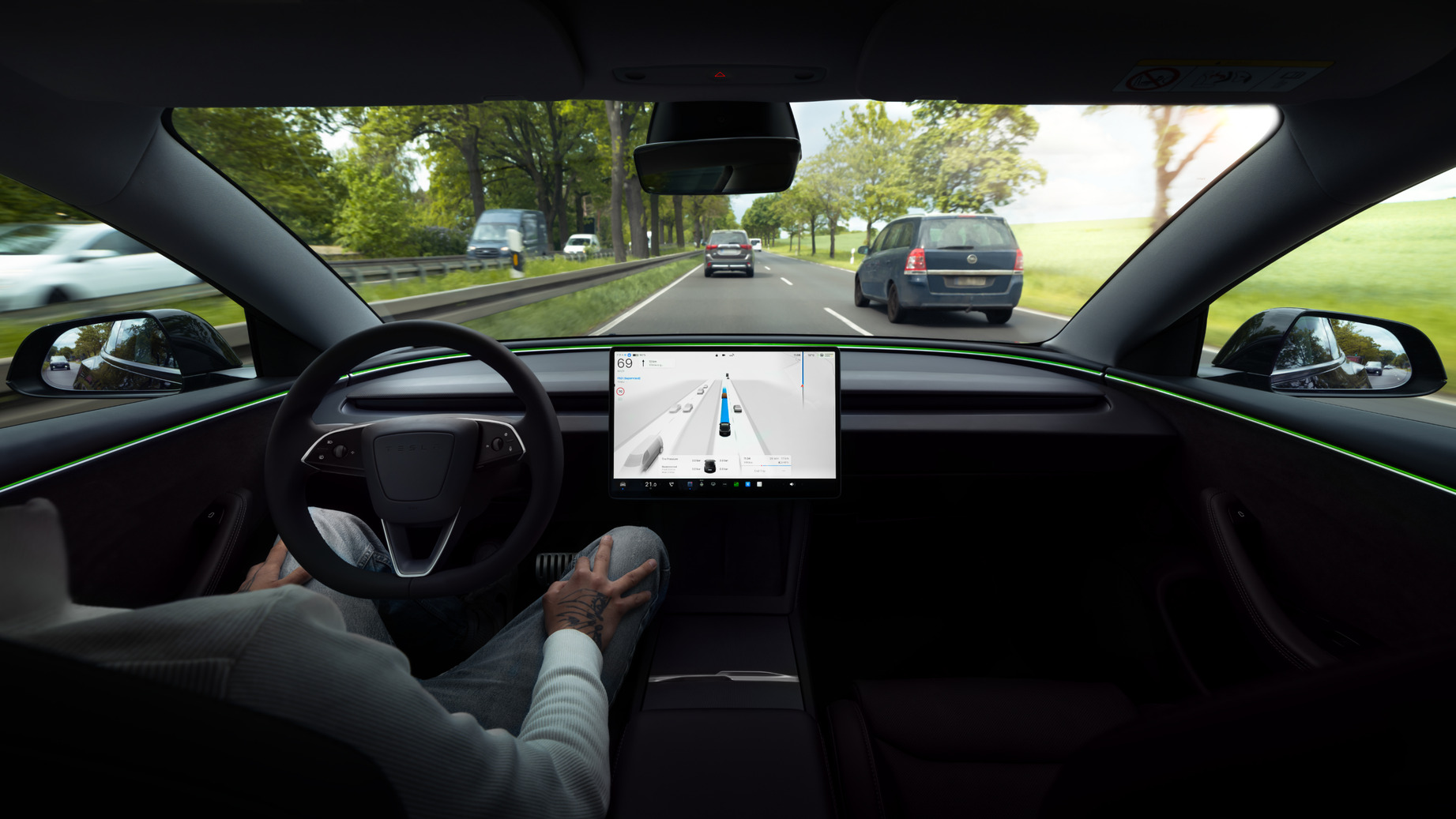
Elon Musk confirmed that upcoming versions of the FSD suite will include the ability to learn and mirror the specific driving styles and preferences of individual owners. This includes lane-positioning habits—such as the car’s tendency to stay in High Occupancy Vehicle (HOV) lanes or avoid "left lane camping," a practice that is illegal in many U.S. jurisdictions but remains a common frustration for automated systems.
The most significant improvements are slated for parking performance. Musk revealed that parking currently accounts for the highest frequency of driver interventions. The software is being refined to handle complex residential driveways and specific parking spot orientations, such as backing in versus pulling in forward. By eliminating these "nuisance" interventions, Tesla aims to bridge the gap between "supervised" FSD and a truly autonomous "Cybercab" experience where the passenger has no need to interact with the vehicle’s controls.
The Tesla Hollywood Diner: A Prototype for Autonomous Commerce
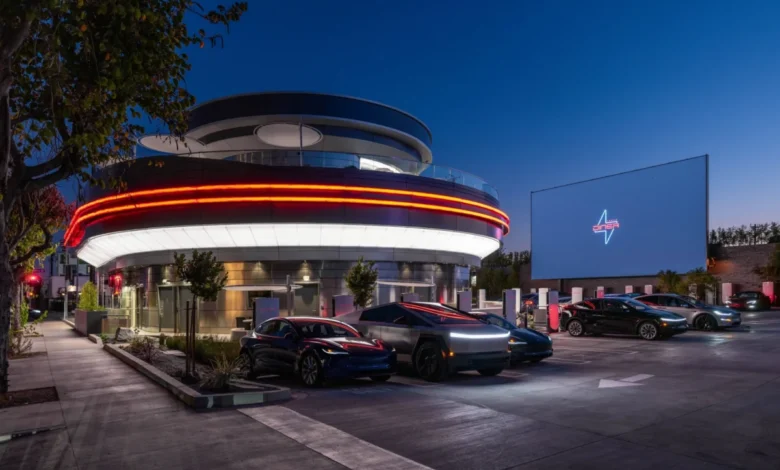
The intersection of Tesla’s automotive technology and retail strategy was on full display this week as the Tesla Hollywood Diner celebrated its first anniversary. Located on Santa Monica Boulevard, the diner—described by Musk as "Grease meets The Jetsons"—represents more than a nostalgic aesthetic. It is a proof-of-concept for how commerce will function in an era of autonomous transport.
The diner’s operational model allows Tesla owners to place food orders directly through their vehicle’s infotainment system while en route or while charging at the adjacent Supercharger station. This integration is designed to be seamless; for a future robotaxi fleet, the vehicle itself becomes the customer. A car could theoretically pull into a charging stall, trigger an automated food delivery to the passenger window, and continue its journey without a human ever stepping out of the vehicle.
The first-anniversary celebration, held on July 21, featured the latest iteration of the Optimus humanoid robot (Gen 3), a display of the upcoming Cybercab, and servers on roller skates—a nod to the 1950s drive-in culture that inspired the project. To commemorate the event, Tesla’s Chief Designer, Franz von Holzhausen, signed a limited run of 50 birthday hats for the first customers who placed orders through their car’s interface at midnight.
Broader Impact and Market Implications
The convergence of these events—the SpaceX market warning, FSD’s evolution, and the success of the Tesla Diner—points to a unified strategy by Musk to dominate both the physical and digital infrastructure of the future. The warning to SpaceX short sellers serves as a reminder that Musk views his companies as long-term bets on the survival and expansion of the human species, rather than quarterly-driven financial instruments.

For the broader market, the 30% dip in $SPCX since its peak represents a classic "buy the rumor, sell the news" event following the IPO. However, the underlying data regarding SpaceX’s launch cadence and the expansion of the Starlink network suggests that the company’s fundamentals remain robust. In 2025, SpaceX accounted for over 80% of all mass launched to orbit globally, a trend that is expected to accelerate as Starship enters full operational status.
Critics continue to argue that Musk’s timelines are overly optimistic and that the valuations of his companies are inflated by "hype" and retail investor enthusiasm. Nevertheless, the historical trend has often favored Musk’s long-term predictions over the short-term skepticism of the financial establishment. As Tesla moves closer to unsupervised driving and SpaceX cements its role as the gatekeeper to the solar system, the "existential risk" Musk mentioned for short sellers remains a primary concern for institutional portfolios.
As the "space economy" transitions from science fiction to a measurable segment of global GDP, the firms that have bet against Musk find themselves in a precarious position. If SpaceX achieves even a fraction of the cost reductions promised by Starship, the current market dip may be remembered as a minor fluctuation in a decades-long ascent toward a multi-trillion dollar valuation. For now, the message from the CEO is clear: those betting against the future of SpaceX do so at their own peril.