Toyota Aggressively Courts Electric Vehicle Owners With Three Thousand Dollar Conquest Incentives To Boost bZ Sales Volume

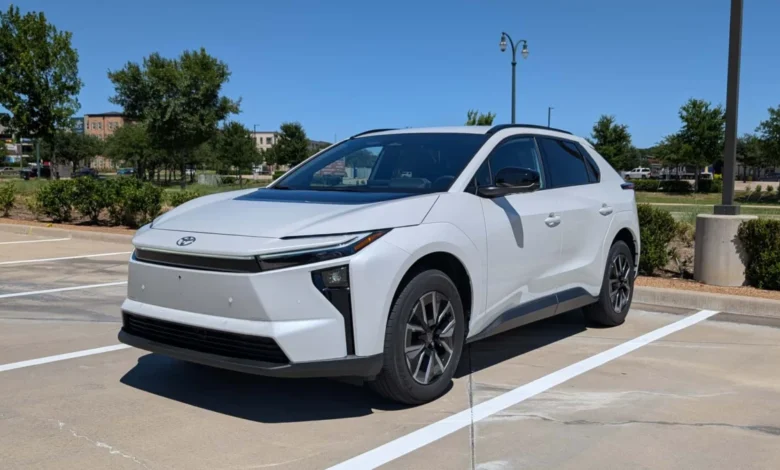
In a strategic move to solidify its standing in the increasingly competitive North American electric vehicle (EV) market, Toyota Motor North America has launched a substantial "conquest" incentive program designed to lure existing EV owners away from rival brands. The centerpiece of this campaign is a $3,000 cash-on-the-hood offer for customers who trade in or own specific older electric models and switch to the latest iteration of the Toyota bZ series. This aggressive financial maneuver signals a significant shift in Toyota’s marketing posture, transitioning from a cautious entrant in the battery-electric space to a dominant player seeking to capitalize on its massive brand equity and a refreshed product lineup.
The "conquest cash" incentive is specifically targeted at a critical demographic: owners of electric vehicles manufactured between the model years 2020 and 2023. By focusing on this three-year window, Toyota is aiming at consumers whose initial leases may be expiring or whose early-generation EV technology—such as slower charging speeds or shorter ranges—is beginning to feel dated compared to contemporary offerings. The offer serves as a direct invitation for early adopters of brands like Tesla, Ford, and Hyundai to migrate to the Toyota ecosystem, leveraging the reliability and service network for which the Japanese automaker is globally renowned.
The Regional Focus and Eligibility Requirements
While Toyota’s broader incentive packages are available nationwide, the $3,000 conquest cash appears to be a geographically targeted strike aimed at California, the most significant EV market in the United States. California’s unique regulatory environment, including its strict Zero-Emission Vehicle (ZEV) mandates and high consumer adoption rates, makes it the primary battleground for market share.
Industry analysts note that this specific incentive is likely designed to be independent of state-funded programs. For instance, California is slated to introduce a $3,500 EV buying incentive in the near future; however, that program is strictly earmarked for first-time EV buyers to expand the total market. Toyota’s conquest cash, conversely, is a private manufacturer incentive aimed at market share redistribution—taking a customer that already exists in the EV space and moving them from a competitor’s column to Toyota’s.
One notable aspect of the program’s flexibility is its "household eligibility" clause. Toyota has specified that the $3,000 incentive is transferable within an immediate family, provided the family members reside in the same household. This allows a spouse or child of an existing EV owner to benefit from the rebate when purchasing a new bZ, even if the trade-in vehicle is not registered in the primary buyer’s name. This nuance broadens the potential reach of the campaign, making it a "family-wide" incentive to switch to Toyota’s electric platform.
National Financial Strategies: 0% APR and Lease Incentives
Recognizing that not all buyers are located in the Golden State, Toyota has bolstered its national sales strategy with a suite of financial products designed to lower the barrier to entry for the bZ. In an era where high interest rates have dampened automotive sales across the board, Toyota is offering 0% APR financing for up to 72 months on the bZ. This long-term, interest-free financing is a rarity in the current economic climate and represents a massive saving over the life of a typical auto loan, often amounting to several thousand dollars in avoided interest charges.
Furthermore, for those who prefer leasing—a popular choice in the rapidly evolving EV sector where technology cycles are short—Toyota is providing up to $4,000 in lease cash. This incentive significantly reduces the monthly financial burden, bringing a 36-month lease down to approximately $349 per month with a standard $3,999 due at signing. To further sweeten the deal, the automaker is maintaining its traditional support for specific demographics, offering an additional $750 rebate for military personnel and $500 for recent college graduates.
The Evolution of the bZ: From bZ4X to a Refined Contender
The current sales push comes on the heels of significant technical improvements to Toyota’s electric crossover. The original bZ4X faced a challenging launch, marked by initial mechanical recalls and criticisms regarding its cold-weather charging performance and range estimates. However, the 2026 model year represents a turning point for the nameplate.
Toyota engineers have addressed several of the "pain points" identified by early reviewers and owners. The refreshed bZ features an optimized battery thermal management system, which has notably improved DC fast-charging speeds in low-temperature environments—a critical factor for buyers in northern climates. Additionally, software refinements have led to more accurate "distance-to-empty" estimations, reducing the range anxiety that plagued earlier iterations.

The 2026 bZ also benefits from a more cohesive packaging strategy. The interior has seen ergonomic updates, and the inclusion of more standard safety and convenience features has enhanced its value proposition against rivals like the Tesla Model Y and the Ford Mustang Mach-E. By improving the product while simultaneously increasing the incentives, Toyota is executing a classic "pincer movement" to regain momentum in the EV segment.
Sales Data and Market Trajectory
The impact of these strategic moves is already visible in Toyota’s balance sheets. In the first half of 2026, Toyota reported sales of 17,553 units for the bZ series. This figure is particularly striking when compared to the same period in the previous year, representing a 100% increase in volume. This doubling of sales suggests that the combination of product maturity and aggressive financing is resonating with the American consumer.
This growth trajectory is essential for Toyota as it navigates the transition toward a "multi-pathway" future. While the company remains a staunch advocate for a diverse lineup including hybrids, plug-in hybrids, and hydrogen fuel cells, the bZ serves as the vanguard for its pure battery-electric ambitions. Success in this segment is vital for meeting federal fleet emissions standards and maintaining relevance in a market where pure EVs continue to gain a larger slice of the total automotive pie.
Chronology of Toyota’s EV Strategy Shift
To understand the significance of the current $3,000 conquest offer, it is necessary to look at the timeline of Toyota’s electric journey:
- 2021-2022: Toyota announces its global "bZ" (Beyond Zero) sub-brand, debuting the bZ4X. The launch is marred by a global recall related to wheel hub bolts, leading to a temporary halt in production.
- 2023: Toyota undergoes a leadership change, with Koji Sato taking the helm as CEO. Sato emphasizes a "battery-first" mindset for future development while maintaining the hybrid core.
- 2024-2025: Substantial investments are made in the Liberty, North Carolina, battery plant. Toyota begins rolling out software updates and hardware tweaks to improve the charging curve of the bZ4X.
- Early 2026: The refreshed bZ hits the market with improved range and 0% APR offers. Sales begin to climb as consumer confidence returns.
- Mid-2026: Toyota launches the $3,000 California conquest incentive, specifically targeting owners of 2020-2023 EVs from other brands.
Competitive Implications and Industry Analysis
The use of "conquest cash" is a high-stakes tactic. By targeting owners of 2020-2023 vehicles, Toyota is effectively betting that it can offer a superior ownership experience to those who may have felt like "beta testers" for other brands’ early EV efforts. This period (2020-2023) saw a flood of new EV entries, some of which suffered from software glitches, inconsistent build quality, or lackluster dealer support.
Toyota’s pitch is centered on stability. For a consumer who may have had a frustrating experience with a startup EV brand’s service department, the prospect of switching to a Toyota—backed by a massive, established dealer network—is a powerful draw. The $3,000 incentive acts as the "closer" for these undecided buyers.
Furthermore, this move puts pressure on competitors to respond. If Toyota successfully siphons off a significant number of Tesla or Hyundai owners in California, those manufacturers may be forced to increase their own loyalty rebates or lower MSRPs further, potentially triggering another round of the "EV price wars" that characterized much of 2024 and 2025.
Future Outlook: Beyond the Incentive
Looking ahead, Toyota’s aggressive incentive structure is likely a bridge to its next generation of electric vehicles. The company has teased solid-state battery technology and a new dedicated EV platform slated for late 2027 and 2028. In the interim, the bZ must perform the heavy lifting of establishing Toyota’s footprint in the electric space.
The success of the $3,000 conquest program will be measured not just in raw sales units, but in "brand switching" statistics. If Toyota can prove that it can successfully convert Tesla or Ford owners into Toyota loyalists, it will have secured a vital foundation for its future electric lineup.
For now, the message from Toyota is clear: the company is no longer content to sit on the sidelines of the EV revolution. With zero-percent financing, significant lease cash, and targeted strikes at its competitors’ customer bases, Toyota is leveraging its financial might to ensure that when current EV owners look for their next vehicle, they see the "three ovals on the hood" as the most logical—and most affordable—choice. As the 2026 sales figures continue to roll in, it appears this strategy is paying dividends, positioning the bZ as a formidable contender in the race for electric dominance.