Shokz OpenDots Air Review: The New Standard for Affordable Clip-Style Audio


The release of the Shokz OpenDots Air marks a significant pivot in the strategy of a brand traditionally synonymous with high-end bone conduction technology. As the audio market increasingly shifts toward "open-ear" designs that prioritize situational awareness without the vibration-heavy sensation of bone conduction, Shokz has introduced the OpenDots Air as a more accessible entry point into its clip-style ecosystem. Launched on June 4, 2026, alongside the premium OpenDots 2, the Air model aims to deliver the core benefits of the brand’s flagship products—stable fit, long battery life, and reliable audio—at a price point that is roughly 25% lower than its sibling. This strategic move suggests a broader effort by Shokz to capture the mid-range market as competition from budget-friendly manufacturers intensifies.
The Evolution of Open-Ear Technology and Market Positioning
The audio industry has seen a rapid expansion in the "hearables" segment, with a specific focus on open-ear designs that allow users to remain connected to their environment. This trend is driven largely by safety concerns among outdoor enthusiasts, such as runners and cyclists, and by a growing segment of office workers who require all-day comfort without the fatigue associated with traditional in-ear monitors (IEMs).
Shokz has historically dominated this space with its bone conduction headsets, but the transition to "air conduction" via the OpenDots series represents a move toward higher fidelity audio. The OpenDots Air follows the legacy of the original OpenDots One, which debuted approximately ten months prior. By stripping away non-essential "bells and whistles" like Dolby Atmos support and proprietary MirrorPitch technology, Shokz has positioned the OpenDots Air as a utilitarian alternative for the mass market. At $129.95 / £129.99 / AU$219, the Air model sits comfortably below the $199.95 OpenDots 2, yet it retains much of the internal hardware that defined its predecessors.

Technical Specifications and Audio Performance
At the heart of the Shokz OpenDots Air are dual 11.8mm custom drivers, a configuration identical to that found in the more expensive OpenDots 2. Shokz utilizes a proprietary system referred to in marketing materials as "Bassphere." While the company remains somewhat guarded regarding the specific technical breakdown of this system, it is designed as a dual-driver architecture intended to mitigate the natural loss of low-end frequencies inherent in open-ear designs.
In practical testing, the audio profile of the OpenDots Air is characterized by a surprisingly robust low-end. Because open earbuds do not create a seal within the ear canal, bass response often suffers as sound waves dissipate into the air. The 11.8mm drivers in the Air model are tuned to provide a "scooped" distinction, ensuring that bass notes in contemporary tracks remain audible and punchy even when competing with ambient noise. However, the lack of high-resolution codecs—such as LDAC or aptX Lossless—means that the device is capped at standard Bluetooth streaming quality. For the target demographic of fitness enthusiasts and casual listeners, this is rarely a deal-breaker, but audiophiles seeking a critical listening experience may find the lack of high-bitrate support limiting.
The Shokz app provides further customization through four equalization presets: Standard, Vocal Enhancement, Bass Enhancement, and an Audio Leakage Reduction mode. The latter is particularly relevant for office environments, as it uses phase-cancellation techniques to ensure that audio remains private even at higher volumes.
Design, Ergonomics, and the Clip-On Form Factor
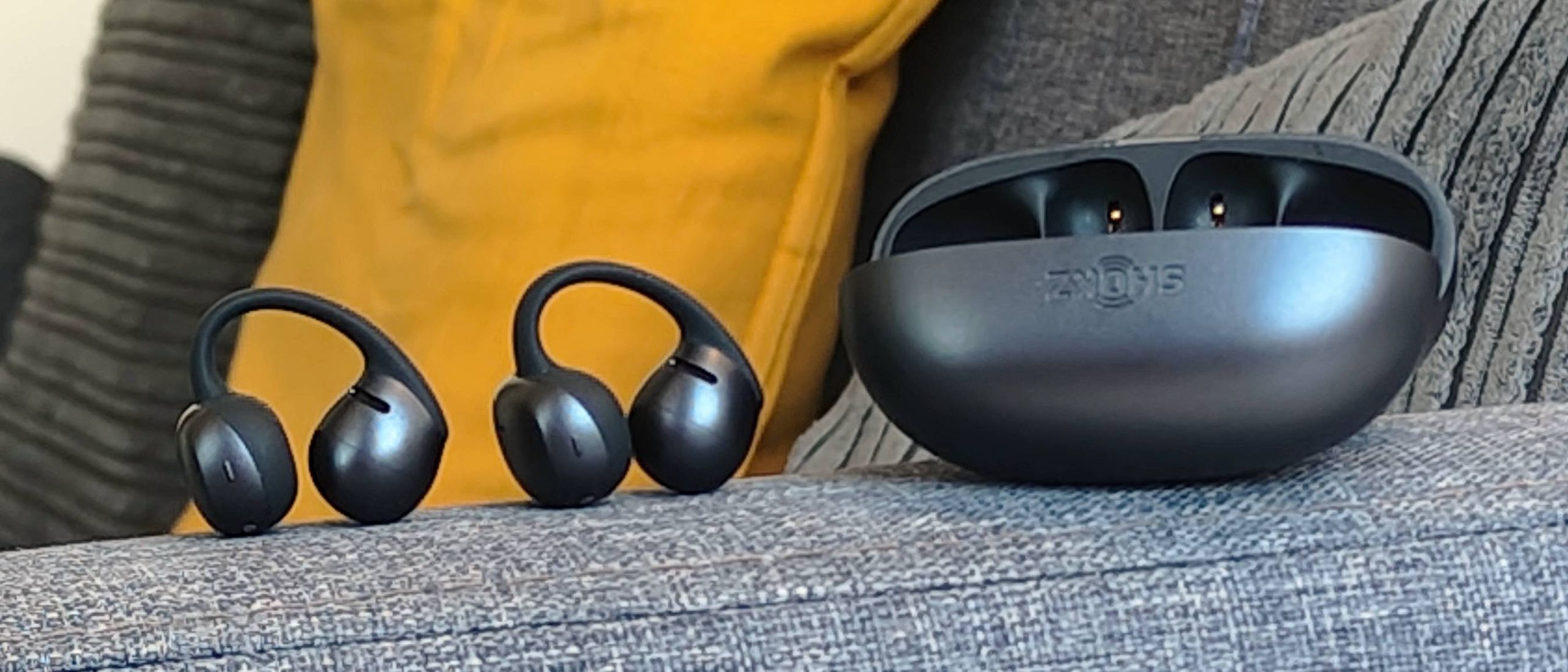
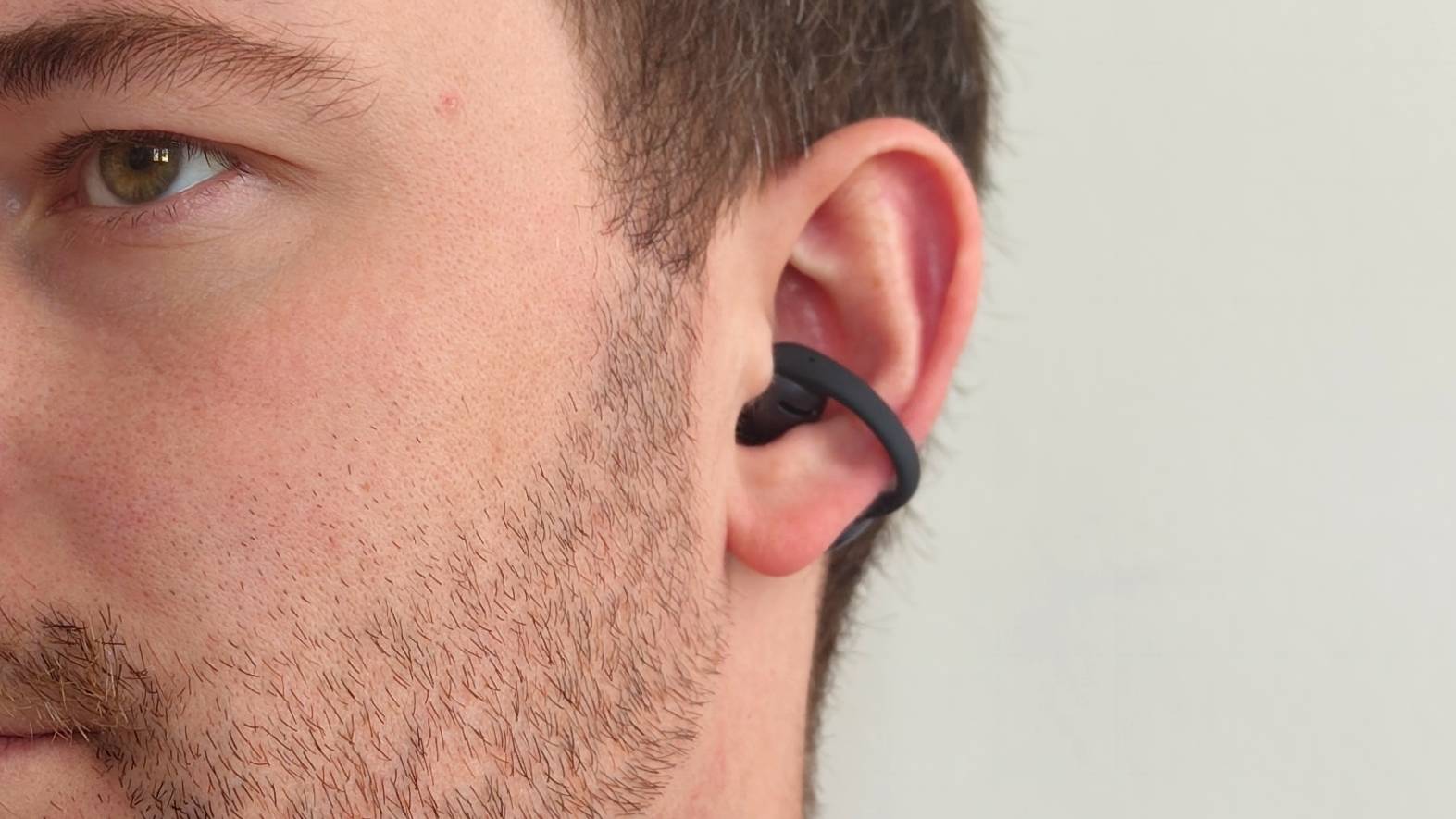
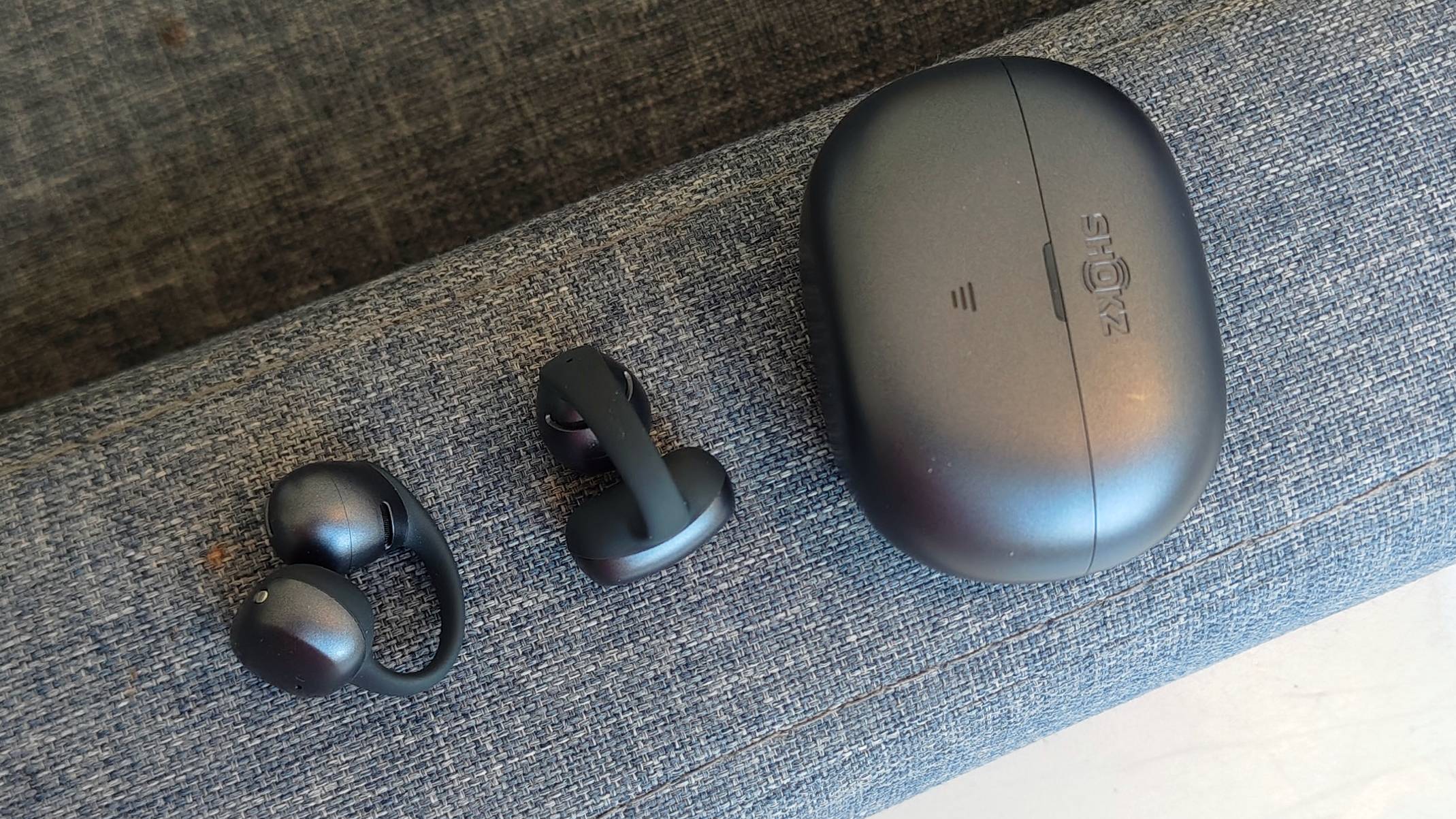
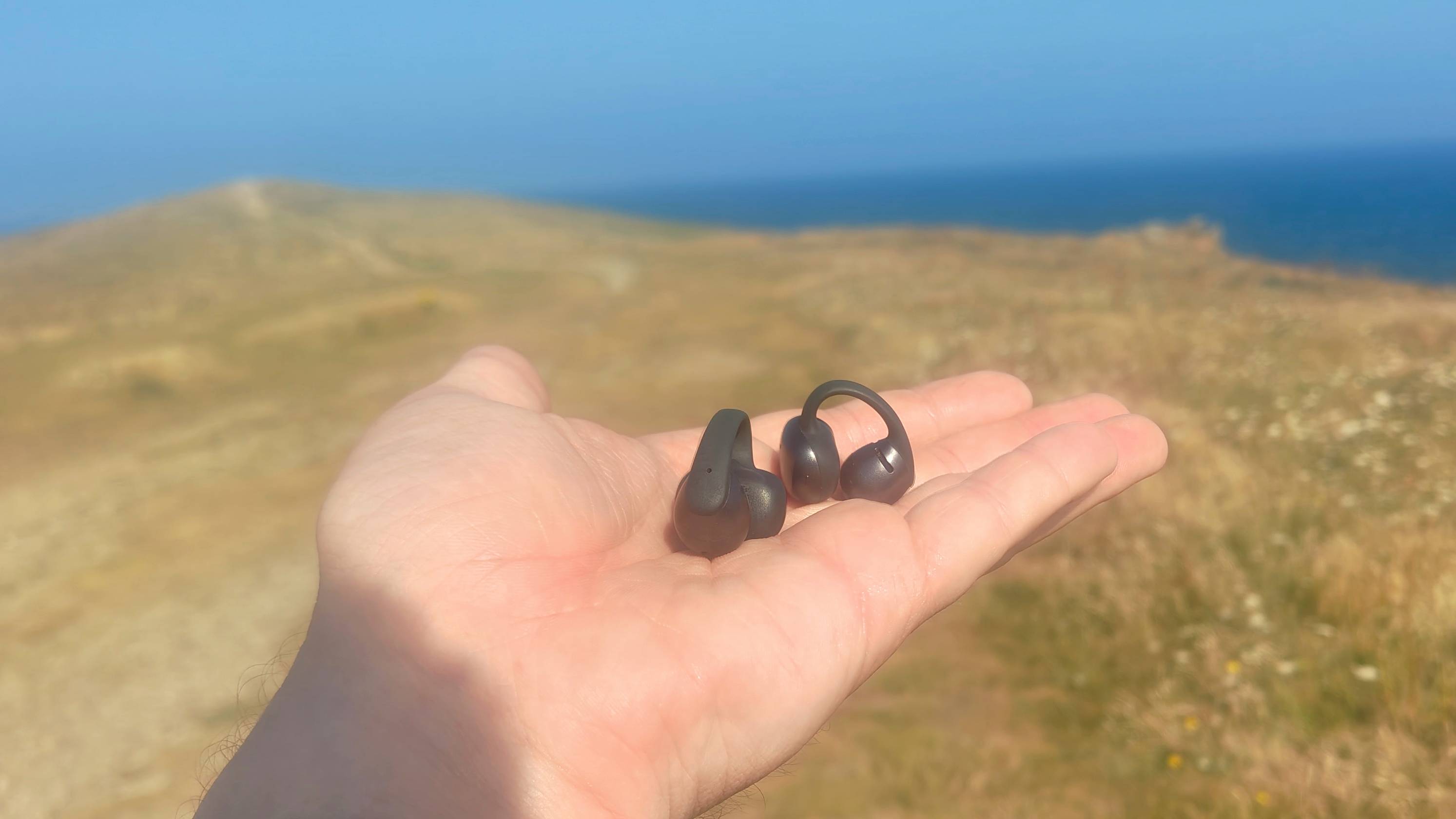
The "clip-on" or "cuff-style" design of the OpenDots Air is its most defining physical characteristic. Unlike traditional earbuds that rest in the ear canal or "hook-style" buds that loop over the top of the ear, the OpenDots Air utilizes a C-shaped bridge to join the speaker housing with a counterweight that sits behind the lower helix of the ear.

Each earbud weighs a mere 6.3 grams, constructed from a blend of soft-touch silicone and durable plastic. This lightweight profile is essential for the "disappearing" sensation Shokz aims for during long-term wear. During rigorous physical activities, including cycling and high-intensity interval training (HIIT), the mechanical grip of the C-bridge ensures the earbuds remain stationary.
Despite the overall comfort, some users may experience a "pinching" sensation after several hours of continuous use. This is a common trade-off in clip-on designs, where a certain amount of clamping force is required to maintain stability. Furthermore, the touch controls located on the exterior of the "dot" are notably finicky. The small surface area requires high precision, which can be difficult to achieve while moving.
Durability is addressed through an IP55 rating. This indicates that the device is protected against dust ingress and low-pressure water jets from any direction. While this makes the OpenDots Air resistant to heavy sweat and rain, they are not submersible and should not be used for swimming.
Connectivity and Software Integration
The OpenDots Air utilizes Bluetooth 6.1, ensuring a stable connection with minimal latency. One of the standout features included in the software suite is Multipoint Pairing, allowing the earbuds to connect to two devices simultaneously—such as a smartphone and a laptop. This feature has become a benchmark for productivity-focused audio gear, enabling seamless transitions between music on a phone and video calls on a computer.

The Shokz app serves as the primary hub for firmware updates and control customization. Beyond the EQ settings, users can toggle wear detection, which automatically pauses music when an earbud is removed, and microphone noise cancellation. The latter is powered by an AI-driven algorithm designed to isolate the user’s voice from wind and traffic noise during calls. In real-world environments, the call quality remains clear, though the open nature of the buds means that the user will still hear their own surroundings vividly.
Battery Life and Portability
In terms of endurance, the OpenDots Air offers 9 hours of continuous playback on a single charge. This is a marginal decrease from the 10 hours provided by the flagship models, but it remains superior to many competitors in the true wireless stereo (TWS) market. When combined with the charging case, the total battery life extends to 36 hours.
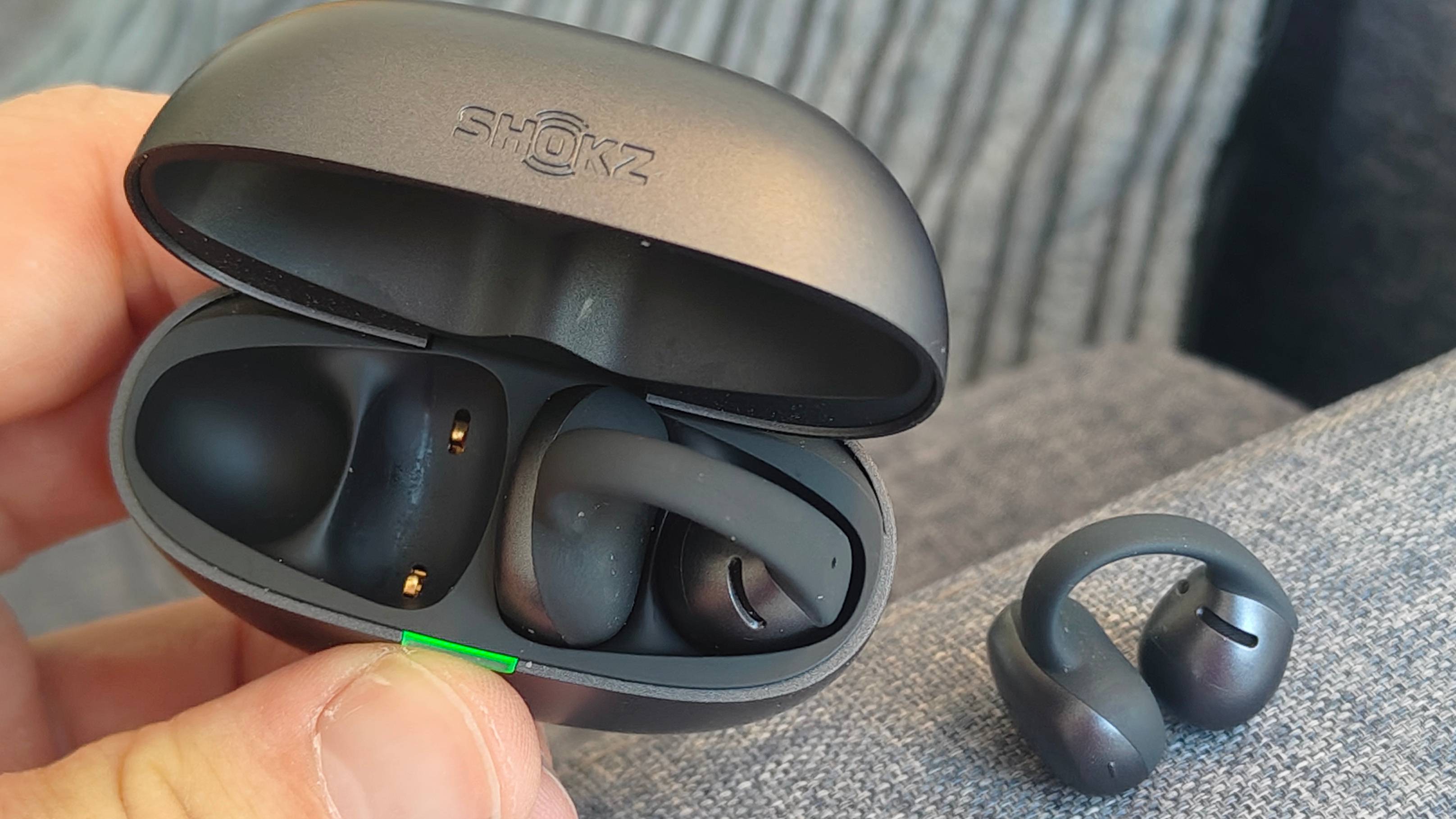
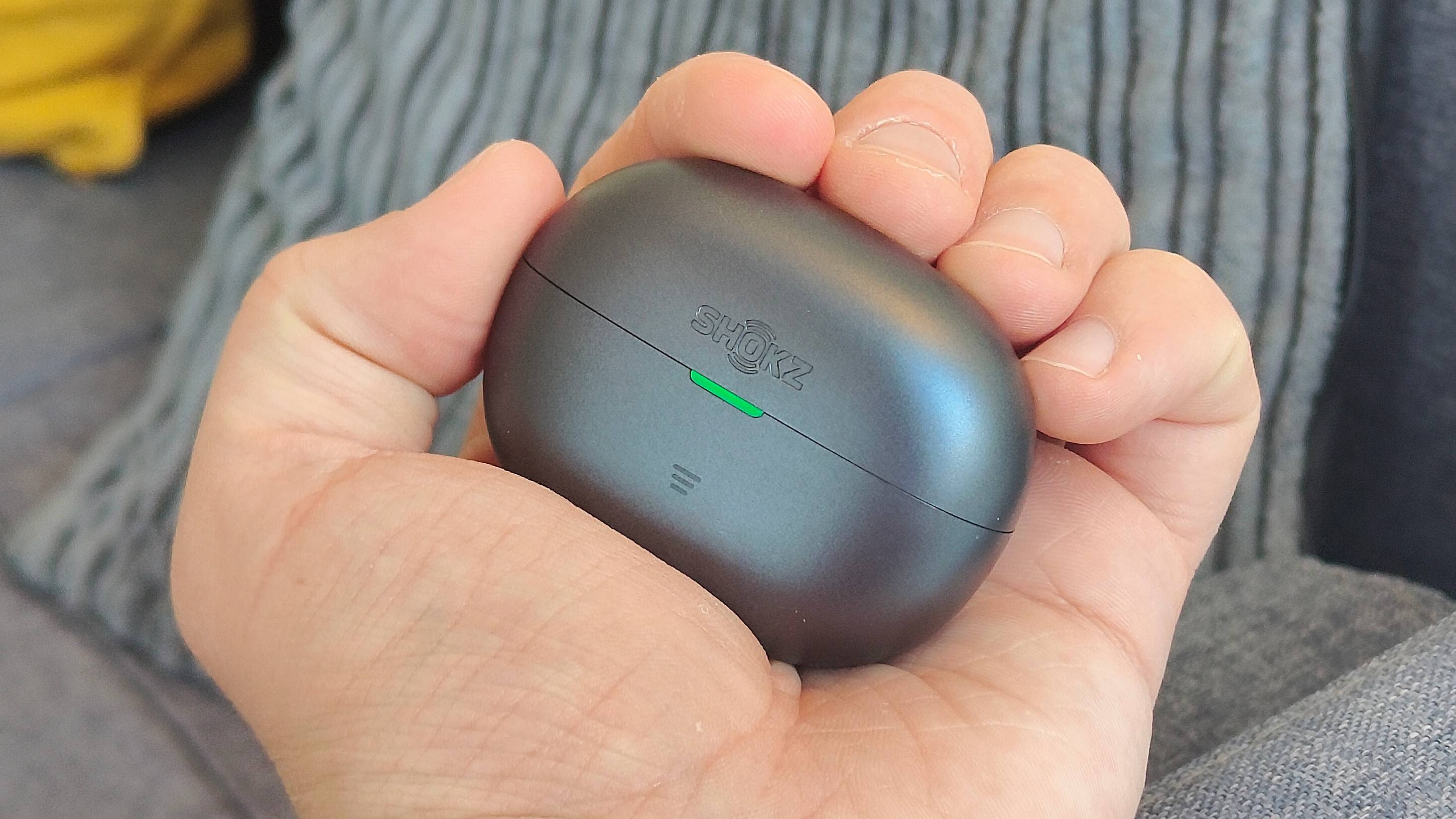
The charging case itself is a highlight of the package. Weighing only 37.3 grams (approximately 50 grams with the buds included), it is significantly more portable than the bulky cases often associated with open-ear hooks. It features a USB-C charging port, though it lacks the wireless charging capabilities found in the OpenDots 2. Another notable omission is a physical Bluetooth pairing button on the case; pairing is instead handled through touch-sensitive gestures on the earbuds themselves.
Chronology of the Shokz Open-Ear Lineup
To understand the positioning of the OpenDots Air, it is helpful to view the timeline of Shokz’s recent product releases:

- August 2025: Release of the Shokz OpenDots One, the brand’s first foray into air-conduction clip-style buds.
- January 2026: Launch of the Shokz OpenFit Pro, a high-end shell-style open earbud featuring advanced noise reduction.
- June 4, 2026: Simultaneous release of the OpenDots 2 (Flagship) and the OpenDots Air (Value-tier).
This rapid release cycle demonstrates Shokz’s commitment to diversifying its portfolio beyond bone conduction, catering to different price points and ergonomic preferences.
Competitive Analysis and Broader Implications
The OpenDots Air enters a market that is increasingly crowded with alternatives. While Shokz remains a premium name in the category, brands like Soundpeats and various third-party manufacturers have released clip-style buds for under $100. For example, the Soundpeats Clip1 offers a similar form factor and 12mm drivers at a significantly lower cost, though it lacks the refined app support and brand pedigree of Shokz.
The broader implication of the OpenDots Air is the "democratization" of high-quality open-ear audio. By lowering the barrier to entry, Shokz is effectively challenging the dominance of traditional in-ear buds like the Apple AirPods. As more consumers prioritize ear health and environmental awareness, the clip-on form factor is poised to move from a fitness niche into the mainstream.
Final Verdict: A Strategic Value Proposition
The Shokz OpenDots Air succeeds by retaining the most critical components of the brand’s higher-end models—specifically the dual-driver audio system and the secure C-bridge fit—while discarding luxury features that the average user may not require. For those who found the $200 asking price of the OpenDots 2 prohibitive, the Air provides a nearly identical experience for $70 less.
While the touch controls remain a point of frustration and the lack of wireless charging may annoy some, the core performance metrics—battery life, sound quality, and comfort—are all present. For runners, commuters, and office workers seeking a reliable, situational-aware audio solution, the Shokz OpenDots Air represents one of the most logical and cost-effective choices currently available in the evolving landscape of wearable audio technology.