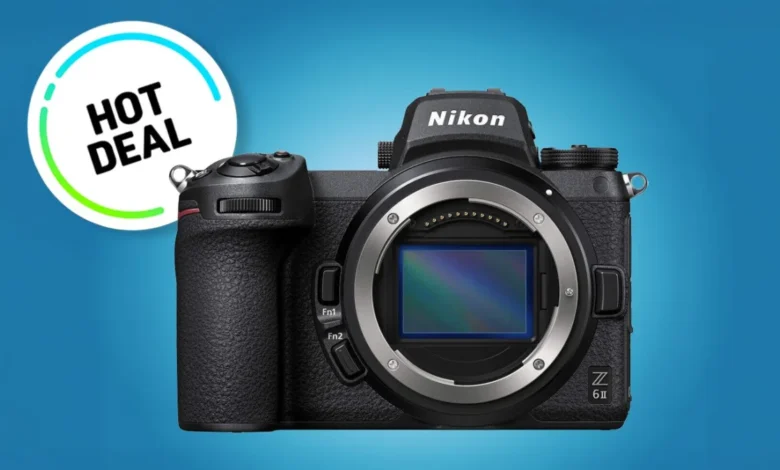
A Chronology of the Nikon Z-Series Evolution
To understand the significance of the current pricing, it is necessary to examine the evolution of the Nikon Z system. Nikon entered the full-frame mirrorless market in August 2018 with the launch of the original Z6 and Z7. The Z6 was lauded for its versatility, balancing high-resolution photography with capable video features.
In October 2020, Nikon released the Z6 II as an incremental but vital improvement over its predecessor. The primary hardware upgrade centered on the integration of dual Expeed 6 image processors. This modification addressed the primary criticisms of the original Z6, specifically regarding autofocus speed, buffer depth, and the inclusion of dual memory card slots—a feature long requested by professionals who required redundant storage for high-stakes photography, such as weddings and commercial events. The Z6 III followed in mid-2024, introducing stacked sensor technology and significantly improved internal raw video recording capabilities, which effectively relegated the Z6 II to a secondary tier in the product lineup.
Technical Specifications and Performance Metrics
The Nikon Z6 II is built around a 24.5-megapixel backside-illuminated (BSI) CMOS sensor. This sensor architecture remains relevant today due to its high signal-to-noise ratio, which allows for impressive dynamic range and performance in low-light environments. The dual-processor system enables a burst shooting rate of up to 14 frames per second (fps), a notable achievement for a camera released in 2020.
The autofocus system utilizes 273 hybrid phase-detection and contrast-detection points, covering approximately 90% of the image area. Firmware updates released by Nikon throughout the camera’s lifecycle have significantly refined eye-detection and subject-tracking capabilities for both humans and animals. These software enhancements have ensured that the hardware remains capable of keeping pace with modern industry standards for portrait and event photography.
Supporting Data and Market Positioning
The decision to adjust the pricing of the Z6 II reflects a broader strategy employed by legacy camera manufacturers. As flagship models like the Z6 III or the Z8/Z9 series occupy the high-end market segment—often priced at double the cost of the Z6 II—manufacturers rely on previous-generation models to capture the "prosumer" demographic.
Market data from the last quarter indicates that mirrorless camera sales continue to cannibalize the remaining DSLR market. By lowering the entry point for the Z6 II, Nikon effectively prevents potential customers from migrating to competitors like Sony or Canon, who offer similar entry-level full-frame options. At the £921.97 price point, the Z6 II provides a gateway into the Nikon Z-mount ecosystem. This ecosystem is widely considered to be one of the most robust in the industry, featuring a wide array of S-line lenses that offer exceptional optical quality.
Industry Implications and User Considerations
The availability of the Z6 II at this price point carries several implications for photographers and the market at large. First, it acknowledges that, for many content creators, the marginal gains offered by newer sensors and processors do not always justify a 100% price increase. The Z6 II is fully capable of producing professional-grade images suitable for high-resolution print and commercial distribution.
Furthermore, the secondary market for used gear often experiences a price correction following such retail discounts. This makes the Z6 II one of the most accessible routes for students or entry-level professionals to acquire a dual-card-slot, full-frame body. The "professional-grade" label, often reserved for cameras with dual memory slots, is key here. In commercial photography, the ability to write images simultaneously to two cards is not merely a convenience but a requirement for risk management. Providing this capability at under £1,000 sets a new benchmark for value in the sector.
Strategic Analysis of the Nikon Ecosystem
Nikon’s strategy regarding its Z-mount lens lineup remains a cornerstone of its business model. By maintaining a deep inventory of legacy lenses and continuously expanding the Z-mount range, the company ensures that an investment in a Z6 II today remains valid for years to come. Whether a photographer is transitioning from a DSLR or entering the world of full-frame photography for the first time, the Z6 II acts as a bridge.
It is important to note that while the Z6 II is aging, the transition to mirrorless is a long-term investment. Users of the Z6 II gain access to the same mount as users of the top-tier Z9, meaning that any glass purchased today is forward-compatible. This modularity is a critical factor for photographers who plan to upgrade their bodies in the future while retaining their lens collection.
Future-Proofing and Longevity
Despite the introduction of newer models, the Z6 II’s performance is far from obsolete. Its build quality, featuring weather-sealed magnesium alloy construction, ensures durability in challenging environments. The ability to shoot 4K video at 60p (via firmware update) and 10-bit N-Log output via HDMI makes it a competent tool for videographers, further cementing its status as a "hybrid" workhorse.
The current price drop is likely a tactical move to clear remaining stock as production lines shift focus to newer, more technologically demanding models. For the consumer, this presents a unique window of opportunity. Historically, camera prices reach their absolute floor just before a model is discontinued entirely. As such, the current offer represents perhaps the most significant value proposition for the Z6 II in its six-year history.
Conclusion and Recommendations
For those operating within the Nikon ecosystem, or for those currently utilizing Nikon F-mount DSLRs and considering a switch to mirrorless, the Z6 II at its current price point is a compelling option. It provides the essential features required for professional photography—reliable autofocus, dual card slots, and high-quality image sensors—without the prohibitive costs associated with newer releases.
As the industry continues to evolve toward higher frame rates, AI-driven autofocus, and 8K video capabilities, the Z6 II serves as a reminder that the fundamentals of photography—composition, exposure, and lighting—remain the primary determinants of quality. While new technology can facilitate the process, the Z6 II remains a powerful, reliable, and now more affordable instrument for those looking to advance their craft. Prospective buyers are encouraged to evaluate their specific needs; if the requirements for specialized features like internal raw video or global shutters are not present, the Z6 II remains a premier choice for professional and enthusiast photography alike.