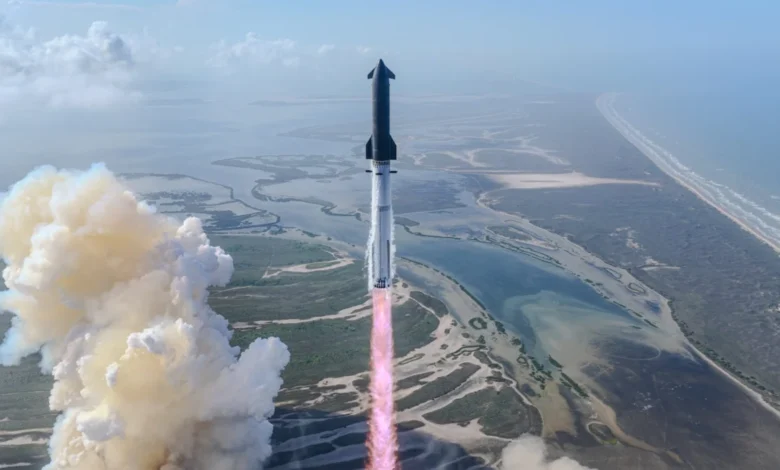
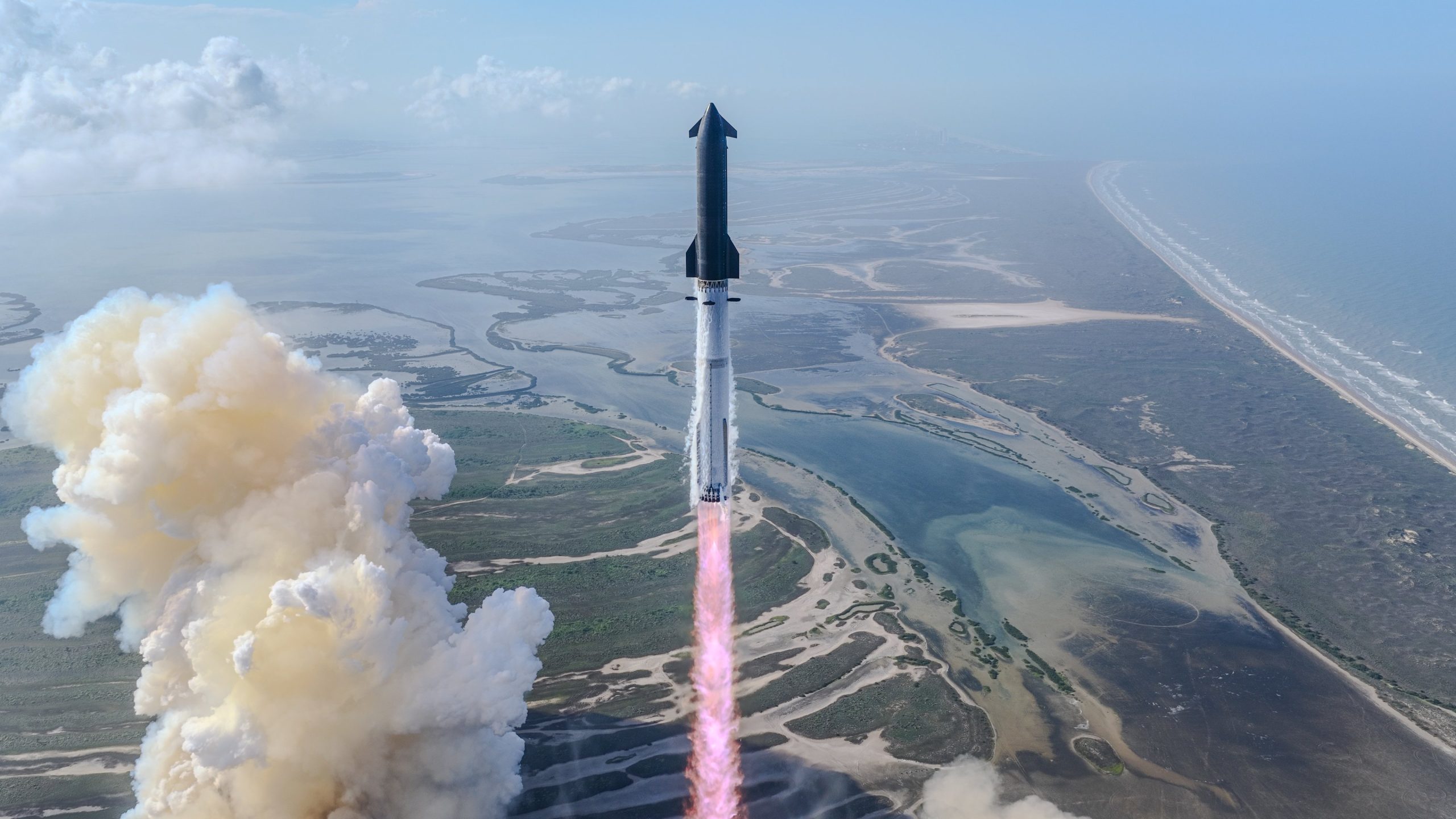
SpaceX has officially designated Monday, July 20, 2026, as the new target date for the thirteenth test flight of its Starship launch vehicle, following a high-profile launch abort that occurred earlier this week. The launch window is scheduled to open at 6:45 p.m. ET (5:45 p.m. CT), with the mission originating from the company’s Starbase facility in Boca Chica, Texas. This upcoming mission represents a pivotal moment for the aerospace manufacturer, marking the first orbital-class attempt since the company’s historic initial public offering (IPO) in June.
The rescheduling comes in the wake of a scrubbed launch attempt on Thursday, July 16. During the final seconds of the countdown, the automated flight control system triggered a "hold" at T-zero. SpaceX CEO Elon Musk later confirmed via social media that the abort was caused by the failure of four Raptor engines to ignite during the critical startup sequence. To ensure the integrity of the upcoming flight, SpaceX engineers have been tasked with removing and replacing two of the Raptor engines on the Super Heavy booster.
Technical Analysis of the Flight 13 Abort
The July 16 scrub occurred after a seemingly flawless countdown. SpaceX had successfully loaded more than 11.5 million pounds of sub-cooled liquid methane and liquid oxygen into the 400-foot-tall rocket. The abort mechanism, designed to protect the launch pad and the vehicle from a "partial power" liftoff, functioned as intended when the engine controller detected that the ignition parameters for the Super Heavy booster’s 33 Raptor 3 engines were not met.

Following the abort, the launch team immediately initiated propellant drainage procedures. Booster 20 was subsequently rolled back to the "Mega Bay" hangar for a detailed inspection. Musk noted that while only a few engines failed to start, the decision to replace two specific units was a precautionary measure to maximize the probability of mission success. This level of caution reflects the heightened stakes surrounding the Starship program as it transitions from an experimental phase into an operational one.
Mission Objectives and Payload Integration
Flight 13 is distinguished from its predecessors by its primary mission objectives, which lean heavily toward operational utility. For the first time in the program’s history, Starship is slated to carry an operational payload: 20 Starlink V3 satellites. These next-generation satellites are significantly larger and more capable than previous iterations, designed to provide increased bandwidth and direct-to-cell capabilities.
A unique secondary objective involves the use of six Starlink satellites equipped with specialized external cameras. These cameras are positioned to capture high-resolution imagery of Starship’s heat shield during the intense heat of atmospheric reentry. This "self-inspection" technique is intended to provide SpaceX engineers with real-time data on tile performance and thermal stress, a critical factor in achieving full and rapid reusability of the upper stage.
Furthermore, the mission plan includes a critical in-space relight of a single Raptor engine. This maneuver was originally planned for Flight 12 but was bypassed after the vehicle experienced engine issues during the ascent phase. Mastering the ability to restart a Raptor engine in the vacuum of space is essential for future missions requiring orbital de-orbit burns, satellite deployment in various inclinations, and eventual deep-space maneuvers for missions to the Moon and Mars.

Unlike several previous flights, SpaceX does not intend to attempt a "catch" of the Super Heavy booster using the "Mechazilla" launch tower arms during Flight 13. Instead, the booster is expected to perform a controlled water landing. The Starship upper stage is targeted for a soft splashdown in the Indian Ocean, following its suborbital trajectory.
The Financial Landscape: SpaceX as a Public Entity
The timing of Flight 13 carries unprecedented weight due to SpaceX’s recent transition to a public company. In June 2026, SpaceX completed what analysts have called the largest IPO in history, raising $75 billion and listing on the stock market under the ticker SPCX at an initial price of $135 per share.
The shift from a private to a public entity means that every technical setback or successful milestone is now scrutinized by institutional and retail investors in real-time. The last-second abort on July 16 served as a reminder of the inherent risks of aerospace development, yet the company’s transparency regarding the engine replacements appeared to maintain market confidence. Analysts suggest that the successful deployment of the Starlink V3 satellites during Flight 13 would serve as a major "proof of concept" for SpaceX’s revenue-generating capabilities, demonstrating that Starship is no longer just a test vehicle, but a functional heavy-lift asset.
Chronology of Starship Development and Recent Milestones
The path to Flight 13 has been defined by a rapid "test-fly-fail-fix" methodology. To understand the significance of the upcoming July 20 attempt, it is necessary to look at the recent timeline of the program:
- May 2026 (Flight 12): Starship achieved several milestones but faced challenges when five engines failed to reignite during the booster’s boostback burn, causing it to deviate from its intended course. The upper stage reached space but skipped the engine relight test due to internal sensor anomalies.
- June 2026: SpaceX goes public (SPCX), marking a shift in the company’s corporate structure and transparency requirements.
- Early July 2026: Booster 20 and Ship 31 are integrated at Starbase. Pre-flight static fire tests indicate readiness, though minor sensor adjustments are made.
- July 15, 2026: Elon Musk announces plans for a "product gallery" at his Texas ranch, signaling a reflective period in his career as Starship nears operational status.
- July 16, 2026: Flight 13 attempt ends in a T-zero abort due to Raptor ignition failure.
- July 17, 2026: SpaceX officially confirms the July 20 reschedule date and the engine replacement plan.
Broader Implications for the Artemis Program and Beyond
The success of the Starship program is not only vital for SpaceX but also for NASA’s Artemis program. Starship has been selected as the Human Landing System (HLS) for the Artemis III and IV missions, which aim to return humans to the lunar surface. Each Starship test flight provides critical data on cryogenic fluid management, heat shield resilience, and engine reliability—all of which are prerequisites for lunar certification.
The demonstration of the Starlink V3 deployment is particularly relevant to NASA, as it showcases the vehicle’s "Payload Delivery System" (PDS), a specialized hatch mechanism required for deploying large-scale lunar infrastructure. If Flight 13 successfully deploys its 20 satellites and completes the in-space engine relight, it will clear a major regulatory and technical hurdle for the company’s 2027 mission manifest.
Contextual Background: Musk’s Texas Expansion and Legacy
Parallel to the technical developments at Starbase, Elon Musk’s personal and professional footprint in Texas continues to expand. Recent land acquisition records indicate that entities tied to Musk, specifically Horse Ranch LLC, have accumulated approximately 6,000 acres across Bastrop and Travis counties. This region, east of Austin, is becoming a centralized hub for Musk’s various ventures, including Tesla’s Giga Texas, Neuralink, and The Boring Company.
Musk’s recent announcement regarding a "product gallery" at his Texas ranch highlights the historical context of his work. The gallery is expected to feature artifacts ranging from his 1984 "Blastar" game code to the latest "Cybercab" and "Optimus" robotics prototypes. Industry observers note that the creation of such a gallery, coinciding with the SpaceX IPO and the 13th flight of Starship, suggests that Musk views the current era as a definitive inflection point for his contribution to technology and space exploration.

The comparison made by JPMorgan CEO Jamie Dimon, who likened Musk to Albert Einstein during the 2025 World Economic Forum, underscores the high expectations placed on the CEO. As SpaceX approaches the July 20 launch date, the eyes of the global community—and now the global market—are fixed on the Texas coastline.
Conclusion and Outlook
As SpaceX teams work through the weekend to swap Raptor engines and re-verify flight systems, the aerospace industry remains focused on the Monday evening window. Flight 13 is more than a routine test; it is a demonstration of resilience and a test of the company’s ability to maintain a high launch cadence under the scrutiny of public shareholders.
The successful execution of the mission would solidify Starship’s role as the backbone of future space infrastructure, enabling the deployment of massive satellite constellations and paving the way for the next era of human spaceflight. For now, the countdown continues toward July 20, as SpaceX aims to turn the lessons of the July 16 abort into a successful orbital achievement.